






- Dasduino (Arduino-compatible)

- Inkplate

- easyC ecosystem

- Raspberry Pi & Micro:bit

- Breadboards & Cables

- Batteries & Power supplies

- Kids

- Sensors

- Actuators

- Communication

- Tools & Lab equipment

- Soldering kits

- Components

- Sale

easyC Microcontrollers
In this category you can find all microcontrollers that use the easyC system for connection and communication. Dasduino and other boards.
Showing all 14 resultsSorted by latest
Coming soon
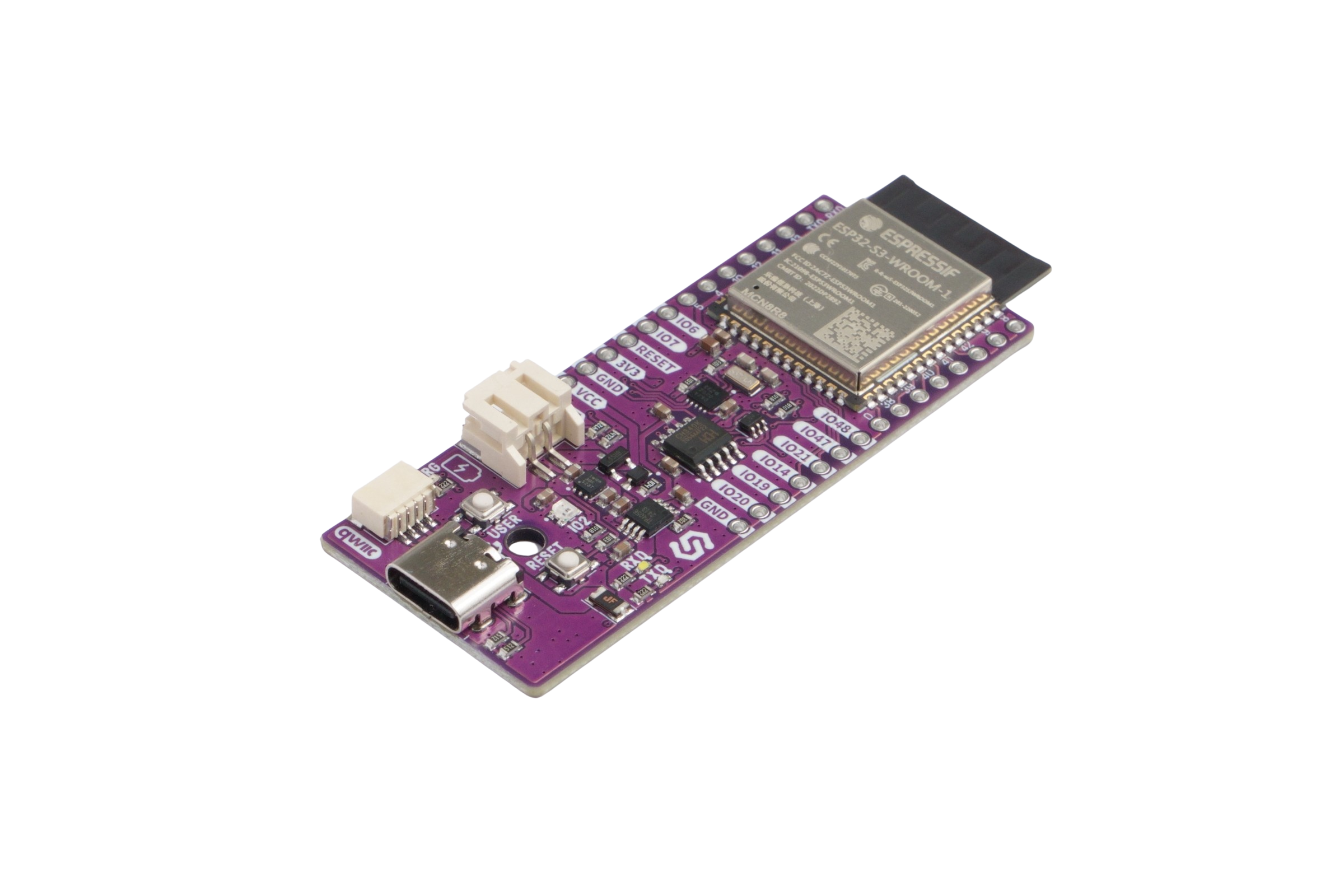
NULA DeepSleep ESP32-S3 Board
The NULA DeepSleep ESP32-S3 is a powerful development board engineered for ultra-low-power IoT applications. Built around the ESP32-S3-WROOM-1-N8R8 module, it combines a dual-core processor with 8MB of Flash and 8MB of PSRAM, providing ample resources for complex projects. The board’s standout feature is its exceptionally low deep sleep current of just 7µA, making it an ideal choice for battery-powered devices where power efficiency is crucial. With integrated Wi-Fi and Bluetooth LE connectivity, the NULA DeepSleep is the perfect center-stage for your embedded projects! Due to it’s ample connectivity, it excels in general use applications as well, such as display driving and wireless communicating.
It features an integrated PCF85063A real-time clock (RTC) for precise timekeeping, even when the main processor is in deep sleep. Power management is handled by an onboard TP4056M Li-Ion/Li-Po battery charger, allowing for battery integration and charging. The board’s design ensures stable performance and provides all the necessary components for a long-lasting IoT solution right out of the box.
Power your next project with the NULA DeepSleep ESP32-S3 if you are building remote environmental sensors, asset trackers, or low-power wireless nodes. This board provides the performance and efficiency you need with its breadboard-friendly layout that makes prototyping quick and easy, while the rich feature set supports a wide range of applications.
Coming soon
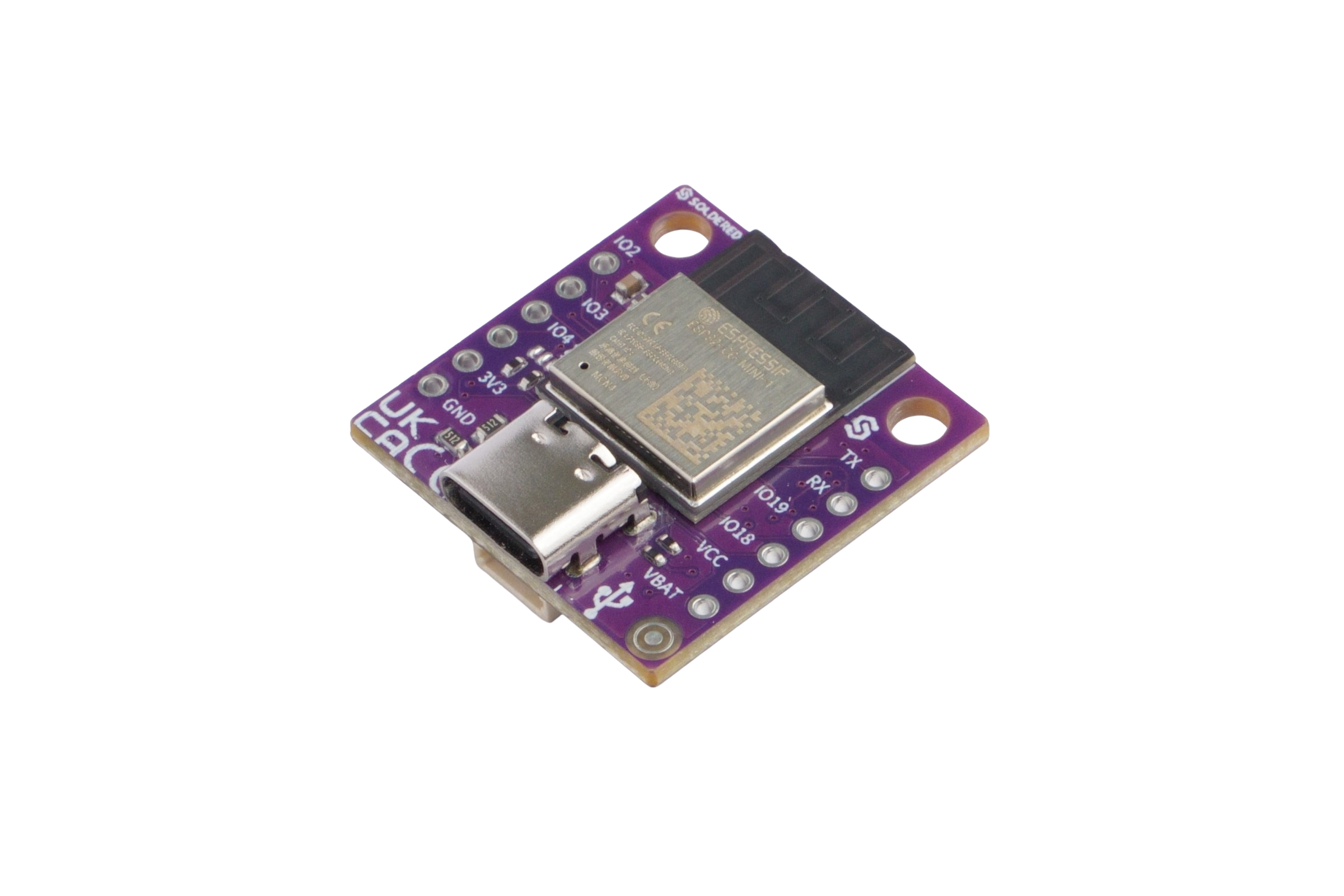
NULA Mini ESP32-C6
Start IoT and wearables development with the ultra-compact NULA Mini ESP32-C6, featuring WiFi 6, Bluetooth 5.3, and Thread/Zigbee connectivity in a breadboard-compatible 25.33×25.33mm form factor. Built around Espressif’s powerful ESP32-C6-MINI-1-N4 module with dual RISC-V cores (160MHz high-performance + 20MHz low-power), this board delivers wireless capabilities with power efficiency. Perfect for smart home nodes, IoT sensors, and battery-powered devices requiring wireless protocols, this board combines the latest connectivity standards with maker-friendly features like Qwiic connectors and Arduino, MicroPython and ESP-IDF support.
Engineered for both prototyping and production deployment, the NULA Mini features 512KB high-performance SRAM, 4MB Flash memory, and 6 versatile GPIO pins supporting UART, SPI, I2C, PWM, and 12-bit ADC functions. Due to its small footprint, it’s very convenient for breadboard prototyping. The integrated Qwiic/STEMMA QT connector enables tool-free sensor integration, while the JST battery connector with onboard power management supports 3.7V Li-Ion batteries for portable applications. Ultra-low power consumption with hardware security features, including secure boot, flash encryption, and hardware crypto engines makes this ideal for professional IoT deployments requiring both performance and security.
This board represents the perfect balance of advanced wireless capabilities and maker accessibility, supporting WiFi 6 efficiency, Bluetooth mesh networking, and Thread/Matter compatibility for future-proof IoT projects. The breadboard-compatible design with bottom-mounted ESP32-C6 maximizes prototyping space while LEGO-compatible mounting holes enable secure project integration. Complete open-source hardware design with documentation ensures unlimited customization possibilities for both hobbyist and professional applications.
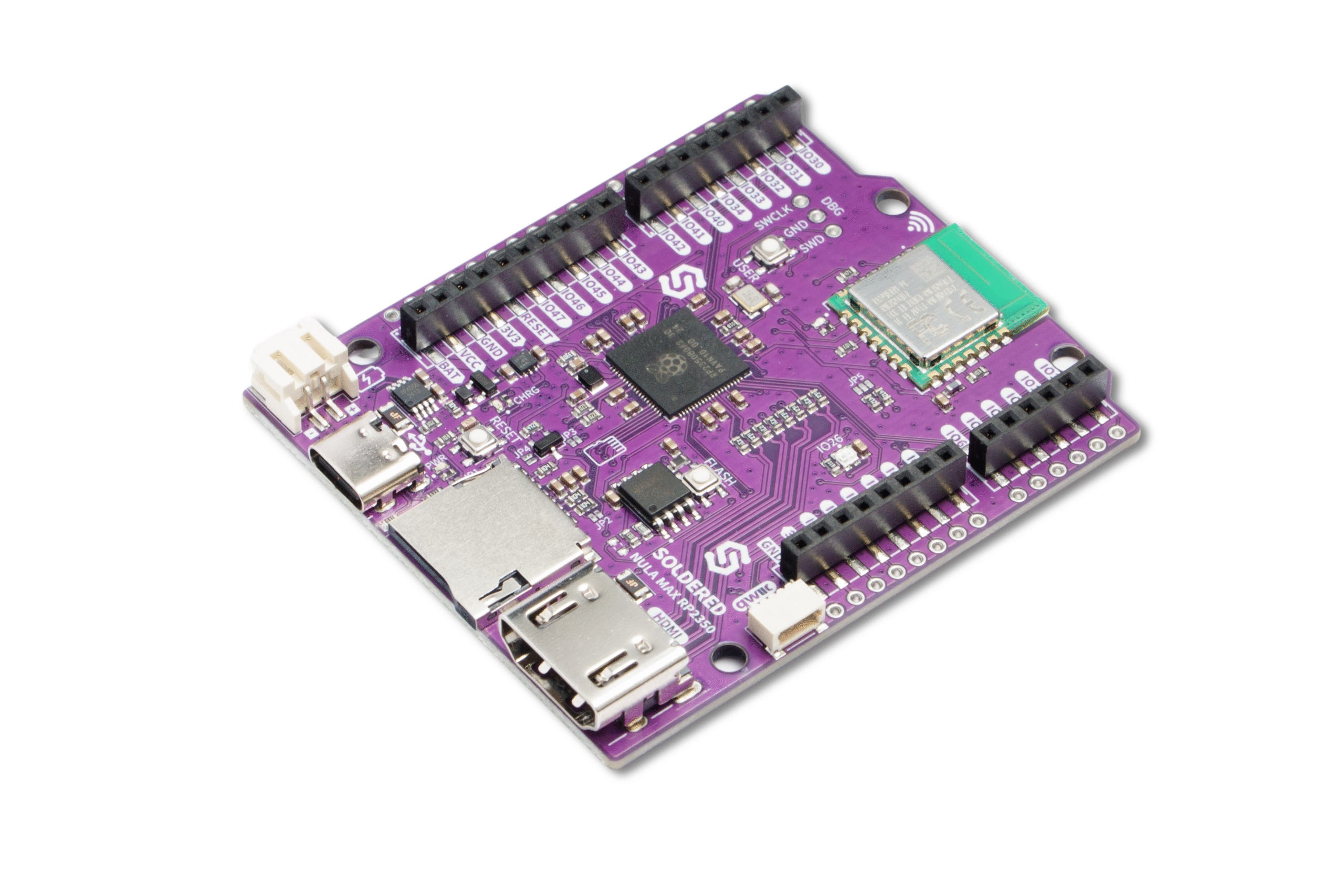
Soldered NULA Max RP2350
Use the full potential of modern microcontroller development with the Soldered NULA Max RP2350. Built around the powerful dual Cortex-M33 RP2350B processor with 520KB on-chip SRAM, this development platform combines the familiar Arduino form factor with modern features like DVI output, WiFi/Bluetooth connectivity, and PIO (programmable I/O). Perfect for makers tackling robotics, display-driven projects, and IoT applications requiring processing power and connectivity options.
Made with both simplicity and expandability, this board features Qwiic port for sensor integration, a microSD slot for optional data logging and media projects, and a Raspberry Pi Radio Module 2 providing reliable and native WiFi and Bluetooth connectivity. The dual header design exposes much more of the RP2350’s pins than other boards, leaving some pins exclusive for WiFi communication and DVI out. With DVI output capability, you can drive displays directly while maintaining full Arduino IDE compatibility.
If the RP2040 board is Arduino Nano, this is your Arduino MEGA. Packed with professional features yet accessible to makers of all skill levels. Whether you’re building weather stations with DVI displays, robotics projects requiring extensive GPIO, or IoT systems needing WiFi connectivity and data logging, the NULA Max RP2350 provides the feature set and expandability your projects demand. EU manufacturing ensures consistent quality and reliable performance for both prototyping and production applications.
Note:
- This board IS NOT 1:1 compatible with Arduino UNO shields, please refer to the pinout
- Before connecting the 3.7 Li-Ion Battery, please refer to the detailed technical documentation which you may find on this page
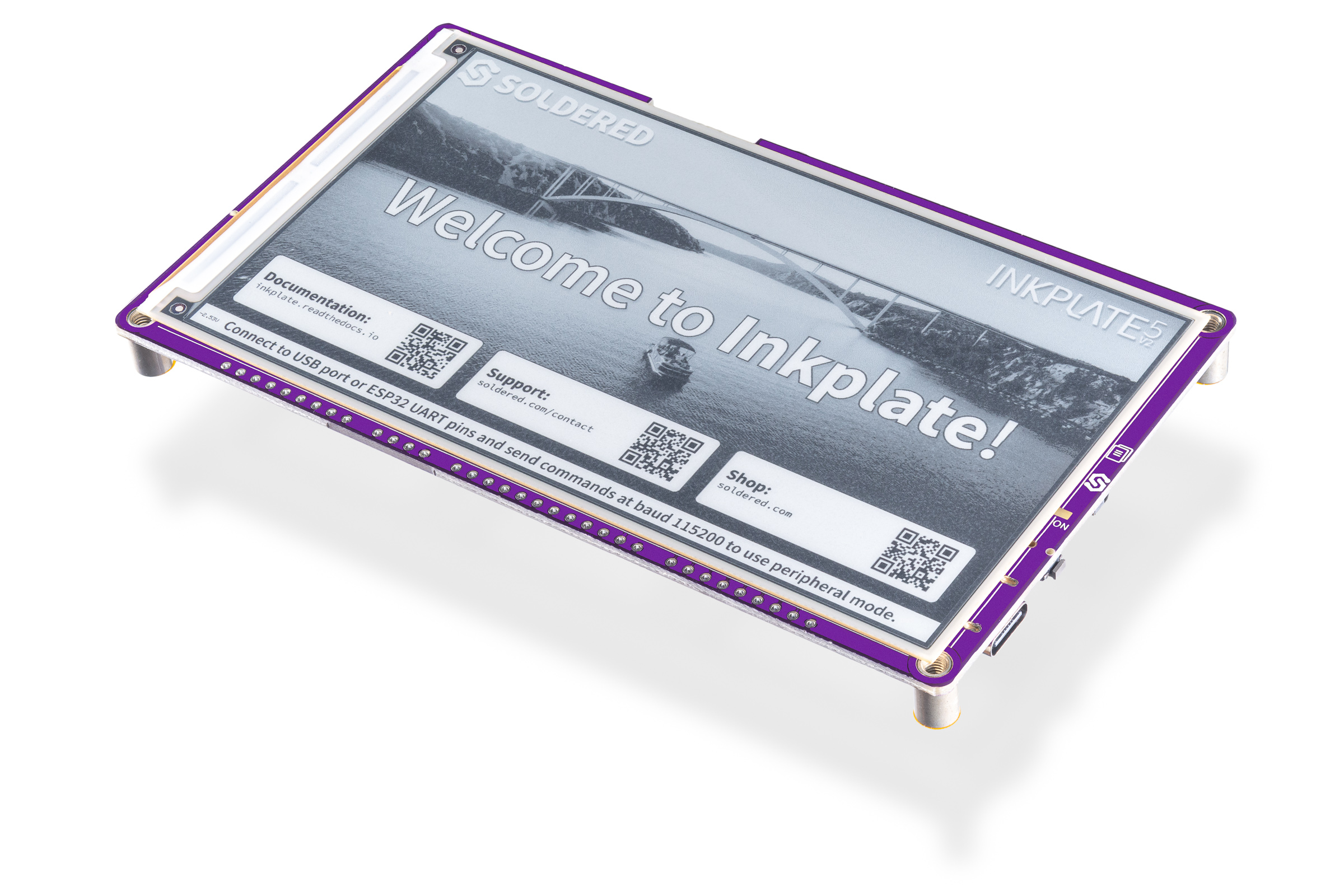
Inkplate 5 Gen2
Introducing the Inkplate 5 Gen2, a versatile board compatible with Arduino and MicroPython technologies, featuring a recycled 5.2″ E-Ink (e-paper) display with fast refresh times of just 0.22 seconds. This fully open, plug-and-play device, powered by the ESP32 microcontroller, is designed for effortless internet connectivity via WiFi or with other devices via Bluetooth.
Its energy-efficient design allows for ultra-low power consumption, enabling it to operate for months on a single charge of a Li-ion battery. The Inkplate 5 Gen2 is not only about power and connectivity; it’s also about convenience. The built-in microSD slot and real-time clock provide unlimited data storage possibilities and precise timekeeping. The device even features numerous GPIO pins, allowing easy expansion of your projects with almost any peripheral device.
The e-paper display of the Inkplate 5 Gen2 offers visual delight. It provides a beautiful, sharp image under all conditions, including direct sunlight, which is always on. The display resolution is 720×1280 pixels, in monochromatic mode, supporting black, white, and 6 shades of gray. The most interesting part? The E-Ink display requires no power between screen updates.
The Inkplate 5 Gen2 refreshes at a speed of 0.99s for a full refresh and 0.22s for a partial refresh.
Our device is a fantastic starting point for those wanting to experiment with E-Ink technology, all neatly packaged in a compact board.
Inkplate 5 Gen2 options:
- With e-paper screen & casing: This version offers a sturdy and elegant casing for your device, made with precision from a 3D printer. Perfect for those who want an extra layer of protection without additional features.
- With e-paper screen, casing, and battery: Upgrade to this version if you seek protection and mobility. This option includes a 3D-printed casing as well as an 1200 mAh integrated battery, ensuring your device stays powered even on the go.
- Without e-paper screen: For those who prefer a simpler or alternative display solution, this version does not include an e-paper screen. Ideal for users who have their own display solutions or prefer to use the device without a visual interface.
Choose the one that best suits your needs and enhance your experience!

Inkplate 6FLICK
Inkplate 6 FLICK is a plug-and-play device featuring a 6.0″ e-paper display with a resolution of 1024×758 pixels. Its main advantage is the ease of use—simply plug in the USB-C cable, open the Arduino IDE, and within minutes, your content will be displayed! With numerous ready-made examples and comprehensive documentation, getting started is extremely easy, and developing more complex projects is also significantly simplified.
This board stands out from the rest of the Inkplate series because it comes with touchscreen functionality supporting two simultaneous touches and built-in lighting that can be controlled in 64 steps, making it ideal for interactive displays. With an exceptionally fast refresh rate of under one second, it also supports greyscale (displaying shades of grey, not just black and white) and “partial updates”—refreshing only part of the screen, which is faster and more visually appealing.
The board is based on the popular ESP32 microcontroller, providing sufficient processing power to manage the screen, as well as WiFi and Bluetooth connectivity. If you choose the version with a lithium battery, you can take advantage of its extremely low power consumption of just 23µA in deep sleep mode, allowing for months of use without recharging. The board also includes a Li-ion battery charger, a microSD card slot, a Real Time Clock, and numerous GPIO pins for connecting additional electronics and expanding the capabilities of the Inkplate.
Its environmental friendliness, combined with high build quality, makes it an ideal choice for those looking to create sustainable and innovative electronic projects. The Inkplate 6 FLICK uses screens recycled from old e-book readers, which is extremely eco-friendly. While minor imperfections like scratches may occur due to recycling, all screens with significant damage are not used in production, ensuring high quality.
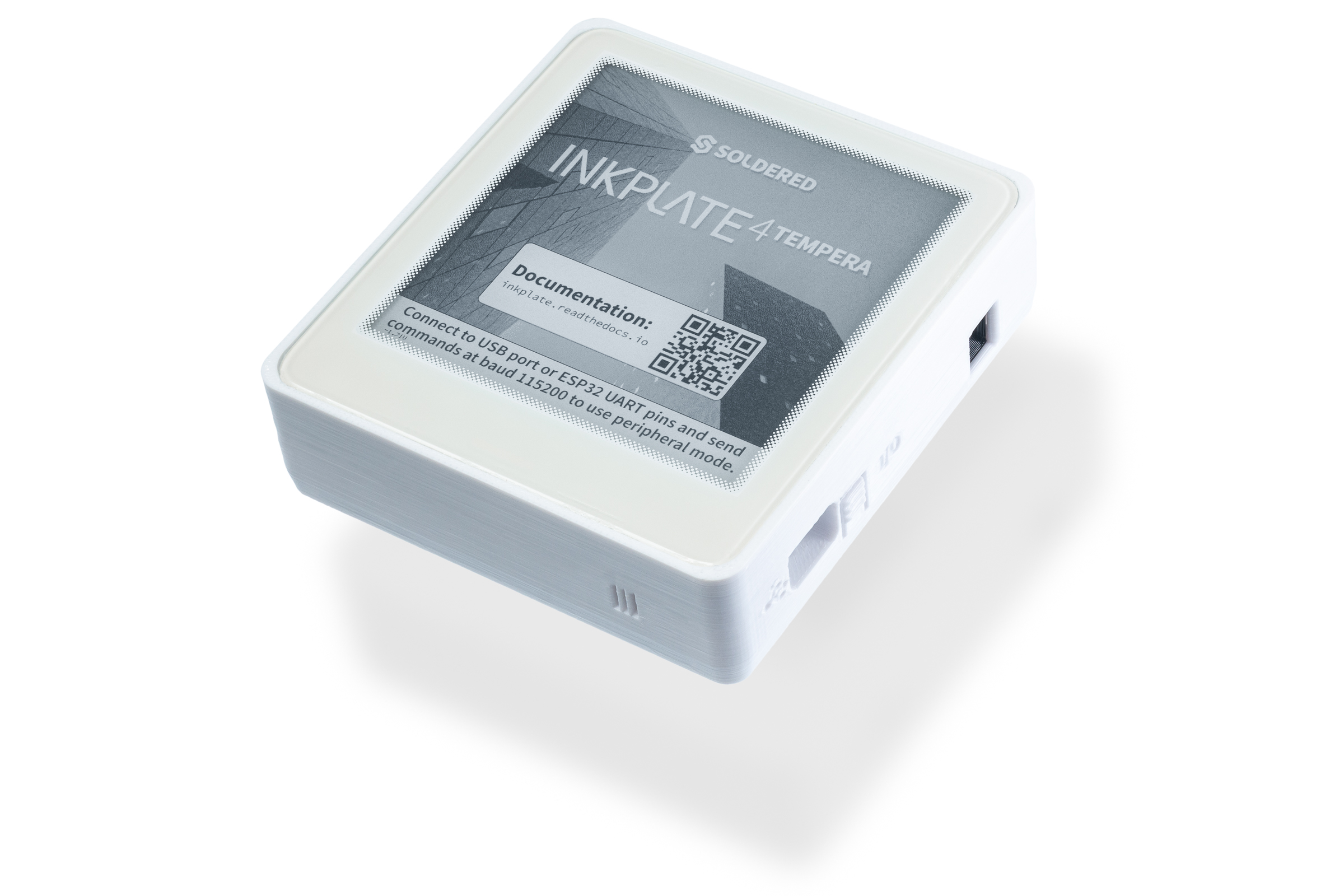
Inkplate 4 TEMPERA
Inkplate 4 TEMPERA is an easy-to-use, all-in-one device that puts the power of e-paper technology in the palm of your hand. Behind its 3.8-inch, 600×600-pixel e-paper touchscreen, it packs the following features into one compact, elegant package: frontlighting, an abundance of sensors, Wi-Fi and Bluetooth connectivity, a built-in battery, and a low-power operating mode.
In this digital age, screens are the windows through which we interact with much of our world, and e-paper technology addresses many of the challenges posed by conventional screens. More specifically, they offer high contrast, daylight readability, and unparalleled energy efficiency. And there is one more thing that sets our screens apart: sustainability. Every Inkplate 4 TEMPERA gives new life to an ED038TH2 E Ink display that we’ve rescued from a tragic future as e-waste. We’d rather see these screens in your hands than in a landfill.
Inkplate 4 TEMPERA is powered by the ESP32 microcontroller, to which we’ve added all of the peripherals we thought you might find useful. Inside the enclosure is a 1200-mAh battery and power-management circuitry so you can charge it easily and determine its remaining charge accurately. Inkplate 4 TEMPERA’s real-time clock (RTC) allows for precise time measurements, and its microSD card slot allows you to to store and display images, among other applications. If you’re looking for sensors, you’ll find a gyroscope and an accelerometer, as well as temperature, humidity, air quality, and gesture sensors. Inkplate 4 TEMPERA also has a built-in, frequency-adjustable buzzer. And of course, it includes various GPIO pins that support peripheral connectivity through a GPIO expander or via the easyC ecosystem.
So, if you’re in the market for a nice-looking screen on which you can display whatever you want—wherever, at whatever time of day, and for however long you want—we invite you to check out Inkplate 4 TEMPERA. We think you’ll find it delightful!
Inkplate 4 TEMPERA options:
Without glass panel: This version is powered by an ESP32 microcontroller, with a 3.8-inch touchscreen e-paper display, built-in lighting, Li-Ion battery, housing, and various peripheral components.
With glass panel: This version is powered by an ESP32 microcontroller, with a 3.8-inch touchscreen e-paper display, built-in lighting, Li-Ion battery, housing, various peripheral components, and additionally protected by a glass panel.
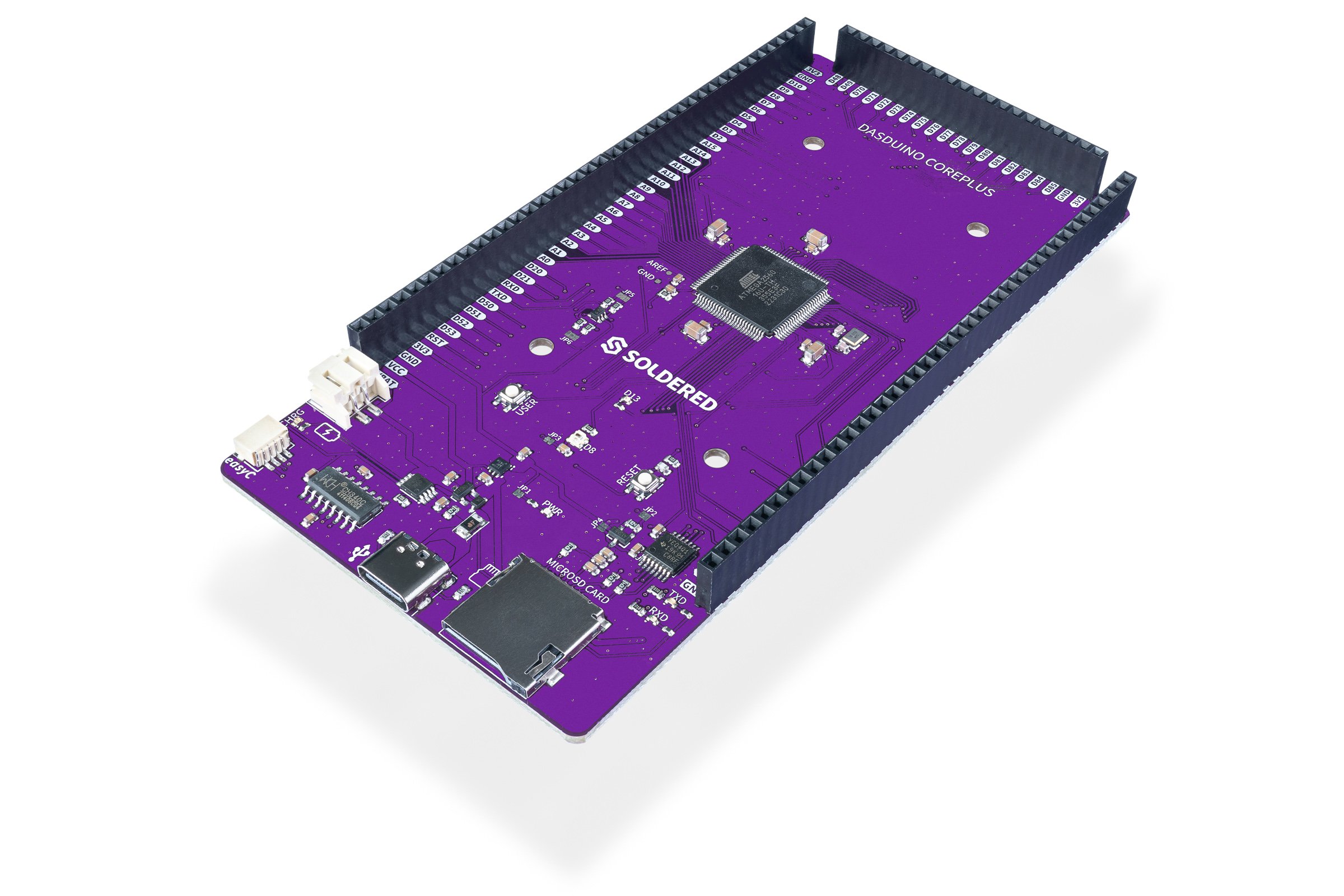
Dasduino COREPLUS (ATmega2560)
The soldered version of the ATmega2560 microcontroller board has arrived! It is designed for enthusiasts and professionals in the field of electronics and DIY projects. The heart of the board, the ATmega2560, is a powerful 8-bit microcontroller that offers enough processing power for demanding applications. The board comes with a large number of digital and analog inputs/outputs, allowing users to connect various sensors and actuators. The ATmega2560 contains a significant amount of Flash memory, SRAM, and EEPROM, which is sufficient for complex applications and data storage. The USB interface allows for easy programming and communication with a computer. It enables communication with various peripheral devices and modules using the easyC system for simple connectivity. The board is compatible with popular development environments, such as Arduino IDE, which facilitates the development and implementation of projects.
This board is ideal for creating complex and versatile electronic projects, such as automatic systems, smart devices, robotics, and many others.
Dasduino COREPLUS (ATmega2560) options:
Dasduino COREPLUS comes in 3 versions depending on the method of connection to the pins:
– without headers
– with male headers
– with female headers
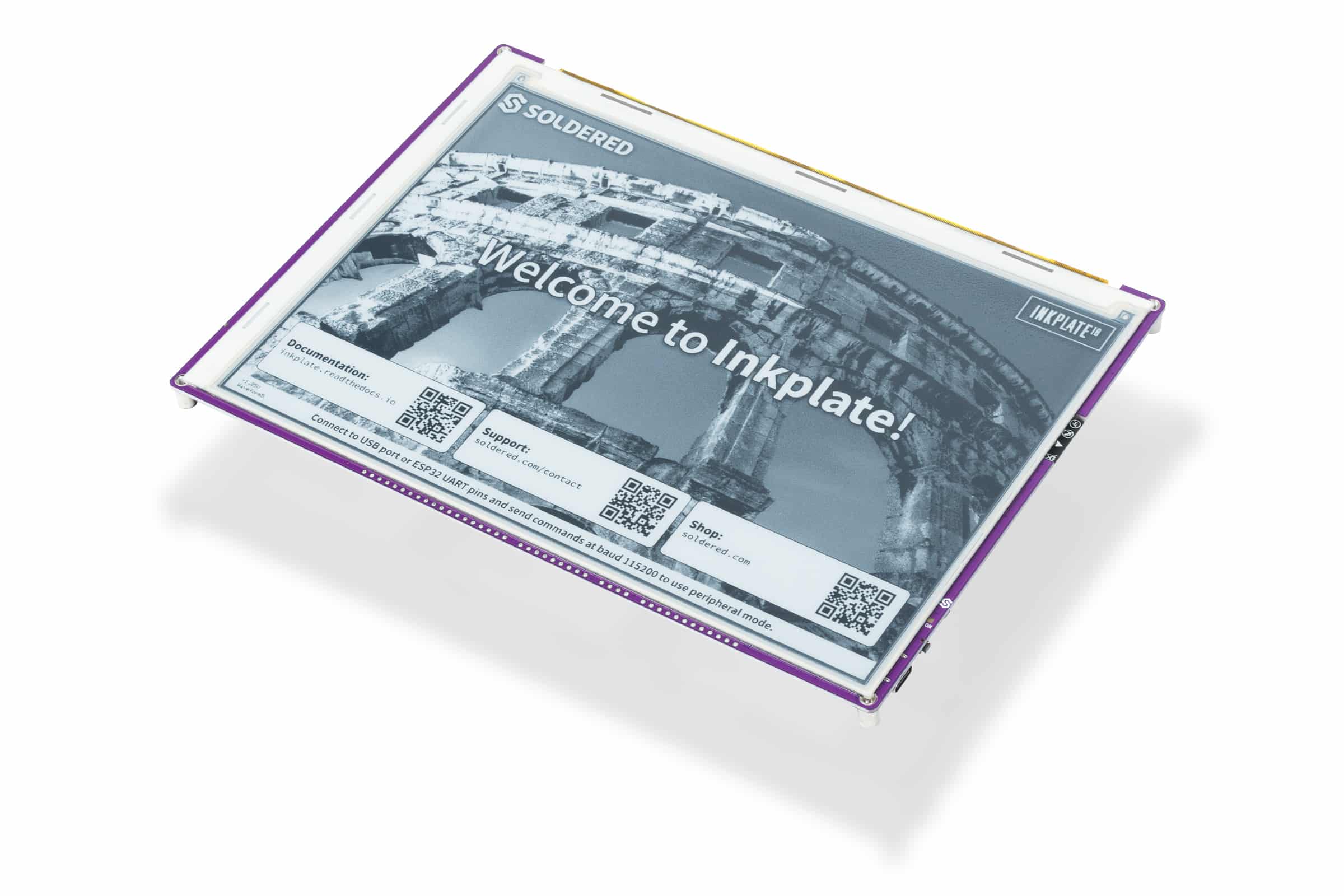
Inkplate 10
Transform your large-scale IoT projects with the Inkplate 10, the 9.7-inch e-paper display that delivers professional dashboard capabilities with months of battery life. This is a large-format display solution that combines ESP32 WiFi power with the ultra-low energy consumption of e-paper technology. Whether you’re building industrial monitoring systems, smart building dashboards, or large information displays, this board provides the expansive screen real estate and reliable operation that applications require.
To name a few features, Inkplate 10 has a stunning 9.7″ inch e-paper display with refresh rate of 1.61s, greyscale mode, and partial updates support. Powered by ESP32, you will have a strong microcontroller with WiFi and Bluetooth at your disposal. It’s super-low-power (22uA) so you can use it for days, weeks, or months out of a single battery charge. There’s Li-ion battery charger, Real Time Clock (RTC), additional GPIO pins, and more. Using our Arduino library (100% compatible with Adafruit GFX), it’s 5 minute work to get the board running for you. The Micropython module is available as well. It’s 100% open-source for both software and hardware. What is especially interesting is that Inkplate uses recycled screens taken from old e-book readers, which is very environmentally friendly, but you have to keep in mind that some screens may have small scratches because of this. All screens with large scratches and damages are not used at all.
Inkplate 10 options:
With e-paper display & enclosure: This version offers a sturdy and sleek enclosure for your device, made with precision from a 3D printer. It’s perfect for those who want an extra layer of protection without any added features.
With e-paper display, enclosure, and battery: Upgrade to this version if you’re looking for both protection and mobility. This option includes a 3D-printed enclosure as well as an integrated battery, ensuring your device stays powered even on the go.
Without e-paper display: For those who prefer a simpler or alternative display solution, this version does not include the e-paper display. It’s ideal for users who have their own display solutions or prefer to use the device without a visual interface.
Choose the one that best fits your needs and enhance your experience!
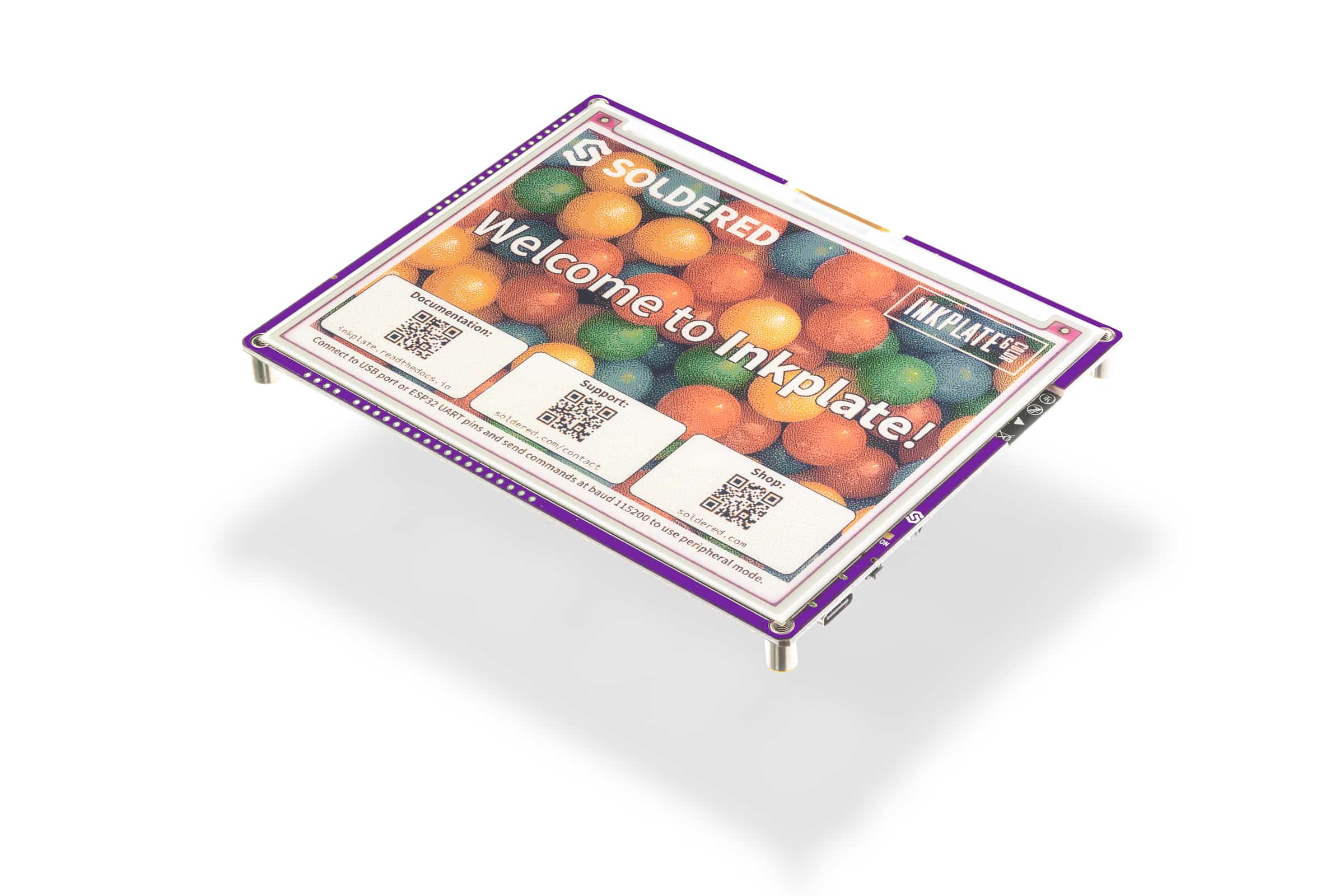
Inkplate 6COLOR
If you’re like us, you thought: “If only I could use a screen like this in my project”, first time you saw an e-book reader. Thanks to the exceptional sharpness and contrast, the ability to display in sunlight and truly unprecedented efficiency in terms of energy (it consumes energy only when changing the content on the screen), electronic paper is the ideal choice for many applications. Inkplate 6COLOR, continuing the tradition of the now well-known Inkplate series, continues to offer variations of e-paper accessible to hobbyists and everyone else in a way that we have made plug-and-play hardware, really easy to use and compatible with Arduino and micropython. Inkplate 6COLOR brings a unique innovation – the ability to display colors on the screen.
If we want to list only a few features, Epaper Inkplate 6COLOR has a 5.85-inch folded e-paper that displays a total of 7 different colors (Black, White, Red, Yellow, Blue, Green, and Orange). Considering the built-in dithering capability, the results you can get on the screen are really impressive. Powered by ESP32, you will have strong microcontroller with WiFi and Bluetooth on your disposal. It’s super-low-power (18uA) so you can use it for days, weeks, or months out of a single battery charge, and there is on-board Li-ion charger and RTC. Using our Arduino library (100% compatible with Adafruit GFX), it’s 5 minute work to get the board running for you. The Micropython module is available as well. It’s 100% open-source for both software and hardware.
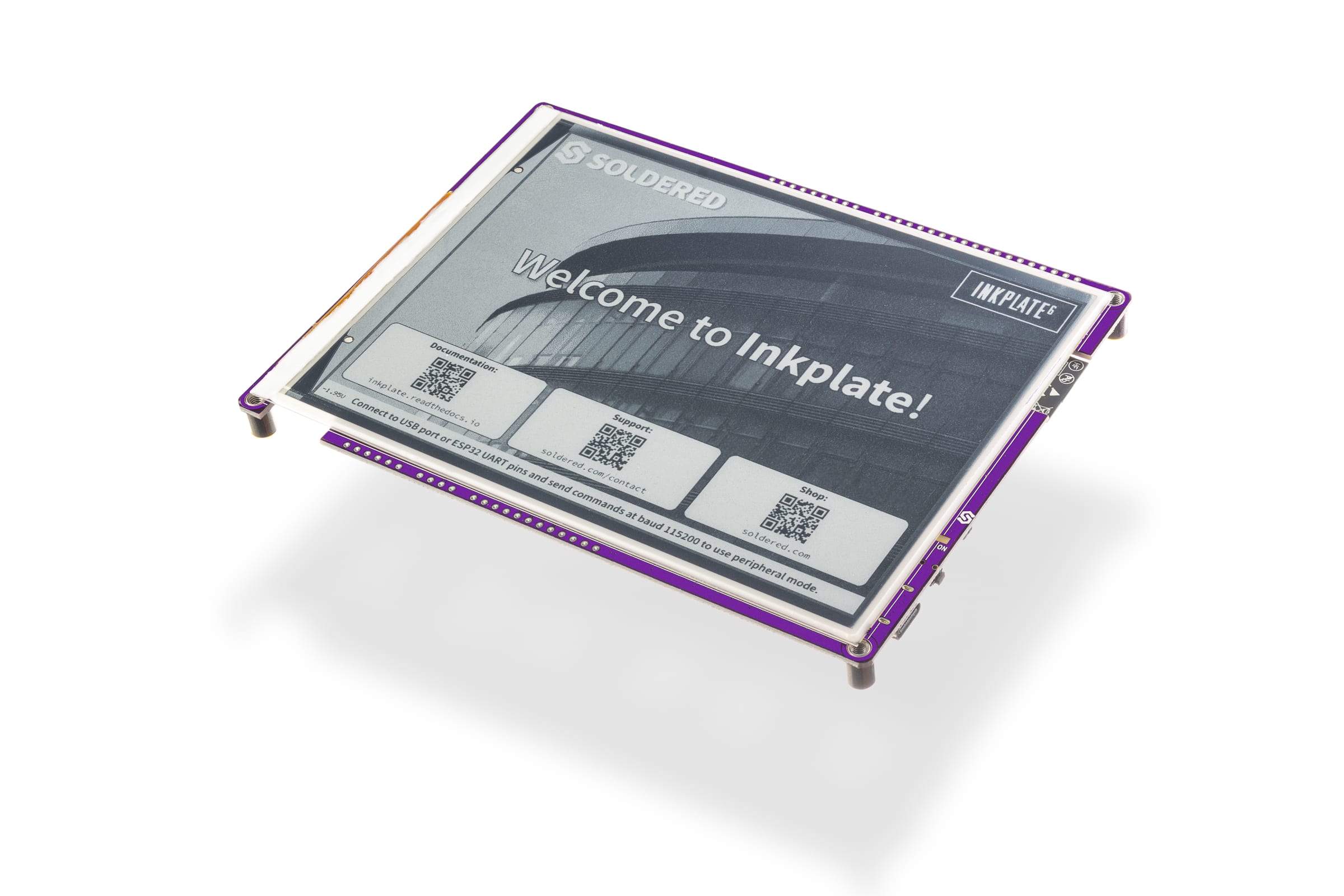
Inkplate 6
If you’re like us, the first time you saw an e-reader, you thought to yourself, “I could do something with that.” Thanks to clean lines, high contrast, daylight readability, and the remarkable level of energy efficiency that comes from drawing power only when changing the contents of the screen, e-paper is uniquely suited to many applications. With Inkplate 6, our goal is to make e-paper accessible to hobbyists and DIY product designers by offering a plug-and-play hardware platform that is super-easy to use and compatible with Arduino.
To name a few features, Inkplate 6 has stunning 6 inch e-paper display with refresh rate of 1.26s, with partial update 264ms, greyscale mode and partial updates support. Powered by ESP32, you will have strong microcontroller with WiFi and Bluetooth on your disposal. It’s super-low-power (22uA) so you can use it for days, weeks, or months out of a single battery charge. Using our Arduino library (100% compatible with Adafruit GFX), it’s 5 minute work to get the board running for you. The Micropython module is available as well. It’s 100% open-source for both software and hardware. What is especially interesting is that Inkplate uses recycled screens taken from old e-book readers, which is very environmentally friendly, but you have to keep in mind that some screens may have small scratches because of this. All screens with large scratches and damages are not used at all.
Inkplate 6 options:
With e-paper display & enclosure: This version offers a sturdy and sleek enclosure for your device, made with precision from a 3D printer. It’s perfect for those who want an extra layer of protection without any added features.
With e-paper display, enclosure, and battery: Upgrade to this version if you’re looking for both protection and mobility. This option includes a 3D-printed enclosure as well as an integrated battery, ensuring your device stays powered even on the go.
Without e-paper display: For those who prefer a simpler or alternative display solution, this version does not include the e-paper display. It’s ideal for users who have their own display solutions or prefer to use the device without a visual interface.
Choose the one that best fits your needs and enhance your experience!
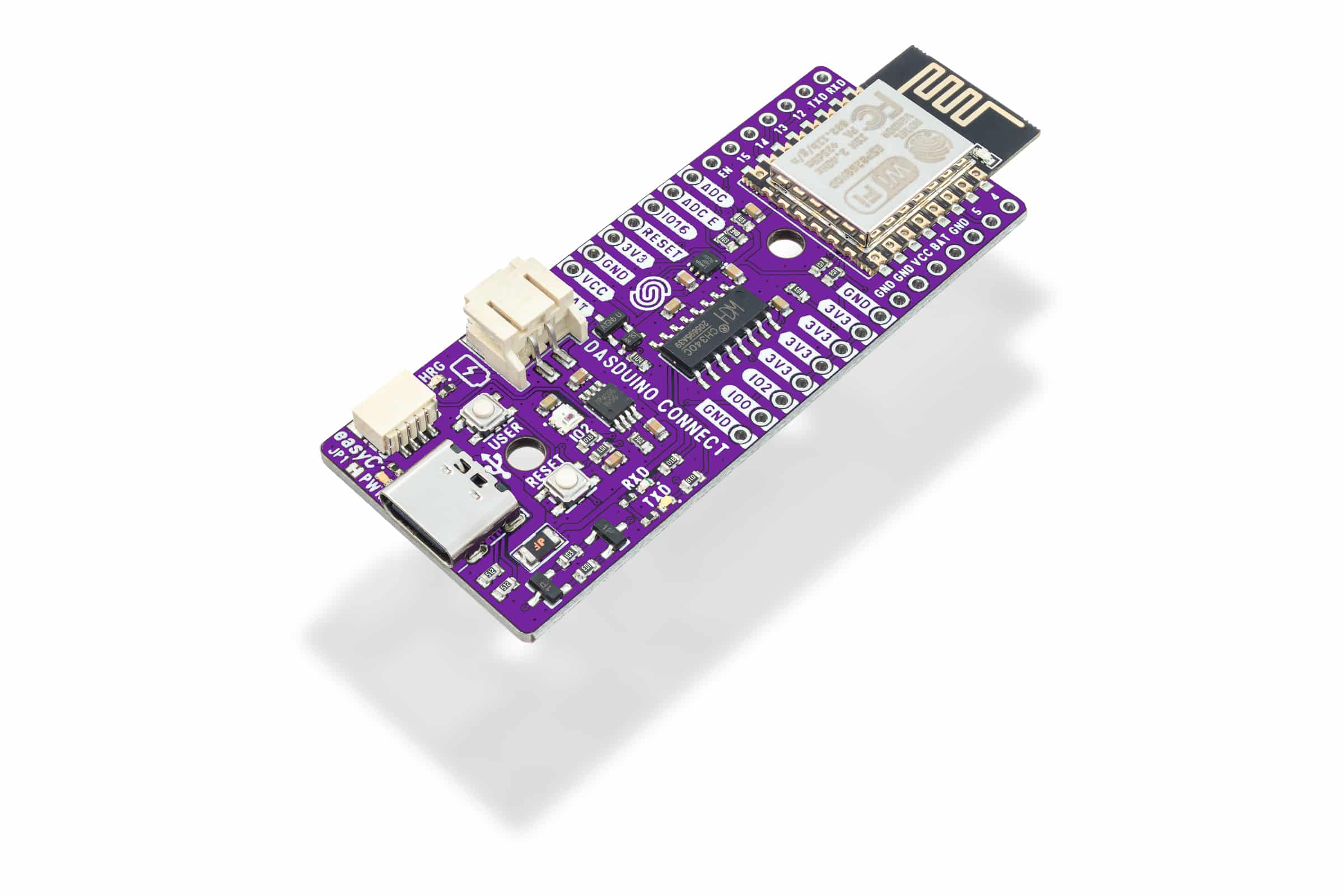
Dasduino CONNECT (ESP8266)
The biggest advantage of Dasduino Connect hides within its name. If you ever wanted to connect your development board directly to the Internet, look no further! This Dasduino comes with the ability to connect to Wi-Fi. It even comes with the TCP/IP protocol suite that supports DNS. Connecting the physical world with the Internet has never been easier! Dasduino Connect is based on the well-known ESP8266 microchip which can be a bit complicated to use on its own. Adding the fact that it works from the Arduino IDE, working this board is as simple as it gets.
Dasduino Connect is 71 mm wide and 26 mm high so you can fit it in most projects. It fits perfectly on a breadboard for faster prototyping. It has a total of 30 pins, most of which are digital and one of which is analog. You can simply connect it to your computer with a USB Type-C and program it in Arduino IDE. Connecting the Dasduino Connect with other boards is done with an easyC cable. The design is 3.3V ready with an onboard regulator for 5V. With the JST battery connector, you can make your projects truly wireless. It includes full RGB WS2812B LED as well. Comes without any headers although it comes with USB-C cable.
Dasduino CONNECT (ESP8266) options:
The Dasduino CONNECT comes in 3 versions depending on the method of establishing a connection to the pins:
– without headers
– with male headers
– with female headers
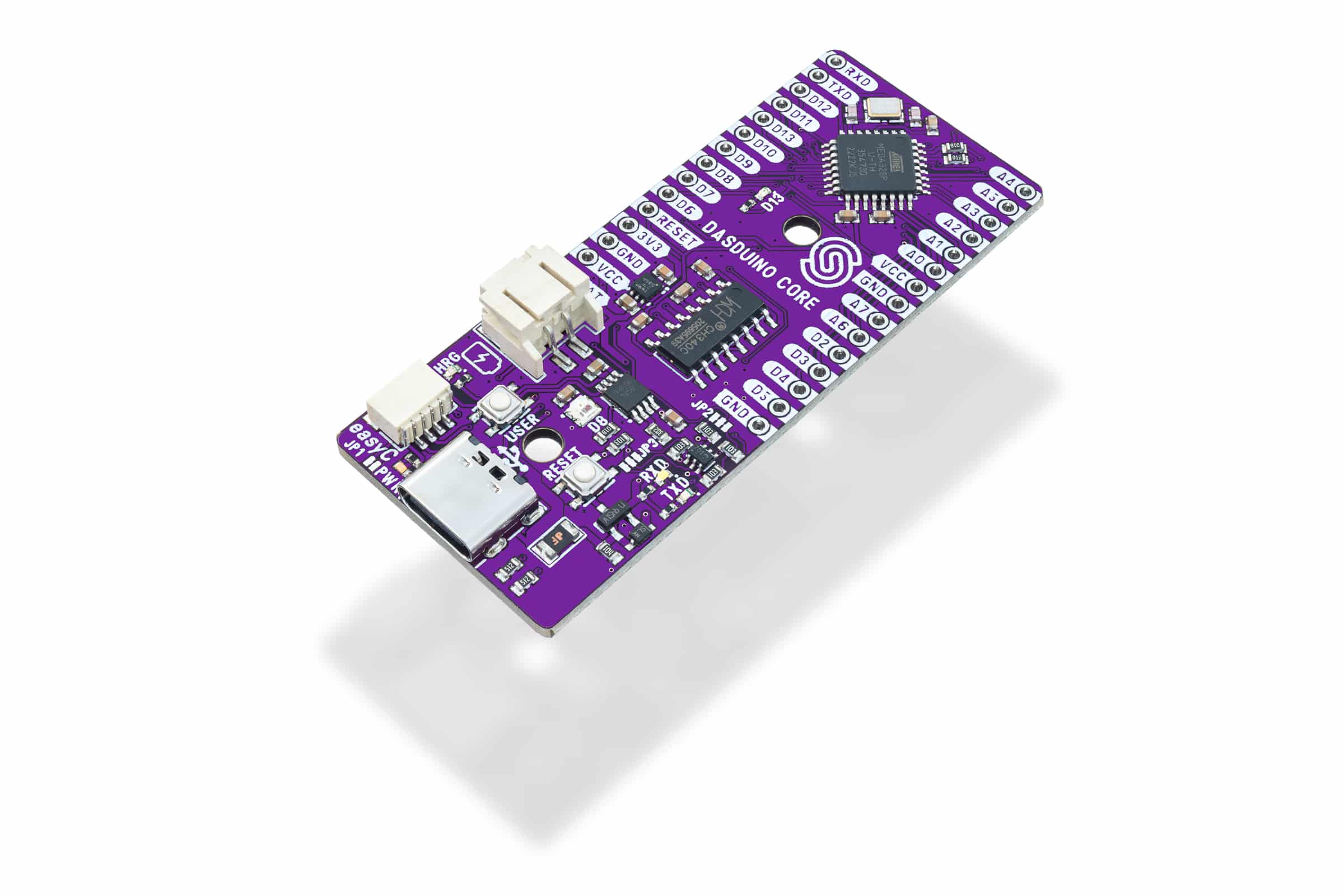
Dasduino CORE (ATmega328)
Are you looking to start tinkering with electronics and Arduinos? Or perhaps you’re looking for a board to help you with electronic projects? Dasduino Core is the right choice for you. If you’re familiar with any of the retired Croduino products, you’ll feel right at home with this board. If not, no worries! Dasduino Core is made for makers of all skill levels! Not only will it execute the tasks in a breeze, but it will take up little space while doing so.
With just 63 mm wide and 22 mm high, Dasduino Core packs 22 I/O pins. It has 14 digital and 8 analog pins, which is plenty for almost all projects. It comes with a USB Type-C connection and is 100% compatible with the original Arduino boards and Arduino IDE. It comes with the Atmel Atmega328P microcontroller we all know and love. It works on 5V or battery voltage. There is also a 3.3V voltage regulator on the board for easy powering of 3.3V breakouts or easyC boards. Furthermore, it features Lithium-ion battery charger and connector, and a full color WS2812 RGB LED. An easyC connector will make connecting the Dasduino Core with other devices effortless.
Dasduino CORE (ATmega328) options:
The Dasduino CORE comes in 3 versions depending on the method of establishing a connection to the pins:
– without headers
– with male headers
– with female headers

Inkplate 2
The Inkplate 2 is an Arduino-compatible board that features a 2.13″ three-color e-paper display. It is a plug-and-play device, programmable via USB port, and controlled by an ESP32 microcontroller. Moreover, it connects to the internet via WiFi or Bluetooth. Since it uses only 8uA in low-power mode, it can last for months on a single Li-ion battery charge. It’s simple enough to be used by beginners, but it also offers plenty of features and a user-friendly platform for advanced users. Inkplate 2 has it all, packed on a small-factor board.
If you’re like us, when you first saw an e-book reader, you thought “If only I could use a screen like this in my project”. Thanks to the exceptional sharpness and contrast, the ability to display in sunlight and truly unprecedented efficiency in terms of energy (it consumes energy only when changing the content on the screen), electronic paper is the ideal choice for many applications. Inkplate 2, continuing the tradition of the now well-known Inkplate series, offers a variation of e-paper accessible to hobbyists and everyone else in a way that we have created a plug-and-play hardware that is really easy to use, and is compatible with Arduino and micropython.
Inkplate 2 options:
With e-paper display & enclosure: This version offers a sturdy and sleek enclosure for your device, made with precision from a 3D printer. It’s perfect for those who want an extra layer of protection without any added features.
With e-paper display, enclosure, and battery: Upgrade to this version if you’re looking for both protection and mobility. This option includes a 3D-printed enclosure as well as an integrated battery, ensuring your device stays powered even on the go.
Without e-paper display: For those who prefer a simpler or alternative display solution, this version does not include the e-paper display. It’s ideal for users who have their own display solutions or prefer to use the device without a visual interface.
Choose the one that best fits your needs and enhance your experience!
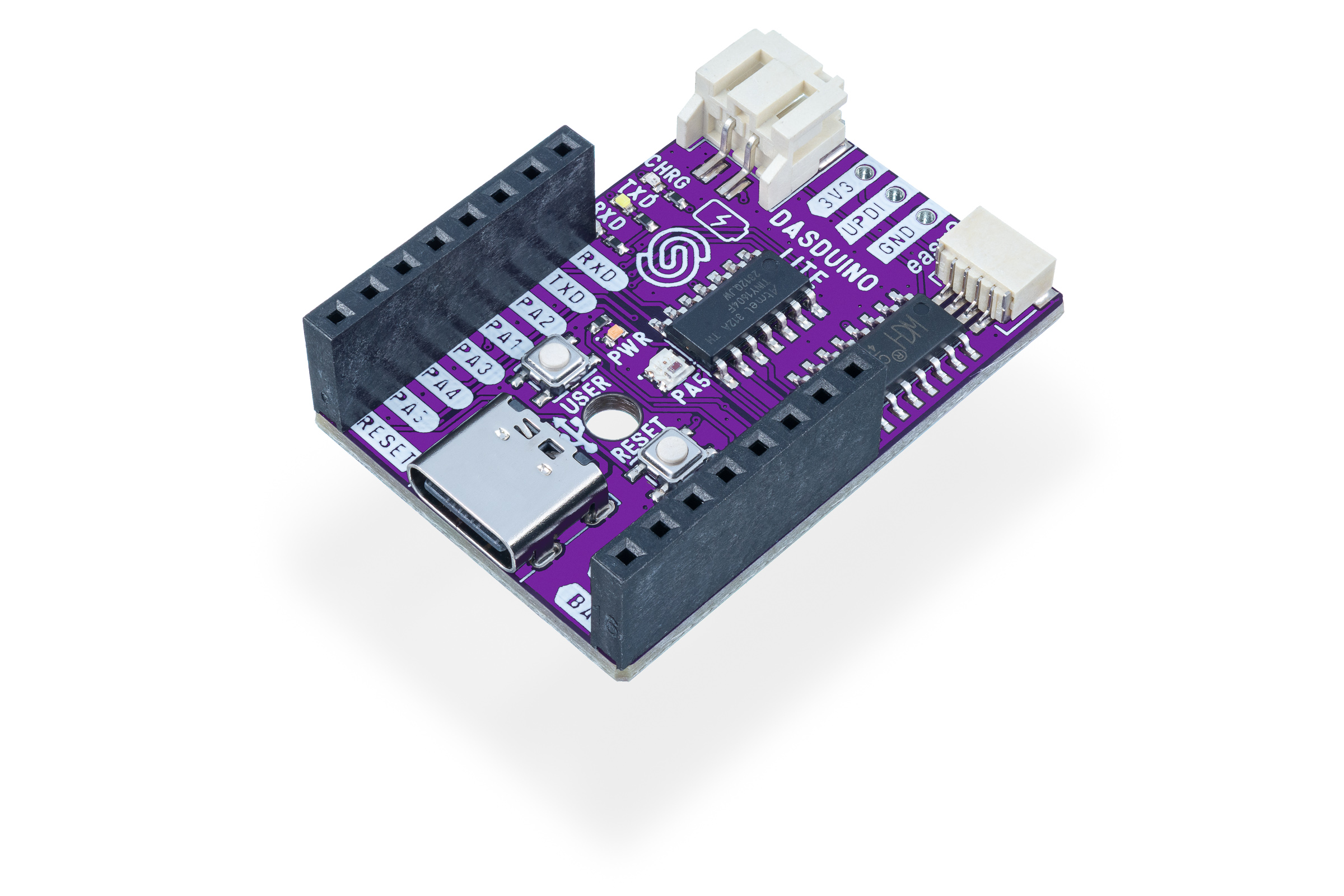
Dasduino LITE (ATTiny1604)
Dasduino Lite is the right choice when you are limited with space, but still looking for capable controller. Based on Attiny1604, with USB-C port, Li-ion charger and CH340 USB-UART converter, it has all must-haves on a small form-factor.
Only 38mm wide and 26mm high, Dasduino Lite contains 12 GPIO pins. Of these, 9 can be programmed as analog. It comes with a USB Type-C connection and is 100% compatible with the original Arduino IDE software using custom Board Definition. In addition to its small dimensions, which are the main characteristic of this Dasduino, there is also a charger for a lithium battery, a full RGB LED and an easyC connector that will allow easy connection of the Dasduino Lite board with other devices. This Dasduino is extremely handy when you need to make a project that needs to take up as little space as possible.
Dasduino LITE (ATTiny1604) options:
The Dasduino LITE comes in 3 versions depending on the method of establishing a connection to the pins:
– without headers
– with male headers
– with female headers

11 years in the industry

Customers in 80+ countries

20,000+ satisfied customers
