






- Dasduino (Arduino-compatible)

- Inkplate

- easyC ecosystem

- Raspberry Pi & Micro:bit

- Breadboards & Cables

- Batteries & Power supplies

- Kids

- Sensors

- Actuators

- Communication

- Tools & Lab equipment

- Soldering kits

- Components

- Sale

Gas & Air quality
In this category you can find gas and air quality sensors. For example MQ gas sensors, BME280, BME680, CCS811 are just some of them.
Showing 25–32 of 32 resultsSorted by latest
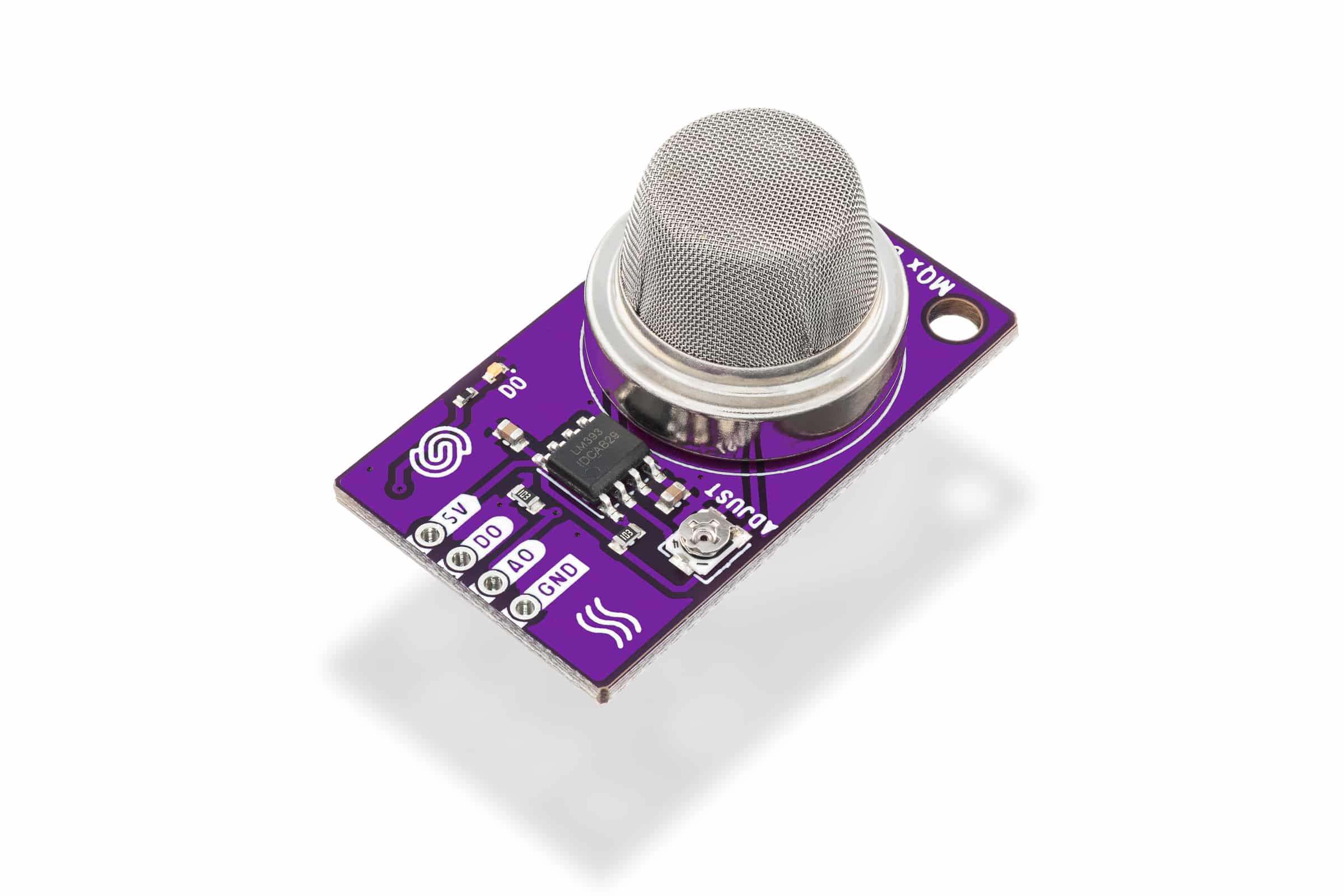
Natural gas, LPG sensor MQ5 breakout
Is your office near a high-traffic area? Are you concerned about the amount of natural and liquefied petroleum gases in your work environment? The MQ5 is a simple-to-use sensor to put your mind at ease. It detects gas particles very quickly between 200 and 10000 ppm.
The breakout board works with both digital (DO) and analog signals (AO). The digital output is obtained by setting a threshold value with a potentiometer. The analog output will differ depending on the intensity of the gas.
Product usage tips:
The sensor takes 24 hours to preheat to optimal working temperature. When gas is detected, the LED will start glowing. It will remain off if it doesn’t detect anything. Two mounting holes enable easy mounting to surfaces. The board comes with four pins that need to be soldered.
The breakout board boasts a long life so you don’t have to worry about it suddenly breaking. Submerging the sensor underwater and freezing it will damage it beyond repair. Highly corrosive gases will also damage the sensor.
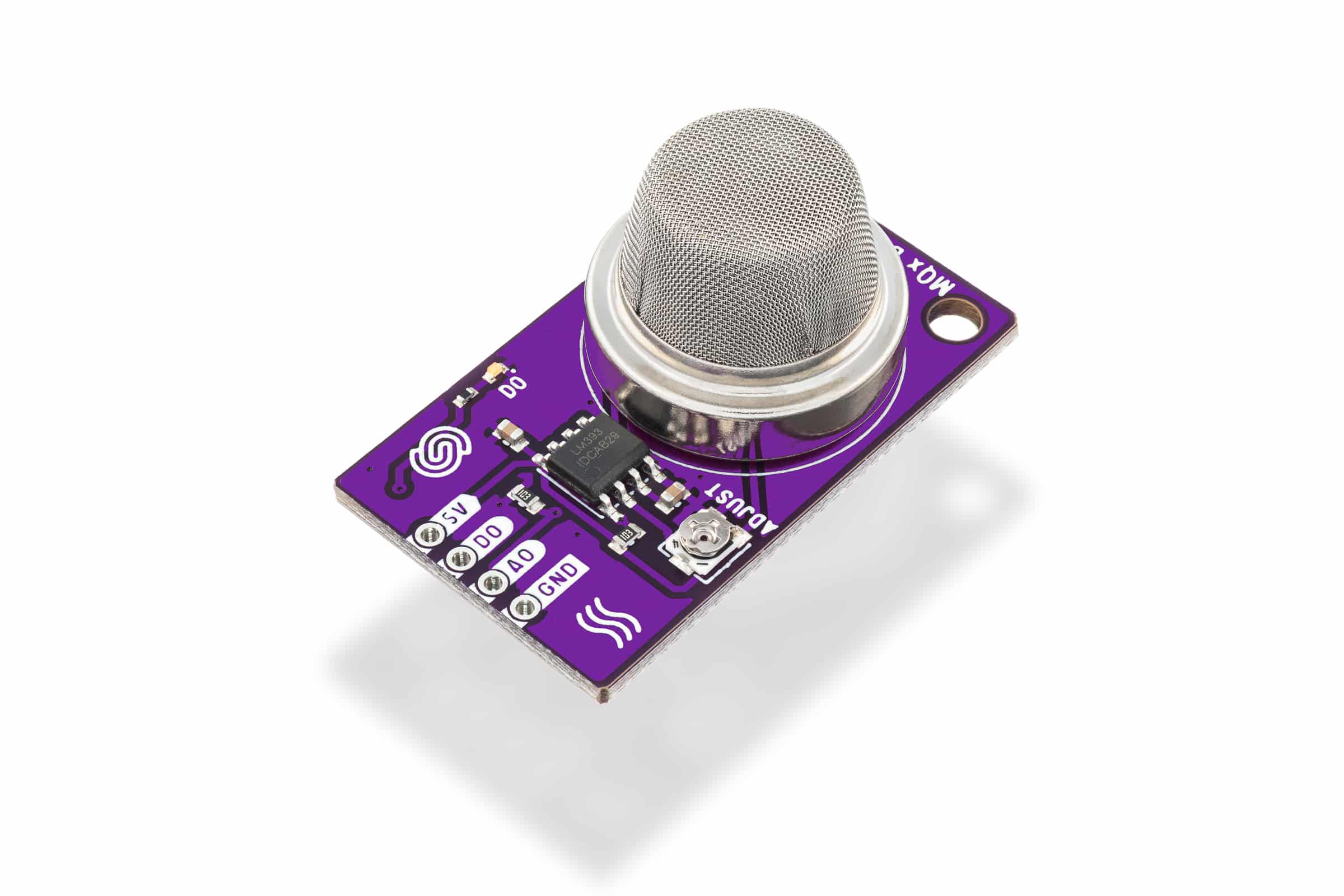
Methane, CNG sensor MQ4 breakout
Have you ever wondered how much natural gas and methane are in your living room? You can easily measure that! The MQ4 breakout board is a simple-to-use sensor that detects the natural gas and methane (CH4) in the air. Once heated to working temperature, it detects changes in air concentrations very quickly between 200 and 10000 ppm.
On the through-holes, the DO stands for digital out and AO for analog out. The digital output is obtained by setting a threshold value using the potentiometer. The analog output will depend on the intensity of the gas around the sensor.
Product usage tips:
The sensor will take 24 hours to preheat to working temperature. The LED on the board will glow when gas is detected, and remain off when it’s not. The board can easily be secured in place using the two mounting holes. It comes with four pins that need to be soldered.
Due to its long life, you can use this board for years without much of a thought. Dipping the sensor in water and freezing it will damage it, so avoid doing that. Highly corrosive gases will weaken it significantly, making it useless.
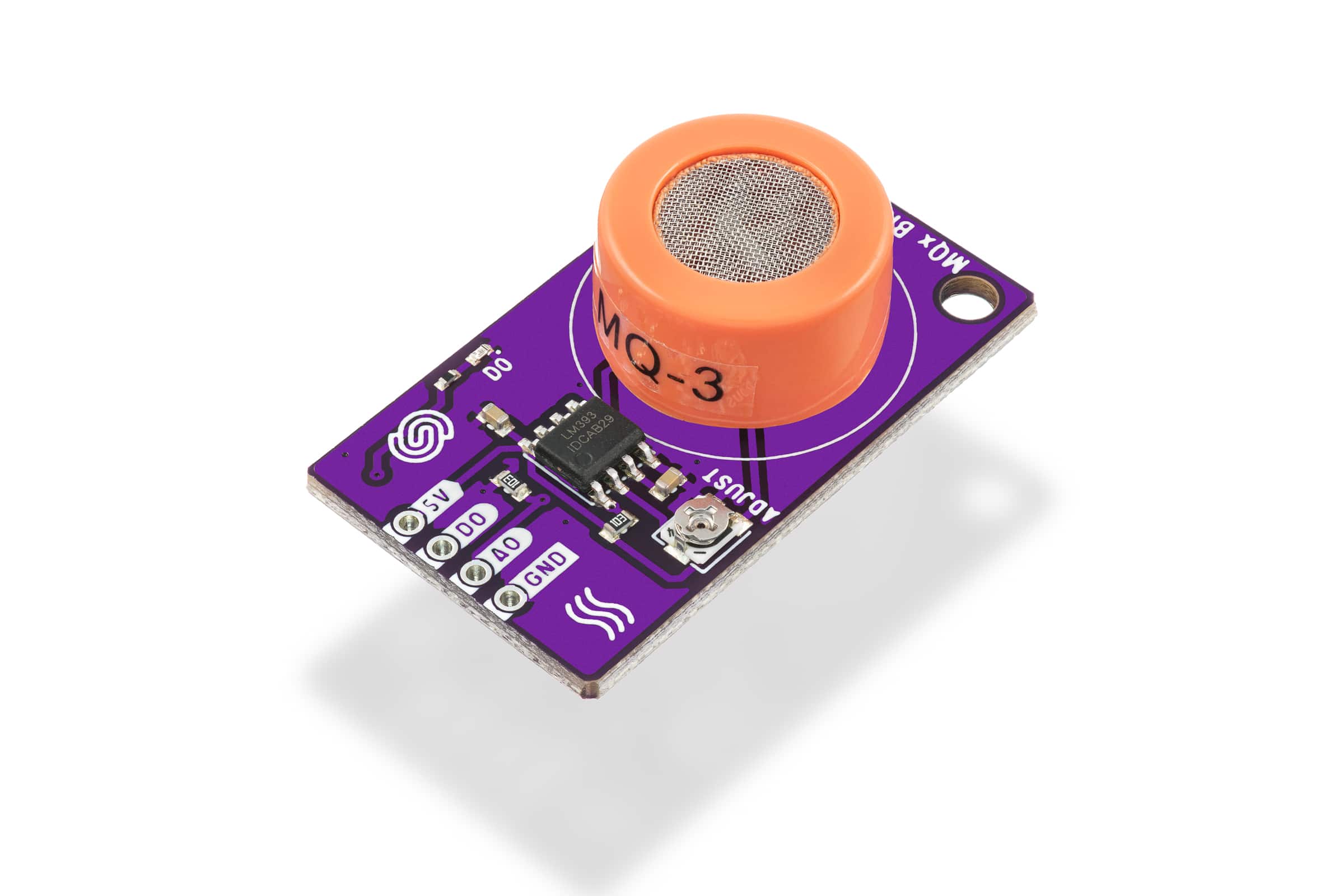
Alcohol, Ethanol sensor MQ3 breakout
MQ sensors, including the MQ3 sensor, have the ability to detect various gases. The MQ3 sensor is specifically designed to detect alcohol vapors. This means it is sensitive to alcohols such as methanol, ethanol, and isopropanol. The MQ3 sensor is commonly used to measure the concentration of alcohol in the air and is a useful tool for alerting to the presence of alcohol in the surrounding environment.
It is important to note that MQ sensors are not specific to only one gas and can react to other gases besides those they are specifically designed for. Therefore, it is important to use the MQ3 sensor exclusively for alcohol detection and to follow the manufacturer’s instructions to achieve optimal accuracy and reliability of measurements. It requires a short heating time to function correctly.
The breakout board works with both digital (DO) and analog signals (AO). The digital output is obtained by setting a threshold value with a potentiometer. The analog output will differ depending on the intensity of the gas in the sensor’s environment.
Product usage tips:
When gas is detected, the LED will start glowing. It will remain off if it doesn’t detect anything. Two mounting holes enable easy mounting to surfaces. The board comes with four male headers that need to be soldered.
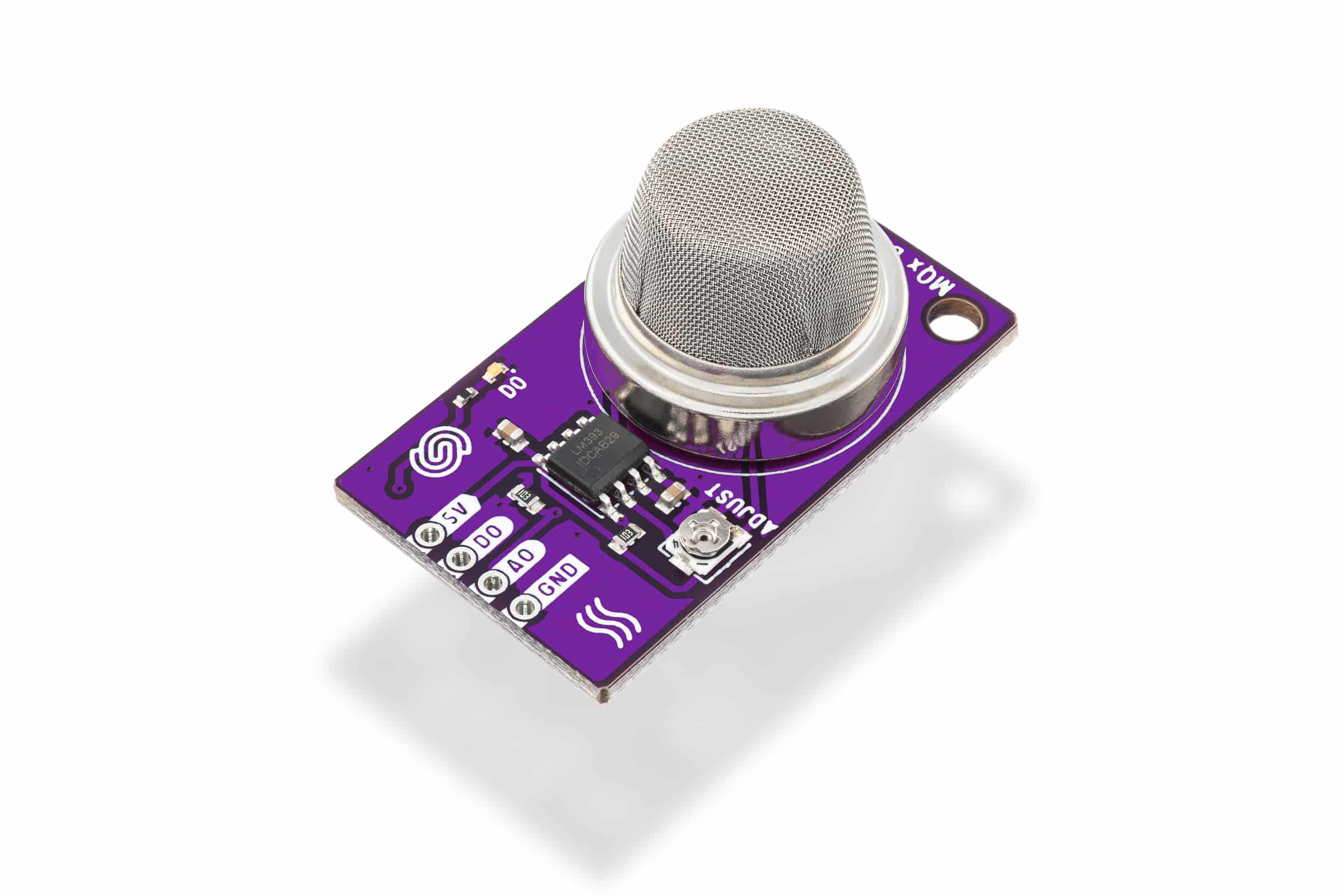
Butane, LPG & Smoke sensor MQ2 breakout
MQ sensors, including the MQ2 sensor, have the capability to detect various gases. The MQ2 sensor is specifically designed to detect combustible gases such as LPG (liquefied petroleum gas), butane, propane, methane, alcohol, hydrogen, and smoke. These gases are commonly found in residential, industrial, and automotive environments. The sensor’s sensitivity and responsiveness enable it to detect even trace amounts of these gases, making it a valuable tool for gas leakage detection, fire detection, and air quality monitoring applications. It takes a short time to heat up in order to work correctly.
The breakout board works with both digital (DO) and analog signals (AO). The digital output is obtained by setting a threshold value with a potentiometer. The analog output will differ depending on the intensity of the gas.
Product usage tips:
When gas is detected, the LED will start glowing. It will remain off if it doesn’t detect anything. Two mounting holes enable easy mounting to surfaces. The board comes with four pins that need to be soldered.

PMS7003 sensor adapter
To connect to our PMS7003 air quality sensor easily, we designed this adapter. It allows you to connect the PMS7003 sensor to breadboard or to connect with cables.
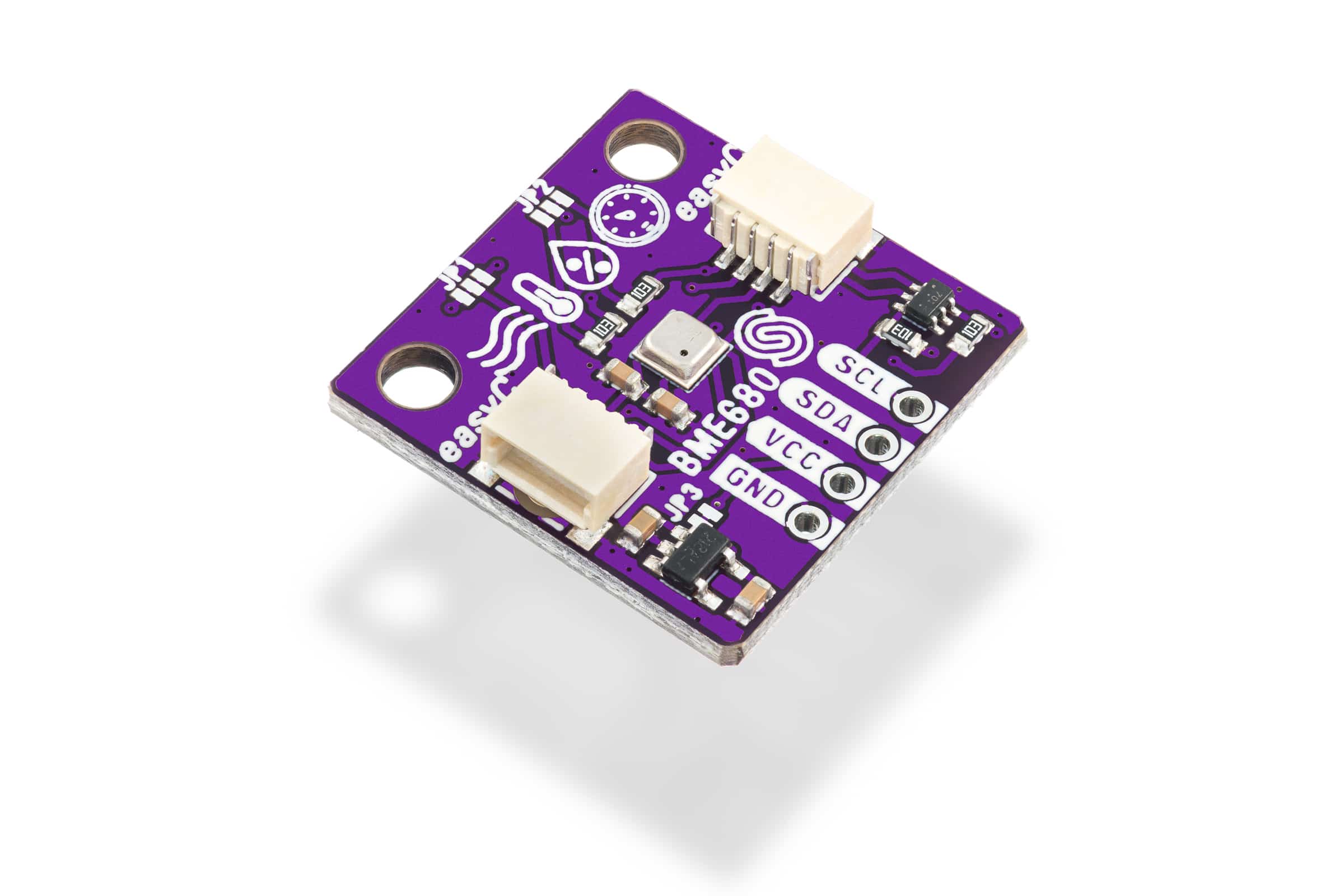
Enviromental & air quality sensor BME680 breakout
The BME680 is an atmospheric sensor that measures four values: temperature, pressure, humidity and air quality as an IAQ index. Using that data can calculate elevation. It is really simple to use considering that it’s using I2C communication protocol and its dimensions are really small so it can fit anywhere. Everything you need to know about the atmospheric conditions and the quality of the air – you can find out using this sensor (ideal for weather station projects!) This board comes with two easyC connectors, providing easy connection to other products.
Coming soon

CO2 sensor MH-Z19
The MH-Z19 is a sensor that uses the non-dispersed infrared principle to detect CO2 in the air. It has built-in temperature compensation and high sensitivity to gas detection, and therefore has extremely accurate readings, and its outputs are on UART and PWM. It consumes little electricity and has a long service life.

PMS7003 sensor PM10, PM2.5
PMS7003 is a kind of digital and universal particle concentration sensor, which can be used to obtain the number of suspended particles in the air, i.e. the concentration of particles, and output them in the form of digital interface. This sensor can be used with different gadgets related to the concentration of particles in the air.

11 years in the industry

Customers in 80+ countries

20,000+ satisfied customers
