





-
My cartSub-total: Subtotal: €157.90



- Dasduino (Arduino-compatible)

- Inkplate

- easyC ecosystem

- Raspberry Pi & Micro:bit

- Breadboards & Cables

- Batteries & Power supplies

- Kids

- Sensors

- Actuators

- Communication

- Tools & Lab equipment

- Soldering kits

- Components

- Sale

Shop

24/7 free customer and technical support

Comprehensive documentation

Open-source hardware and software

2-year Warranty - no questions asked
Showing 217–240 of 699 resultsSorted by latest

PIR Movement sensor board
A PIR (passive infrared) motion sensor is a device that detects physical movement within its field of vision by sensing changes in infrared radiation. This sensor works on the principle of detecting thermal thermal signals emitted by objects, mainly warm-blooded creatures like humans. The “passive” in the name refers to the fact that the sensor itself does not emit or radiate any energy for detection.
Easily connects to Dasduino/Arduino via digital pin. When it detects movement, it sets the output digital pin to HIGH. The angle that the sensor “sees” is 100 degrees and reaches up to 5 meters. It has a potentiometer for delay (how often to check for movement).
It is often used in a variety of applications, including home security systems, automatic lighting, and energy management, among others.

Hall effect sensor breakout with digital output
The hall effect sensor (Hall Effect sensor) will be able to detect the magnetic field in its vicinity thanks to the aforementioned physical law. A magnetic field that can be created by a magnet, a current flowing through a conductor or some third source, the Hall effect sensor will recognize each. This sensor has a programmed threshold at which it will change the state of its output signal, so it is a sensor with a digital output.

Hall effect sensor breakout with digital output & easyC
The hall effect sensor (Hall Effect sensor) will be able to detect the magnetic field in its vicinity thanks to the aforementioned physical law. A magnetic field that can be created by a magnet, a current flowing through a conductor or some third source, the Hall effect sensor will recognize each.
This sensor has a programmed threshold at which it will change the state of its output signal, so it is a sensor with a digital output. Through the easyC connectors, it enables a simple connection with the microcontroller.
Coming soon
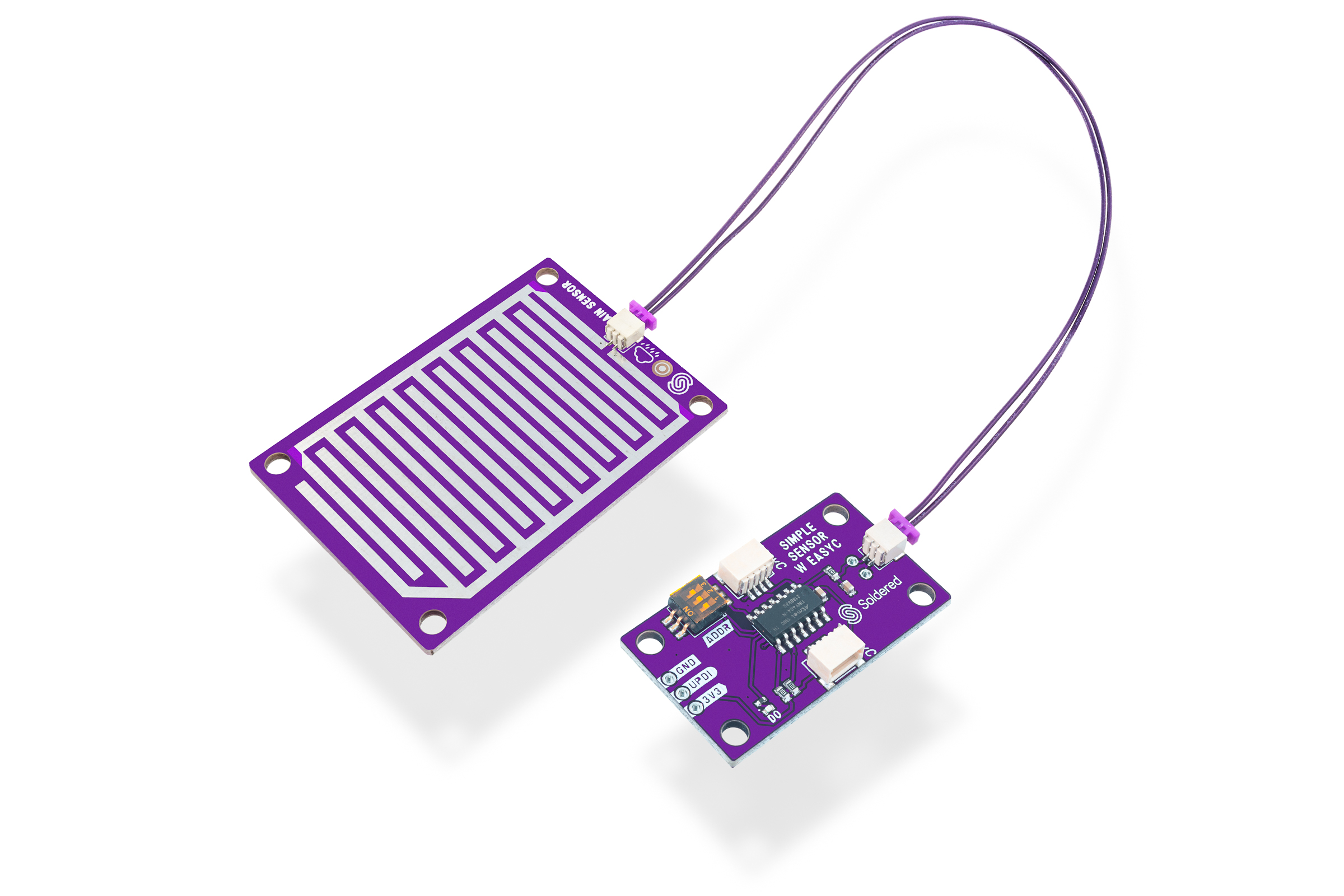
Simple rain sensor board with easyC
This sensor has two pieces – the rain sensor and the simple sensor. The rain sensor has nickel-coated lines on both sides. It measures moisture and outputs the data to the simple sensor that reads it. The simple sensor comes with easyC connectors onboard, which enables quick and easy connection with Dasduino microcontroller boards.
With the easy-to-use simple rain sensor, farmers can save water in irrigation. The sensor will alert them to shut down the water supply when it senses rain. It can even act as an automatic on and off switch, like turning on wipers on a car when it senses rain.
Coming soon
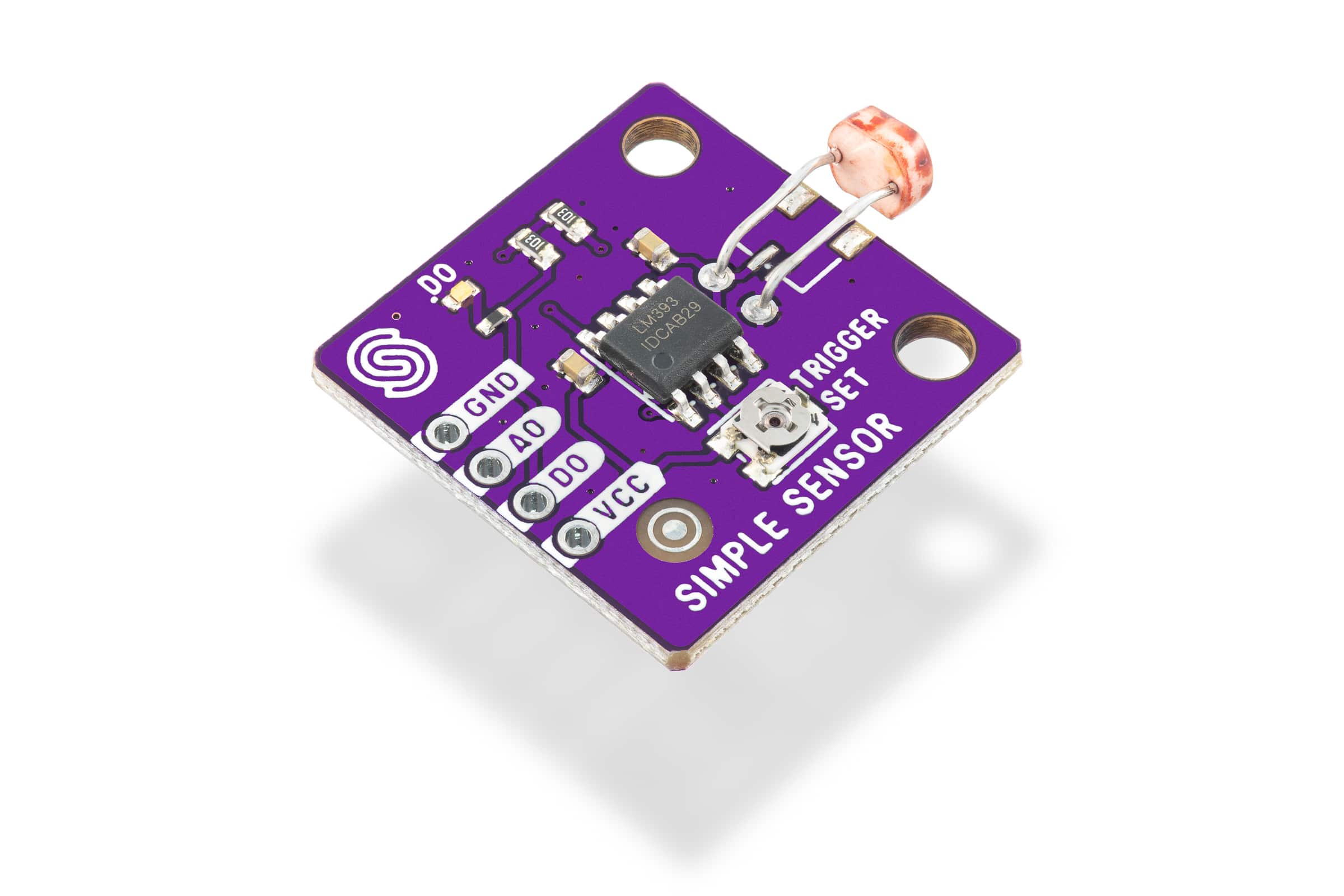
Simple light sensor board
The Simple Light Sensor Board is a versatile solution for adding light detection to your electronics projects. It’s a complete module that provides both analog and digital outputs, giving you the flexibility to create a wide range of applications. Whether you’re building an automatic lighting system, a plant-monitoring device, or a smart home alarm, this sensor board provides the reliable light detection that every maker needs.
The onboard LM393 comparator and adjustable potentiometer make this board perfect for creating precise light-activated triggers. You can easily set a specific light threshold for the digital output, allowing you to trigger an action when the light level crosses a certain point. This is ideal for beginners who want a simple on/off signal, as well as for advanced users who need to fine-tune the sensor’s sensitivity for their specific application. Perfect for students learning about sensors, hobbyists building interactive projects, or engineers prototyping new devices.
What makes this light sensor board special is its all-in-one design, combining a LDR with all the necessary circuitry on a compact module. This sensor will not give you detailed lux readings, just a simple analog value proportional to the amount of light. As with all our products, it’s open-source, with all design files available for you to modify and adapt. Plus, with our 2-year warranty and technical support, you can be confident in your purchase.
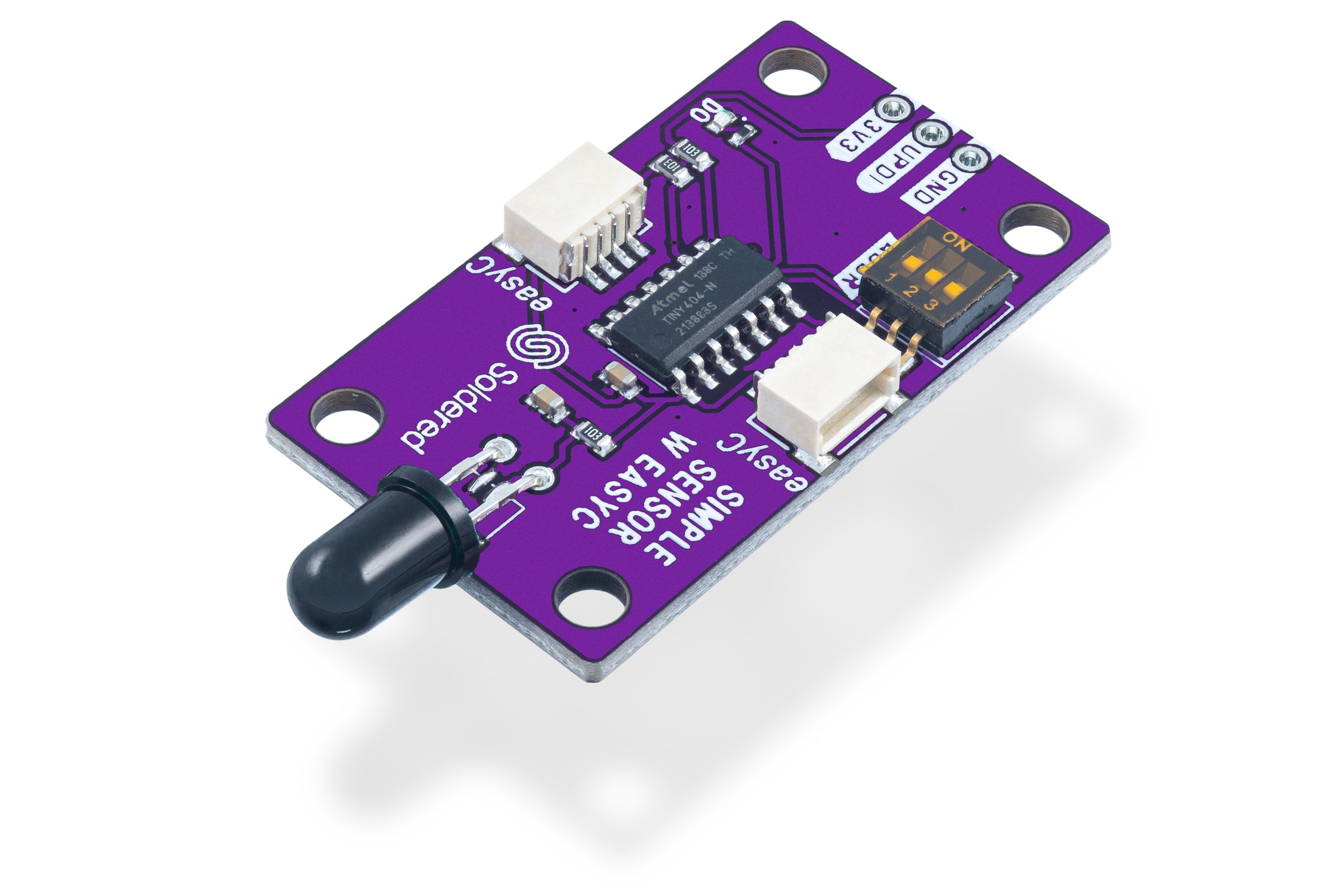
Simple fire sensor with easyC
On this module, there is a component, a phototransistor, which is capable of detecting infrared radiation. Since fire emits a large amount of infrared radiation, this sensor will detect it, but that is not its only application. Wherever there are IR (infrared) waves, this sensor will detect them, including from solar radiation.
The simple sensor has easyC connectors, which enables quick and easy connection with Dasduino microcontroller boards.
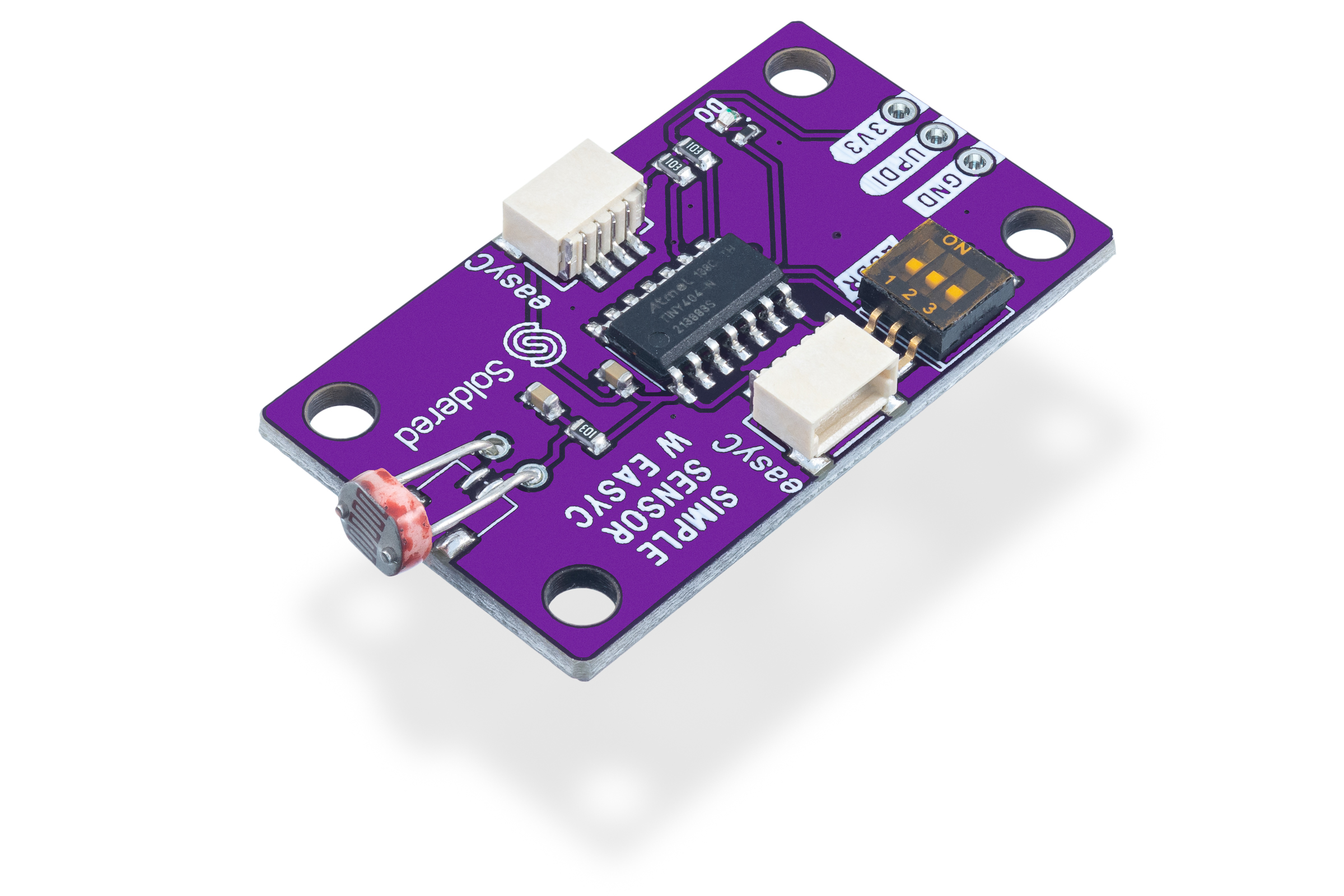
Simple light sensor board with easyC
Light is one of the most important things in the life of most living beings. This is why it is common to work with light sensors when learning about electronics. A simple light sensor has a light dependent resistor (LDR) and sensor on a breakout board for easy wiring. The simple sensor comes with easyC connectors onboard, which enables quick and easy connection with Dasduino microcontroller boards.
As the name suggests, an LDR will change its resistance depending on the amount of light it is exposed to. The amount of light and resistance are inversely proportional. The more light it is exposed to, the less resistance it will have. So if there is more light, the board will have a resistance of several hundred Ohms. If the resistor is in the dark, it will have a resistance of several thousand Ohms.

Simple soil humidity sensor
How many times have you watered your plants and feared you’re overdoing it? With the simple soil humidity sensor, those worries are a thing of the past! This two-part sensor is straightforward to use. The two exposed prongs go into the soil and send the humidity information to the sensor via the connected wire. The more water is in the ground, the better the results will be.
The two pieces are connected with the provided JST-SH 2-pin cable. The sensor uses the LM393 differential comparator. The main benefit of this board is ability to give analog and digital output. By setting the potentiometer on the board, you are able to get digital signal at the DO pin when signal crosses certain value, while analog values will be present on the AO pin at all times.

Simple rain sensor
Water is essential for life on Earth. Using water efficiently is very important. With the easy-to-use simple rain sensor, farmers can save water while irrigating their crops. The sensor will alert them to shut down the water supply when it senses rain. It can even act as an automatic on and off switch, like turning on wipers on a car when it senses rain.
This sensor has two pieces – the rain sensor and the simple sensor. The rain sensor has nickel-coated lines on both sides. It measures moisture and outputs the data to the simple sensor that reads it. The simple sensor uses the LM393 differential comparator. The main benefit of this board is ability to give analog and digital output. By setting the potentiometer on the board, you are able to get digital signal at the DO pin when signal crosses certain value, while analog values will be present on the AO pin at all times.

Smart LED WS2812B Ring12
WS2812B is an extremely interesting LED that can emit light in red, green or blue – or any combination of these three colors, able to show a total of approximately 16 million different colors. On this board diodes are arranged in a circle. They are controlled by a single pin with only few lines of code from Arduino IDE. That’s possible thanks to the integrated controller inside the LED itself!
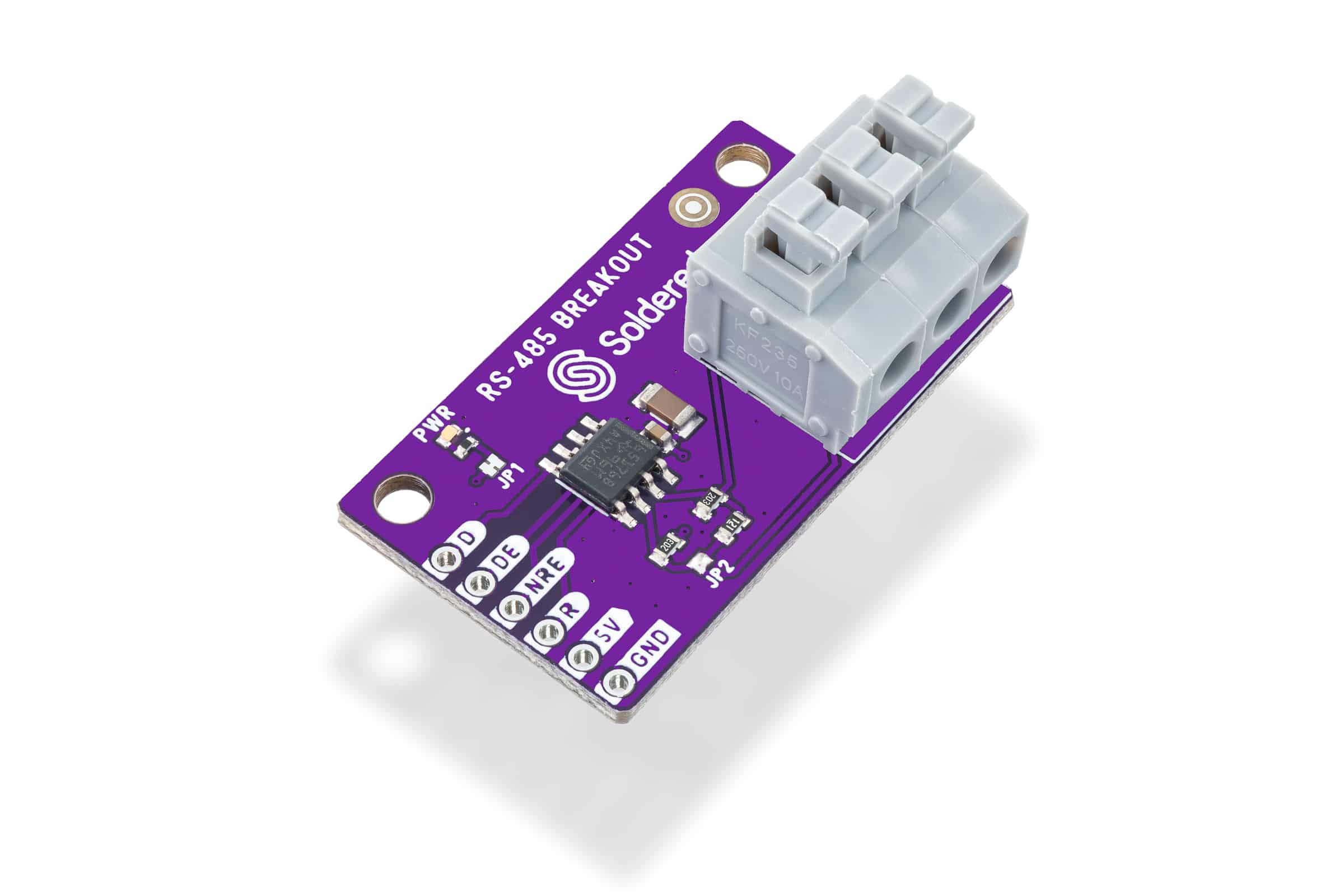
RS-485 transciever breakout
This module allows you to connect a Dasduino, or similar microcontroller, to a RS-485 communication protocol. The RS-485 is used to send data over long distances (up to 1200m) at 20Mbps and in high-noise environments, such as industrial. The module works on 5V and requires between 120μA and 500μA of current.
• Voltage: 5V
• Based on: SN65176BDR
• Dimensions: 38 x 2mm
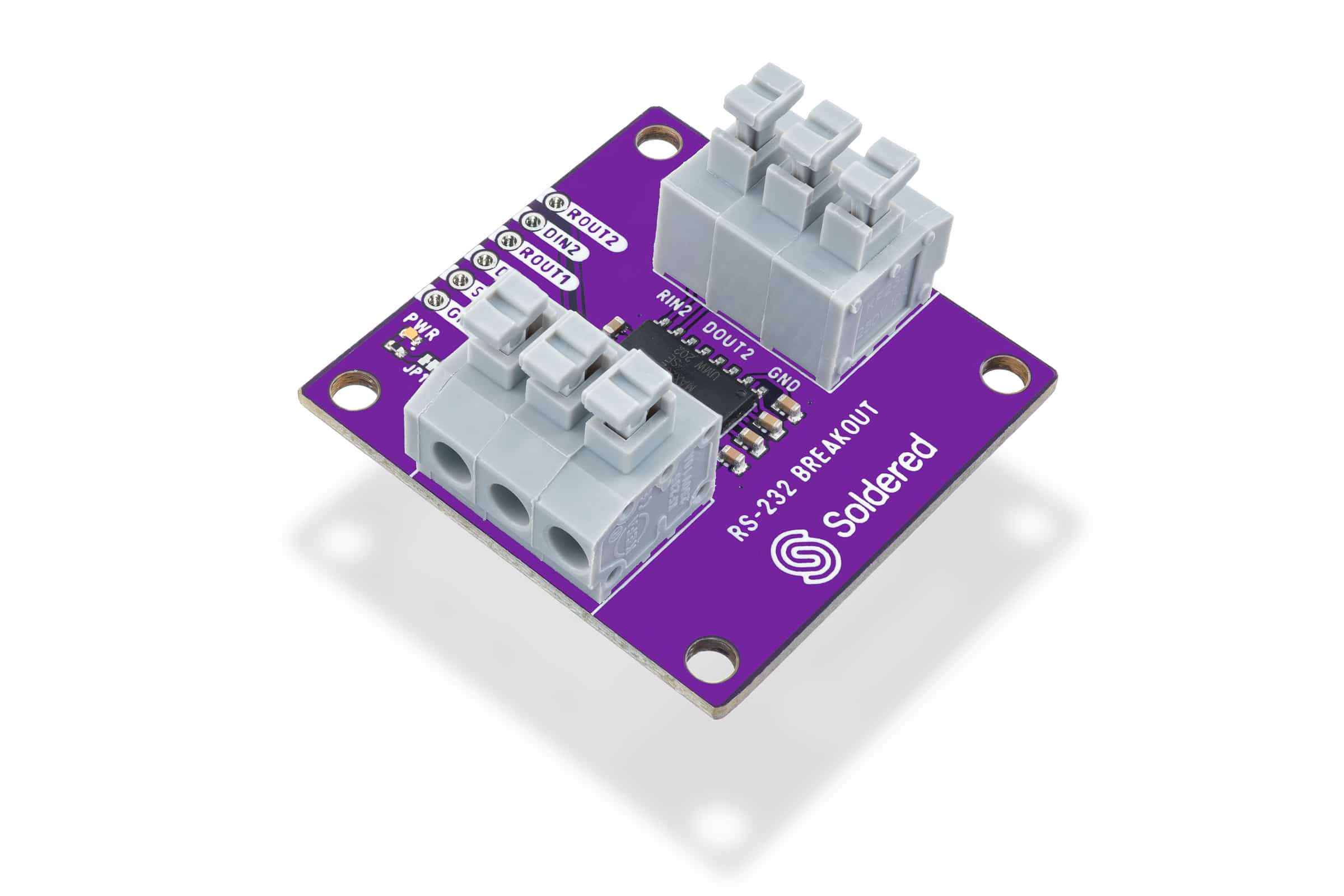
RS-232 transciever breakout
The RS-232 is a standard and very popular protocol for communication between two devices. It is a full-duplex protocol which means it can receive and send data at the same time, and data is sent at voltages from + 3V to + 15V for a digital “one” and from -3V to -15V for digital “zero”. This provides a more secure environment for data transmission which is resistant to noise or interference, which is why the RS-232 is often used in industry. This module converts serial communication to RS232.
• Communication lines: TX, RX
• IC:232 MAX
• Voltage: 3.3V – 5.5V
• Dimensions: 22 x 22 mm
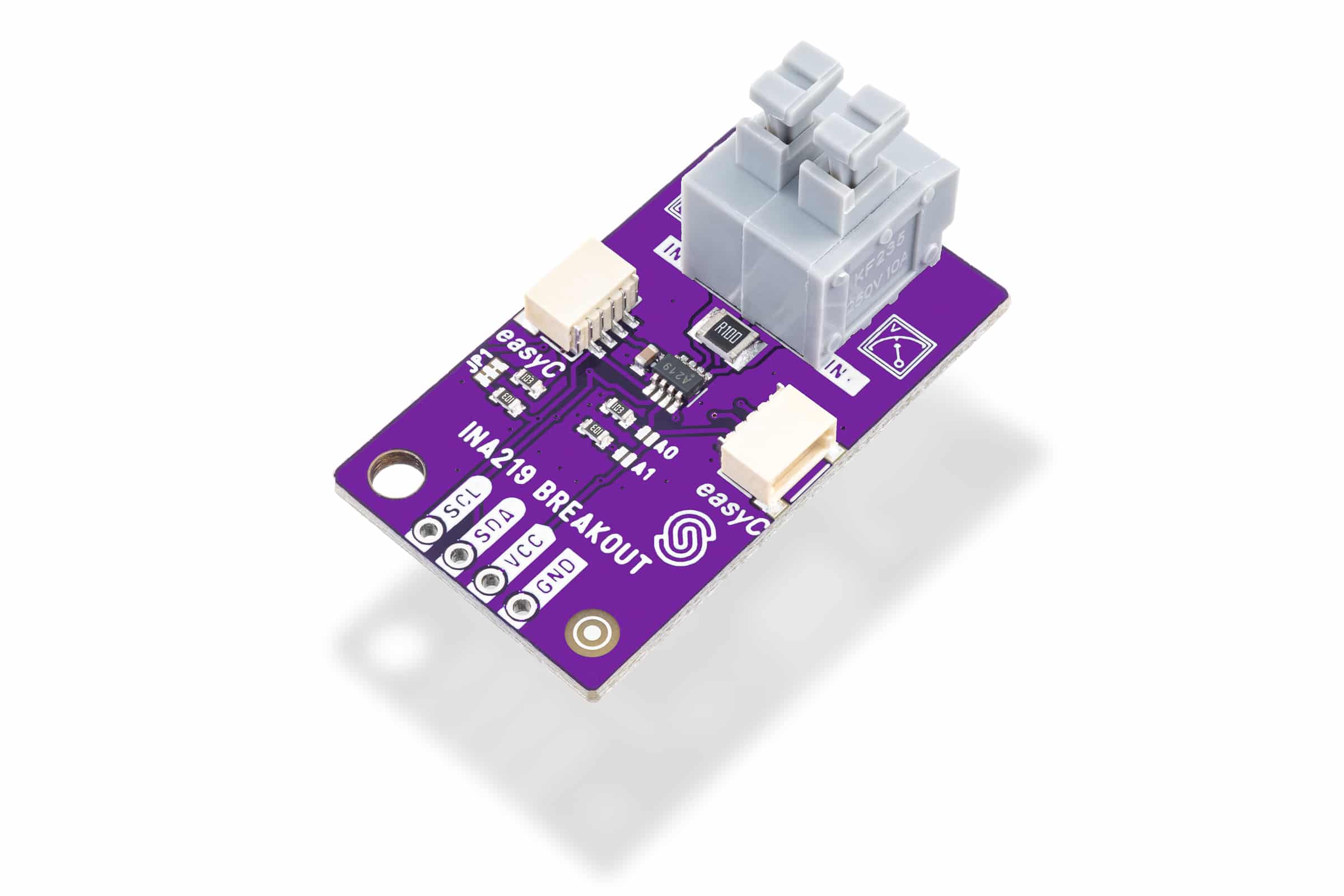
Voltage & current sensor INA219 breakout
Unlock precise power monitoring for your electronics projects with the INA219 Voltage & Current Sensor Breakout. This device accurately measures current, voltage, and power, providing data via a simple I2C interface. Designed for seamless integration, it’s perfect for Arduino, Raspberry Pi, and other microcontroller-based systems, allowing you to track energy consumption, monitor battery life, or implement power management solutions with ease.
Featuring a 0.1-ohm shunt resistor, the INA219 breakout can measure currents up to ±3.2A and voltages up to 26V, offering bidirectional measurement capabilities. Its design includes a jumper for I2C address modification, enabling multiple sensors on a single microcontroller bus. Whether you’re a hobbyist or a professional, the INA219 provides reliable and accurate data, making it a tool for any project requiring detailed electrical parameter insights.
Beyond its technical capabilities, the INA219 breakout emphasizes user-friendliness and open-source principles. With documentation and complimentary technical support, you’ll have all the resources needed to get started quickly. Its easyC compatibility further simplifies connections, allowing for rapid prototyping without complex wiring.
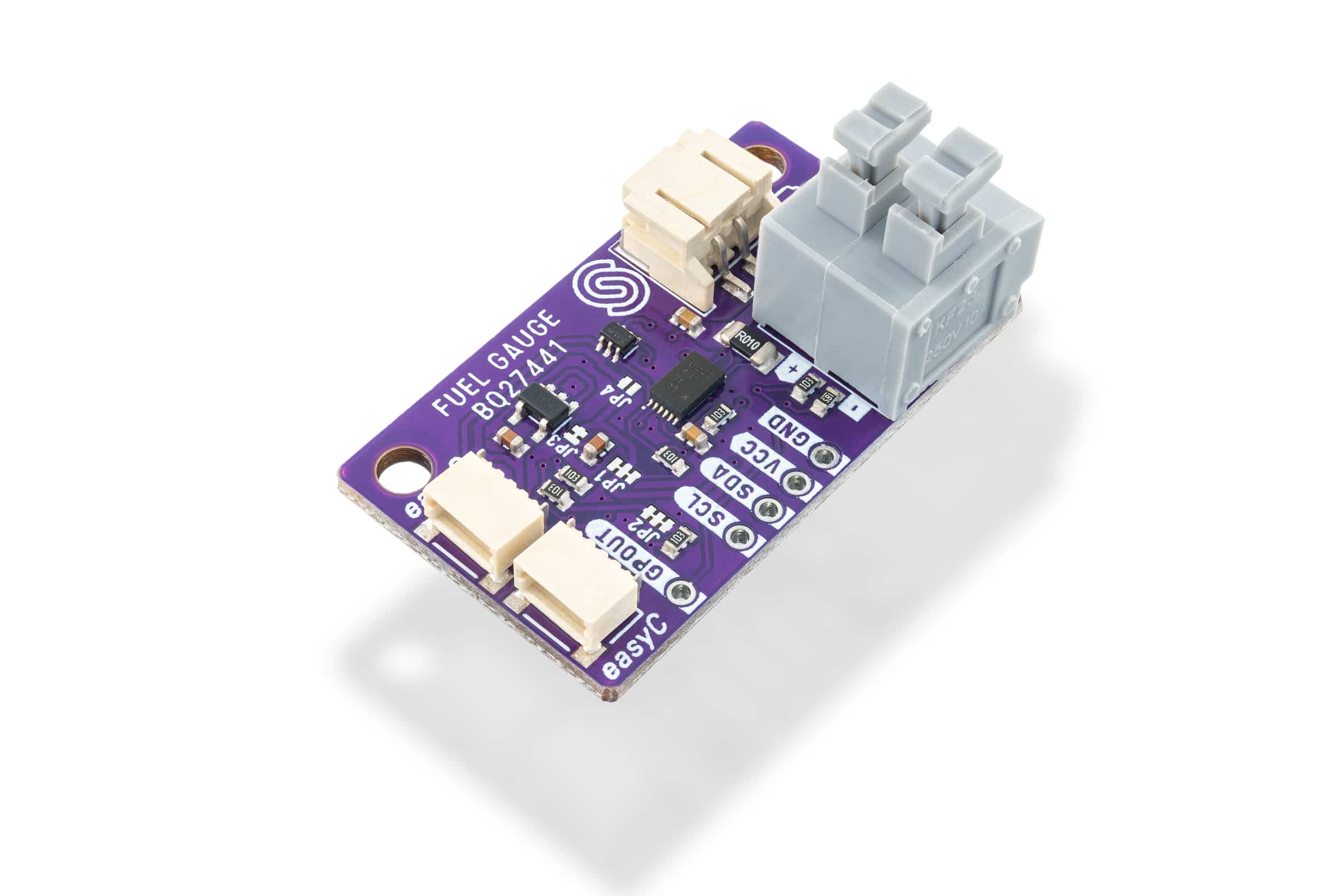
Fuel gauge BQ27441 breakout
Fuel gauge is a special type of accessory for lithium batteries that very precisely measures the state of the battery. This includes current voltage [mV], state of charge [%] and probably most interestingly: remaining capacity in the battery [mAh]. It is used with 1S batteries, and provides all this information via the I2C interface.
On our board you can find easyC connectors which allow I2C communication with microcontroller. Also, there is a JST input for any pouch battery you can find in our offer, as well as quick connect terminal connector for input if your source doesn’t have JST connector.

Digital light & proximity sensor LTR-507 breakout
For very precise measurements of the amount of light, take this digital light sensor into account (ALS – Ambient Light Sensor). In addition, the LTR-507ALS also measures the proximity (PS – Proximity Sensor) of the object to the sensor. It sends all this data via I2C communication, which is easy to read via our Arduino library.
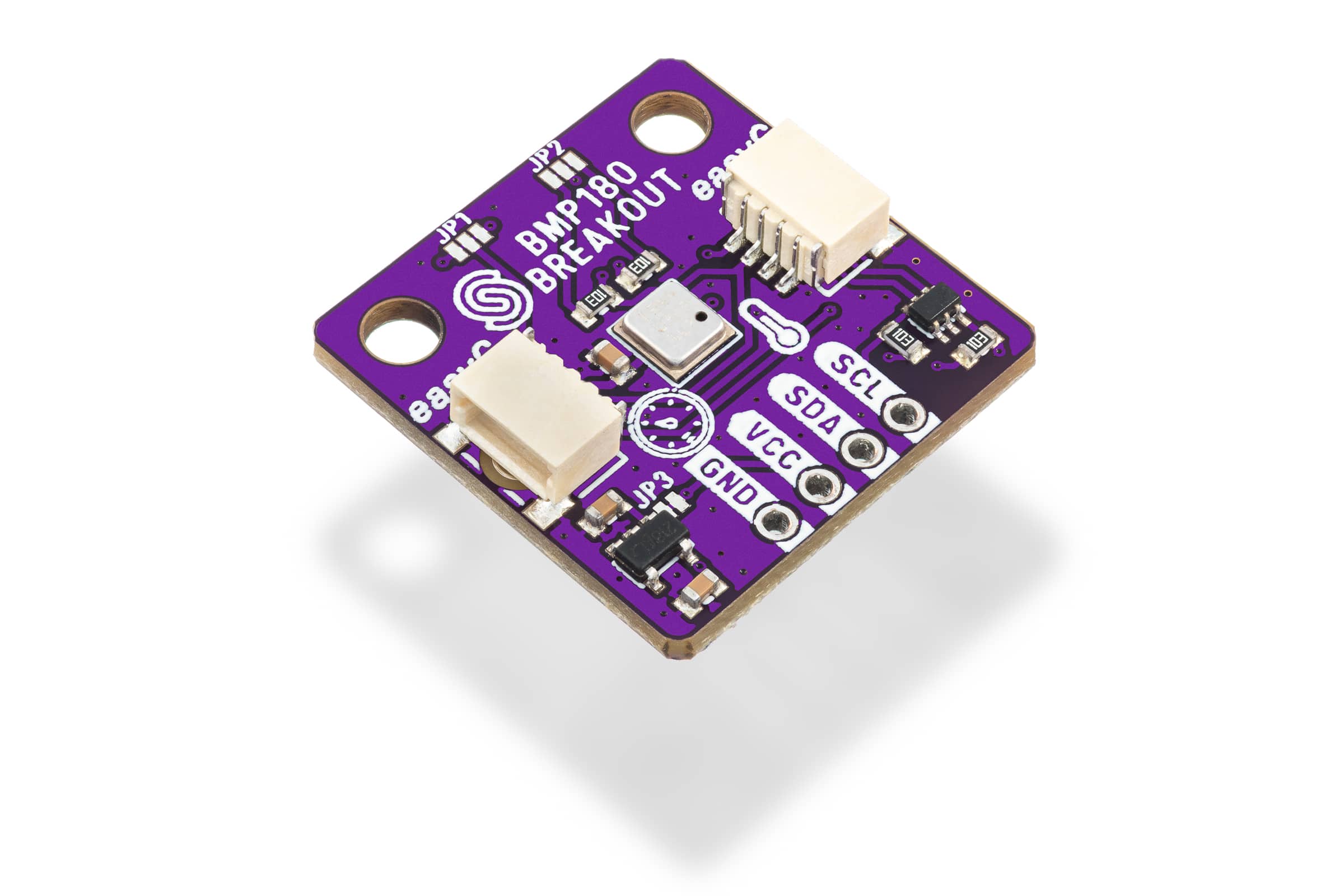
Pressure & temperature sensor BMP180 breakout
Ever wanted to build your own weather station using Arduino? Then the BMP180 breakout board with precision sensor from Bosch might interest you. The digital sensor on the board precisely measures the changes in barometric pressure and temperature. It uses the piezoresistive effect to gather the information. Since the pressure varies depending on height, the sensor can measure altitude too. Very low current consumption and voltage allow this type of sensor to be used in many modern devices.
The design is 5V ready with an onboard regulator for 3.3V. The breakout board’s standard current consumption is very low, only 5 µA. It uses an I2C interface, and the I2C address is 0x77. No soldering, nor need for distinguishing between SDA and SCL is required due to easyC. The sensor has integrated EEPROM memory with data for calibration. The pressure is measured in steps of 1hPa (=0.01hPa =0,01mbar), and 0.1°C for temperature.
Product usage tips:
If there is an error while using the breakout board, see if it’s connected properly. Take a look at the pinout. If everything is properly connected, check if the I2C address of the breakout board is correct prior to programming it. The I2C 7-bit address should be 0x77. If everything is correctly connected and the I2C address is right, look through your code once again. There might be some bugs in the code that are stopping the sensor from working as it should.
BMP180 breakout board works very well in combination with any Dasduino board and OLED I2C 0.96” display breakout board. All of them use easyC so they can be connected in a matter of seconds. The BMP180 sensor can measure the barometric pressure and temperature, while the OLED display can show them. The breakout board also comes with two mounting holes so you can attach it onto something and it won’t budge.
To keep the sensor working for a long while, we would advise you not to use it in extreme conditions. Going over or below the temperature range will surely damage the sensor. Same with the pressure. Keep track of the current going through it. Allowing too high of a current through the breakout board will burn the sensor and render it completely useless.
Coming soon
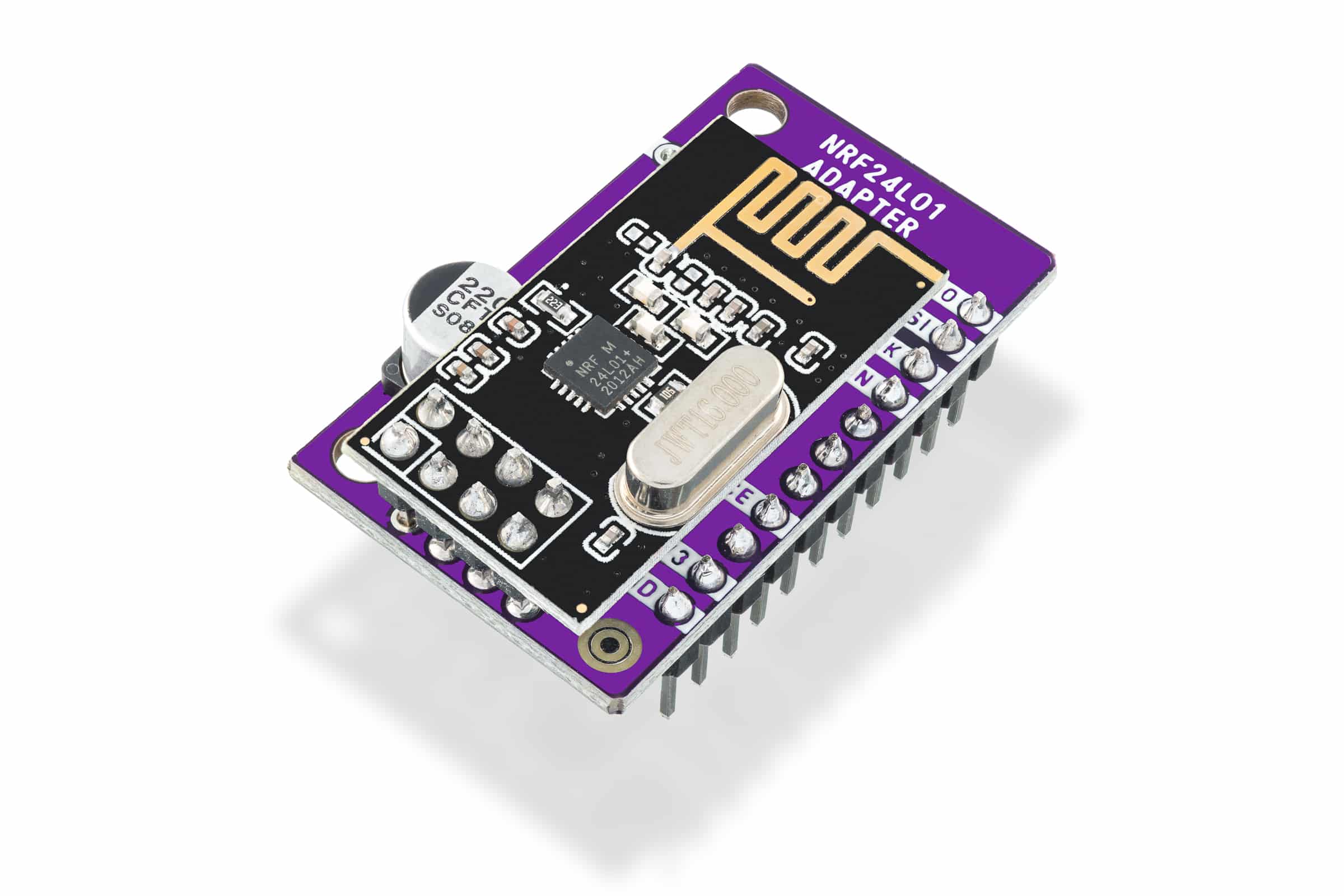
NRF24L01 adapter for Dasduino boards
Connecting the NRF24L01 can be tricky – you have to pay attention to the layout of the pins, adjust them to match those from the library and add a capacitor. This board solves all that, and it already comes with soldered headers, so just plug this board into your Dasduino and that’s it!
• Comes with NRF24L01+ module
• Dimensions: 38 x 22 mm

PMS7003 sensor adapter
To connect to our PMS7003 air quality sensor easily, we designed this adapter. It allows you to connect the PMS7003 sensor to breadboard or to connect with cables.
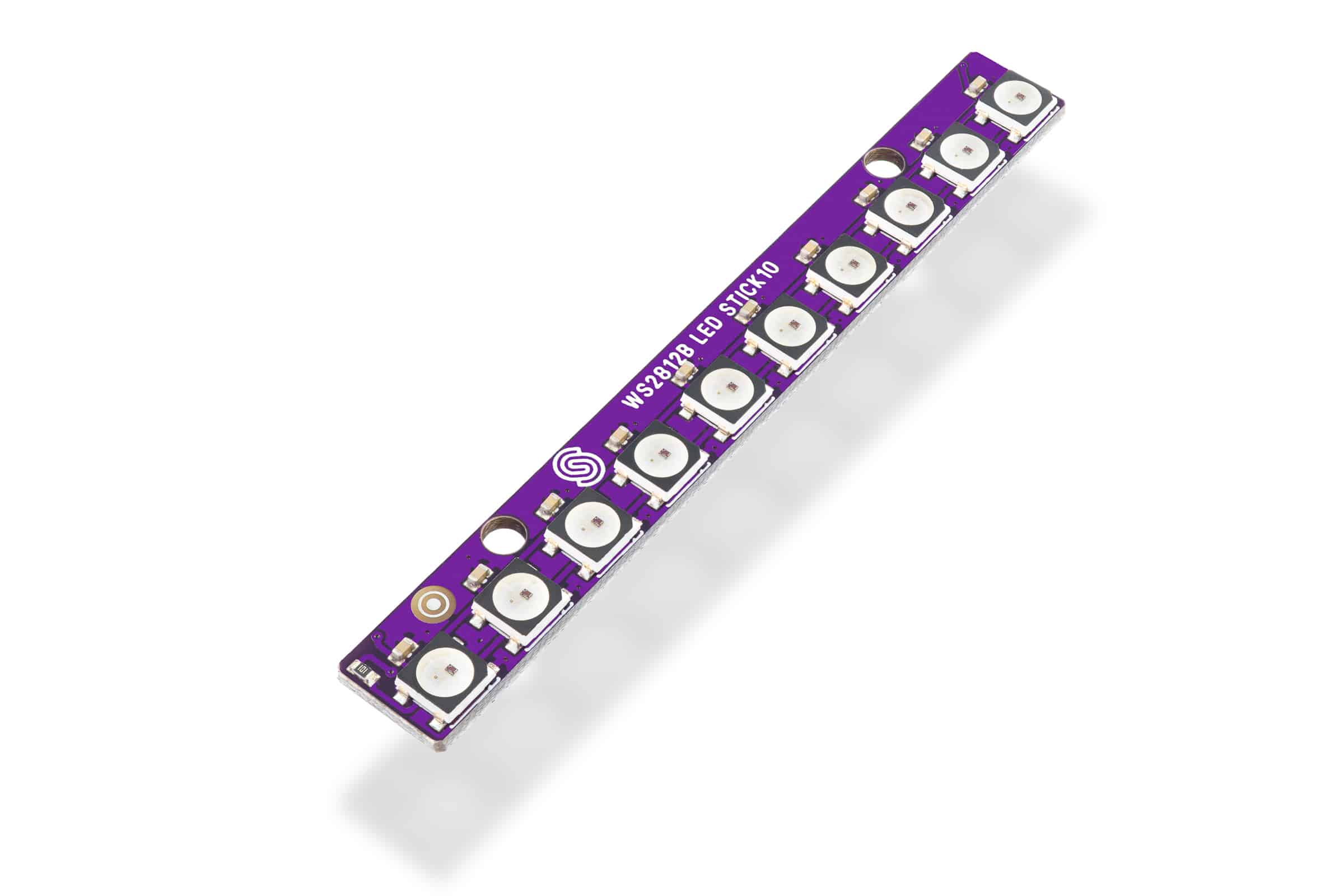
Smart LED WS2812B Stick10
WS2812B is an extremely interesting LED that can emit light in red, green or blue – or any combination of these three colors, able to show a total of approximately 16 million different colors. On this board, diodes are arranged in a line of 10. You can even connect these sticks in a line. They are controlled by a single pin with only a few lines of code from Arduino IDE. That’s possible thanks to the integrated controller inside the LED itself!
• Number of LEDs: 10
• Voltage: 5V
• LED type: WS2812B
• Current: max 60mA per LED
• Dimensions: 80 x 10 mm
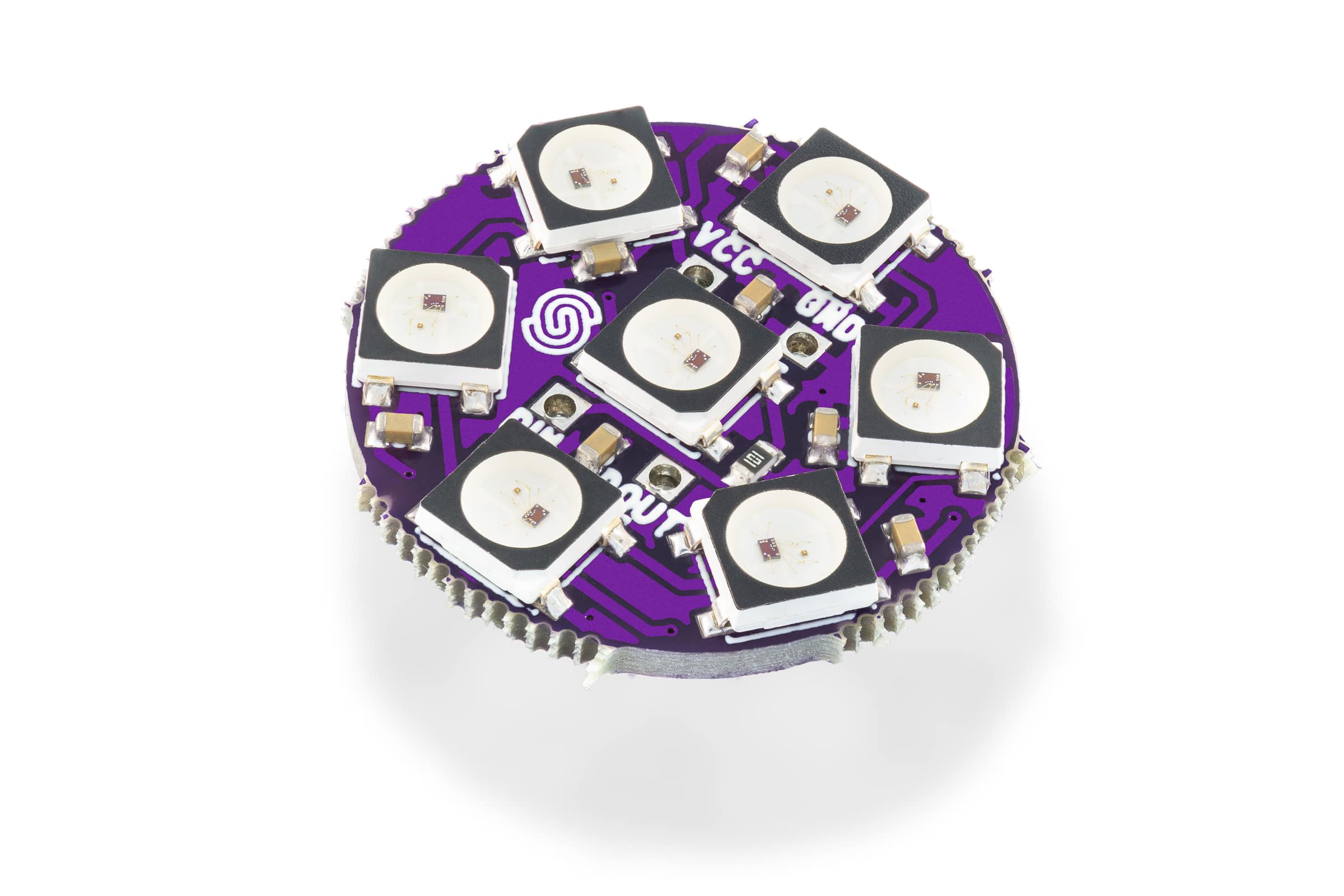
Smart LED WS2812B Ring7
The Smart LED WS2812B Ring7 is a compact 23 mm round PCB with seven individually addressable WS2812B RGB LEDs, ideal for dynamic, vibrant lighting in microcontroller projects like wearables, small displays, or visual indicators. Each LED has an integrated controller, allowing the entire ring to be driven by a single digital pin on Arduino, Raspberry Pi, or similar platforms, simplifying wiring and programming.
Operating at 5 V, each LED draws ~18 mA, with a maximum current of 126 mA. The 24-bit WS2812B protocol enables over 16 million colors per pixel. Its small size and daisy-chainable design allow multiple rings to be combined for larger arrays without extra control complexity.
Perfect for status indicators, miniature displays, or creative lighting effects, the Ring7 is compatible with popular LED libraries for chasing lights, fades, and reactive animations. Its compact, robust design makes it a versatile choice for hobbyists and professionals alike.
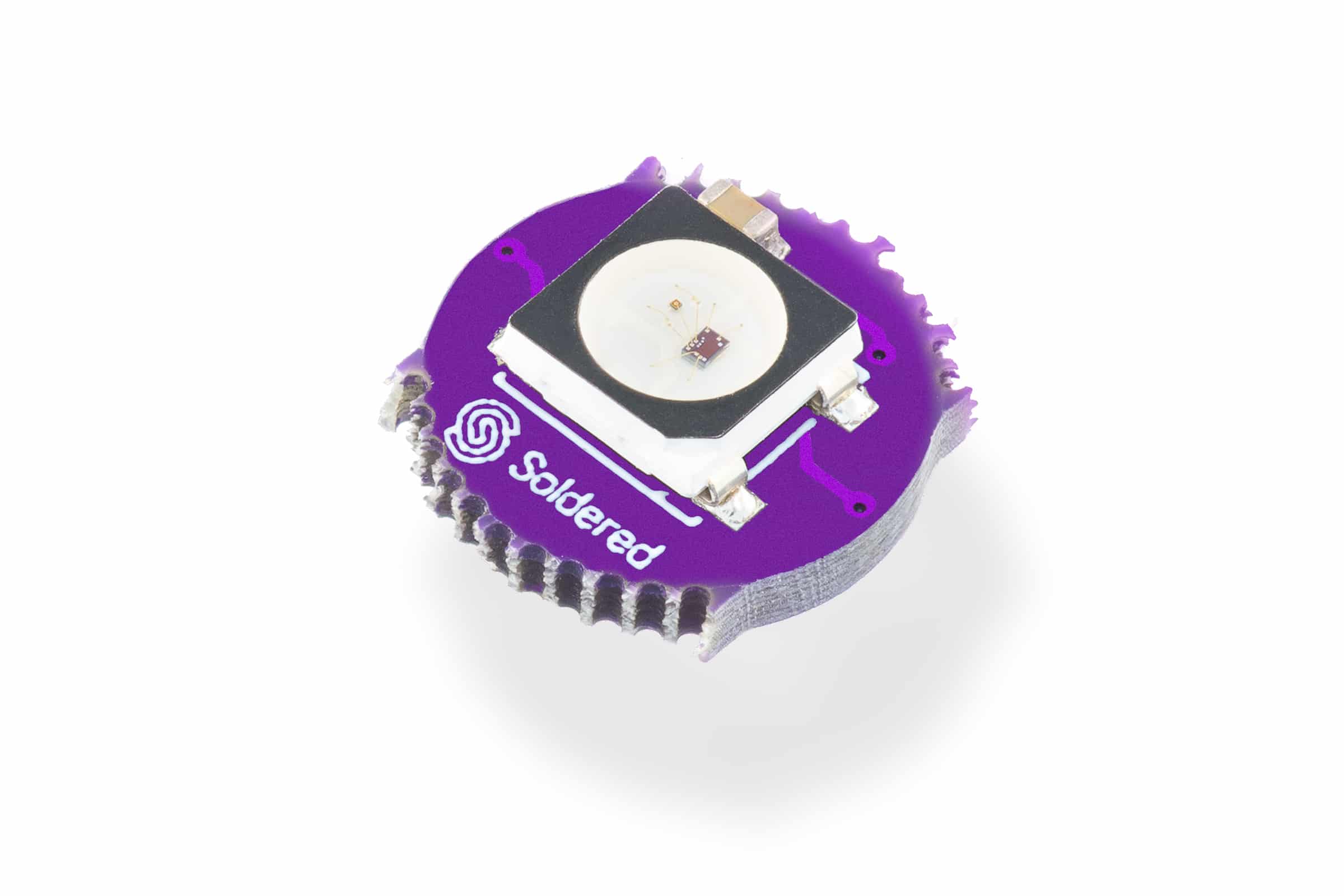
Smart LED WS2812B Pixel
These small LEDs are not just ordinary lights – each is unique because it has a built-in small integrated circuit (IC) that is able to turn on the LED light in 16 million different colors. IC is WS2812 and it uses a single wire that can control thousands of these LEDs. With a little imagination by putting these pixels, you get superior effects with a minimum effort. These lamps are easy to control with Dasduino.

Display OLED I2C 0.96" SSD1306
Looking to add visuals to your Arduino projects? The I2C OLED breakout board is perfect for that. Because of its high contrast, you will be in awe of its crispness! The display is made from hundreds of LEDs, each representing one pixel in a 128×64 grid. Thus, it doesn’t need any backlight, and it needs less power than the classic LCD screens. That’s 8192 pixels all individually lit at your fingertips!
The design is 5V ready with an onboard regulator, so is compatible with any 3.3V board. The breakout board uses only about 20 mA, depending on active pixels. It is easy to control over the I2C interface. It is even easier to connect with the easyC system – no soldering required!
Display OLED I2C 0.96″ SSD1306 options:
The color of the OLED screen on the product can be:
– White
– Blue
11 years in the industry
Customers in 80+ countries
20,000+ satisfied customers