





-
My cartSub-total: Subtotal: €29.95


- Dasduino (Arduino-compatible)

- Inkplate

- easyC ecosystem

- Raspberry Pi & Micro:bit

- Breadboards & Cables

- Batteries & Power supplies

- Kids

- Sensors

- Actuators

- Communication

- Tools & Lab equipment

- Soldering kits

- Components

- Sale

Shop

24/7 free customer and technical support

Comprehensive documentation

Open-source hardware and software

2-year Warranty - no questions asked
Showing 49–72 of 699 resultsSorted by latest
Retired

Electrical tape 15mm width, 10m
Electrical tape is well known to everyone – it provides insulation between various connections.
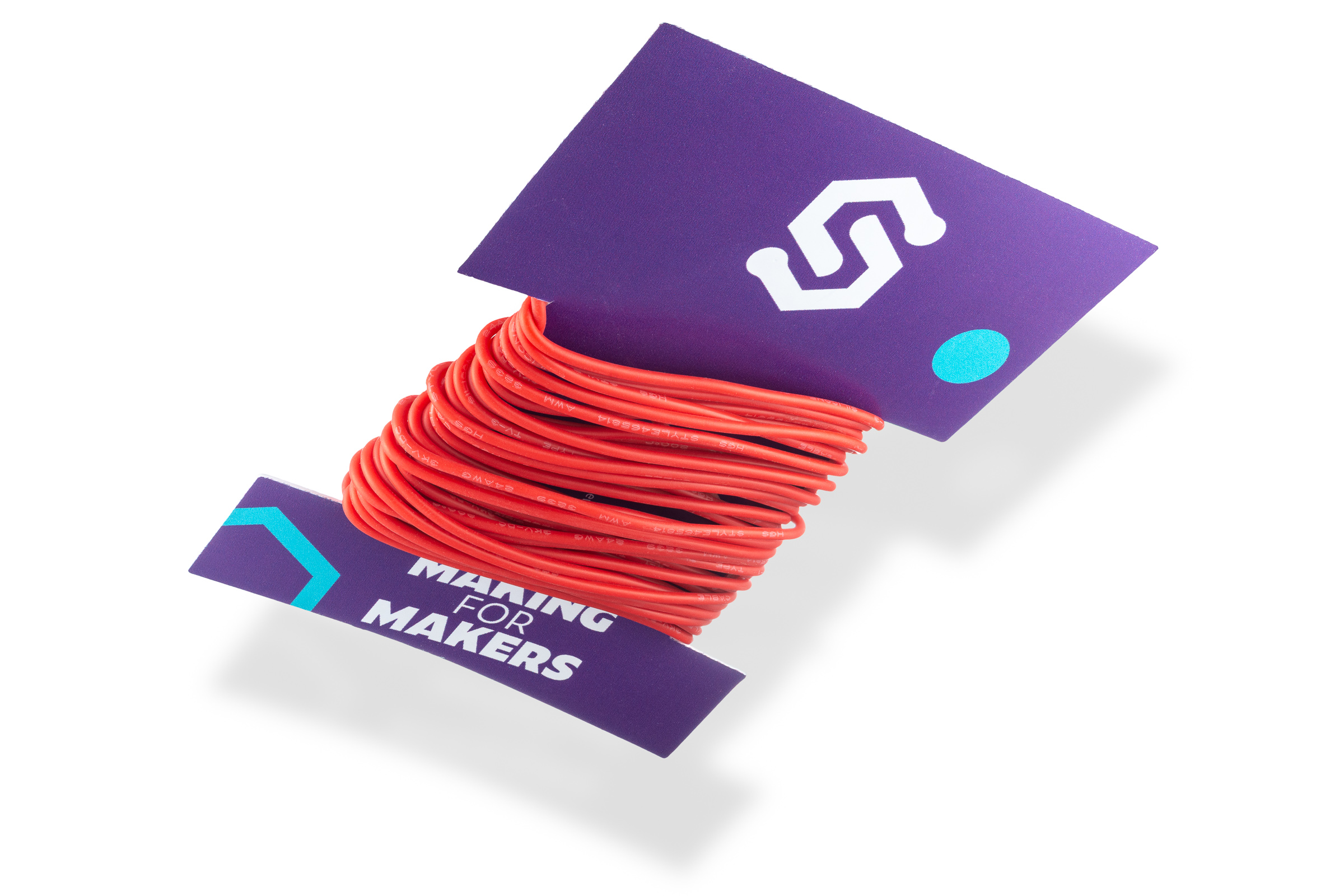
Prototyping wire 5m, AWG24
It is extremely easy to remove insulation and solder with this stranded copper wire. It will serve great in small projects and prototypes.
The wire comes in a 5m package and is available in red, black, and white.
Coming soon

Kapton tape 20mm width, 10m
Kapton is a special type of material that is resistant to high temperatures and does not conduct electricity. When it is thinly rolled out and adhesive tape is placed on it, we get a kapton tape. In electronics, it is often used to protect plastic components from damage during soldering and as an insulator.
Coming soon
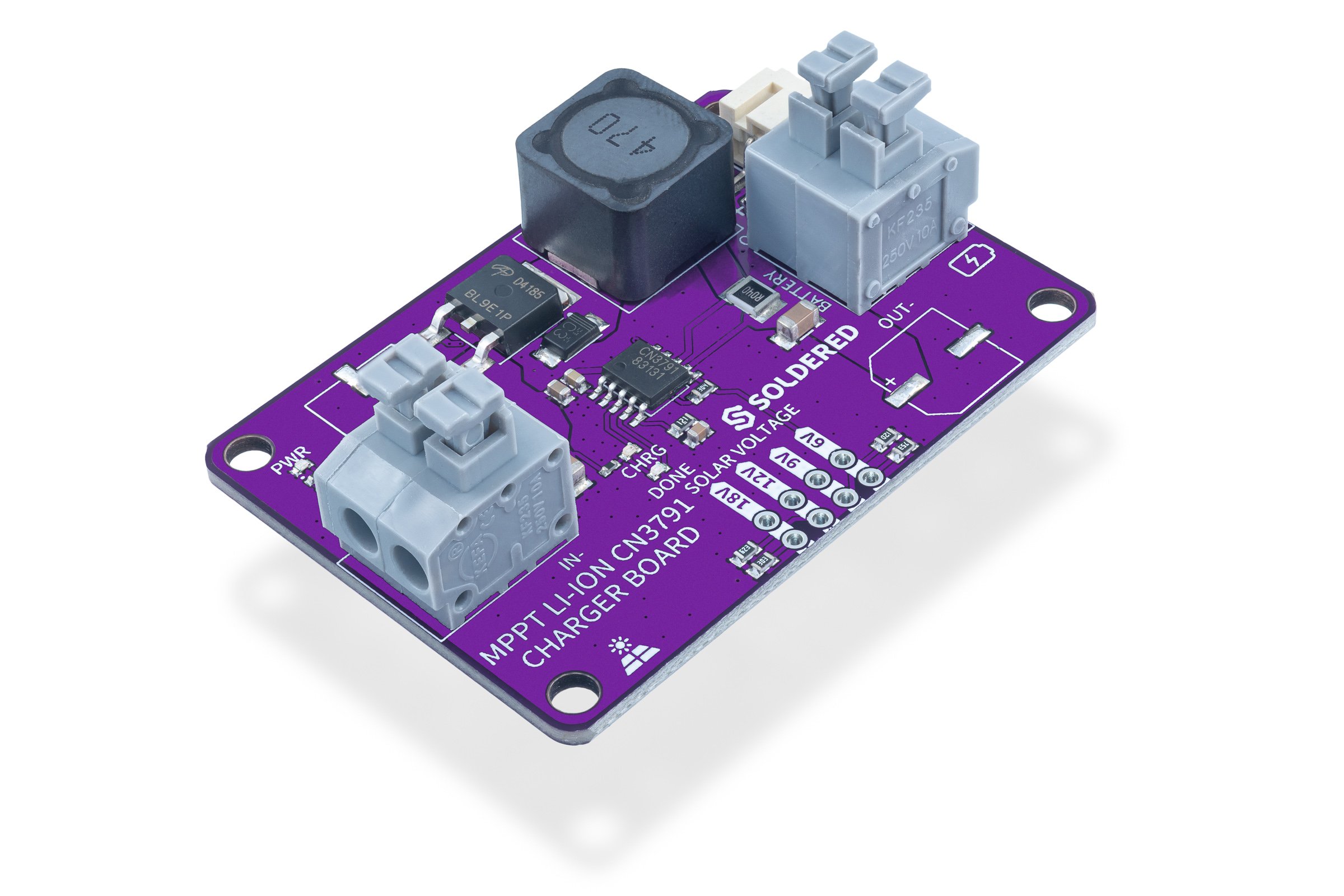
MPPT Li-Ion CN3791 charger board
Introducing our MPPT Li-Ion CN3791 Charger Board, your solution for solar energy to power your electronics. Designed for hobbyists, makers, and professionals, this board simplifies efficient and reliable Li-Ion battery charging via solar panels.Simply connect one of our Li-Ion batteries and a solar panel and your project is now solar-powered! The battery acts as an accumulator and will continue powering your projects even when the sun isn’t shining, and when it is, your battery will be charging! Its compact form factor and user-friendly design make it ideal for integrating into a wide range of projects, from portable devices to off-grid sensor nodes, ensuring your creations stay powered sustainably.
At its core, the CN3791 chip delivers charging algorithms tailored for Li-Ion batteries, guaranteeing precise control, maximum efficiency, and safety. The board features quick-connect spring terminals for effortless solar panel and battery integration, alongside a JST connector compatible with our extensive range of Li-Ion batteries. This thoughtful design ensures seamless setup and performance, making it a great choice for demanding applications.
Designed and manufactured in the EU, our MPPT Li-Ion CN3791 charger board adheres to the highest quality and safety standards. Our open-source principles with detailed documentation and technical support empower your innovation. Whether you’re building an Arduino-powered weather station or a custom solar-powered robot, this board offers the reliability, performance, and community backing you need to bring your ideas to life.
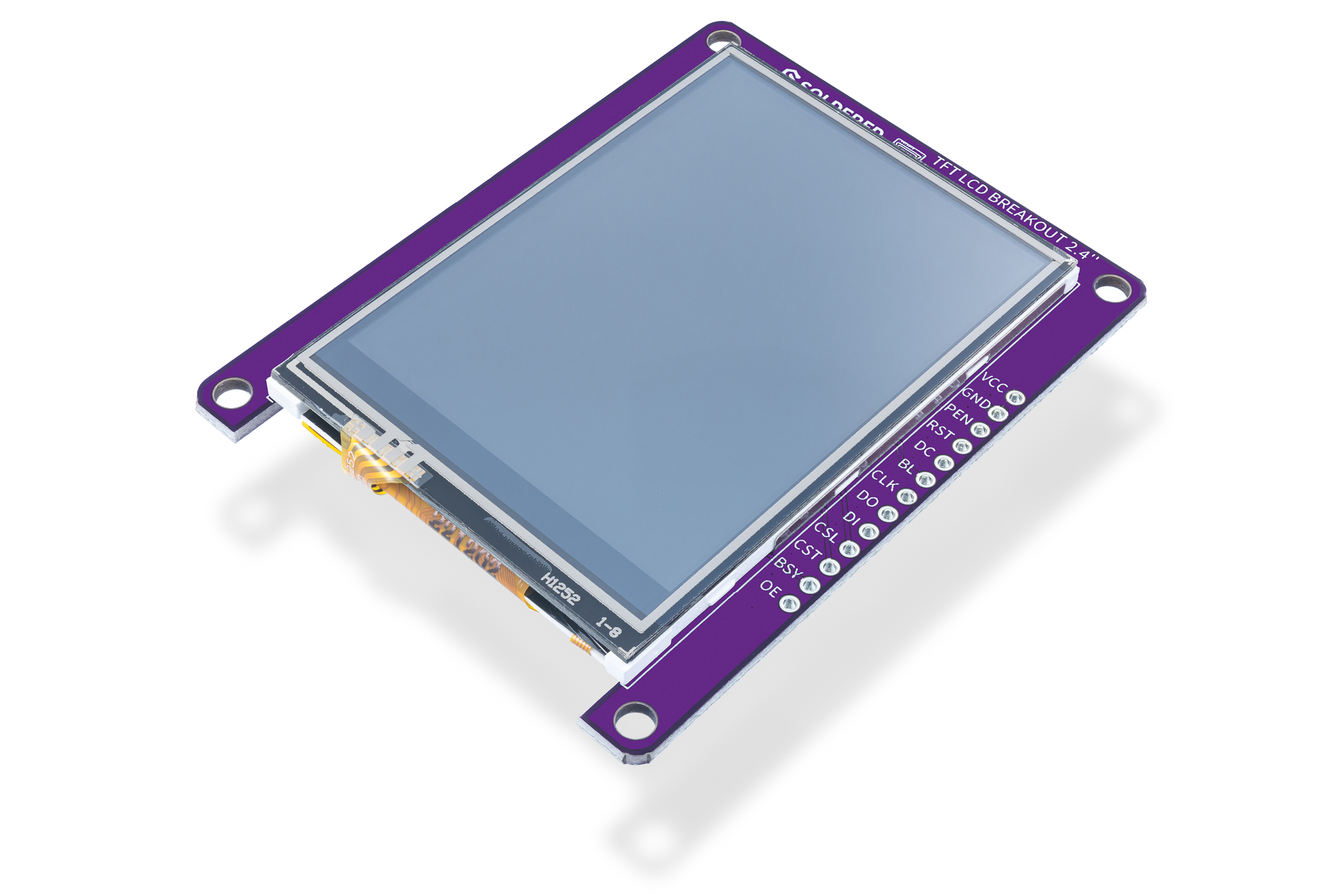
TFT LCD breakout 2.4" with touchscreen
This compact yet powerful breakout board brings your Arduino projects to life with its crystal-clear 2.4″ TFT display, allowing you to showcase your creativity in vivid detail. But that’s not all – with built-in touch sensitivity, navigating menus, selecting options, and interacting with your creations becomes as intuitive as a tap or swipe. Whether you’re designing a sleek user interface for your latest gadget or crafting an immersive gaming experience, this module offers the sensitivity and precision you need to captivate your audience.
Furthermore, integrating this breakout module into your Dasduino projects is very straightforward. Plus, with its SPI communication interface, you can easily exchange data between your Dasduino board and the display, unleashing your creativity without the hassle of complex wiring.
So whether you’re dreaming of a futuristic control panel, designing a personalized weather station, or building a portable gaming console, the TFT 2.4″ breakout module is your gateway to a world of captivating visuals and seamless interaction, all powered by Dasduino. Say hello to vibrant displays, touch-sensitive magic, and endless creativity – all in the palm of your hand.

Screw terminal 3.81mm - 3 contacts
Screw terminal for a printed circuit board with a width of 3.81 mm with three contacts.
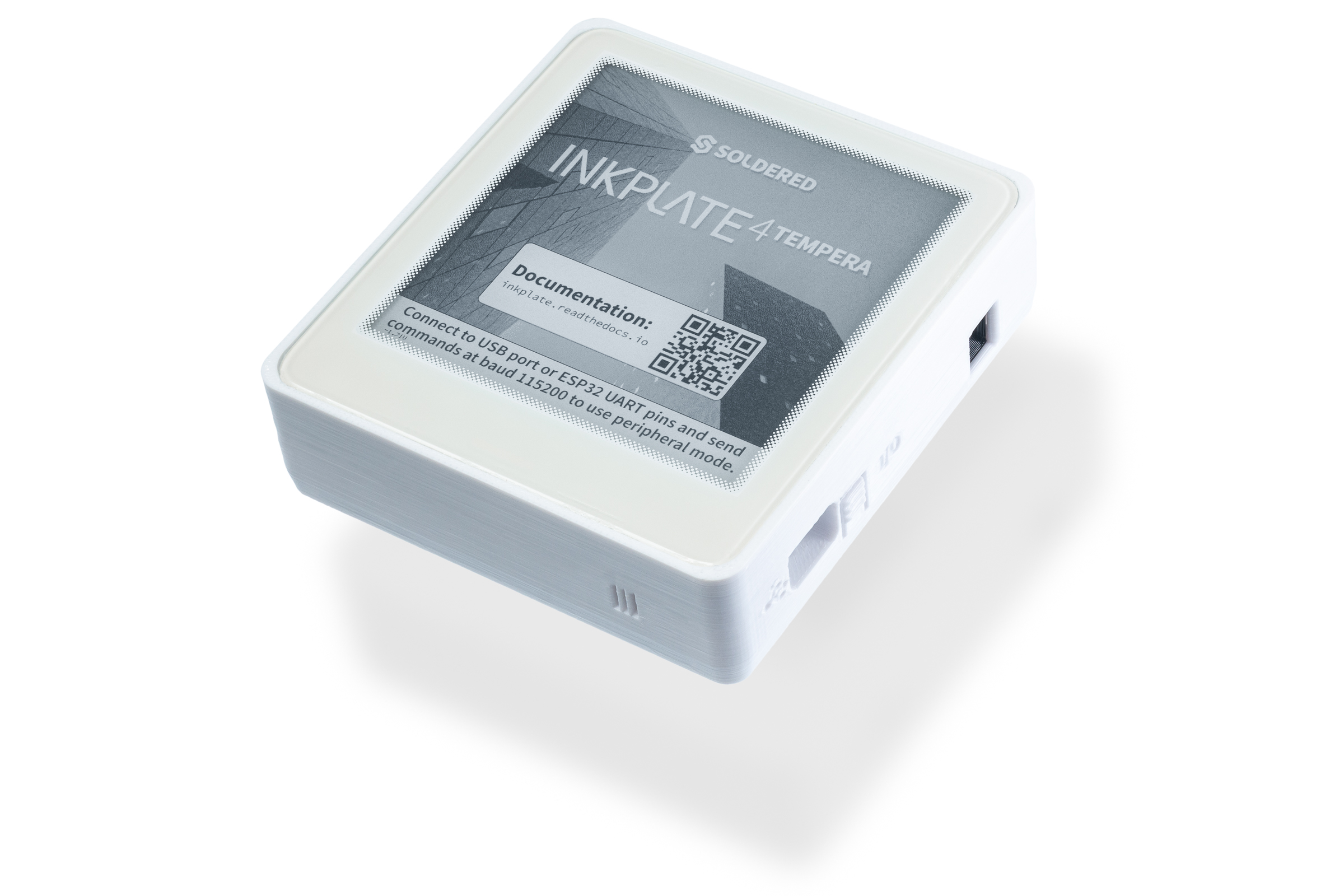
Inkplate 4 TEMPERA
Inkplate 4 TEMPERA is an easy-to-use, all-in-one device that puts the power of e-paper technology in the palm of your hand. Behind its 3.8-inch, 600×600-pixel e-paper touchscreen, it packs the following features into one compact, elegant package: frontlighting, an abundance of sensors, Wi-Fi and Bluetooth connectivity, a built-in battery, and a low-power operating mode.
In this digital age, screens are the windows through which we interact with much of our world, and e-paper technology addresses many of the challenges posed by conventional screens. More specifically, they offer high contrast, daylight readability, and unparalleled energy efficiency. And there is one more thing that sets our screens apart: sustainability. Every Inkplate 4 TEMPERA gives new life to an ED038TH2 E Ink display that we’ve rescued from a tragic future as e-waste. We’d rather see these screens in your hands than in a landfill.
Inkplate 4 TEMPERA is powered by the ESP32 microcontroller, to which we’ve added all of the peripherals we thought you might find useful. Inside the enclosure is a 1200-mAh battery and power-management circuitry so you can charge it easily and determine its remaining charge accurately. Inkplate 4 TEMPERA’s real-time clock (RTC) allows for precise time measurements, and its microSD card slot allows you to to store and display images, among other applications. If you’re looking for sensors, you’ll find a gyroscope and an accelerometer, as well as temperature, humidity, air quality, and gesture sensors. Inkplate 4 TEMPERA also has a built-in, frequency-adjustable buzzer. And of course, it includes various GPIO pins that support peripheral connectivity through a GPIO expander or via the easyC ecosystem.
So, if you’re in the market for a nice-looking screen on which you can display whatever you want—wherever, at whatever time of day, and for however long you want—we invite you to check out Inkplate 4 TEMPERA. We think you’ll find it delightful!
Inkplate 4 TEMPERA options:
Without glass panel: This version is powered by an ESP32 microcontroller, with a 3.8-inch touchscreen e-paper display, built-in lighting, Li-Ion battery, housing, and various peripheral components.
With glass panel: This version is powered by an ESP32 microcontroller, with a 3.8-inch touchscreen e-paper display, built-in lighting, Li-Ion battery, housing, various peripheral components, and additionally protected by a glass panel.
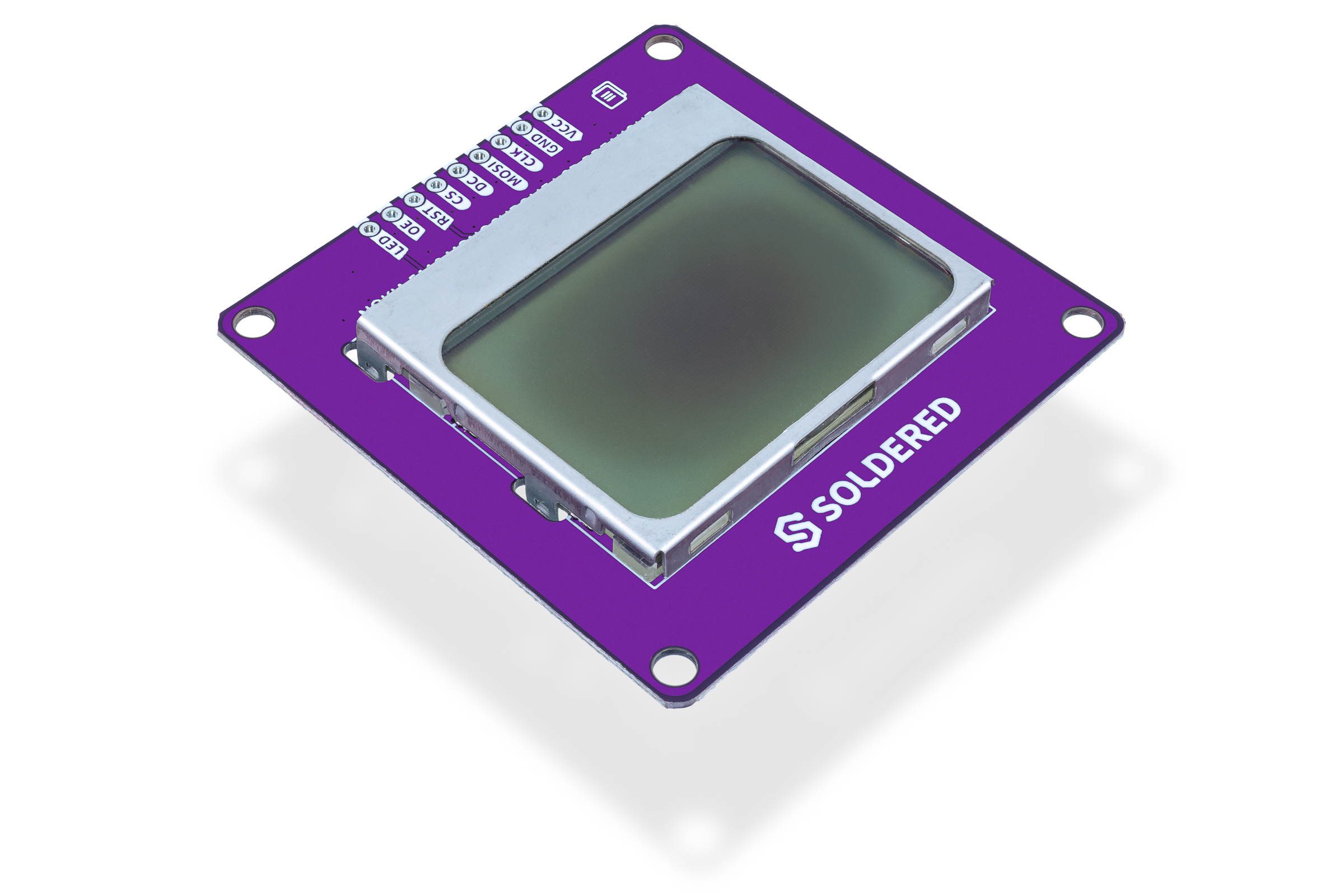
Nokia 5110 monochrome LCD breakout
The Nokia 5110 breakout is yet another in our series of modules that bring the classic Nokia 5110 LCD display to life in your modern projects. With its core being the TXB0104QPWRQ1 for efficient voltage-level conversion, this board bridges the gap between your microcontroller and the display, regardless of their voltage differences.
Whether you are an experienced engineer or just starting out, this breakout board is designed to inspire and enable your creativity. Its blend of advanced technology and user-friendly features makes integrating the Nokia 5110 display into your projects not just possible, but enjoyable. Dive into your next adventure with this board and let your imagination light up pixel by pixel!
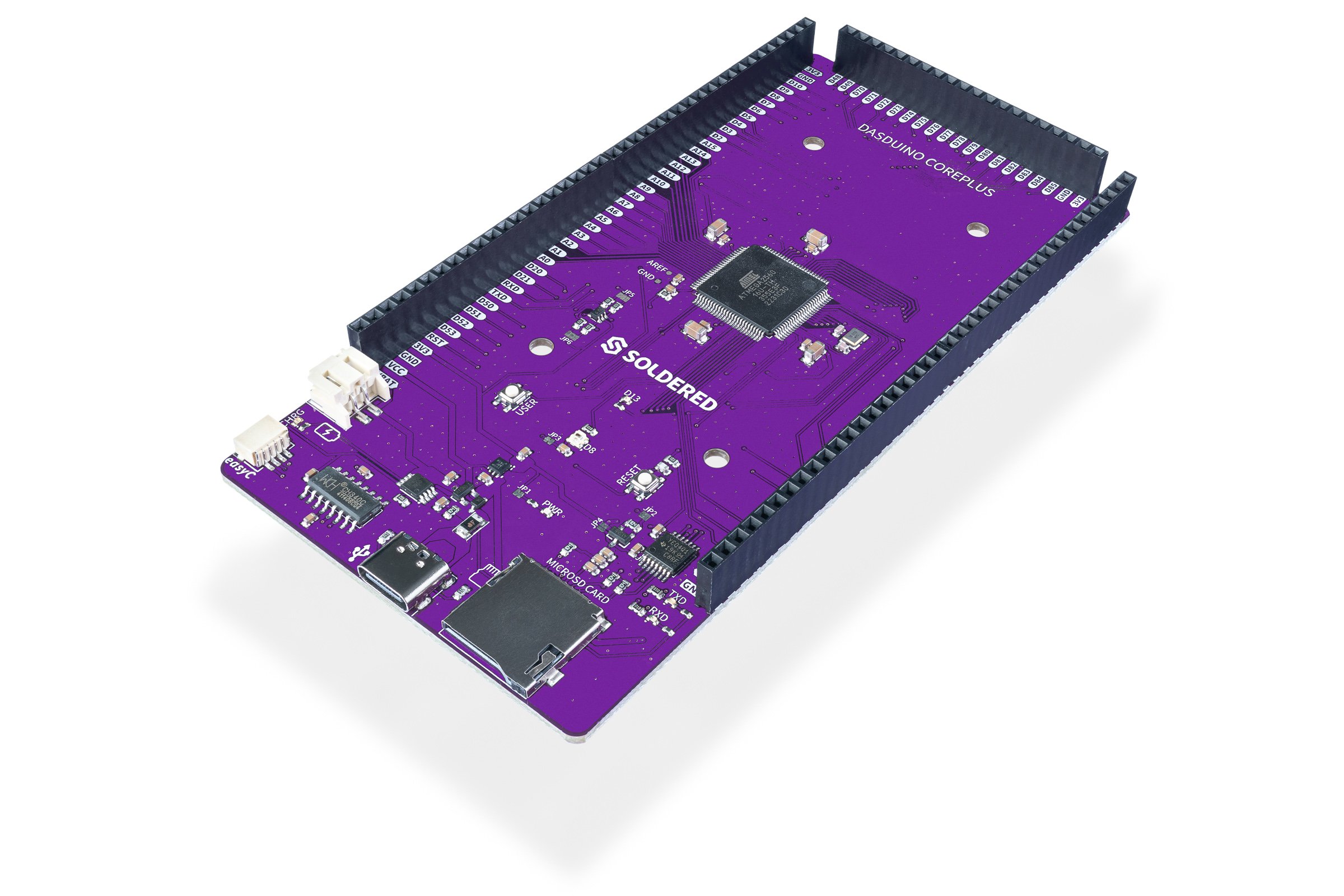
Dasduino COREPLUS (ATmega2560)
The soldered version of the ATmega2560 microcontroller board has arrived! It is designed for enthusiasts and professionals in the field of electronics and DIY projects. The heart of the board, the ATmega2560, is a powerful 8-bit microcontroller that offers enough processing power for demanding applications. The board comes with a large number of digital and analog inputs/outputs, allowing users to connect various sensors and actuators. The ATmega2560 contains a significant amount of Flash memory, SRAM, and EEPROM, which is sufficient for complex applications and data storage. The USB interface allows for easy programming and communication with a computer. It enables communication with various peripheral devices and modules using the easyC system for simple connectivity. The board is compatible with popular development environments, such as Arduino IDE, which facilitates the development and implementation of projects.
This board is ideal for creating complex and versatile electronic projects, such as automatic systems, smart devices, robotics, and many others.
Dasduino COREPLUS (ATmega2560) options:
Dasduino COREPLUS comes in 3 versions depending on the method of connection to the pins:
– without headers
– with male headers
– with female headers

Buzzer
A buzzer is a small speaker (actually a piezo). We all know what a speaker does, so no further explanation is needed. Here, we are talking about a passive buzzer which requires an AC signal to produce sound. It’s like an electromagnetic speaker, where a variable input signal produces sound, instead of automatically producing a tone.
Coming soon
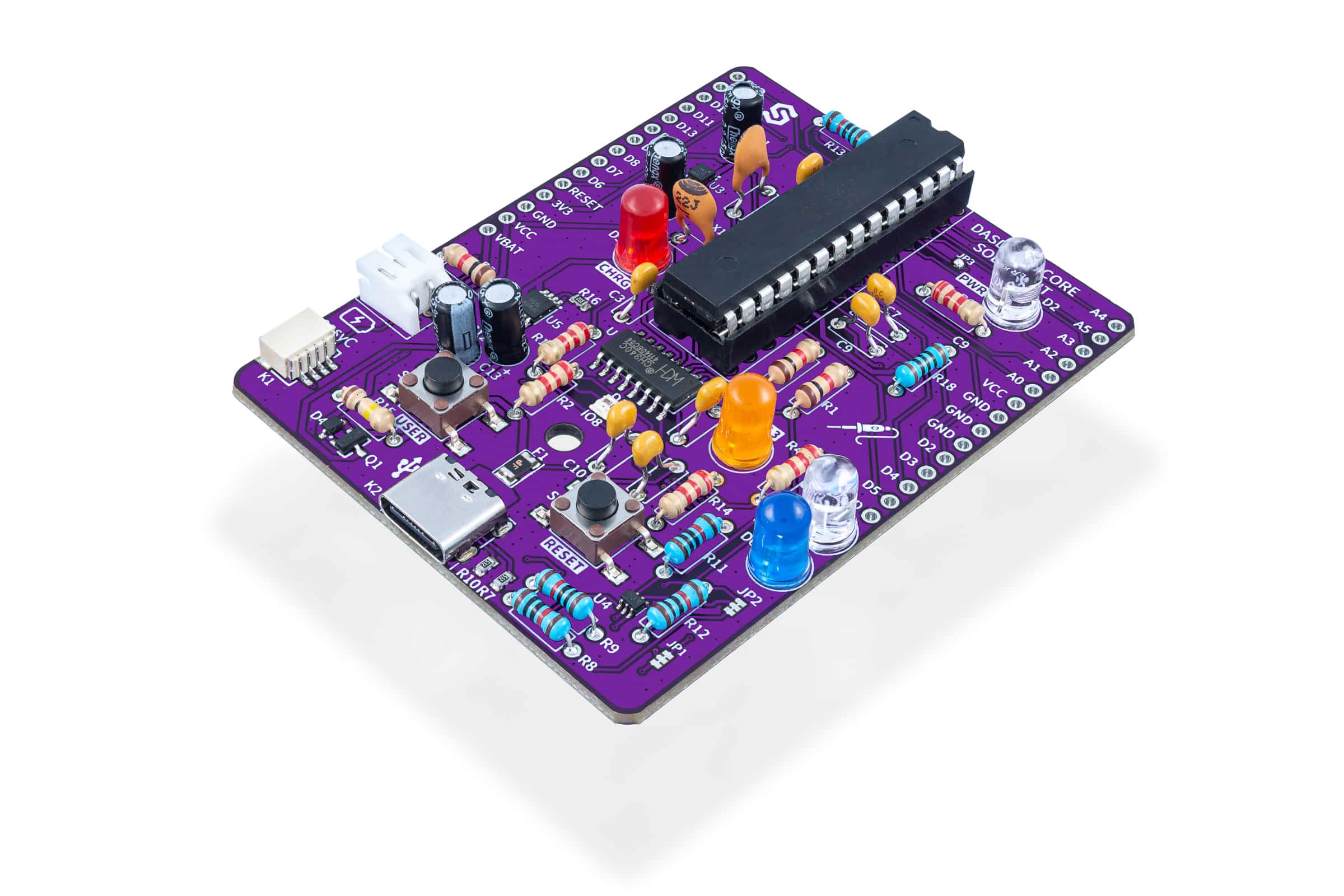
Make your own Dasduino Solder Kit
If you’re looking for a simple way to start soldering or just want to make your own Dasduino, this soldering set is a great opportunity. “Make your own Dasduino CORE” is an educational set for learning the skill of soldering, with which you end up with a functional microcontroller board. As with the other SMD versions of the Dasduino CORE boards we offer, the possibilities are endless.
It is based on the ATmega328P microcontroller, and all SMD components are already soldered on the board. The set also includes a THT socket for the microcontroller, which simplifies the replacement of the microcontroller should it ever become necessary.
The set consists of:
- PCB
- 7 capacitors of 100nF
- 4 capacitors of 2.2uF
- 2 capacitors of 22pF
- 5 resistors of 2.2kOhm
- 5 resistors of 10kOhm
- 3 resistors of 1kOhm
- 1 resistor of 100kOhm
- 1 resistor of 100Ohm
- 1 JST battery connector
- 1 purple LED
- 1 white LED
- 1 blue LED
- 1 red LED
- 1 orange LED
- 1 socket for ATmega328P
- 1 ATmega328P microcontroller
Coming soon

GNSS GPS L86-M33 breakout with easyC
Global Navigation Satellite Signal Systems (GNSS), or as we all like to call it “GPS”, enable precise location determination on Earth. Thanks to this module, you can use GNSS for your project and use the device for asset tracking or create a wearable device. The module is small, energy-efficient, high-performing, and easy to use thanks to the built-in antenna.
L86-M33 is a GNSS receiver, which means it can receive signals from GPS, GLONASS, and Galileo constellations. Equipped with EASY (Embedded Assist System for self-generated orbit prediction) and AlwaysLocate technologies, L86-M33 ensures fast and accurate positioning even in challenging environments. Its advanced internal logger LOCUS allows you to store your routes and location data.
Our breakout board, in addition to the previously mentioned L86-M33 module which has an integrated antenna, also has a connector for a CR1220 battery which is used as a backup for timekeeping and GPS data. The module can operate without the battery, but every time it will have to fetch data from satellites afresh (cold start). If the integrated antenna is insufficient, there is an IPX connector on the board for adding an external, stronger antenna. To easily access the module pins, the pins are extended on the board for accessibility. There is also a switch on the board to change the I2C address.
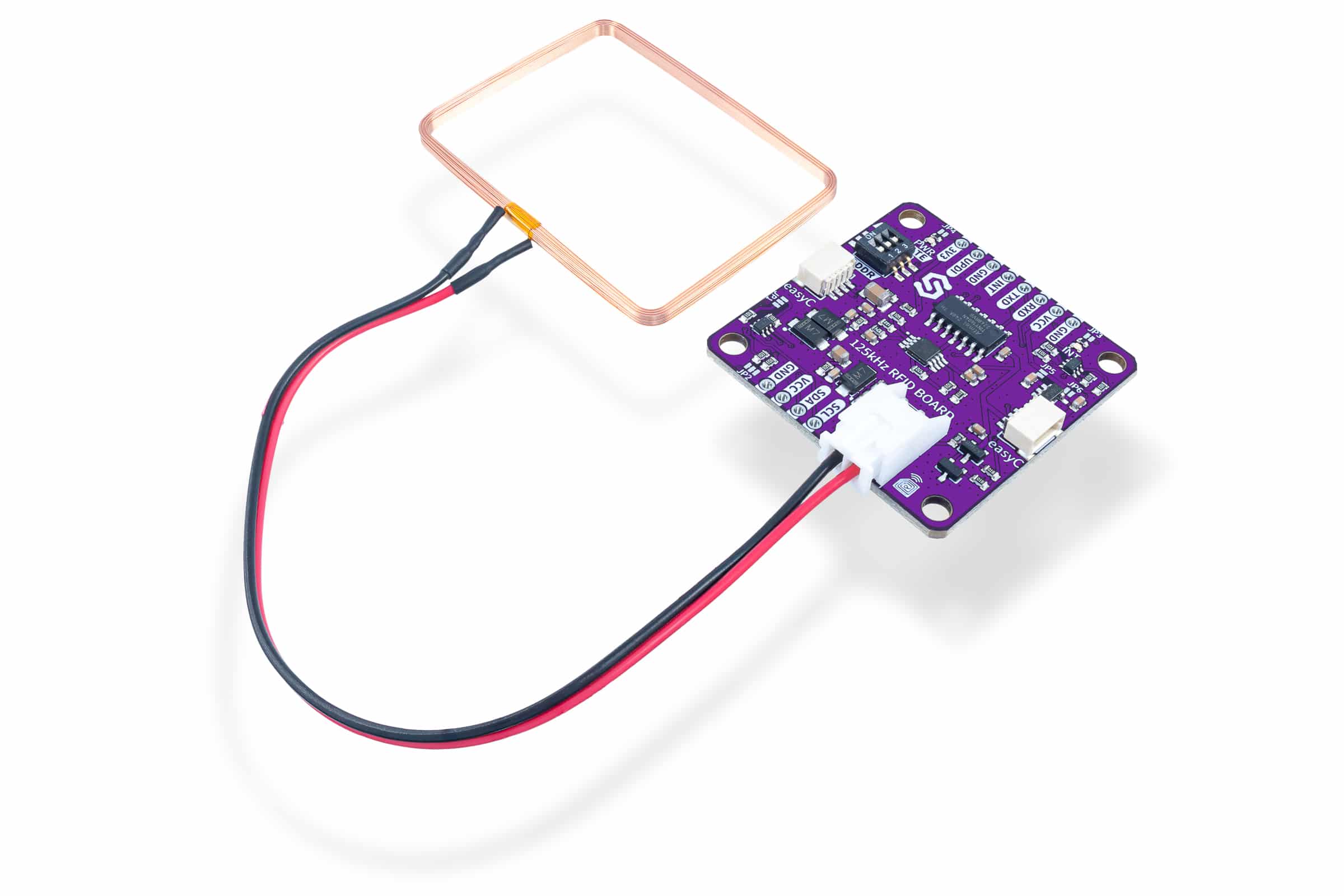
125kHz RFID tag reader board
Our 125kHz RFID Tag Reader Board is your key to the world of interactive possibilities. Whether you’re building a keyless entry system for your workshop, a personalized music player that plays a different song for each family member, or an inventory system that tracks your tools, this RFID reader is the heart of it all.
This reader is designed for easy integration to your projects. With both UART and I2C versions available, you can choose the communication protocol that best fits your needs. The onboard microcontroller is pre-programmed and ready to go, so you can start reading tags. Included is a switch to change the data transfer speed, giving you the flexibility to work with a wide range of microcontrollers. The included antenna ensures a reliable reading distance, so your projects will work flawlessly every time.
Like all of our products, this RFID reader is designed and manufactured in Europe to the highest quality standards, and we back it with a 2-year warranty and technical support. And because we believe in the power of open source, all of our design files are available for you to download and modify!
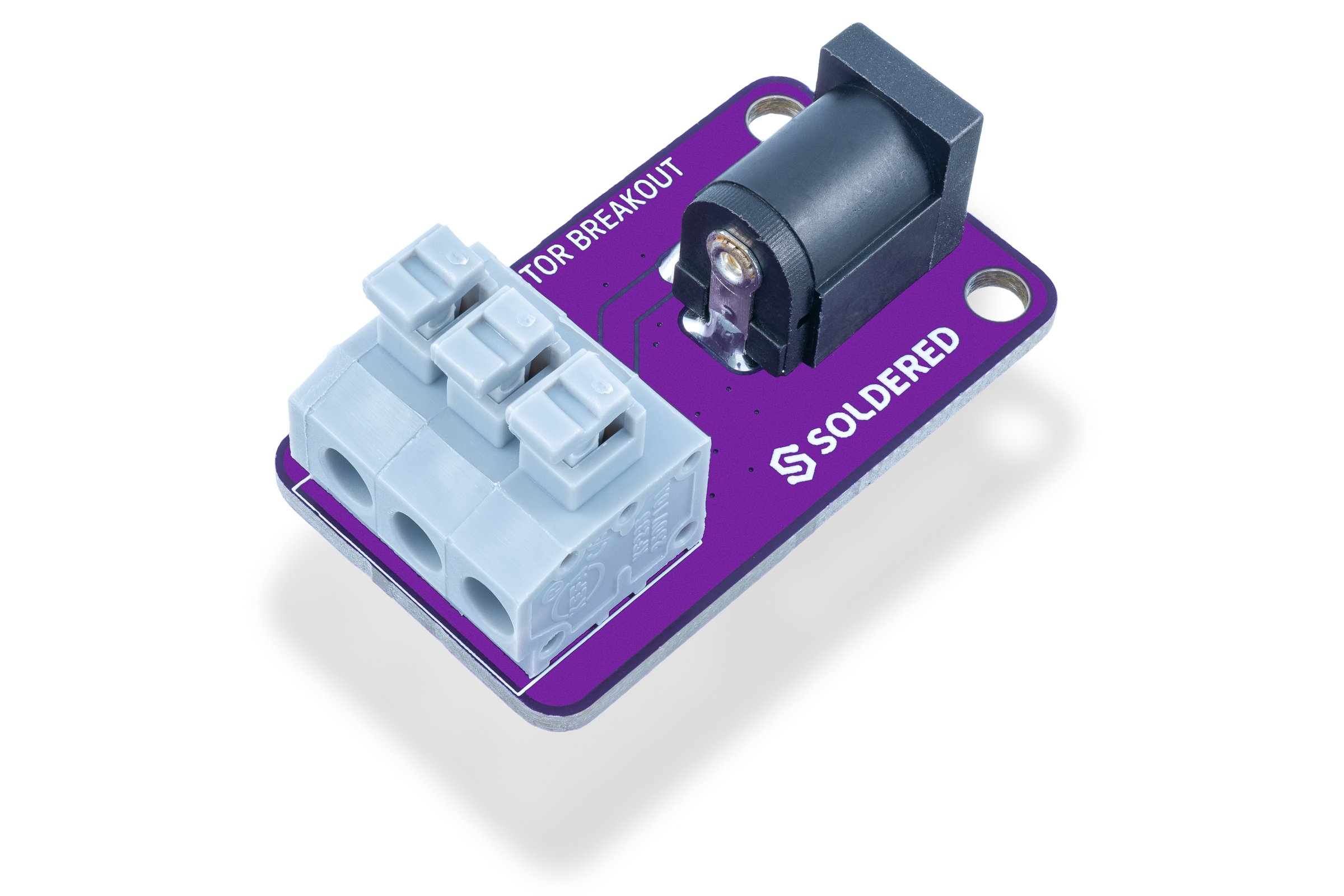
DC connector breakout
Simple breakout that allows access to standard 2.4 mm pins of a DC connector.
Coming soon
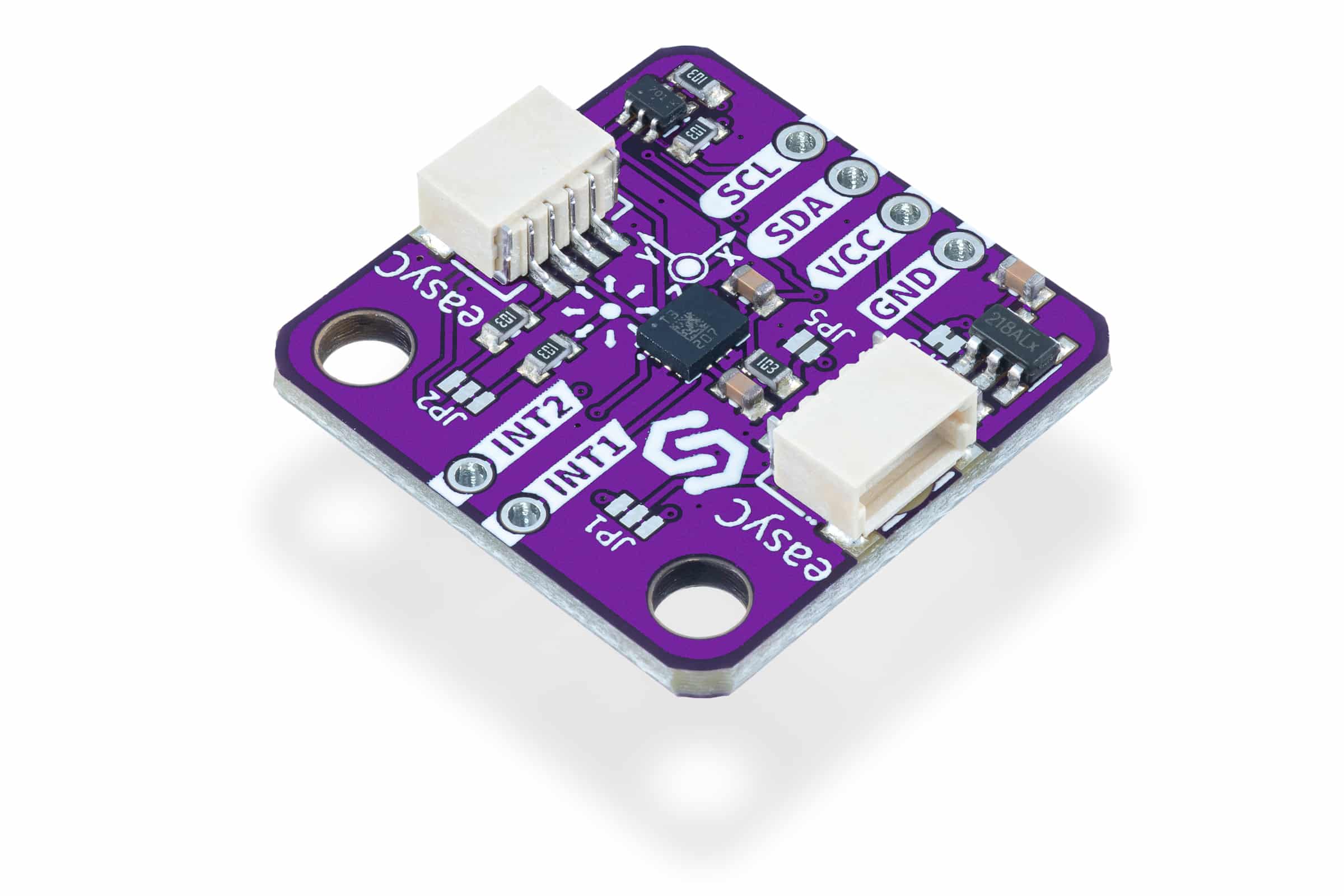
Accelerometer & Gyroscope LSM6DSO 6-DOF breakout
Step into the world of motion sensing with our nifty Accelerometer & Gyroscope LSM6DSO breakout! Small but mighty, this breakout board combines a 3D accelerometer and a 3D gyroscope on one tiny platform, letting you track both static and dynamic motions of your projects with ease. Its compact size doesn’t mean a compromise on performance – in fact, it offers high-resolution measurements of up to ±16 g and ±2000 dps respectively. So whether you’re building a drone, a VR game, or an IoT gadget, our LSM6DSO breakout will be your perfect companion for precise and efficient motion tracking.
Our LSM6DSO breakout is all about combining high-performance capabilities with user-friendly design. It operates on a supply voltage range of 1.71V to 3.6V, making it compatible with both 3.3V and 5V systems. Its power-saving features ensure that your projects keep running smoothly without draining too much energy. So, why wait? Add a dash of engineering magic to your projects with our Accelerometer & Gyroscope LSM6DSO breakout! With I2C interface, it’s a breeze to connect with various microcontrollers.
This breakout board comes with 2 easyC connectors which will simplify connection with microcontrollers. By using the easyC module connection system, forget about incorrectly connected or, in the worst case, damaged modules.
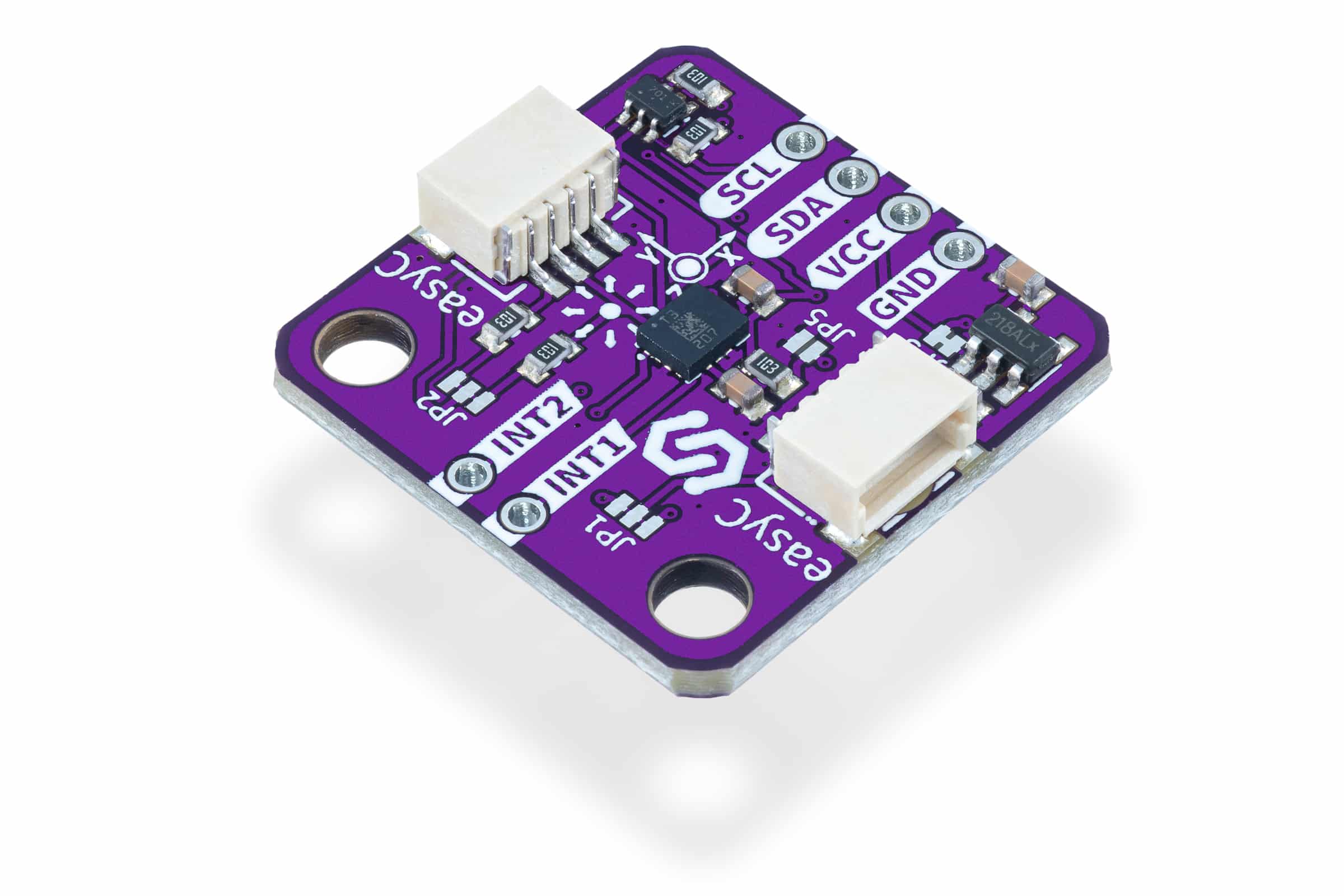
Accelerometer & Gyroscope LSM6DS3 6-DOF breakout
Embrace the fascinating world of motion tracking with our Accelerometer & Gyroscope LSM6DS3 Breakout! This handy little board integrates a 3D accelerometer and a 3D gyroscope, allowing you to monitor both linear acceleration and rotational motion in your projects. Despite its compact form, it packs a punch with high-resolution measurements of up to ±16 g and ±2000 dps respectively. Whether you’re building a gesture-controlled robot, a fitness tracker, or a drone, our LSM6DS3 breakout is here to ensure precision and reliability in every motion tracking task.
But it’s not just about tracking movement. Our LSM6DS3 breakout comes with an array of impressive features to add extra layers of sophistication to your projects. It features an embedded temperature sensor, providing crucial temperature data in environments where accurate motion tracking is a must. Additionally, it boasts a FIFO (First In, First Out) buffer that allows you to store and manage data efficiently, offering you greater control over your motion tracking applications. The board uses I2C interface, providing compatibility with a multitude of microcontrollers.
Our LSM6DS3 breakout is a seamless blend of high performance and user-centric design. Operating on a supply voltage range of 2.5V to 3.6V, it is compatible with both 3.3V and 5V systems. Its low-power operating modes ensure optimal performance without significant energy consumption. Start your journey towards motion mastery with our Accelerometer & Gyroscope LSM6DS3 Breakout and add that unique engineering touch to your projects!
This breakout board comes with 2 easyC connectors which will simplify connection with microcontrollers. By using the easyC module connection system, forget about incorrectly connected or, in the worst case, damaged modules.
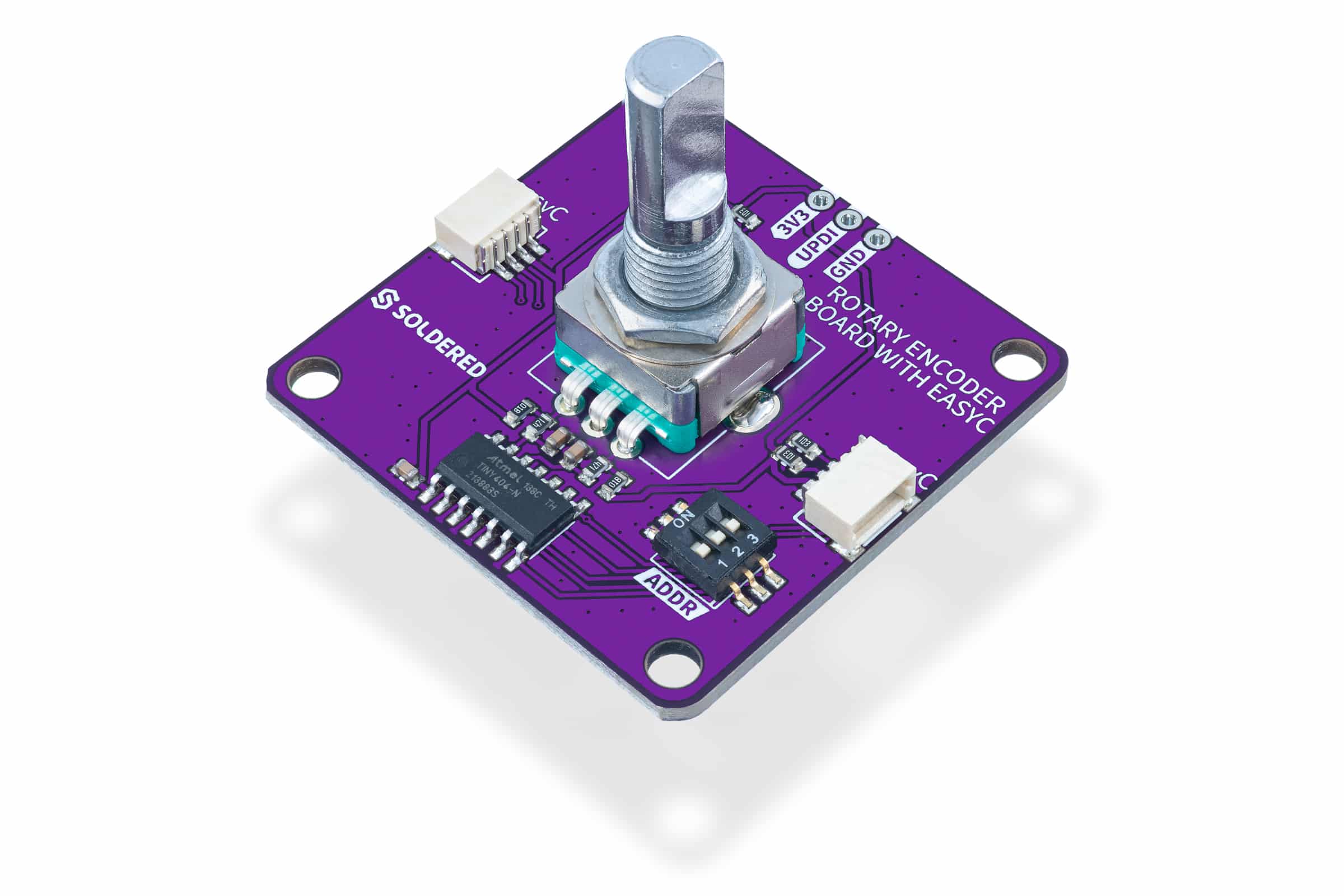
Rotary encoder board with easyC
Unleash the potential of digital control with our Rotary Encoder breakout board. Compact and powerful, this module makes working with rotary encoders easy. Rotary encoders are versatile input devices that convert angular position or button movement into digital signals. With the ability to detect direction and distance of rotation, they are perfect for controlling a variety of equipment such as volume knobs on audio devices, motors in robotics, or navigation controls in user interfaces.
Our breakout board simplifies the use of rotary encoders by utilizing easyC technology, making it easily connectable with microcontrollers or other circuits. It accepts input from a rotary encoder and translates it into signals that your microcontroller can interpret. In addition to the aforementioned rotary encoder module, the board also features a small ATTiny404 microcontroller, as well as a switch for selecting the I2C address. This breakout board comes with 2 easyC connectors for easy plug-and-play into the easyC system. If you don’t want to use easyC, the module can also be used via standard headers.

Accelerometer & Gyroscope LSM6DSO32 6-DOF breakout
The LSM6DSO32 sensor breakout is a compact and versatile sensor module designed to provide precise motion sensing capabilities for various applications. It is based on the LSM6DSO32, a high-performance 6-axis Inertial Measurement Unit (IMU) manufactured by STMicroelectronics.
The breakout board features a tiny yet powerful chip that combines a 3-axis accelerometer and a 3-axis gyroscope, allowing it to measure linear acceleration and angular rate in three dimensions. This makes it an ideal choice for projects that require motion tracking, orientation detection, gesture recognition, and activity monitoring.
One of the key advantages of the LSM6DSO32 sensor breakout is its low power consumption, making it suitable for battery-powered applications, such as wearables, IoT devices, and remote sensing systems. Additionally, the breakout board offers flexibility and ease of use with its I2C and SPI communication interfaces, allowing seamless integration with a wide range of microcontrollers and development platforms.
This breakout board comes with 2 easyC connectors which will simplify connection with microcontrollers. By using the easyC module connection system, forget about incorrectly connected or, in the worst case, damaged modules.
Coming soon
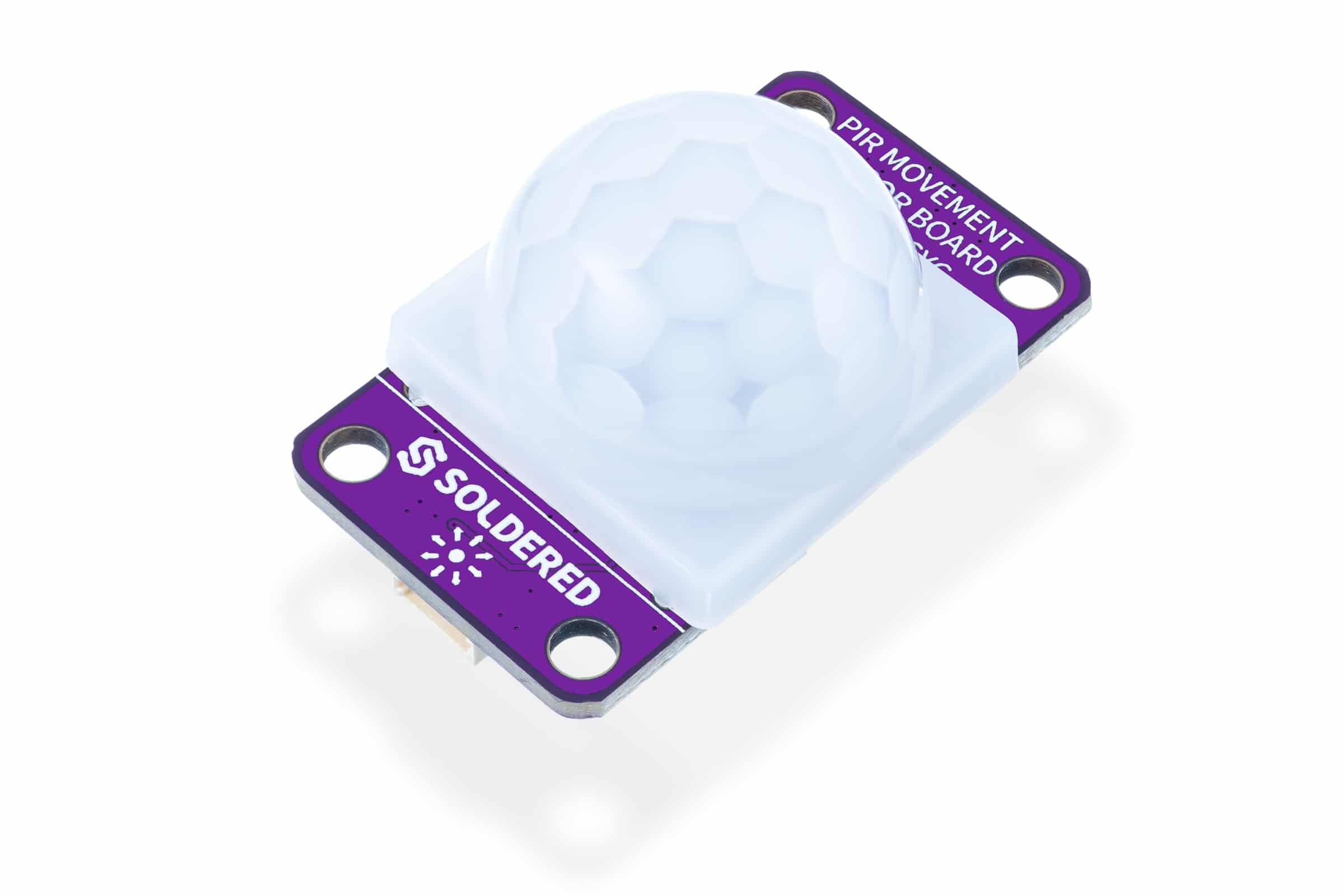
PIR Movement sensor board with easyC
A PIR (passive infrared) motion sensor is a device that detects physical movement within its field of vision by sensing changes in infrared radiation. This sensor works on the principle of detecting thermal thermal signals emitted by objects, mostly warm-blooded creatures like humans. The “passive” in the name refers to the fact that the sensor itself does not emit or radiate any energy for detection.
When it detects motion, the sensor sends a digital signal to the microcontroller. The angle that the sensor “sees” is 100 degrees and reaches up to 5 meters. It is often used in a variety of applications, including home security systems, automatic lighting, and energy management, among others.
Our breakout board simplifies the use of the PIR sensor by using easyC technology, making it easily connectable with microcontrollers or other circuits. It accepts input from the PIR sensor and translates it into signals that your microcontroller can interpret. In addition to the aforementioned PIR sensor, the board also contains a small ATTiny404 microcontroller, as well as a switch for selecting the I2C address. This breakout board comes with 2 easyC connectors for easy integration into the easyC system. If you do not wish to use easyC, the module can also be used via standard headers.

GNSS GPS L86-M33 breakout
Global Navigation Satellite Systems (GNSS), or as we all like to call it “GPS,” enable precise location determination on Earth. Thanks to this module, you can use GNSS for your project and employ the device for asset tracking or create a wearable device. The module is small, energy-efficient, highly effective, and easy to use thanks to its built-in antenna.
L86-M33 is a GNSS receiver, meaning it can receive signals from GPS, GLONASS, and Galileo constellations. Equipped with EASY (Embedded Assist System for self-generated orbit prediction) and AlwaysLocate technologies, the L86-M33 ensures fast and accurate positioning even in challenging environments. Its advanced internal logger, LOCUS, allows you to store your routes and location data.
In addition to the aforementioned L86-M33 module, which has an integrated antenna, our breakout board also has a connector for a CR1220 battery that is used as a backup for timekeeping and GPS data. The module can operate without a battery, but each time it will have to pull data from the satellites anew (cold start). If the integrated antenna is not sufficient, there is an IPX connector on the board for adding an external, stronger antenna. To easily access the pins of the module, the pins are exposed on the board for easy access.

WiFi 2.4G PCB antenna with IPX connector TX2400-FPC-5015
If you have a device you want to connect to a WiFi network, by using an IPX connector, all you need is this antenna. Use the IPX connector to establish connection with your device and it is ready to connect to a 2.4GHz WiFi network.
11 years in the industry
Customers in 80+ countries
20,000+ satisfied customers