









- Dasduino (Arduino-compatible)

- Inkplate

- easyC ecosystem

- Raspberry Pi & Micro:bit

- Breadboards & Cables

- Batteries & Power supplies

- Kids

- Sensors

- Actuators

- Communication

- Tools & Lab equipment

- Soldering kits

- Components

- Sale

easyC Actuators
In this category, find all electronics actuators that use the easyC system for connection and communication. Relays, RTC, OLED, LCD adapters, etc.
Showing all 11 resultsSorted by latest
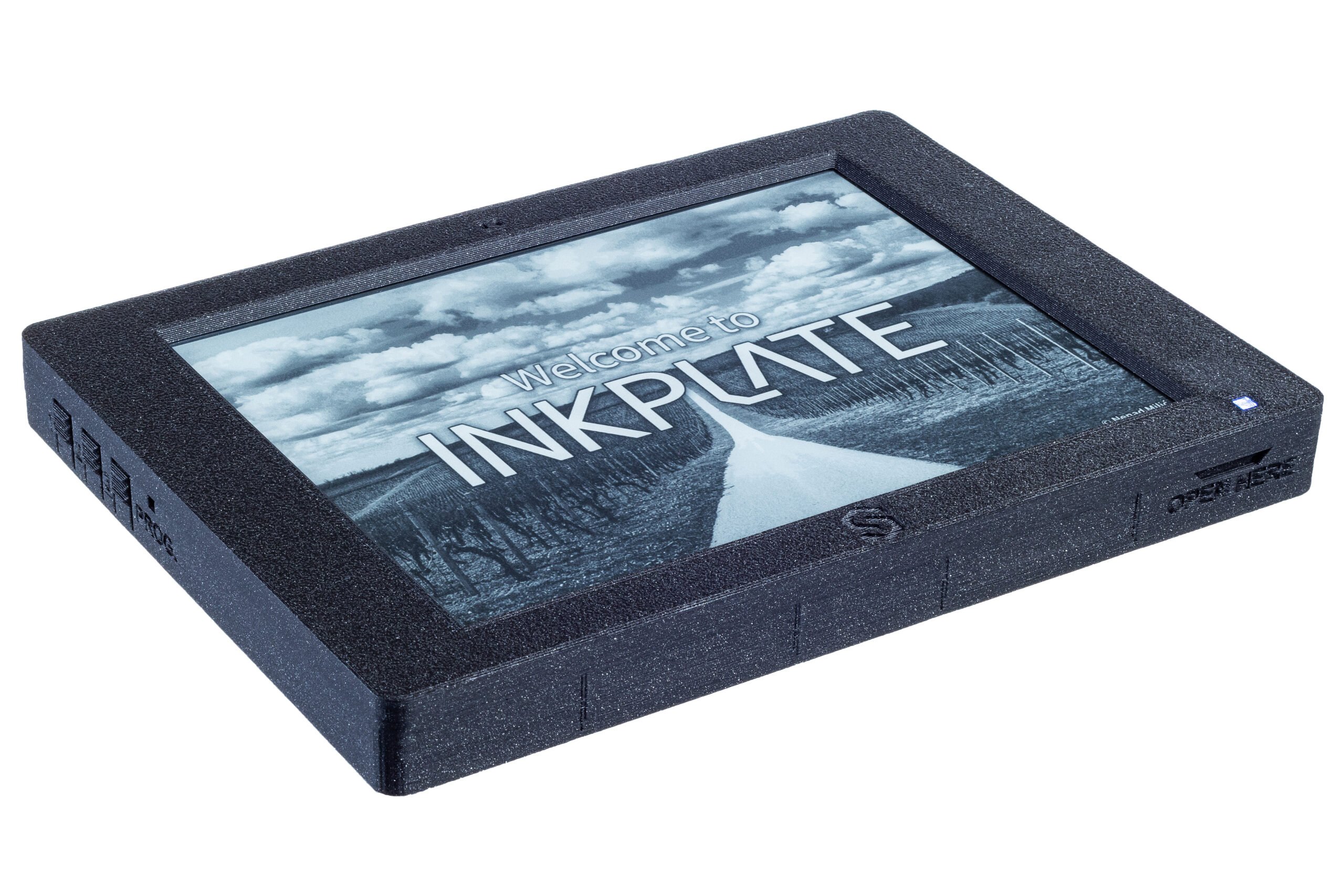
The Inkplate 6 MOTION is a supercharged 6-inch e-paper display with a resolution of 1024×758 pixels and support for partial updates. It offers an accelerated refresh rate of 91 ms (up to 11 frames per second), significantly outperforming other DIY e-paper devices, providing smoother motion, less lag, and sharper updates. It also supports 4-bit grayscale, allowing a total of 16 shades on the screen. Powered by a dual-processor setup, the 32-bit STM32H743 microcontroller and ESP32-C3 co-processor, this versatile display integrates seamlessly into dynamic projects, enabling real-time content for applications like animations, interactive menus, or smart-home interfaces.
Its impressive sensor array includes the LSM6DSO32 accelerometer and gyroscope, Sensirion SHTC3 temperature and humidity sensor, and APDS-9960 gesture and proximity sensor, making it ideal for highly interactive environments. The front-facing RGB programmable LED adds customizable visual indicators, enhancing interactivity. Additional hardware features include a microSD card slot, USB-C programming port, multiple GPIO pins for expansions, RTC, a rotary encoder, and 3 button inputs on the sides. It can be easily expanded using the onboard easyC ecosystem if needed.
The device’s MCP73831 battery charger and low-power design (only 22 μA in low-power mode) ensure long-term performance on battery power. With full support for Arduino, as well as numerous ready-to-use examples, developers can quickly integrate the Inkplate 6 MOTION into a variety of projects, from real-time data displays to smart-home systems and digital signage. The Inkplate is, of course, 100% open-source.
Its eco-friendliness, along with high-quality craftsmanship, makes it an ideal choice for anyone looking to build sustainable and innovative electronic projects. The Inkplate 6 MOTION uses screens recycled from old e-book readers, which is extremely environmentally friendly. Although minor damage such as scratches is possible due to the screen recycling, all screens with significant damage are not used in production, ensuring high quality.
Inkplate 6 MOTION options:
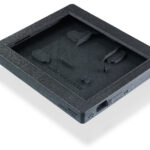
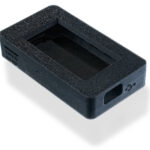
With e-paper display & enclosure: This version offers a sturdy and sleek enclosure for your device, made with precision from a 3D printer. It’s perfect for those who want an extra layer of protection without any added features.
With e-paper display, enclosure, and battery: Upgrade to this version if you’re looking for both protection and mobility. This option includes a 3D-printed enclosure as well as an 1200 mAh integrated battery, ensuring your device stays powered even on the go.
Without e-paper display: For those who prefer a simpler or alternative display solution, this version does not include the e-paper display. It’s ideal for users who have their own display solutions or prefer to use the device without a visual interface.
Choose the one that best fits your needs and enhance your experience!

LCD display with HD44780 controller enables showing text, symbols, value or anything else that comes from Croduino/Arduino. It is capable of showing 16 symbols in two lines and therefore can be used in many projects that need to send clearly visible and legible output information. An I2C LCD adapter is soldered to this LCD screen, which enables characters to be displayed on the LCD screen via the I2C bus. It also has an easyC connector for a really simple connection.
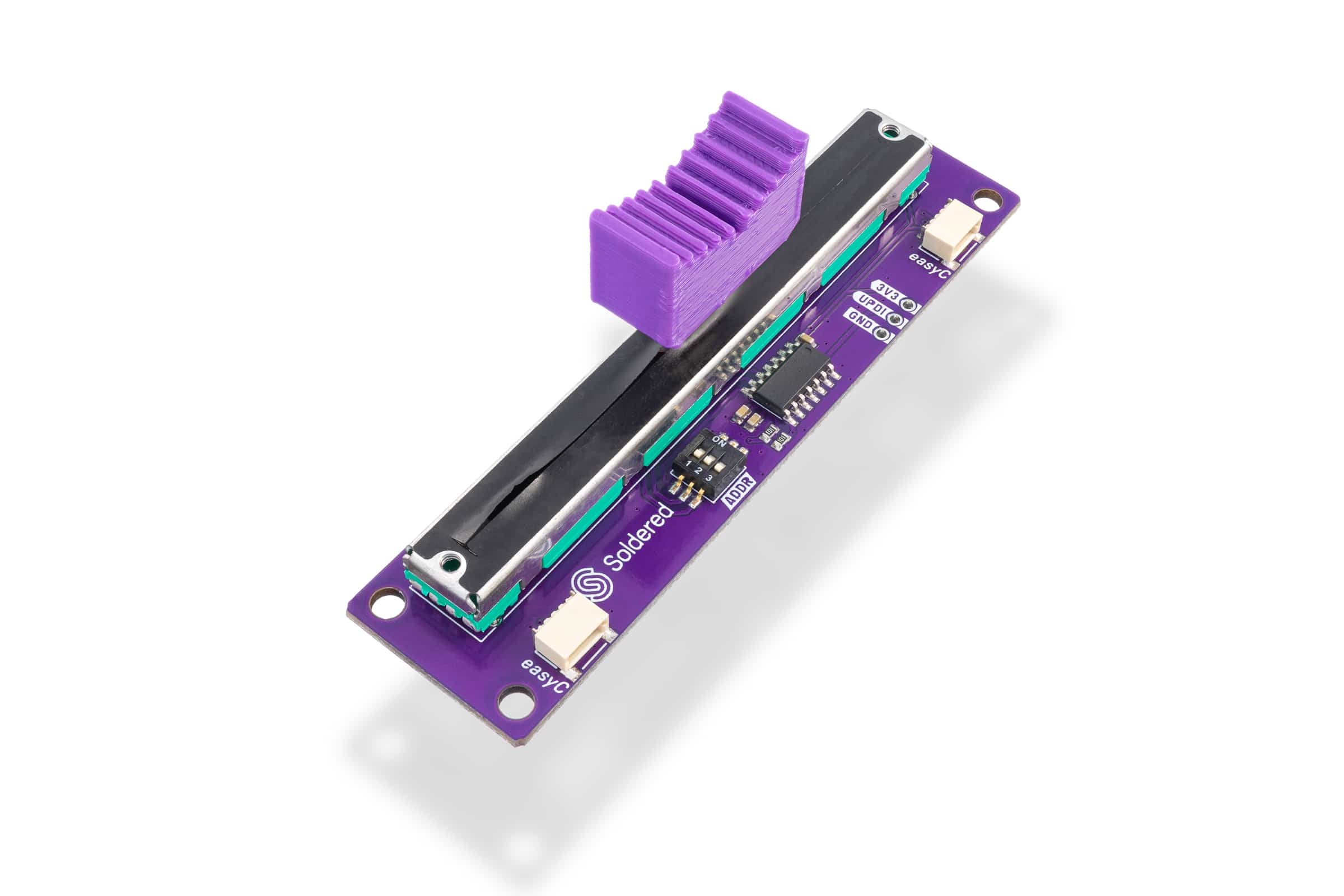
Potentiometers are well known all around, and the sliding potentiometer is just one of its versions. You’ve probably seen it in some music equipment, and now you have the chance to add it to your project!
This board has easyC connector. Thanks to easyC ecosystem, this board can be connected using off-the-shelf cables, without soldering. Controlling the is as simple as it gets, too.

Looking to add visuals to your Arduino projects? The I2C OLED breakout board is perfect for that. Because of its high contrast, you will be in awe of its crispness! The display is made from hundreds of LEDs, each representing one pixel in a 128×64 grid. Thus, it doesn’t need any backlight, and it needs less power than the classic LCD screens. That’s 8192 pixels all individually lit at your fingertips!
The design is 5V ready with an onboard regulator, so is compatible with any 3.3V board. The breakout board uses only about 20 mA, depending on active pixels. It is easy to control over the I2C interface. It is even easier to connect with the easyC system – no soldering required!
Display OLED I2C 0.96″ SSD1306 options:
The color of the OLED screen on the product can be:
– White
– Blue
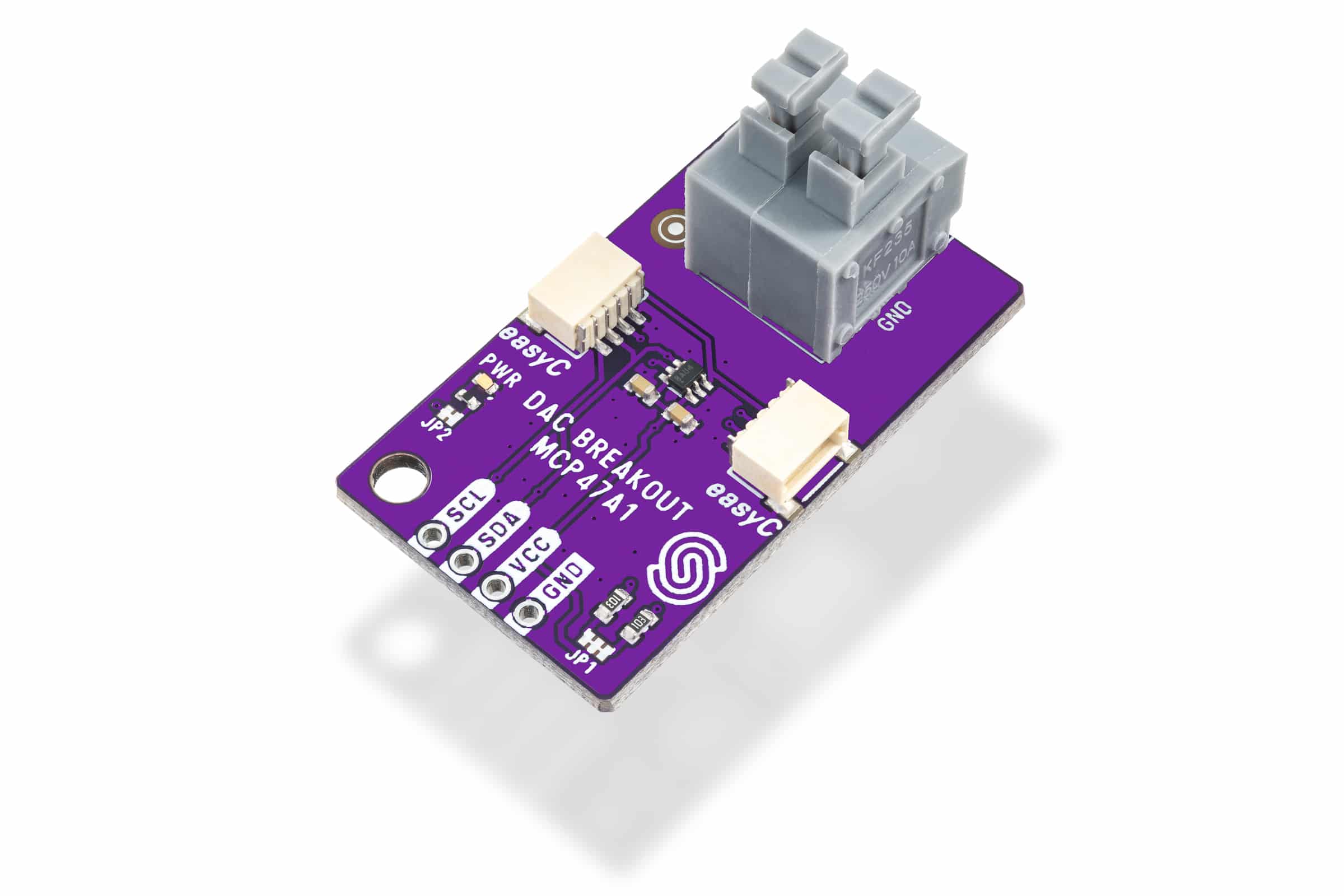
The DAC 6-bit 1-channel MCP47A1 breakout is a compact solution for adding precise analog output to microcontrollers and embedded systems. Featuring the Microchip MCP47A1, this single-channel DAC provides 6-bit resolution (64 steps) for accurate voltage generation, ideal for LED dimming, motor control, sensor calibration, and waveform generation.
Operating from 1.8V to 5.5V, it supports both 3.3V and 5V logic, and communicates via a simple I²C interface for easy two-wire control. Its small footprint and minimal external components make it perfect for space-constrained or battery-powered projects.
With a Qwiic (formerly easyC) connector, setup is quick and solder-free, ensuring reliable, tool-less integration. This breakout is ideal for hobbyists and engineers looking for precise, efficient analog control in compact designs.
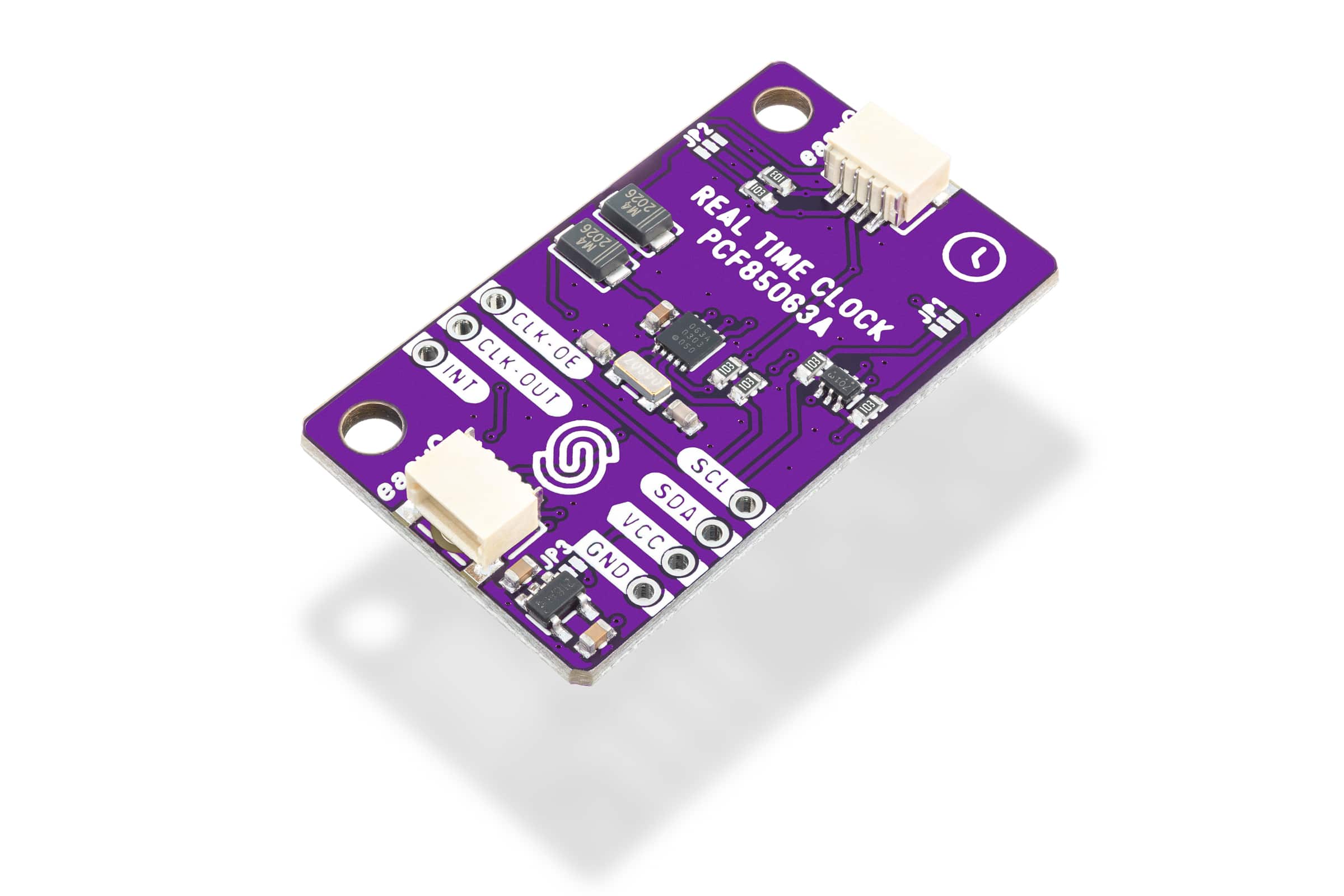
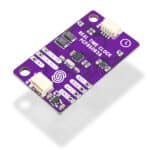
RTC (Real Time Clock) is a device that carefully and precisely tracks time and dates. It is extremely precise, so it is more suitable for long-term time tracking than clocks on microcontrollers. This breakout can work with an extremely low current and thanks to the alarm feature and interrupt pin, it will allow a microcontroller to enter sleep mode until its awaken by this RTC.
It has a built-in battery holder (battery not included) and even if power is lost, real-time tracking won’t be affected.
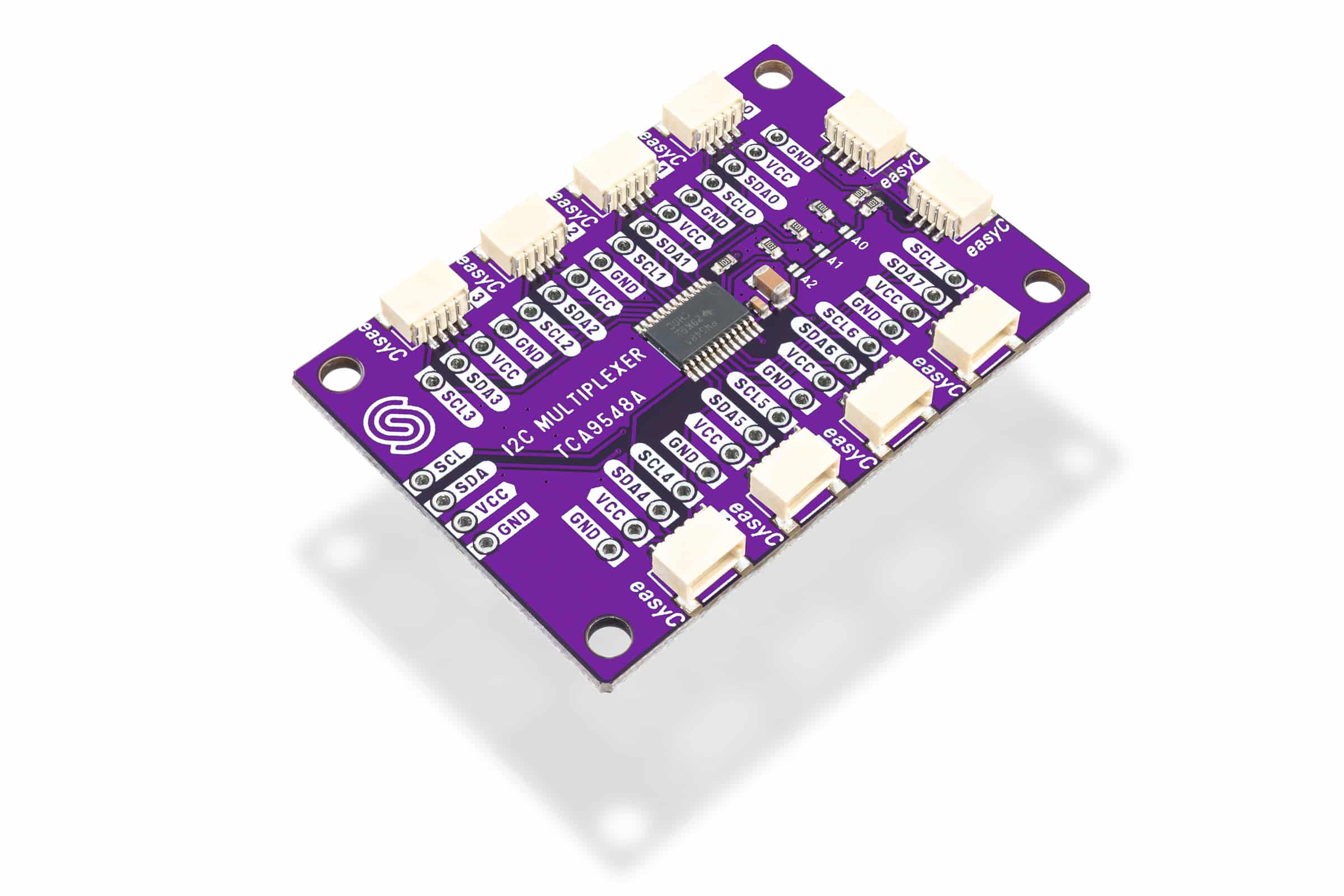
Ever needed to connect two peripherals with the same I2C address to the same microcontroller? This module allows you to seamlessly connect up to eight I2C devices with identical addresses.. Using the TCA9548A IC, our breakout board provides flexibility, enabling control of up to 64 devices on the same I2C bus. This means you can integrate numerous sensors, such as 64 BME680s (because why not?), all managed by just one microcontroller, simplifying complex setups and expanding your possibilities.
Beyond its core capabilities, the TCA9548A breakout is engineered for compatibility and ease of use, especially within the Qwiic ecosystem. This adapter is convenient for makers and engineers looking for rapid prototyping solutions without the intricate wiring. Its broad voltage compatibility (1.65V – 5.5V) ensures integration with a wide range of microcontrollers, including Arduino and NULA boards, making it an addition to any electronics workbench. With its compact dimensions and clear pinout, integrating this multiplexer into your existing or new projects is easy and efficient.
This I2C multiplexer is designed and manufactured in the EU, guaranteeing great performance and durability. We offer documentation, quick start guides and dedicated technical support to ensure your success, including our open-source community. Choose our TCA9548A breakout for a high-performance solution that empowers your innovative projects with I2C communication capabilities.
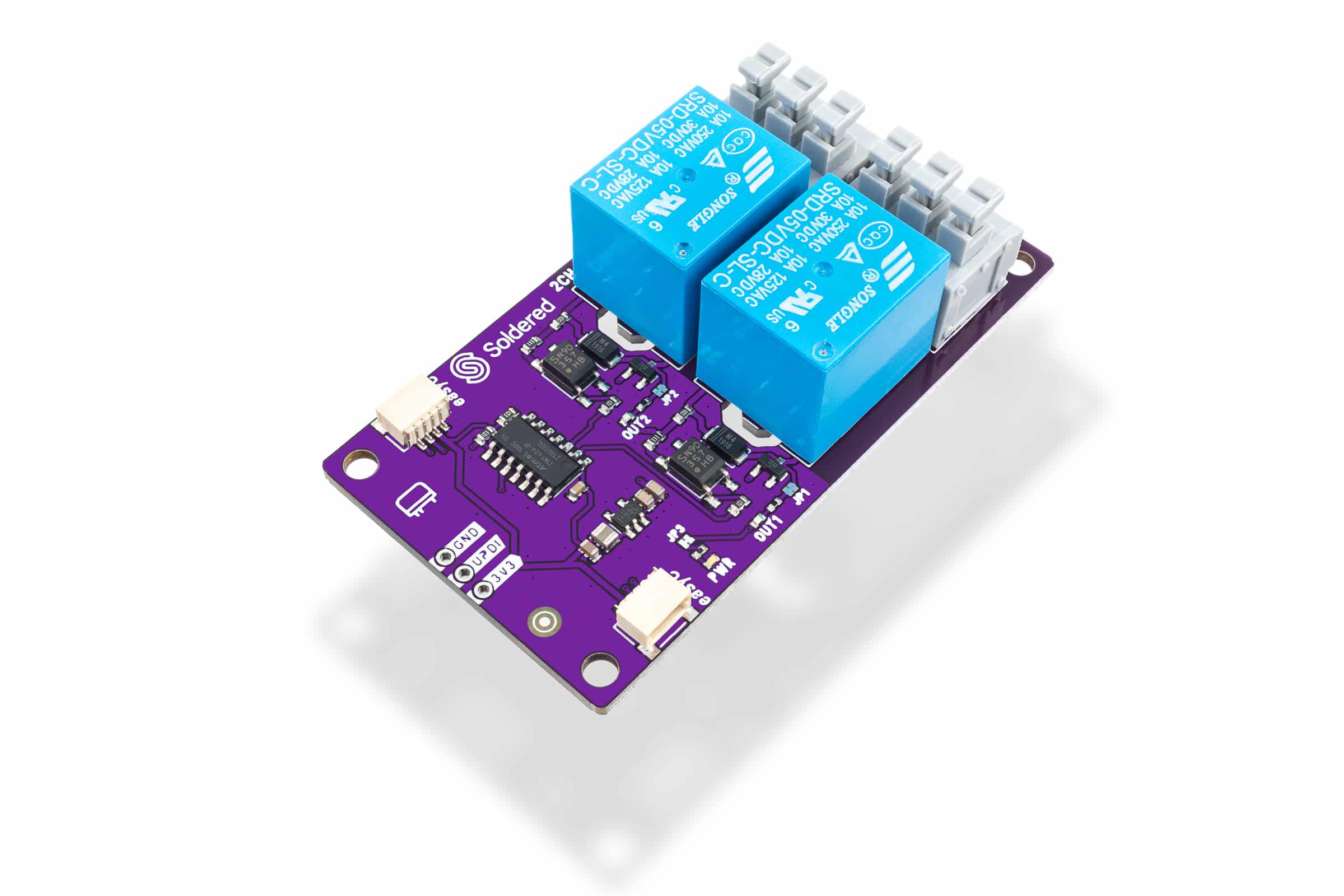
Did you ever wanted to turn on and off a device that needs large current or voltage? Whether operating on DC or AC, a relay is what you need. A relay is actually an electronic switch that is activated by a signal we send from a Dasduino or Arduino. This module further simplifies the whole process because it contains everything you need for the relay to work, and you just have to connect it to the microcontroller and power supply. You don’t have to think about voltages and currents, insulation between high and low voltage or grounding, everything is already taken care of on the board.
This board has easyC connector. Thanks to easyC ecosystem, this board can be connected using off-the-shelf cables, without soldering. Controlling the is as simple as it gets, too.

Did you ever wanted to turn on and off a device that needs large current or voltage? Whether operating on DC or AC, a relay is what you need. A relay is actually an electronic switch that is activated by a signal we send from a Dasduino or Arduino. This module further simplifies the whole process because it contains everything you need for the relay to work, and you just have to connect it to the microcontroller and power supply. You don’t have to think about voltages and currents, insulation between high and low voltage or grounding, everything is already taken care of on the board.
This board has easyC connector. Thanks to easyC ecosystem, this board can be connected using off-the-shelf cables, without soldering. Controlling the is as simple as it gets, too.
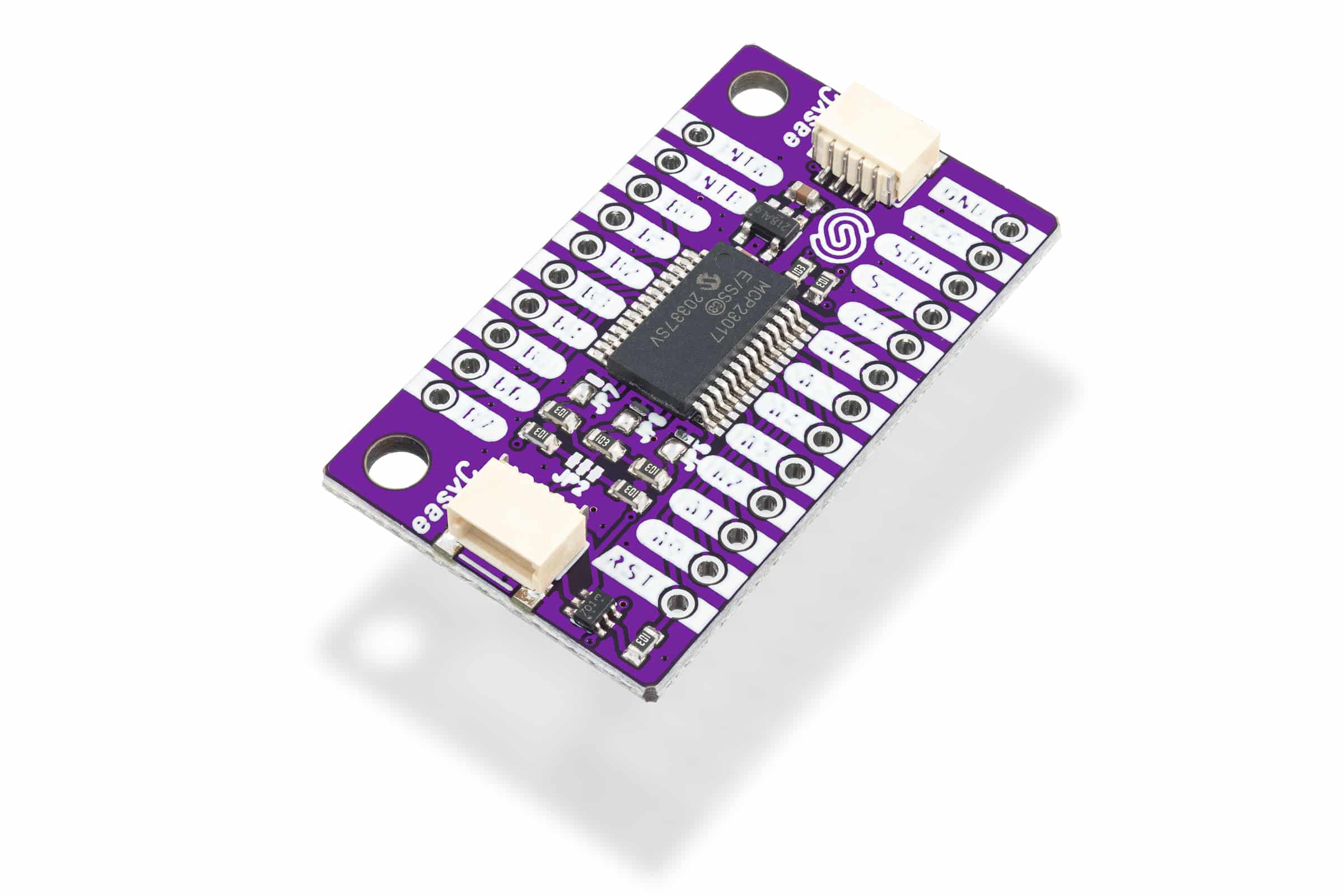
Running out of IO pins on your microcontroller? The MCP23017 I2C IO Expander is the perfect solution, allowing you to add 16 fully configurable digital IO pins to your project with just two wires (I2C protocol). The pins can be driven using our Arduino and MicroPython libraries. It’s a powerful tool that enables you to build bigger and complex projects without upgrading your microcontroller. Whether you’re driving multiple LEDs, reading a large array of buttons, or managing a complex sensor network, this IO expander provides the extra capacity you need.
Each pin can be individually configured as an input, output, or input with an internal pull-up resistor. The ability to change the I2C address via onboard jumpers means you can connect up to eight of these breakout boards to a single microcontroller, giving you a massive 128 additional IO pins. With the ability to sink or source up to 25mA per pin, you can directly drive LEDs and other components without the need for extra driver circuitry. This makes it perfect for students learning about digital electronics, makers building custom control panels, and engineers prototyping complex systems.
What makes this breakout special is its seamless integration into our Qwiic ecosystem, allowing for quick connections to your favorite boards and other I2C modules. As with all our products, it’s open-source, with all design files available for you to modify and adapt. Plus, as with all our products, 2-year warranty and technical support are included.
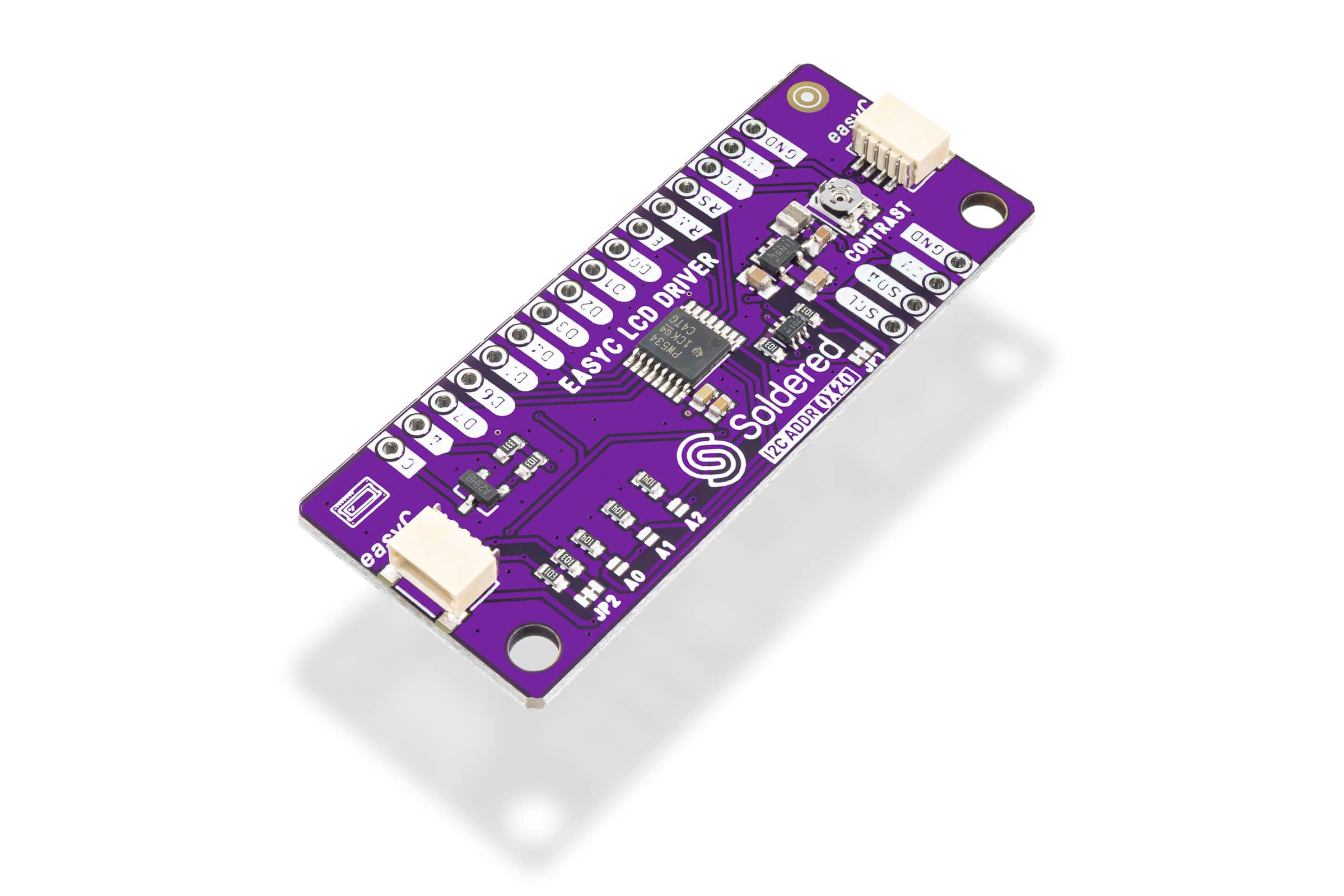
This adapter makes connection of LCD to Dasduino (or any other Arduino-compatible board) a breeze! It uses I2C communication which needs only two pins. It can be used and work with all of ours LCDs (16×2, 20×4, 16×4). Use our library and get started in few minutes of work!
It’s even easier with easyC – no soldering is needed!

11 years in the industry

Customers in 80+ countries

20,000+ satisfied customers
