








- Dasduino (Arduino-compatible)

- Inkplate

- easyC ecosystem

- Raspberry Pi & Micro:bit

- Breadboards & Cables

- Batteries & Power supplies

- Kids

- Sensors

- Actuators

- Communication

- Tools & Lab equipment

- Soldering kits

- Components

- Sale

easyC Sensors
In this category you can find all sensors that have an easyC connector on them, i.e. they use the easyC system for connection and communication.
Showing 1–24 of 38 resultsSorted by latest
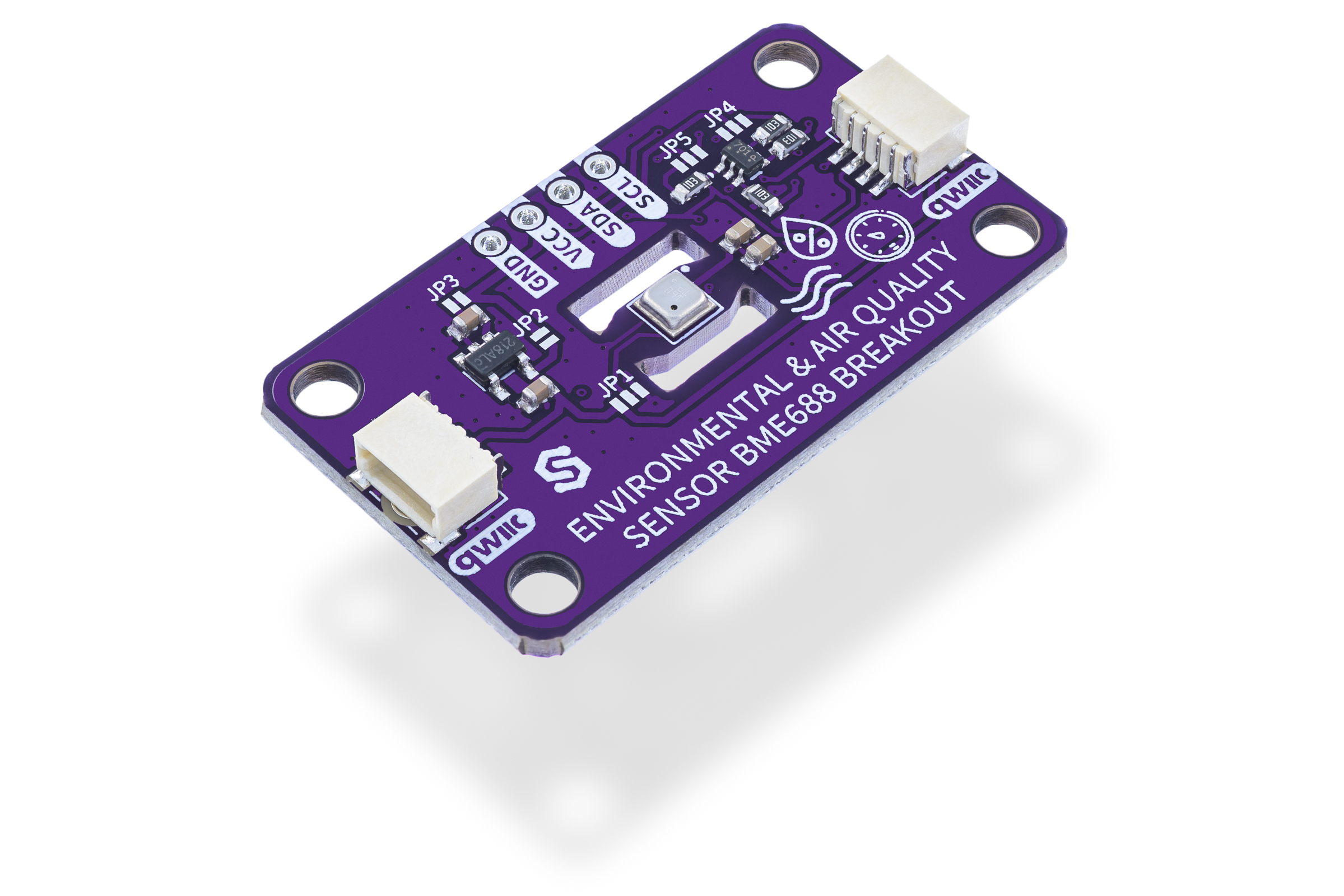
This is our most advanced multi-purpose environmental sensor yet, built around the cutting-edge Bosch BME688. It combines precise environmental monitoring with gas analysis capabilities, measuring organic compounds (VOCs), volatile sulfur compounds (VSCs), carbon monoxide, and hydrogen in the parts-per-billion (ppb) range alongside temperature, humidity, and barometric pressure.
Our Arduino and MicroPython libraries focus on providing reliable environmental data and basic gas detection, but you can supercharge your project by using the Bosch BME-AI Studio software for advanced AI features. Our breakout communicates exclusively via the I2C interface (up to 3.4 MHz), making integration straightforward with any microcontroller platform.
Designed for both industrial applications and makers, this breakout board includes dual Qwiic connectors for solderless, plug-and-play integration. Whether you are building an advanced air quality monitoring system, a smart HVAC controller, or conducting environmental research, the BME688 provides the precision and intelligence you need for comprehensive environmental sensing.
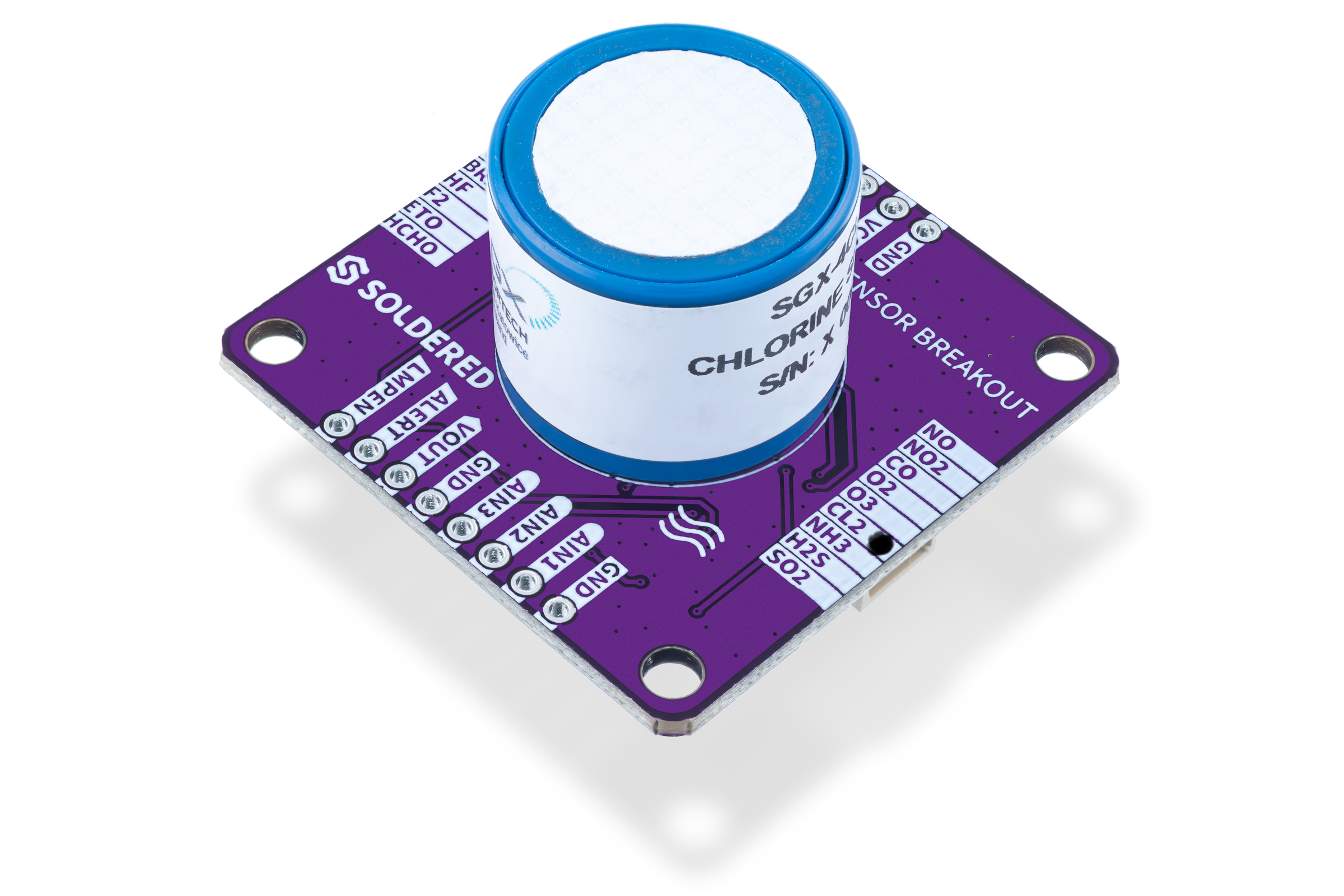
Ensure a safe and healthy environment with our High-Precision Electrochemical Cl₂ Gas Sensor Breakout. This advanced sensor module is specifically designed to detect chlorine gas (Cl₂) with exceptional accuracy, making it ideal for a range of applications, from industrial monitoring to environmental studies.
The breakout board works with both 3.3V and 5V power supplies. The EasyC connector provides a fast and easy connection with the microcontroller board. The board provides both analog and digital output with integrated ADC. The analog front end is fully programmable with I2C communication.
This breakout board is perfect for industrial safety, environmental monitoring, and research projects and provides a reliable foundation for precise gas detection solutions. Integrate this sensor into your systems to ensure timely alerts and maintain optimal safety standards.
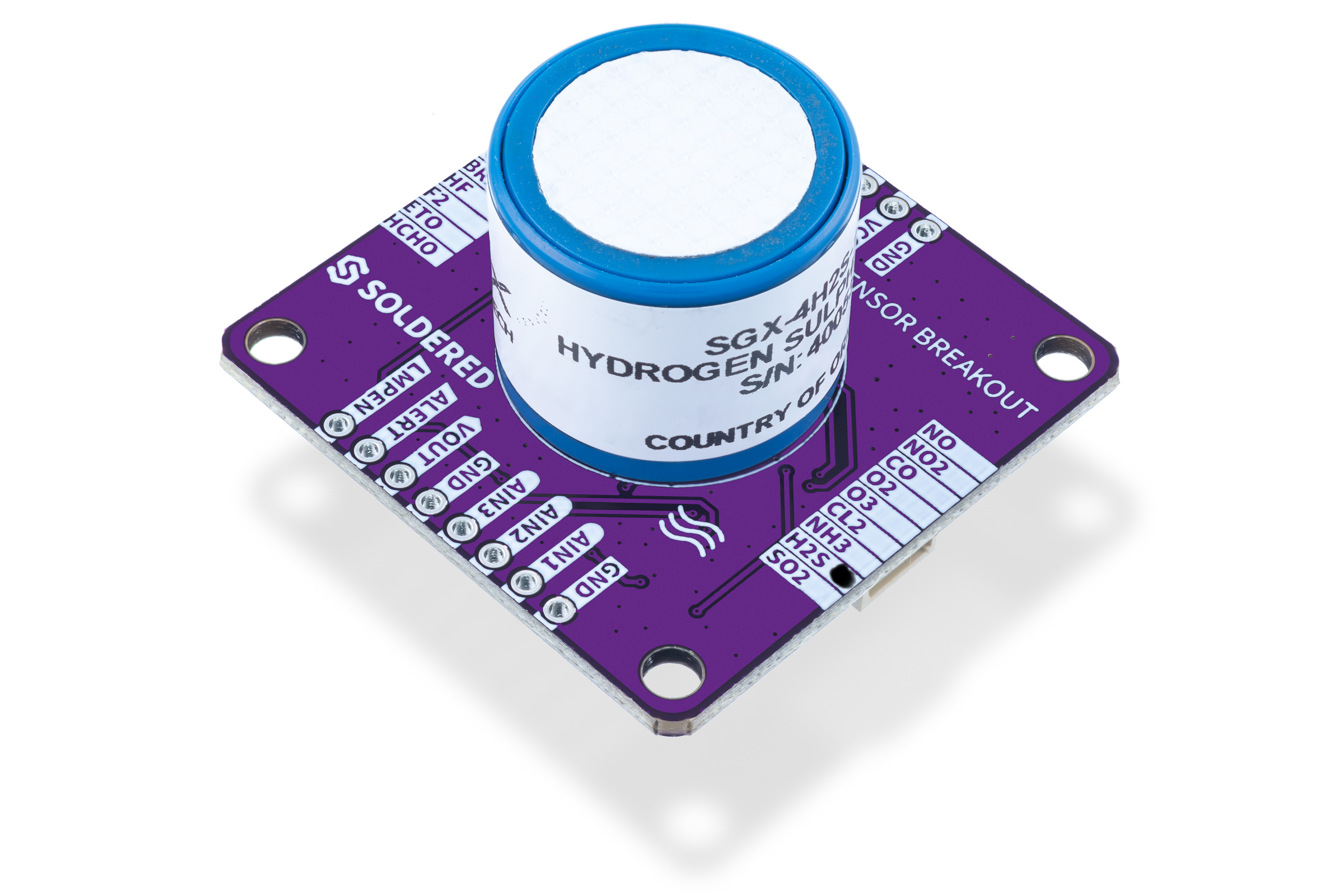
Ensure a safe and healthy environment with our High-Precision Electrochemical H₂S Gas Sensor Breakout. This advanced sensor module is specifically designed to detect hydrogen sulfide (H₂S) with exceptional accuracy, making it ideal for a range of applications, from industrial monitoring to environmental studies.
The breakout board works with both 3.3V and 5V power supplies. The EasyC connector provides a fast and easy connection with the microcontroller board. The board provides both analog and digital output with integrated ADC. The analog front end is fully programmable with I2C communication.
This breakout board is perfect for industrial safety, environmental monitoring, and research projects and provides a reliable foundation for precise gas detection solutions. Integrate this sensor into your systems to ensure timely alerts and maintain optimal safety standards.
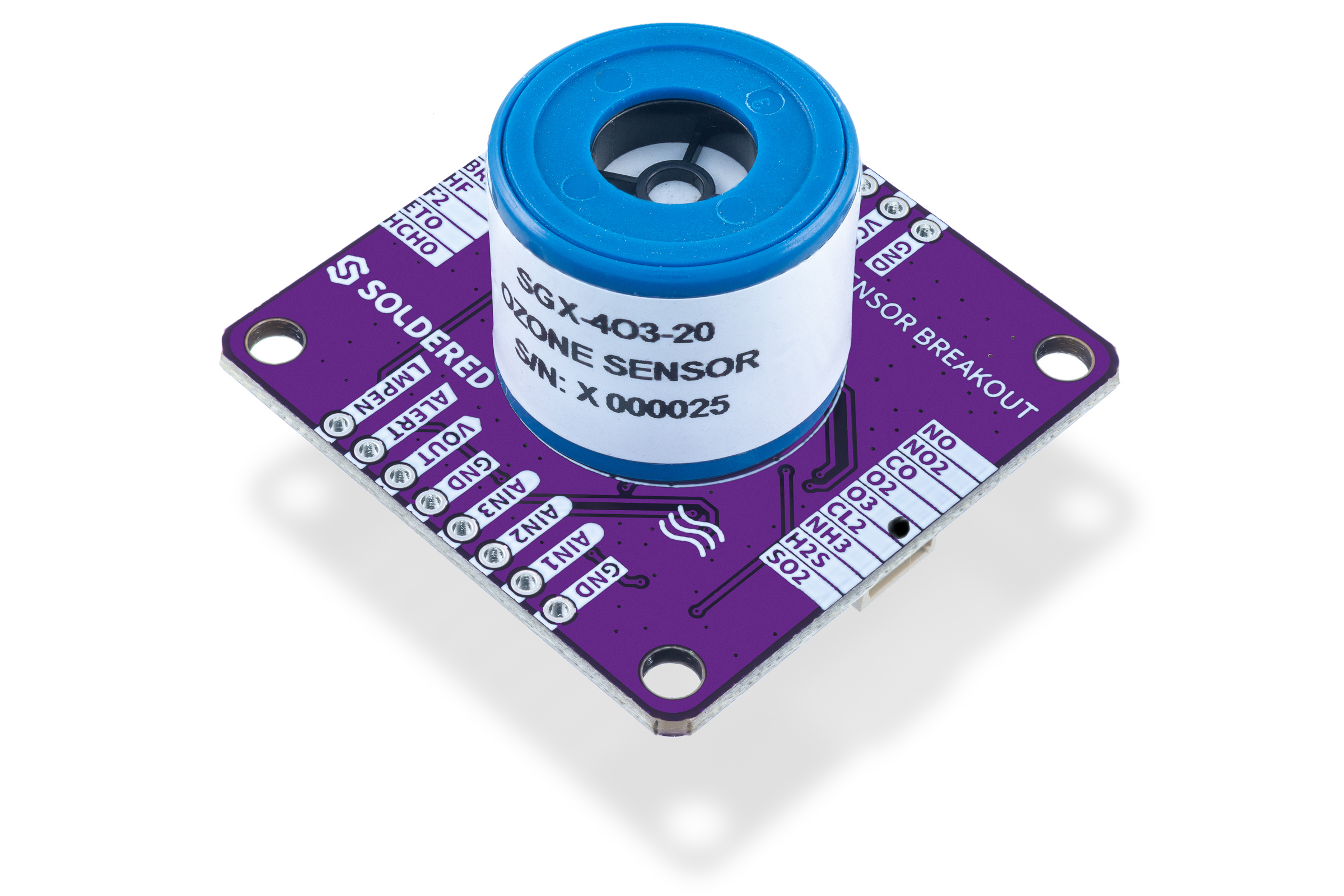
Ensure a safe and healthy environment with our High-Precision Electrochemical O₃ Gas Sensor Breakout. This advanced sensor module is specifically designed to detect ozone (O₃) with exceptional accuracy, making it ideal for various applications, from industrial monitoring to environmental studies.
The breakout board works with both 3.3V and 5V power supplies. The EasyC connector provides a fast and easy connection with the microcontroller board. The board provides both analog and digital output with integrated ADC. The analog front end is fully programmable with I2C communication.
This breakout board is perfect for industrial safety, environmental monitoring, and research projects and provides a reliable foundation for precise gas detection solutions. Integrate this sensor into your systems to ensure timely alerts and maintain optimal safety standards.
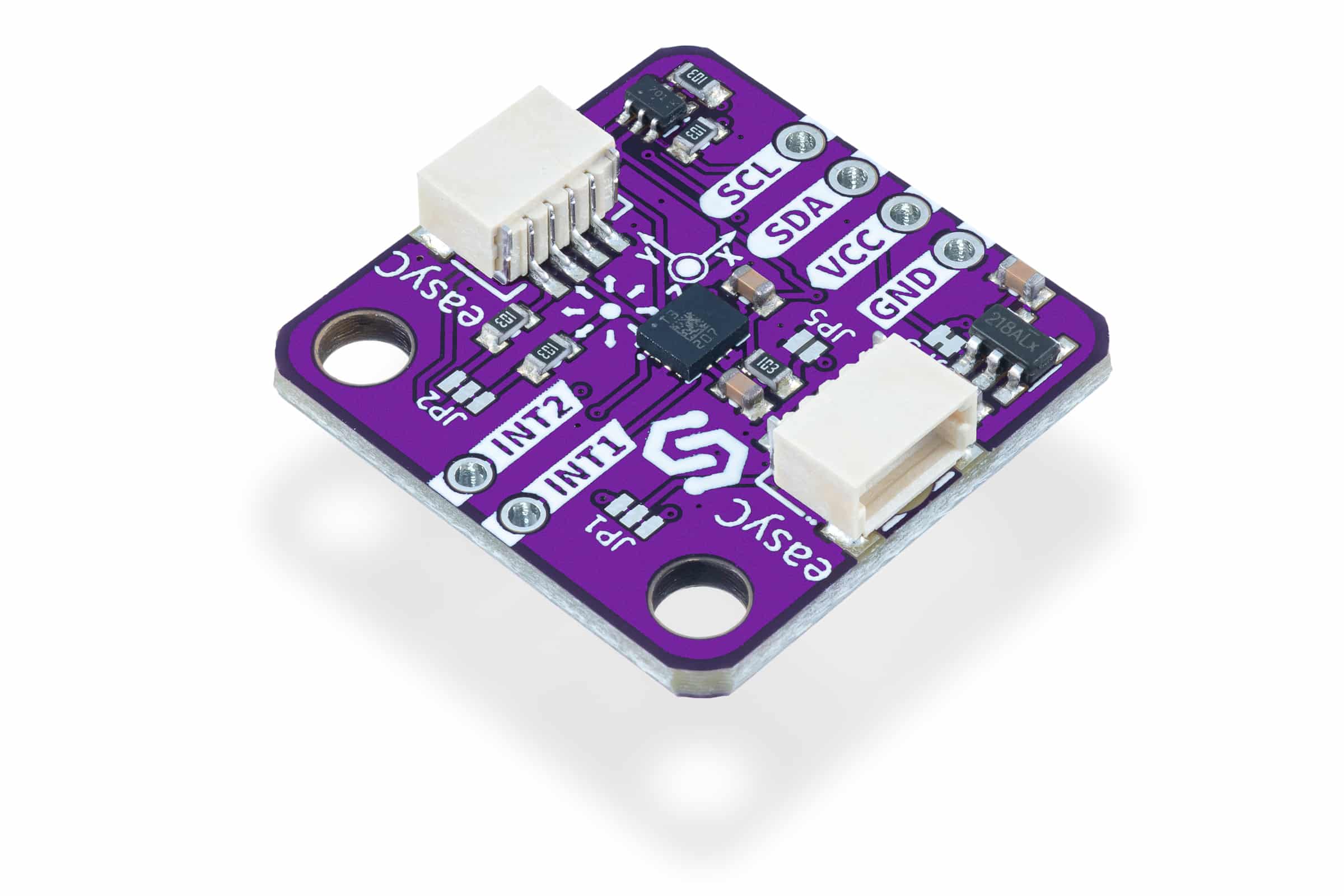
Step into the world of motion sensing with our nifty Accelerometer & Gyroscope LSM6DSO breakout! Small but mighty, this breakout board combines a 3D accelerometer and a 3D gyroscope on one tiny platform, letting you track both static and dynamic motions of your projects with ease. Its compact size doesn’t mean a compromise on performance – in fact, it offers high-resolution measurements of up to ±16 g and ±2000 dps respectively. So whether you’re building a drone, a VR game, or an IoT gadget, our LSM6DSO breakout will be your perfect companion for precise and efficient motion tracking.
Our LSM6DSO breakout is all about combining high-performance capabilities with user-friendly design. It operates on a supply voltage range of 1.71V to 3.6V, making it compatible with both 3.3V and 5V systems. Its power-saving features ensure that your projects keep running smoothly without draining too much energy. So, why wait? Add a dash of engineering magic to your projects with our Accelerometer & Gyroscope LSM6DSO breakout! With I2C interface, it’s a breeze to connect with various microcontrollers.
This breakout board comes with 2 easyC connectors which will simplify connection with microcontrollers. By using the easyC module connection system, forget about incorrectly connected or, in the worst case, damaged modules.
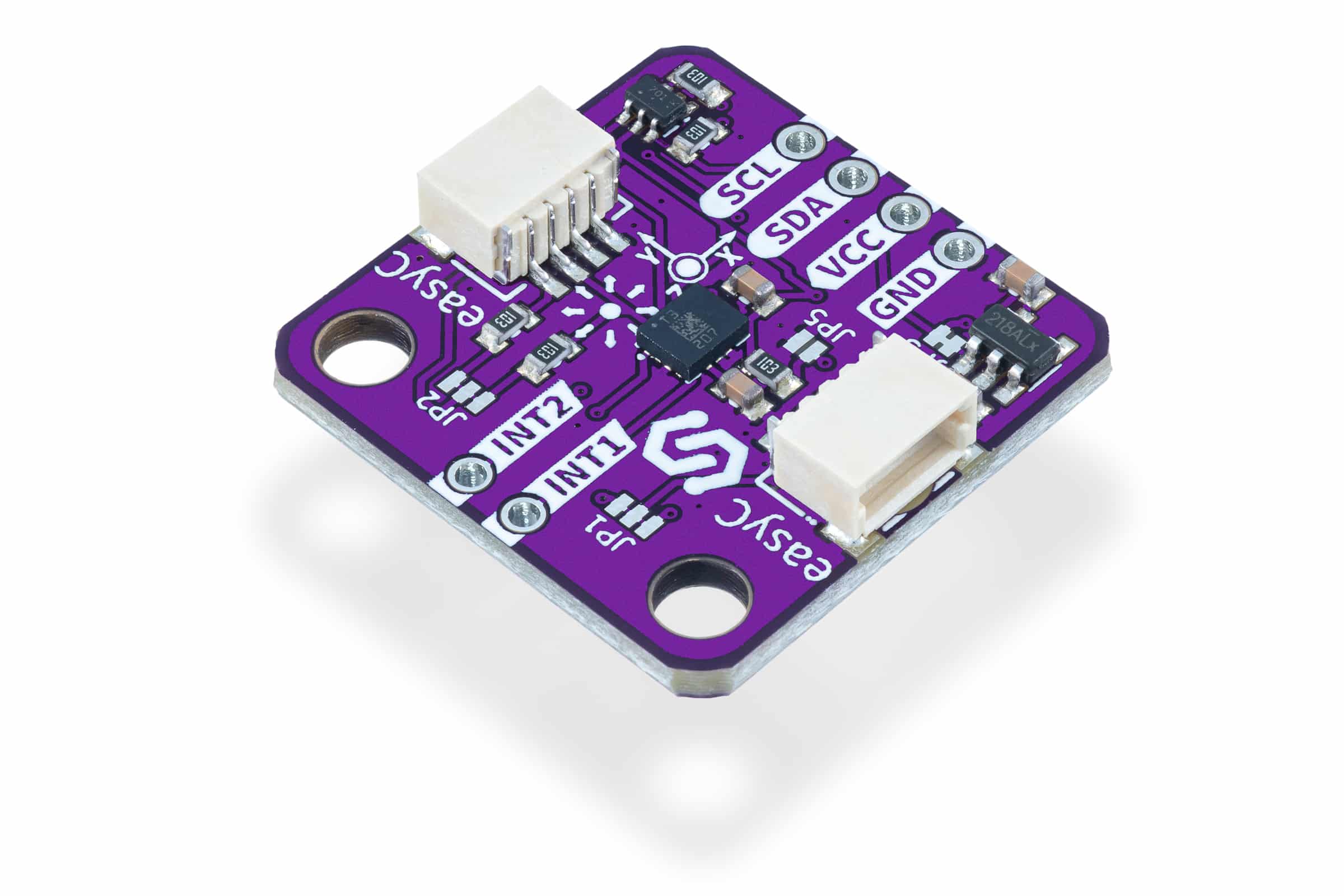
Embrace the fascinating world of motion tracking with our Accelerometer & Gyroscope LSM6DS3 Breakout! This handy little board integrates a 3D accelerometer and a 3D gyroscope, allowing you to monitor both linear acceleration and rotational motion in your projects. Despite its compact form, it packs a punch with high-resolution measurements of up to ±16 g and ±2000 dps respectively. Whether you’re building a gesture-controlled robot, a fitness tracker, or a drone, our LSM6DS3 breakout is here to ensure precision and reliability in every motion tracking task.
But it’s not just about tracking movement. Our LSM6DS3 breakout comes with an array of impressive features to add extra layers of sophistication to your projects. It features an embedded temperature sensor, providing crucial temperature data in environments where accurate motion tracking is a must. Additionally, it boasts a FIFO (First In, First Out) buffer that allows you to store and manage data efficiently, offering you greater control over your motion tracking applications. The board uses I2C interface, providing compatibility with a multitude of microcontrollers.
Our LSM6DS3 breakout is a seamless blend of high performance and user-centric design. Operating on a supply voltage range of 2.5V to 3.6V, it is compatible with both 3.3V and 5V systems. Its low-power operating modes ensure optimal performance without significant energy consumption. Start your journey towards motion mastery with our Accelerometer & Gyroscope LSM6DS3 Breakout and add that unique engineering touch to your projects!
This breakout board comes with 2 easyC connectors which will simplify connection with microcontrollers. By using the easyC module connection system, forget about incorrectly connected or, in the worst case, damaged modules.
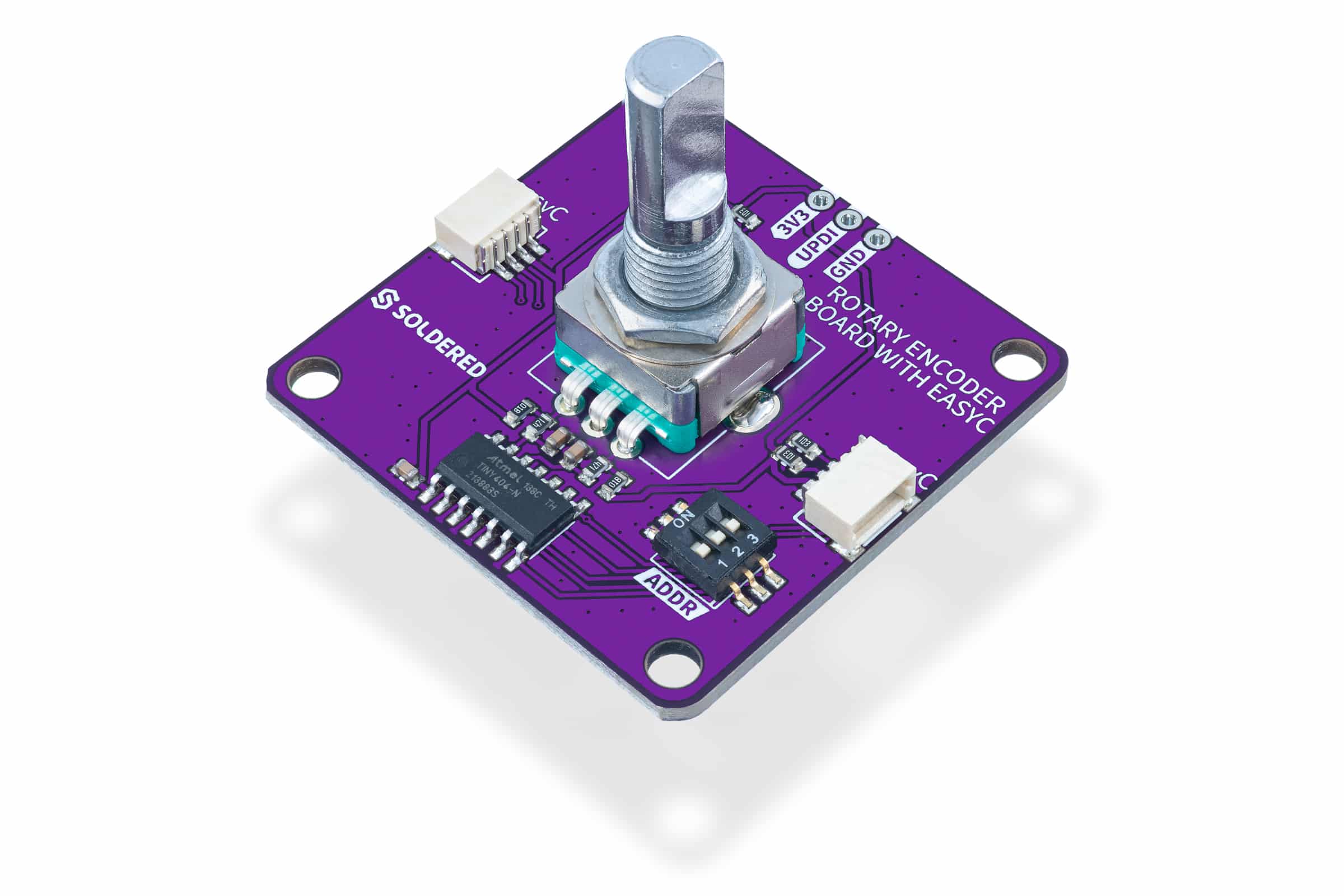
Unleash the potential of digital control with our Rotary Encoder breakout board. Compact and powerful, this module makes working with rotary encoders easy. Rotary encoders are versatile input devices that convert angular position or button movement into digital signals. With the ability to detect direction and distance of rotation, they are perfect for controlling a variety of equipment such as volume knobs on audio devices, motors in robotics, or navigation controls in user interfaces.
Our breakout board simplifies the use of rotary encoders by utilizing easyC technology, making it easily connectable with microcontrollers or other circuits. It accepts input from a rotary encoder and translates it into signals that your microcontroller can interpret. In addition to the aforementioned rotary encoder module, the board also features a small ATTiny404 microcontroller, as well as a switch for selecting the I2C address. This breakout board comes with 2 easyC connectors for easy plug-and-play into the easyC system. If you don’t want to use easyC, the module can also be used via standard headers.

The LSM6DSO32 sensor breakout is a compact and versatile sensor module designed to provide precise motion sensing capabilities for various applications. It is based on the LSM6DSO32, a high-performance 6-axis Inertial Measurement Unit (IMU) manufactured by STMicroelectronics.
The breakout board features a tiny yet powerful chip that combines a 3-axis accelerometer and a 3-axis gyroscope, allowing it to measure linear acceleration and angular rate in three dimensions. This makes it an ideal choice for projects that require motion tracking, orientation detection, gesture recognition, and activity monitoring.
One of the key advantages of the LSM6DSO32 sensor breakout is its low power consumption, making it suitable for battery-powered applications, such as wearables, IoT devices, and remote sensing systems. Additionally, the breakout board offers flexibility and ease of use with its I2C and SPI communication interfaces, allowing seamless integration with a wide range of microcontrollers and development platforms.
This breakout board comes with 2 easyC connectors which will simplify connection with microcontrollers. By using the easyC module connection system, forget about incorrectly connected or, in the worst case, damaged modules.
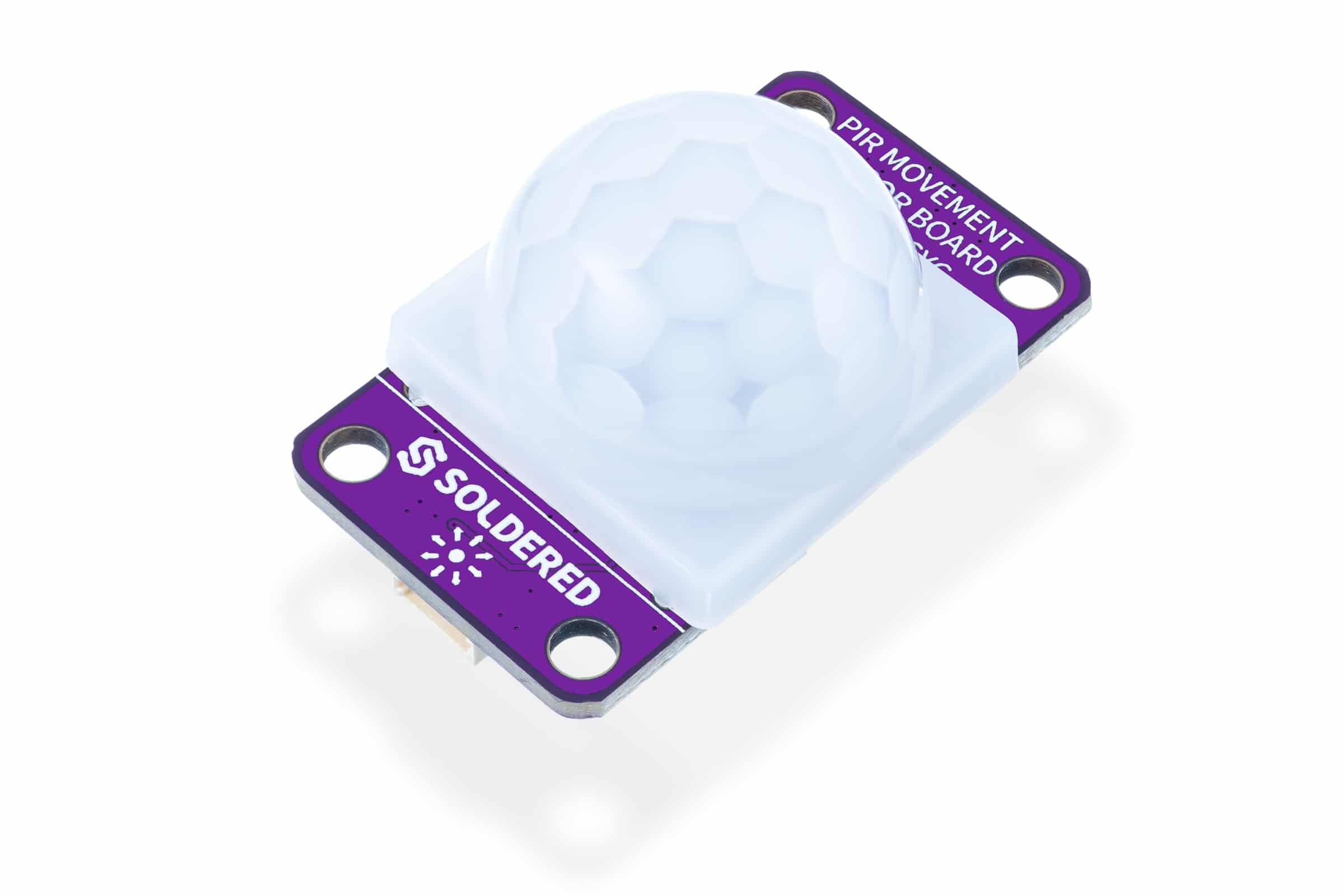
A PIR (passive infrared) motion sensor is a device that detects physical movement within its field of vision by sensing changes in infrared radiation. This sensor works on the principle of detecting thermal thermal signals emitted by objects, mostly warm-blooded creatures like humans. The “passive” in the name refers to the fact that the sensor itself does not emit or radiate any energy for detection.
When it detects motion, the sensor sends a digital signal to the microcontroller. The angle that the sensor “sees” is 100 degrees and reaches up to 5 meters. It is often used in a variety of applications, including home security systems, automatic lighting, and energy management, among others.
Our breakout board simplifies the use of the PIR sensor by using easyC technology, making it easily connectable with microcontrollers or other circuits. It accepts input from the PIR sensor and translates it into signals that your microcontroller can interpret. In addition to the aforementioned PIR sensor, the board also contains a small ATTiny404 microcontroller, as well as a switch for selecting the I2C address. This breakout board comes with 2 easyC connectors for easy integration into the easyC system. If you do not wish to use easyC, the module can also be used via standard headers.
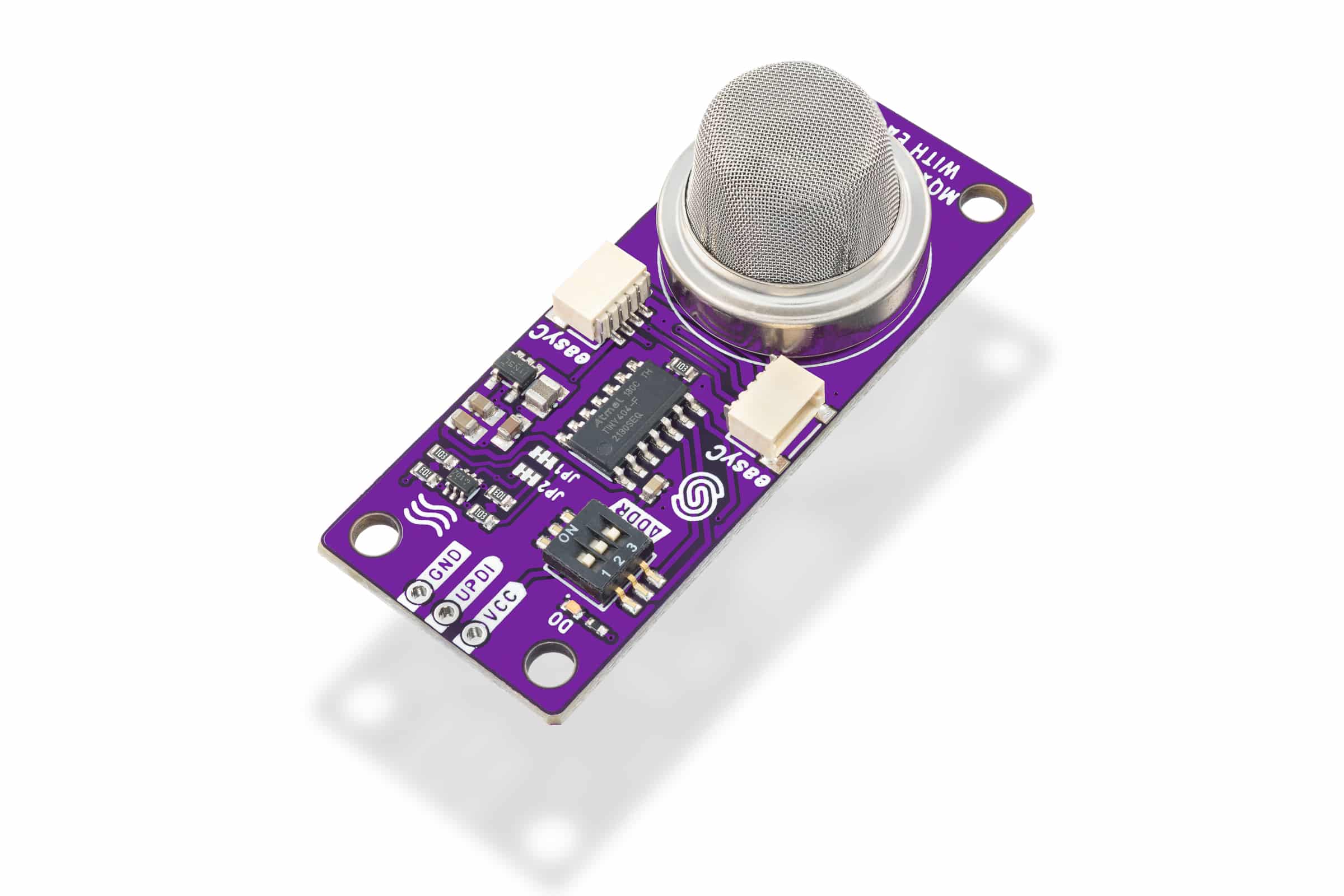
Protect your place from dangerous organic compounds with the MQ138 formaldehyde sensor. Formaldehyde, benzene, toluene, and acetone are invisible health hazards commonly found in new furniture, building materials, paints, and cleaning products – but now you can detect them before they become a problem. Perfect for indoor air quality monitoring, smart home safety systems, and industrial hygiene applications, this intelligent sensor features an onboard microcontroller for accurate, calibrated readings through the convenient Qwiic interface.
Engineered with an integrated microcontroller, this sensor delivers pre-calibrated readings through the Qwiic interface, eliminating analog signal processing and calibration requirements. Please note that you will have to use our Arduino library for the project to ensure correct communication with the onboard microcontroller. Don’t worry, using our documentation, you should find it easy to get started. The digital output provides reliable, consistent measurements while the Qwiic system enables tool-free connection to all Soldered development boards and others which support the Qwiic/easyC/STEMMA-QT interface. The 3.3V operation with onboard regulation ensures compatibility with modern microcontroller systems, while four mounting holes enable secure installation in monitoring applications.
This sensor is ideal for detecting formaldehyde levels in new homes, furniture, and workplace safety monitoring. The LED indicator provides immediate visual feedback when harmful VOC levels are detected. Allow an initial heat-up period (48 hours first run and then each consecutive run 5 mins heat up time) for optimal accuracy. The sensor provides relative concentration readings perfect for trend monitoring and threshold detection. Ideal for triggering ventilation systems or safety alerts. Four mounting holes enable permanent installation in HVAC systems, indoor air quality monitors, or portable testing devices. Compatible with Arduino, Raspberry Pi, and ESP32 through the Qwiic interface. Includes documentation and example code for immediate implementation in air quality monitoring projects. Custom selectable I2C address via onboard switch ensures compatibility with existing projects.
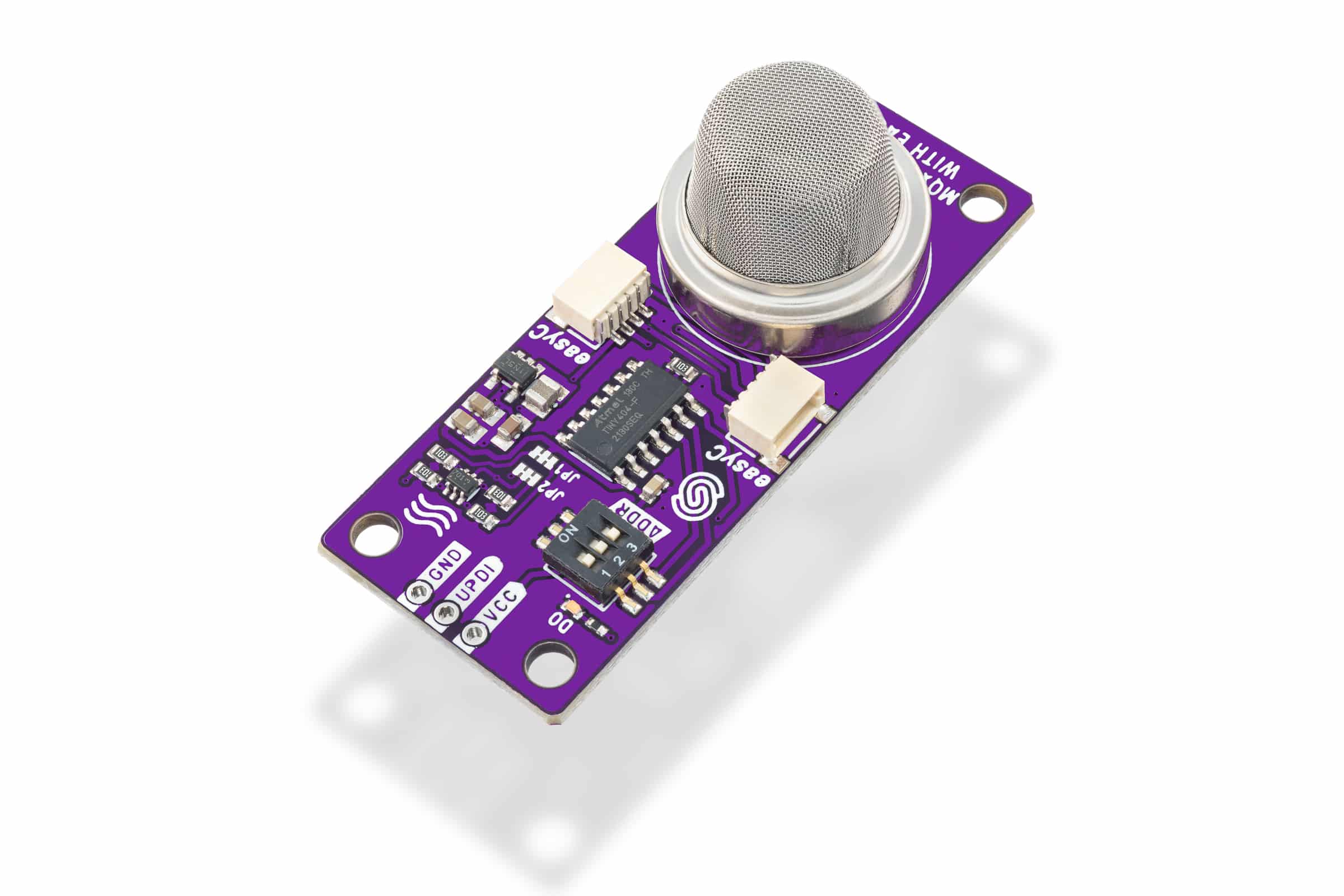
The sensitivity and selectivity of the MQ137 sensor allow it to effectively detect and measure levels of ammonia, making it a valuable tool for applications such as gas leakage detection, agricultural monitoring, and environmental sensing. By integrating the MQ137 sensor with appropriate electronic circuits and microcontrollers like Dasduino, you can create systems that provide real-time monitoring and prompt alerts in the presence of hazardous ammonia concentrations. It requires a short time to heat up in order to work correctly.
The breakout board provides digital and analog information through the easyC system. Sensor readings are obtained through easyC.
Product usage tips:
When gas is detected, the LED will start glowing. It will remain off if it doesn’t detect anything. Four mounting holes enable easy mounting to surfaces. The board comes with three male headers.
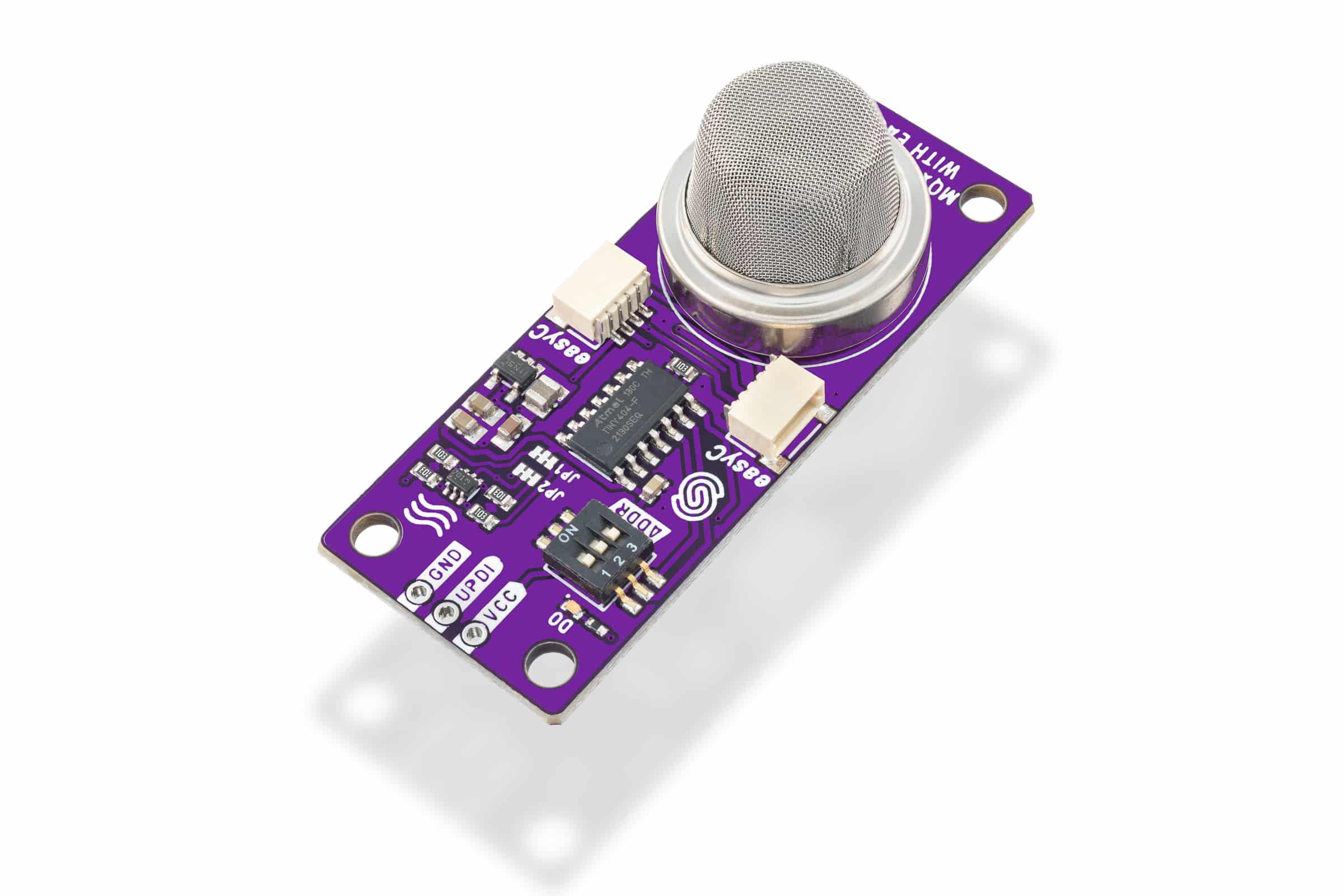
The versatility of the MQ135 sensor allows for its use in applications such as indoor air quality monitoring, gas leakage detection, and environmental sensing. While its main target gas is carbon dioxide (CO2), it is also sensitive to various other gases, including volatile organic compounds (VOCs), alcohol vapors, benzene, smoke, and other harmful gases commonly found in the environment. By integrating the MQ135 sensor with appropriate electronic circuits and microcontrollers like Dasduino, you can create systems that enable real-time monitoring and analysis of gas concentrations, allowing you to take necessary actions to maintain a healthy and safe environment.
The MQ135 air quality measurement module operates at 5V and consumes approximately 150mA. It requires some time to heat up before it can provide accurate results.
The breakout board provides digital and analog information through the easyC system. Sensor readings are obtained through easyC.
Product usage tips:
When gas is detected, the LED will start glowing. It will remain off if it doesn’t detect anything. Four mounting holes enable easy mounting to surfaces. The board comes with three male headers.
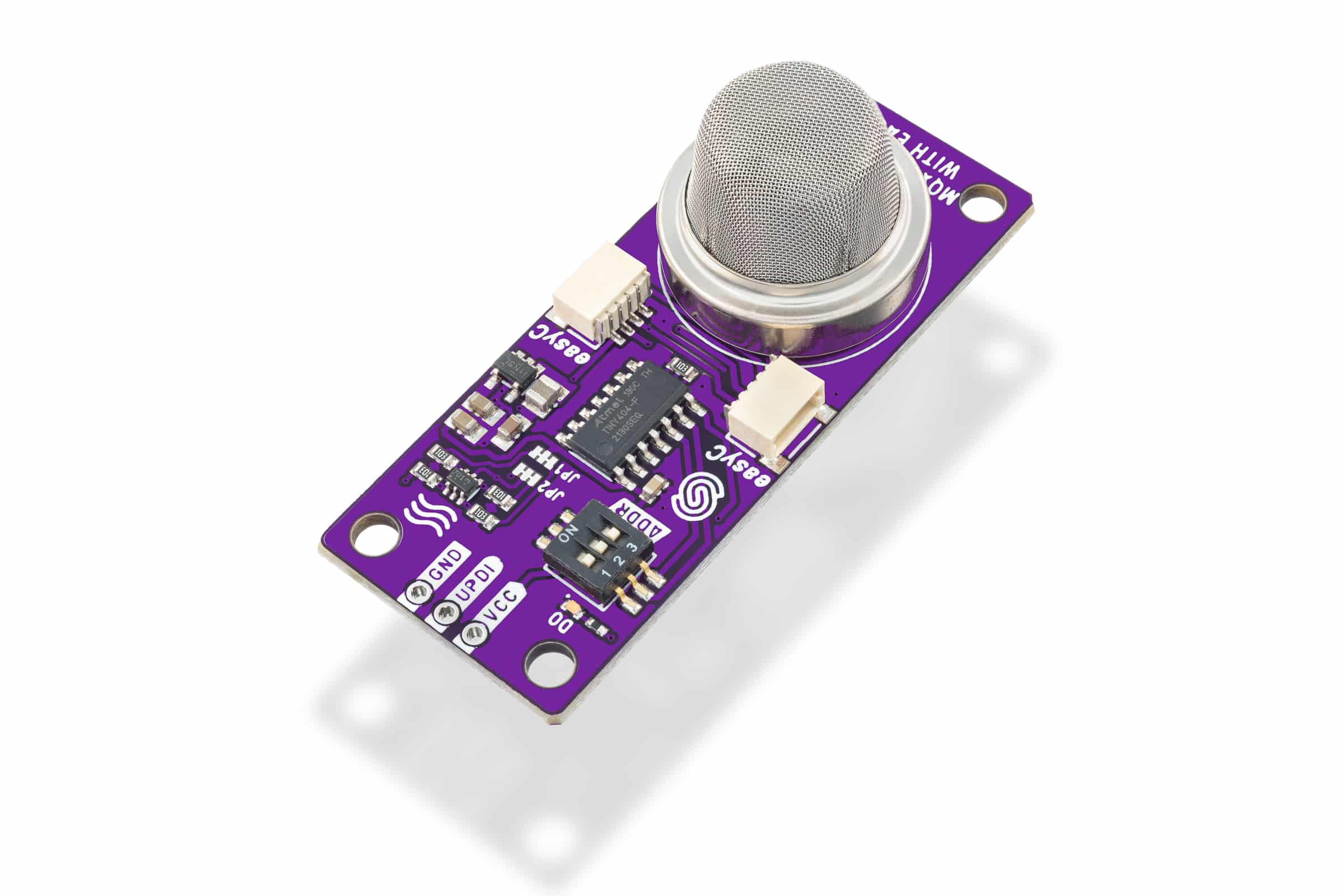
The MQ131-H is the high concentration version of the MQ131 ozone sensor, designed for detecting ozone (O₃) levels in the 10–1000 ppm range. This sensor offers good sensitivity to O₃ and operates on the semiconductor detection principle, making it ideal for industrial and environmental applications.
The sensitivity and selectivity of the MQ131 sensor enable it to effectively detect and measure ozone levels, making it a valuable tool for applications such as air quality monitoring, ozone generators, and ozone leakage detection systems. By integrating the MQ131 sensor with appropriate electronic circuits and microcontrollers like Dasduino, you can create systems that enable real-time monitoring of ozone concentration and trigger alerts when dangerous levels are detected.
The breakout board provides digital and analog readings via the easyC system, allowing smooth integration with platforms that support this interface. Sensor data is easily accessible through easyC.
Product usage tips:
-
-
When gas is detected, the LED will light up. It will remain off if no gas is detected.
-
The board includes four mounting holes for easy installation.
-
Comes with three male headers for UPDI programming the onboard ATTINY, which is not required for normal usage
-
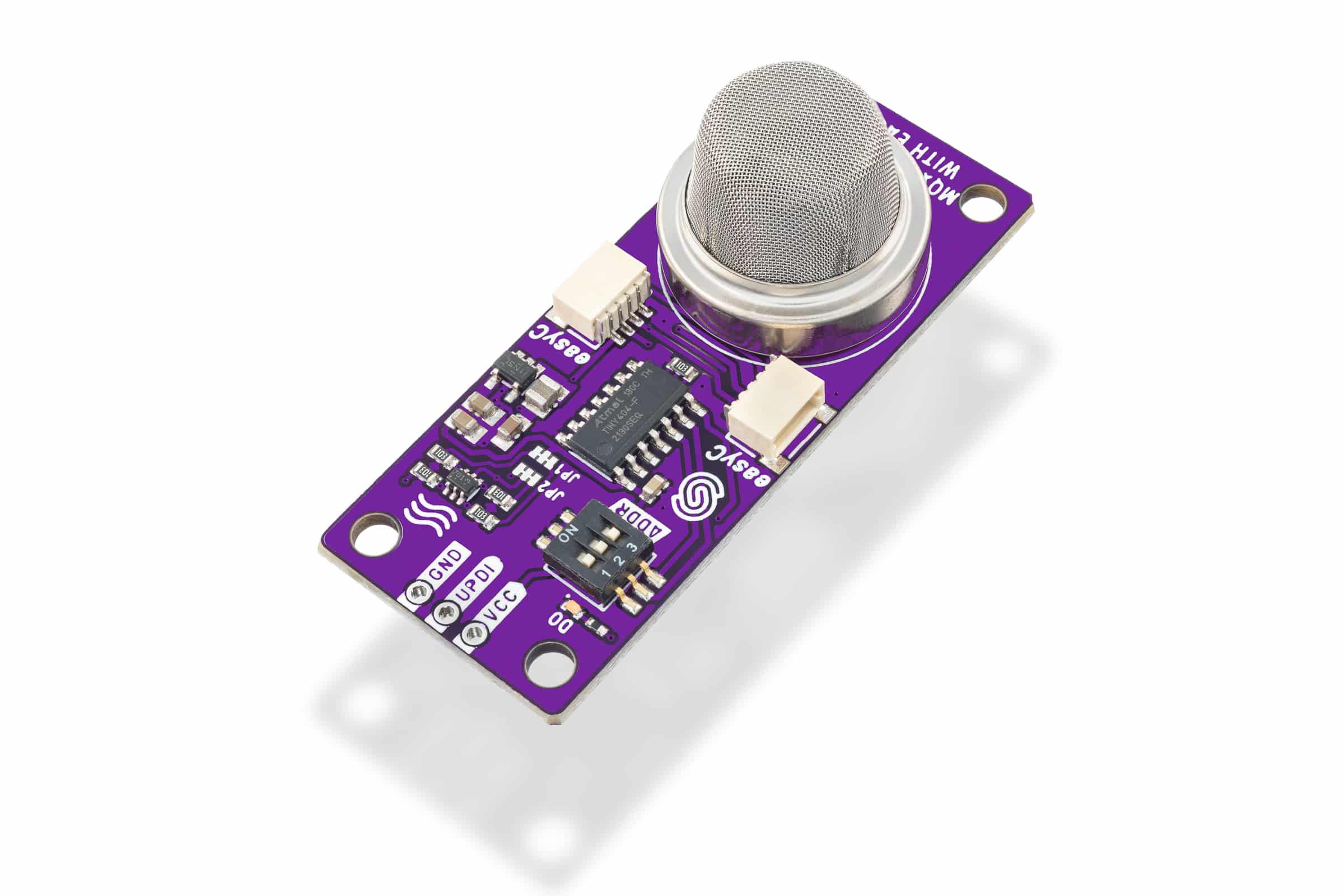
We are surrounded by invisible gases everywhere. Although we generally don’t have to worry about them, in certain circumstances they can be very flammable and dangerous. The MQ9 breakout detects carbon monoxide, methane, propane and other flammable gases so that the right measures can be taken in time. The sensor detects carbon monoxide at 10-1000 ppm and other flammable gases at 100-10000 ppm.
The breakout board provides digital and analog information via the easyC system. Sensor readings are obtained via easyC.
Product usage tips:
When gas is detected, the LED will start glowing. It will remain off if it doesn’t detect anything. Four mounting holes enable easy mounting to surfaces. The board comes with three male headers.
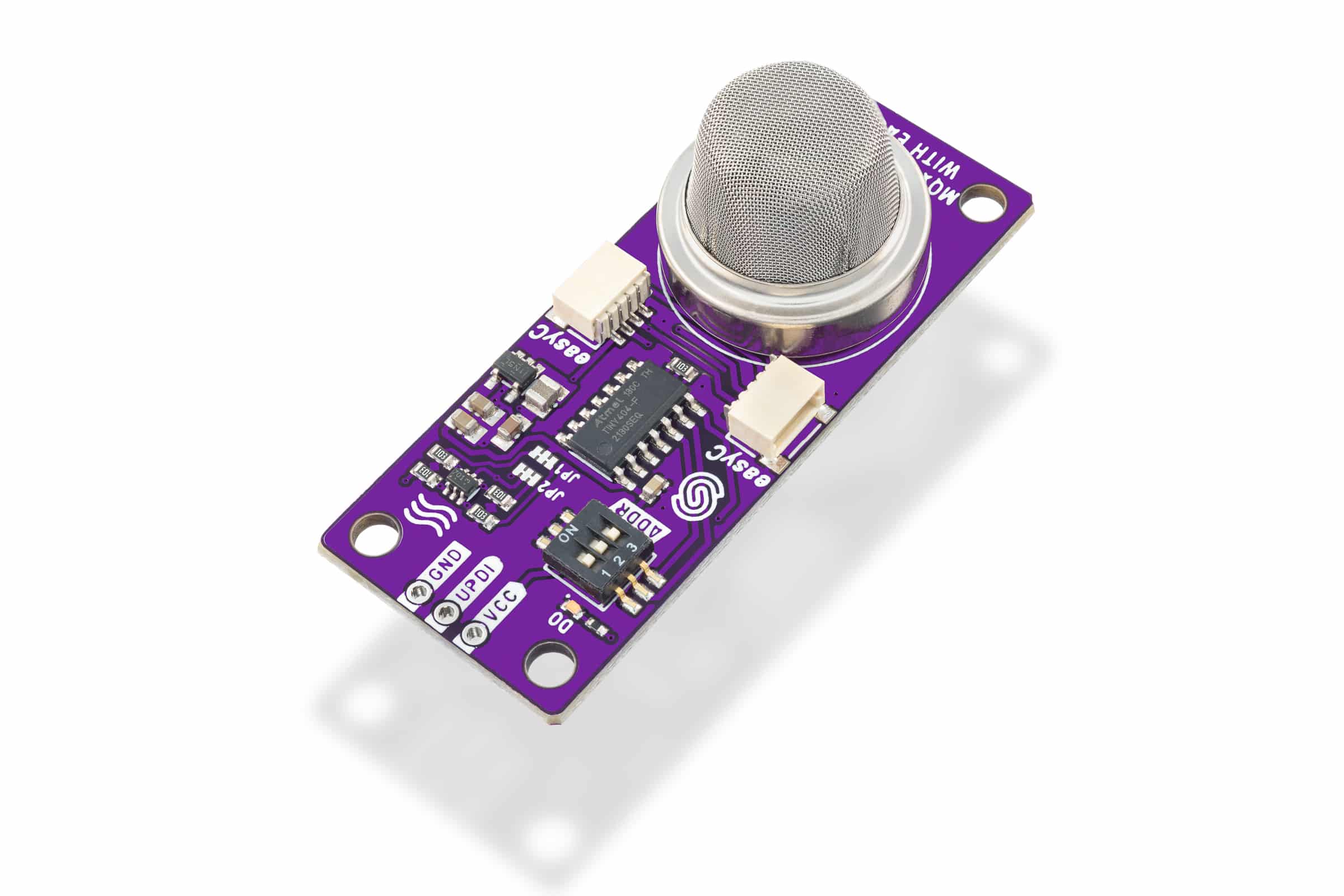
Hydrogen is all around us, and it is dangerous because it is highly flammable. Its leakage can be very dangerous for both life and property. That is why it is important to detect any leakage to prevent such losses in the industry. To do this, hydrogen sensors such as the MQ8 breakout board are used. The sensor detects hydrogen in the range of 100-1000 ppm.
The breakout board provides digital and analog information via the easyC system. Sensor readings are obtained via easyC.
Product usage tips:
When gas is detected, the LED will start glowing. It will remain off if it doesn’t detect anything. Four mounting holes enable easy mounting to surfaces. The board comes with three male headers.
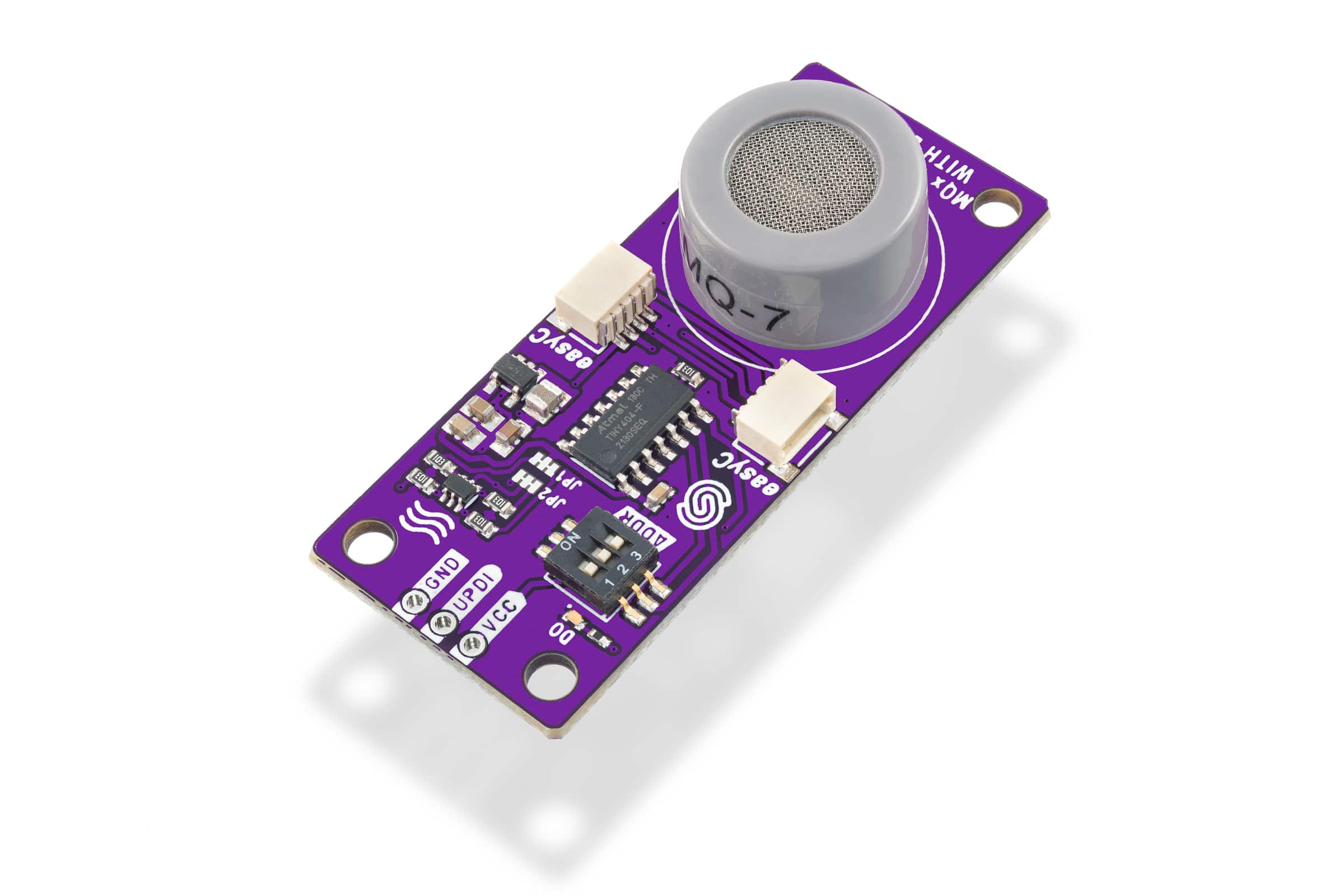
The sensitivity and selectivity of the MQ7 sensor enable it to effectively detect and measure carbon monoxide levels, making it a crucial tool for applications such as gas leakage detection, security systems, and environmental monitoring. By integrating the MQ7 sensor with appropriate electronic circuits and microcontrollers like Dasduino, you can create systems that enable real-time monitoring and prompt alerts in the presence of hazardous CO concentrations. It requires a short time to warm up in order to work correctly.
The breakout board provides digital and analog information through the easyC system. Sensor readings are obtained through easyC.
Product usage tips:
When gas is detected, the LED will start glowing. It will remain off if it doesn’t detect anything. Four mounting holes enable easy mounting to surfaces. The board comes with three male headers.
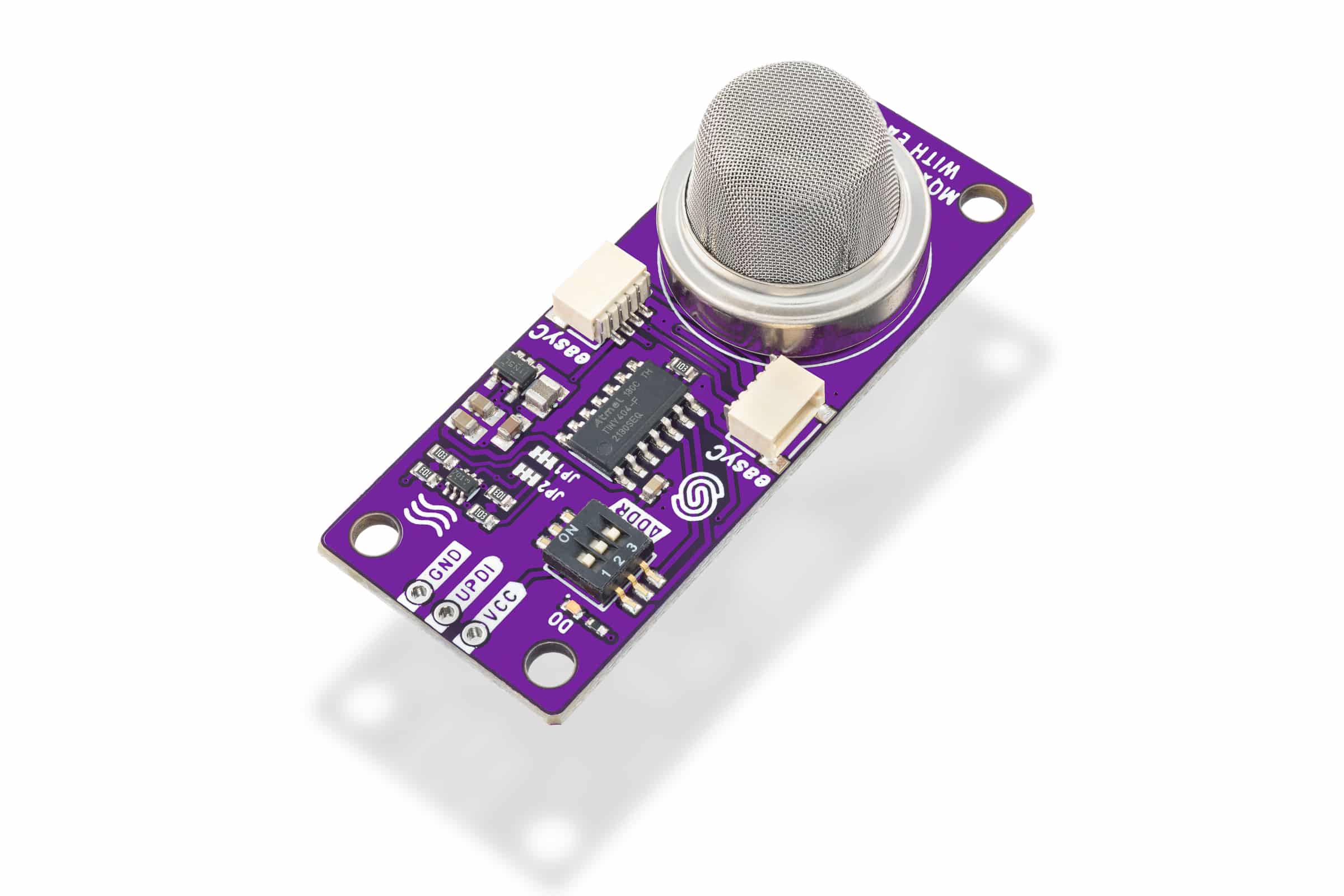
Humans can detect many smells, but may have difficulty distinguishing gases. That’s why we use sensors like the MQ6 that detects LPG and butane in the air. When heated to the optimal operating temperature, it very quickly detects changes in air concentration between 200 and 10,000 ppm.
The breakout board provides digital and analog information via the easyC system. Sensor readings are obtained via easyC.
Product usage tips:
When gas is detected, the LED will start glowing. It will remain off if it doesn’t detect anything. Four mounting holes enable easy mounting to surfaces. The board comes with three male headers.
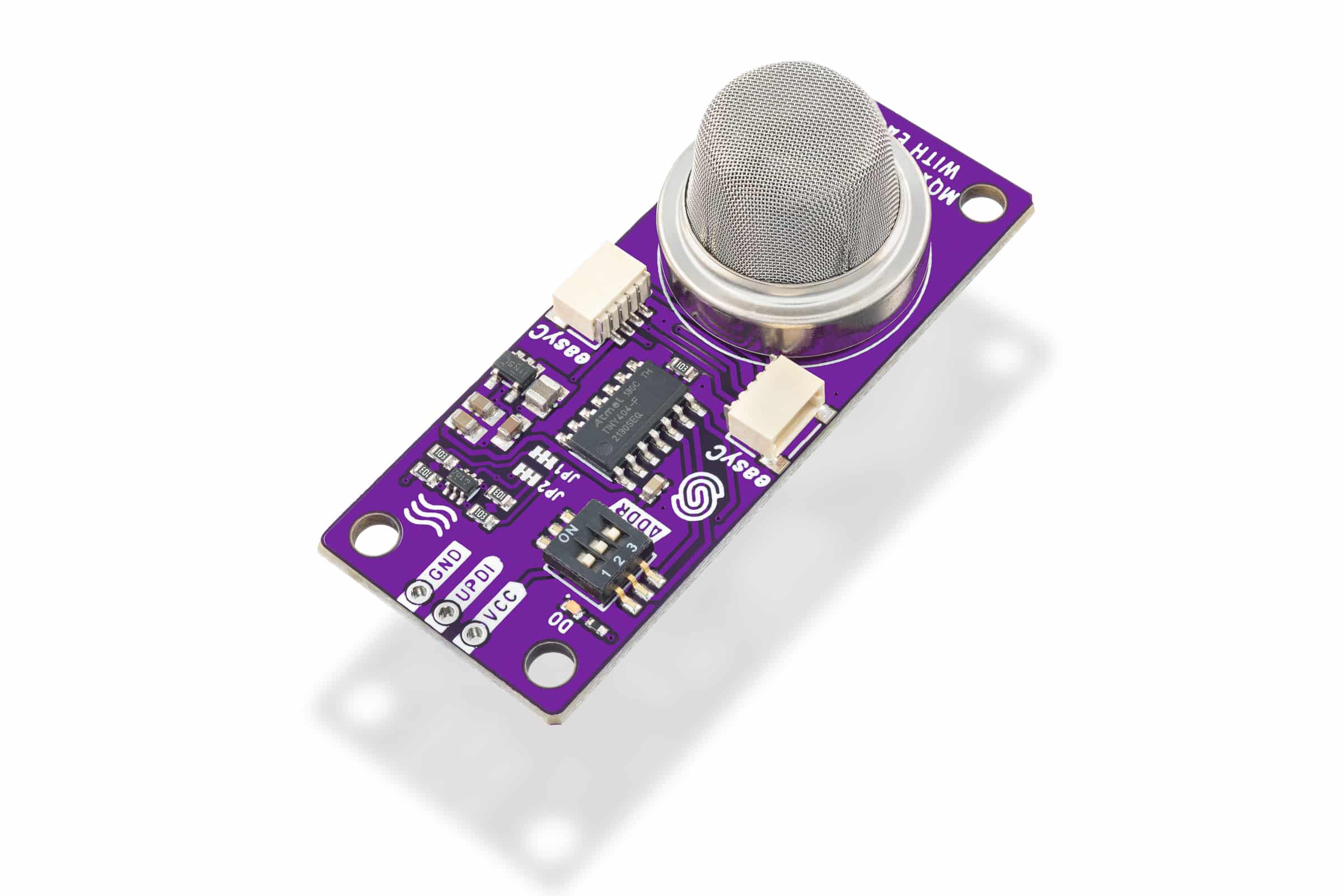
Is your office located near a high traffic area? Are you concerned about the presence of natural and liquefied petroleum gases in your work environment? The MQ series sensors can help detect various gases, and the MQ5 sensor is an easy-to-use sensor that provides information about the levels of natural gases and LPG (liquefied petroleum gas) in your surroundings. It quickly detects gas particles in the range of 200 to 10,000 ppm.
The breakout board provides digital and analog information through the easyC system. Sensor readings are obtained through easyC.
Product usage tips:
When gas is detected, the LED will start glowing. It will remain off if it doesn’t detect anything. Four mounting holes enable easy mounting to surfaces. The board comes with three male headers.

The Methane/CNG Sensor MQ4 Breakout with Qwiic offers a reliable, compact solution for detecting combustible gases like Methane (CH4) and Compressed Natural Gas (CNG). Built around the sensitive MQ-4 sensor, the board includes an ATTiny404 MCU that converts the analog signal to a digital I²C output, simplifying integration and eliminating the need for external ADCs or complex calibration. This ready-to-use module is ideal for environmental monitoring and safety applications.
Designed for easy integration, the breakout features a 4-pin Qwiic (formerly easyC) connector, allowing solder-free connection to Qwiic-enabled development boards. The I²C interface supports multiple sensors on a single bus and works with a range of microcontrollers, from Arduino to Raspberry Pi. Low power consumption makes it suitable for battery-powered or remote monitoring systems, while the robust design ensures long-term stability in demanding environments.
Perfect for portable gas leak detectors, automated ventilation systems, or air quality monitoring stations, the MQ4 breakout provides accurate, digital gas sensing for both educational and professional projects. Simply connect via the Qwiic port to your microcontroller and start monitoring Methane and CNG immediately.
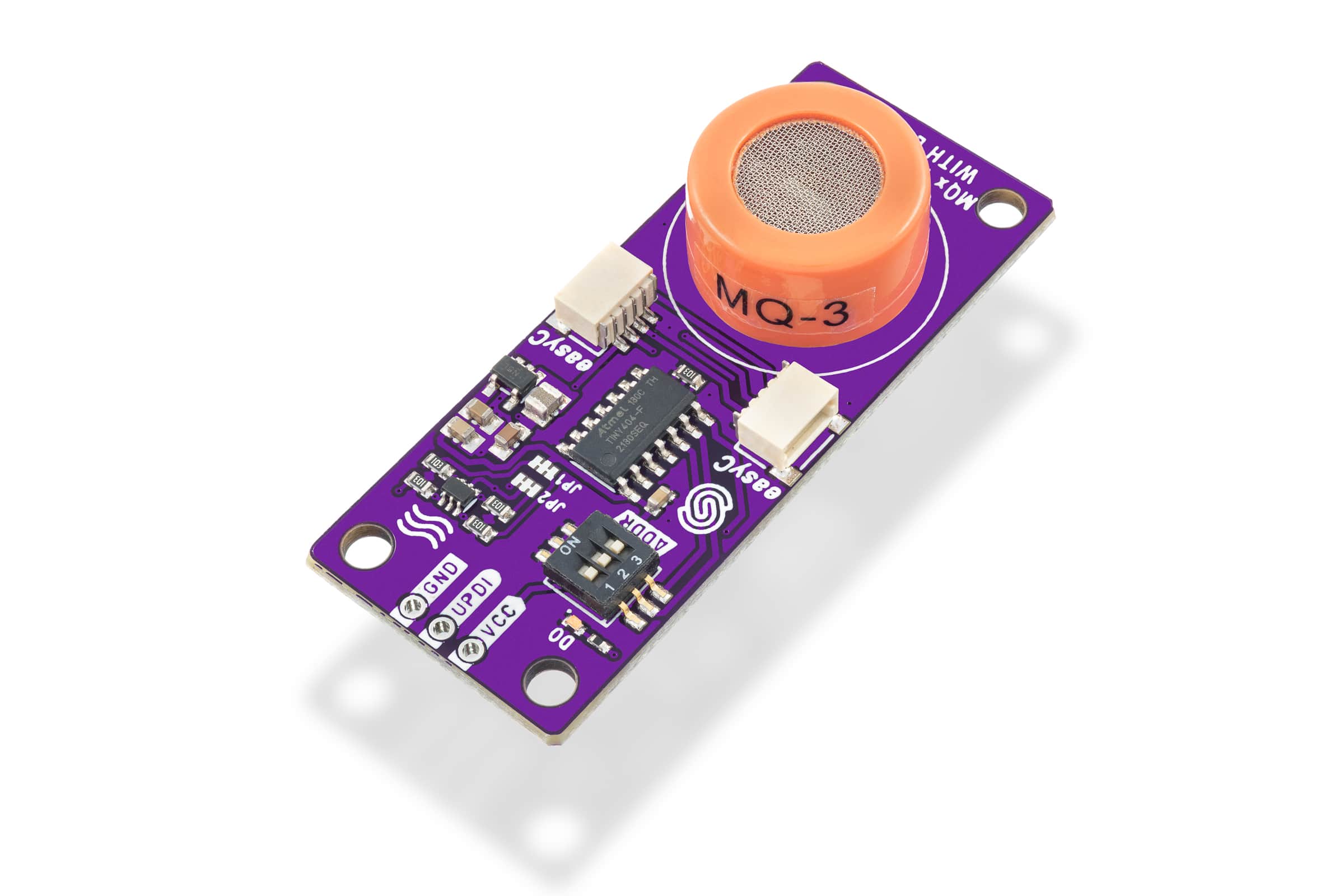
MQ sensors, including the MQ3 sensor, have the capability to detect various gases. The MQ3 sensor is specifically designed to detect alcohol vapors. This means it is sensitive to alcohols such as methanol, ethanol, and isopropanol. The MQ3 sensor is commonly used for measuring alcohol concentration in the air and serves as a useful tool for alerting to the presence of alcohol in the environment.
It is important to note that MQ sensors are not specific to only one gas and can react to other gases besides the ones they are specifically designed for. Therefore, it is important to use the MQ3 sensor exclusively for alcohol detection and follow the manufacturer’s instructions to achieve optimal accuracy and reliability of measurements. It requires a short time to heat up in order to work correctly.
The breakout board provides digital and analog information through the easyC system. Sensor readings are obtained through easyC.
Product usage tips:
When gas is detected, the LED will start glowing. It will remain off if it doesn’t detect anything. Four mounting holes enable easy mounting to surfaces. The board comes with three male headers.

MQ sensors, including the MQ2 sensor, have the capability to detect various gases. The MQ2 sensor is specifically designed to detect combustible gases such as LPG (liquefied petroleum gas), butane, propane, methane, alcohol, hydrogen, and smoke. These gases are commonly found in residential, industrial, and automotive environments. The sensor’s sensitivity and responsiveness enable it to detect even trace amounts of these gases, making it a valuable tool for gas leakage detection, fire detection, and air quality monitoring. It takes a short time to heat up in order to work correctly.
The breakout board provides digital and analog information through the easyC system. Sensor readings are obtained through easyC.
Product usage tips:
When gas is detected, the LED will start glowing. It will remain off if it doesn’t detect anything. Four mounting holes enable easy mounting to surfaces. The board comes with three male headers.

ADC (Analog Digital Converter) is a device that reads analog signals (just like the analogRead () function in Arduino IDE) and converts them into digital signals that can be read by a microcontroller. This breakout is based on the ADS1015 ADC, which reads values in 12-bit resolution, receives a maximum of 3.3V on its inputs and has a total of 4 channels (which can also be used as two differential). Works great with any microcontroller at 5V. It has 2 easyC connectors for easier connection on I2C communication.

The hall effect sensor (Hall Effect sensor) will be able to detect the magnetic field in its vicinity thanks to the aforementioned physical law. A magnetic field that can be created by a magnet, a current flowing through a conductor or some third source, the Hall effect sensor will recognize each.
This sensor has a programmed threshold at which it will change the state of its output signal, so it is a sensor with a digital output. Through the easyC connectors, it enables a simple connection with the microcontroller.
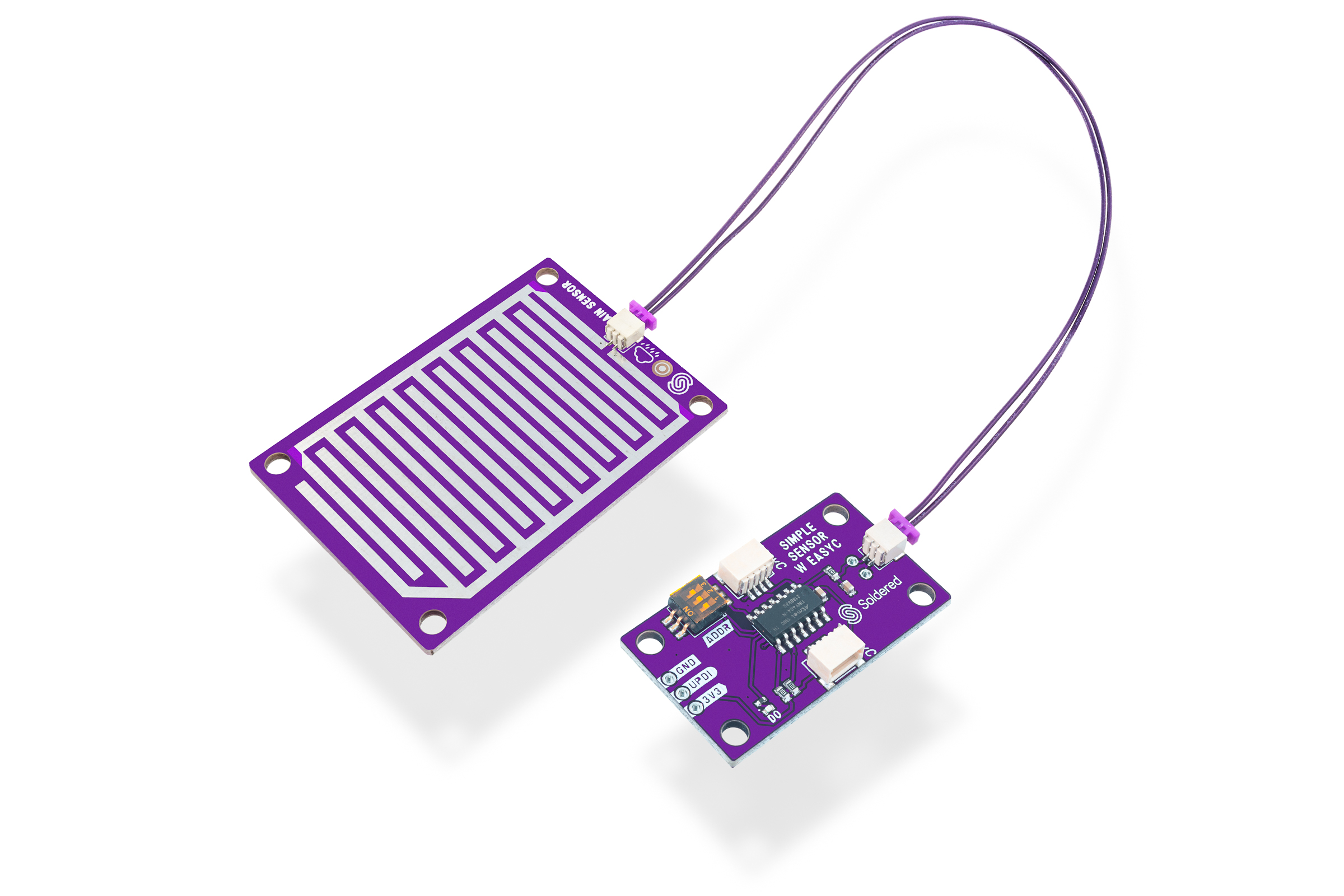
This sensor has two pieces – the rain sensor and the simple sensor. The rain sensor has nickel-coated lines on both sides. It measures moisture and outputs the data to the simple sensor that reads it. The simple sensor comes with easyC connectors onboard, which enables quick and easy connection with Dasduino microcontroller boards.
With the easy-to-use simple rain sensor, farmers can save water in irrigation. The sensor will alert them to shut down the water supply when it senses rain. It can even act as an automatic on and off switch, like turning on wipers on a car when it senses rain.

11 years in the industry

Customers in 80+ countries

20,000+ satisfied customers
