





-
My cartSub-total: Subtotal: €19.45

- Dasduino (Arduino-compatible)

- Inkplate

- easyC ecosystem

- Raspberry Pi & Micro:bit

- Breadboards & Cables

- Batteries & Power supplies

- Kids

- Sensors

- Actuators

- Communication

- Tools & Lab equipment

- Soldering kits

- Components

- Sale

Input devices
This category includes input devices such as joystick module, membrane keyboards, cameras, fingerprint sensor, slider potentiometer etc.
Showing all 7 resultsSorted by latest
Coming soon
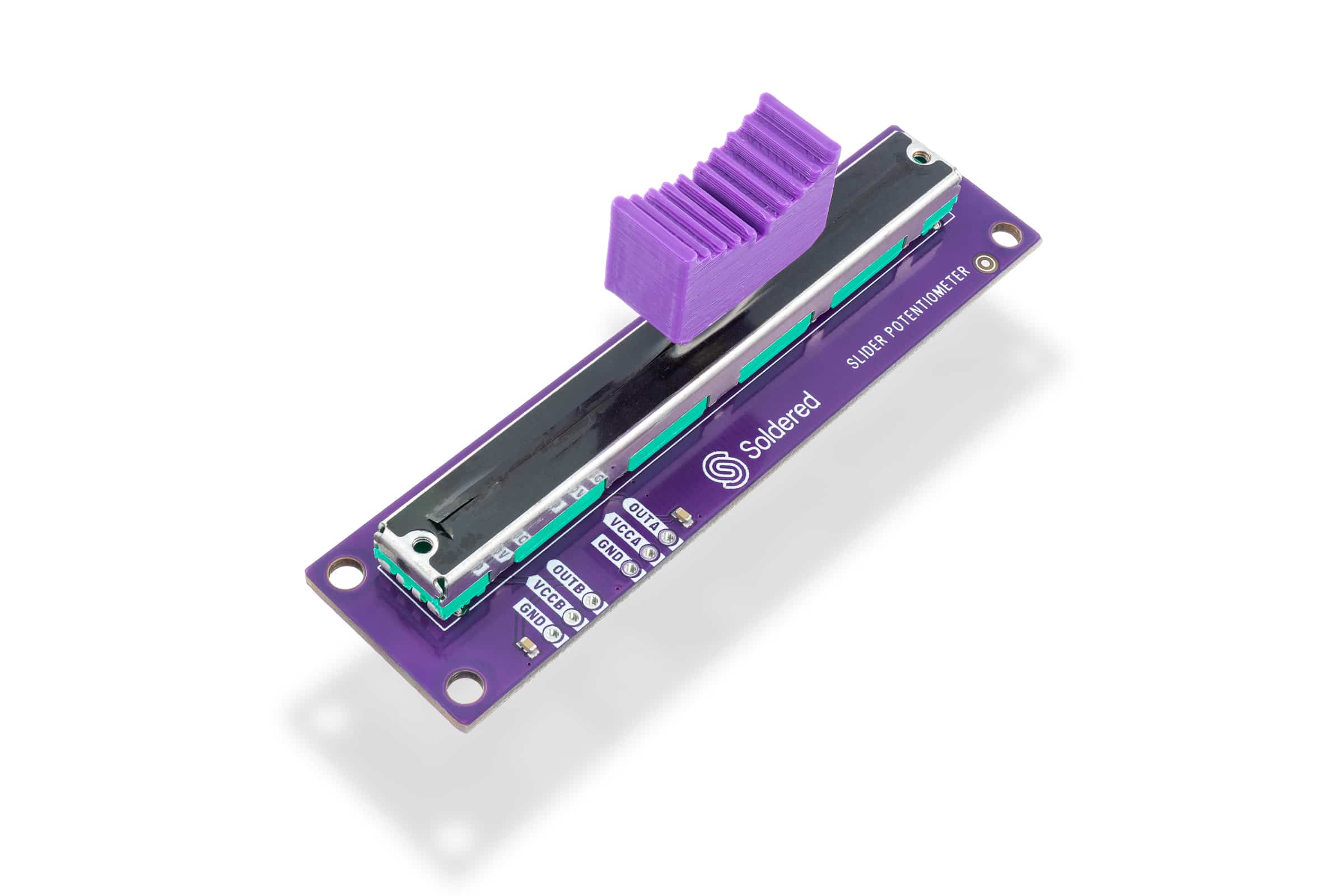
Slider potentiometer breakout
Potentiometers are well known all around, and the sliding potentiometer is just one of its versions.You’ve probably seen it in some music equipment, and now you have the chance to add it to your project!
• Type: linear
• Resistance: 10k
• Dimensions: 86 x 22 mm

ADC 12-bit ADS1015 4-channel with PGA breakout
ADC (Analog Digital Converter) is a device that reads analog signals (just like the analogRead () function in Arduino IDE) and converts them into digital signals that can be read by a microcontroller. This breakout is based on the ADS1015 ADC, which reads values in 12-bit resolution, receives a maximum of 3.3V on its inputs and has a total of 4 channels (which can also be used as two differential). Works great with any microcontroller at 5V. It has 2 easyC connectors for easier connection on I2C communication.
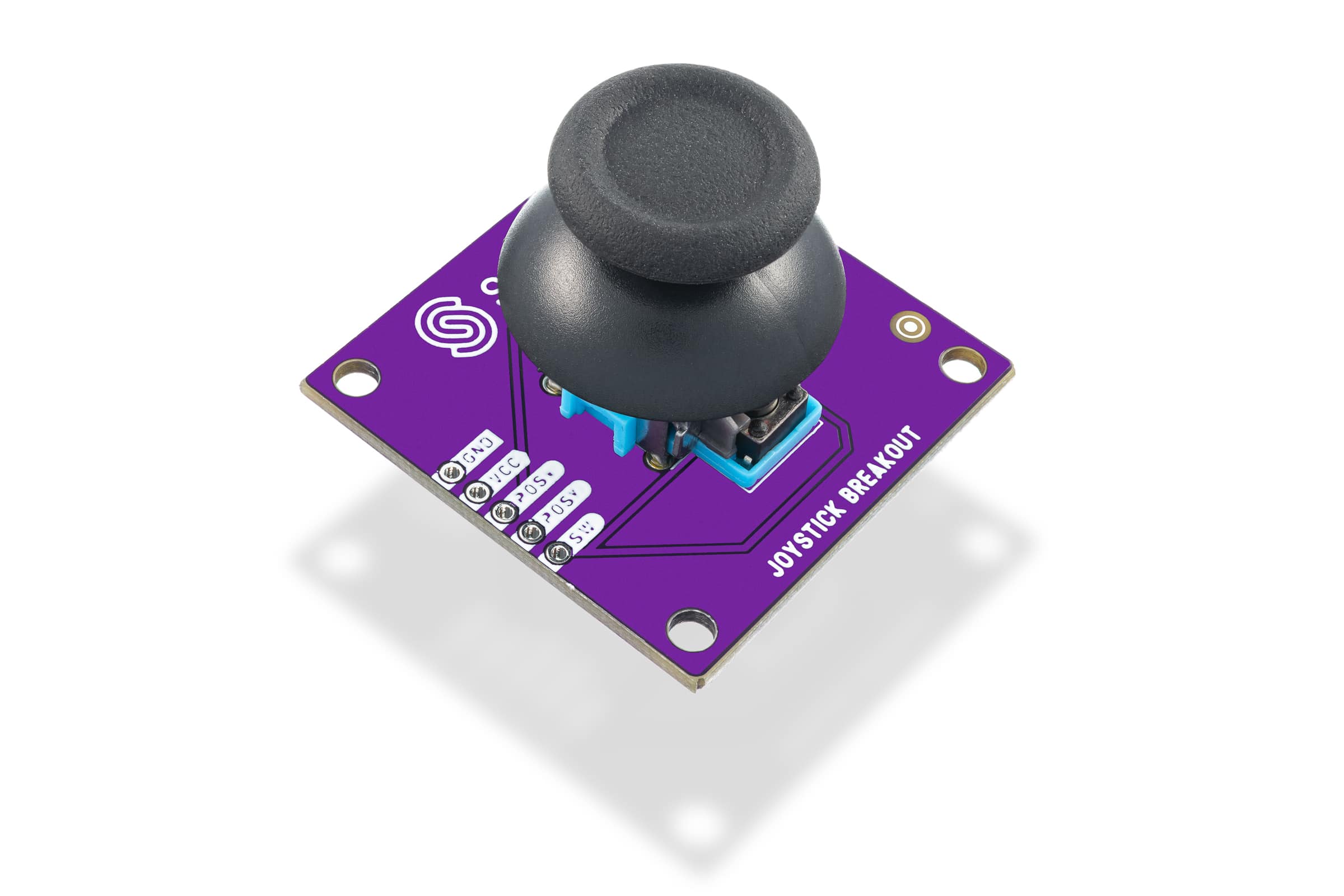
Joystick 2-axis with pushbutton breakout
Joystick module is well known to all – it is identical to the one found in the PlayStation2 joystick. Whether you are making a game with a microcontroller or want more freedom while navigating a joystick module will come handy.
It reads X and Y position of the joystick knob (used for controlling) and whether the joystick is being pressed down. X and Y values are shown in the form of analog values while reading off if the joystick is pressed or not is shown in the form of digital value (HIGH/LOW; it has pull-up resistor).
Coming soon
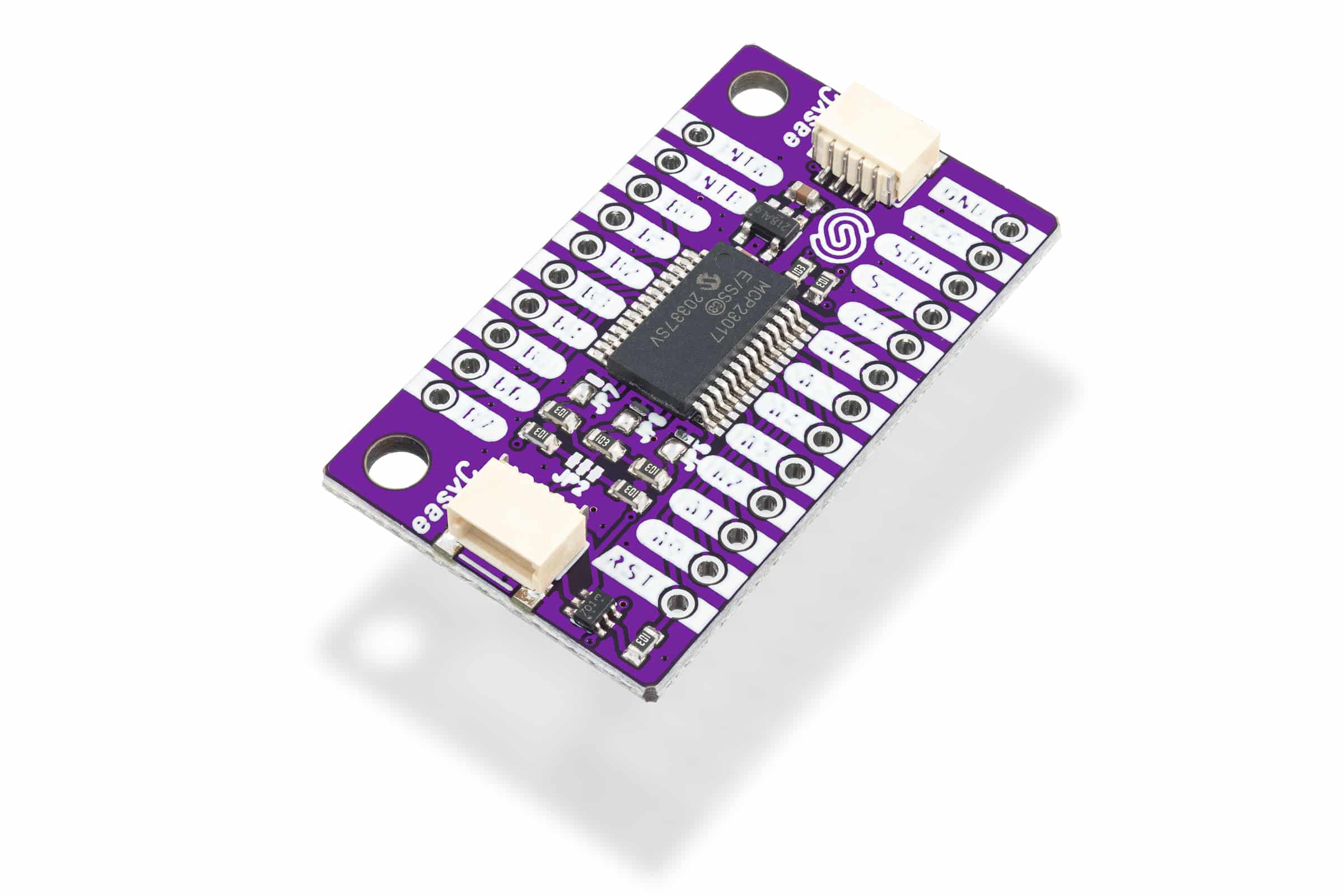
IO expander MCP23017 breakout
Running out of IO pins on your microcontroller? The MCP23017 I2C IO Expander is the perfect solution, allowing you to add 16 fully configurable digital IO pins to your project with just two wires (I2C protocol). The pins can be driven using our Arduino and MicroPython libraries. It’s a powerful tool that enables you to build bigger and complex projects without upgrading your microcontroller. Whether you’re driving multiple LEDs, reading a large array of buttons, or managing a complex sensor network, this IO expander provides the extra capacity you need.
Each pin can be individually configured as an input, output, or input with an internal pull-up resistor. The ability to change the I2C address via onboard jumpers means you can connect up to eight of these breakout boards to a single microcontroller, giving you a massive 128 additional IO pins. With the ability to sink or source up to 25mA per pin, you can directly drive LEDs and other components without the need for extra driver circuitry. This makes it perfect for students learning about digital electronics, makers building custom control panels, and engineers prototyping complex systems.
What makes this breakout special is its seamless integration into our Qwiic ecosystem, allowing for quick connections to your favorite boards and other I2C modules. As with all our products, it’s open-source, with all design files available for you to modify and adapt. Plus, as with all our products, 2-year warranty and technical support are included.
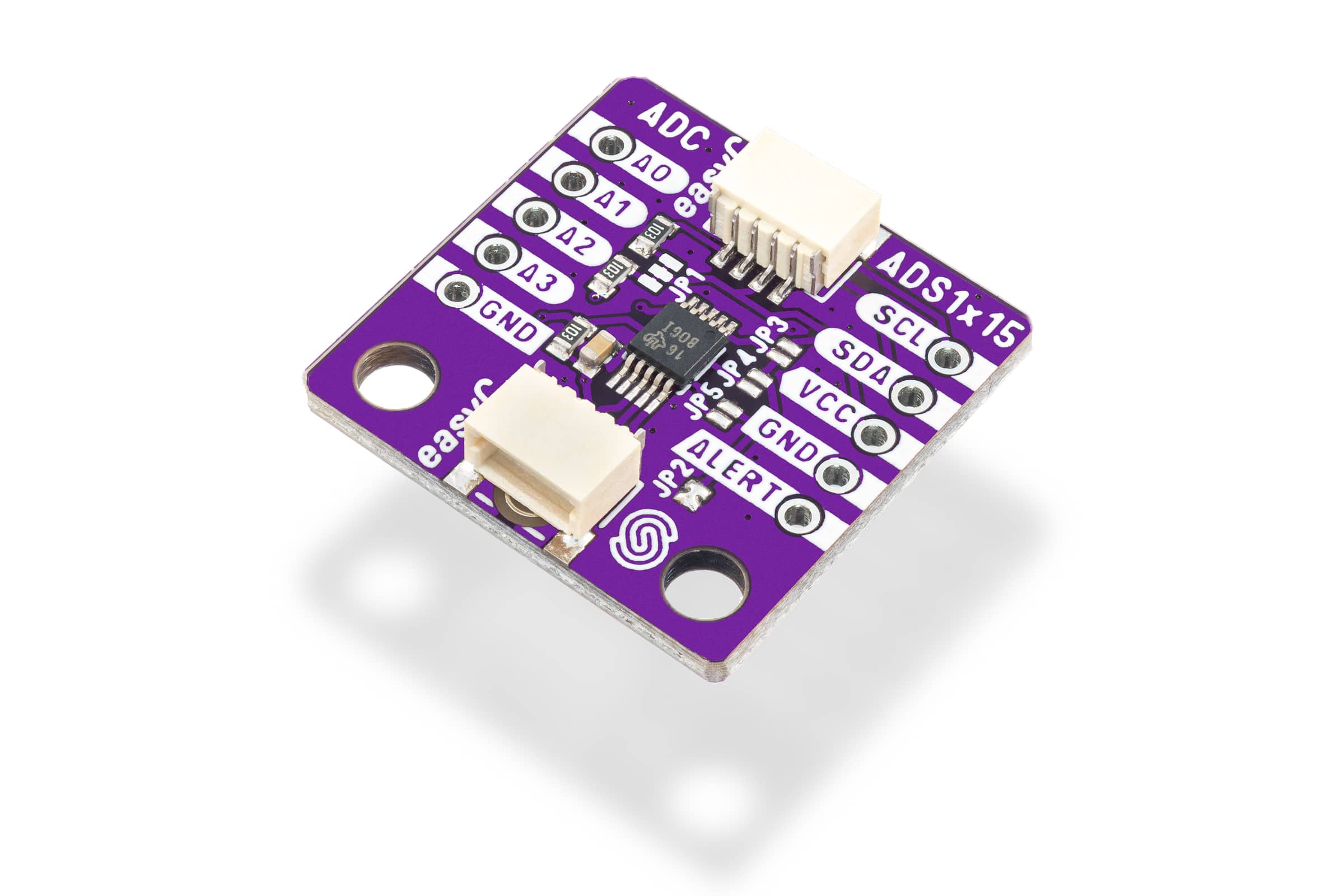
ADC 16-bit ADS1115 4-channel with PGA breakout
The ADS1115 16-Bit ADC delivers analog to digital conversion for precision measurement applications. This high-performance breakout board features Texas Instruments’ industry-standard ADS1115 chip, providing 16-bit resolution at up to 860 samples per second with built-in programmable gain amplifier (PGA) for optimal signal conditioning. Perfect for Arduino, Raspberry Pi, and microcontroller projects requiring accurate analog signal measurement beyond standard 10-bit ADC capabilities.
With its wide 2V-5.5V supply range and I2C interface, the ADS1115 offers versatility for various measurement scenarios. The programmable gain amplifier provides selectable gains from ±6.144V down to ±0.256V full-scale range, enabling precise measurement of both large and small signals. Four single-ended channels can be configured as two differential pairs, while the built-in voltage reference ensures measurement stability. The easyC connector system simplifies integration, eliminating wiring errors and enabling rapid prototyping for sensor networks, data acquisition systems, and precision measurement applications.
Applicable for sensor networks, building data acquisition systems, or upgrading Arduino projects with analog measurement capabilities, the ADS1115 provides the accuracy and reliability. With comprehensive documentation and professional EU manufacturing quality, this ADC module delivers precision in a maker-friendly package. With our extensive Arduino library, you can get started quickly, without soldering, using our Qwiic (easyC) connector.
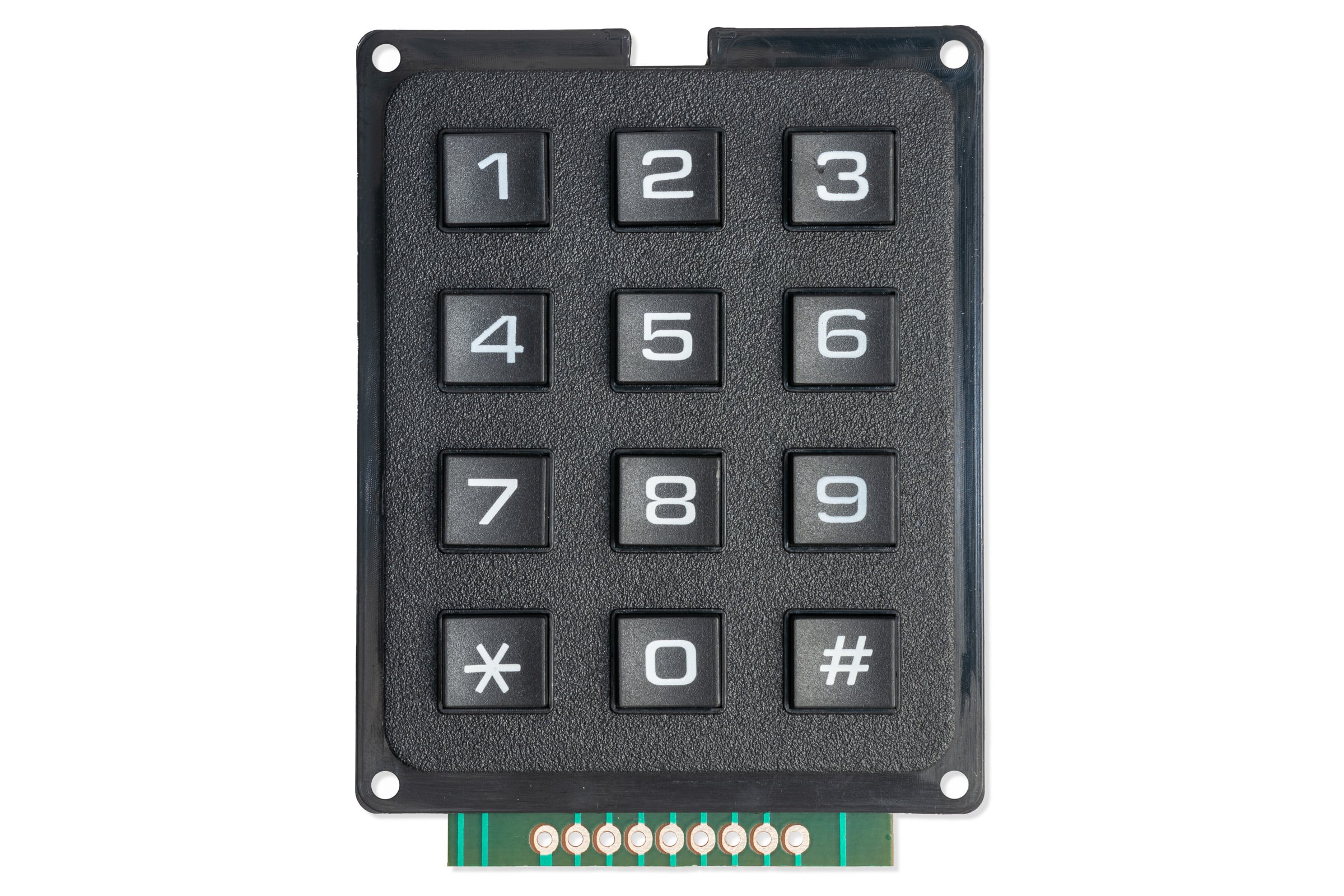
Matrix keyboard 3x4
Matrix keyboard is a system of 12 buttons that are interconnected that allowes us a more complex data input on Croduino/Arduino. With this keyboard you will create whole systems of menus, data entry and settings of various parameters.
• Dimensions: 70 x 50 mm
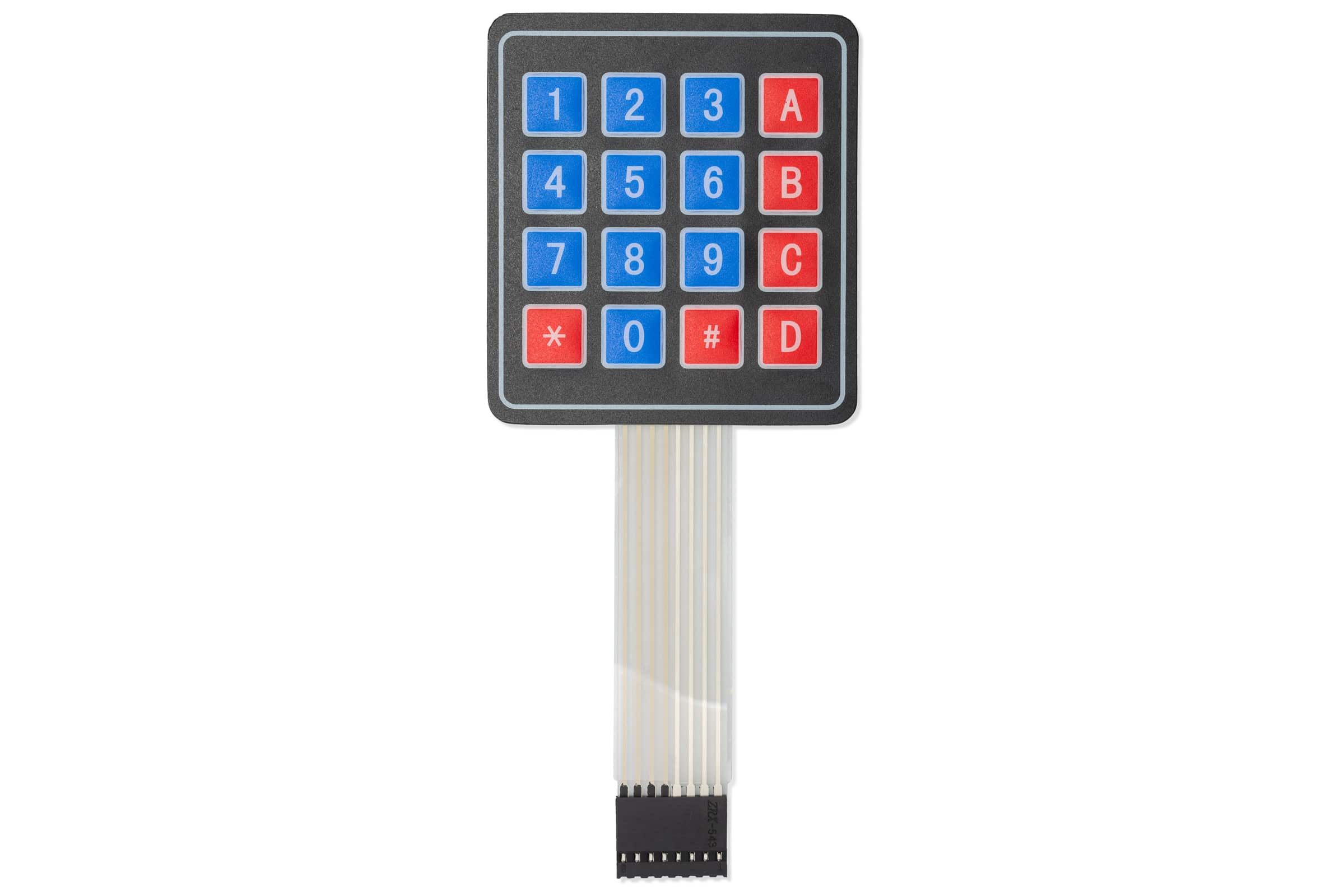
Membrane keyboard 4x4
The membrane keyboard is a system of 16 keys that are mutually connected and enable us more complex entry to Dasduino/Arduino. Using this keyboard, you can create whole systems of menus, data input, and adjustment of different parameters.

11 years in the industry

Customers in 80+ countries

20,000+ satisfied customers
