





-
My cartSub-total: Subtotal: €6.95

- Dasduino (Arduino-compatible)

- Inkplate

- easyC ecosystem

- Raspberry Pi & Micro:bit

- Breadboards & Cables

- Batteries & Power supplies

- Kids

- Sensors

- Actuators

- Communication

- Tools & Lab equipment

- Soldering kits

- Components

- Sale

Shop

24/7 free customer and technical support

Comprehensive documentation

Open-source hardware and software

2-year Warranty - no questions asked
Showing 241–264 of 699 resultsSorted by latest
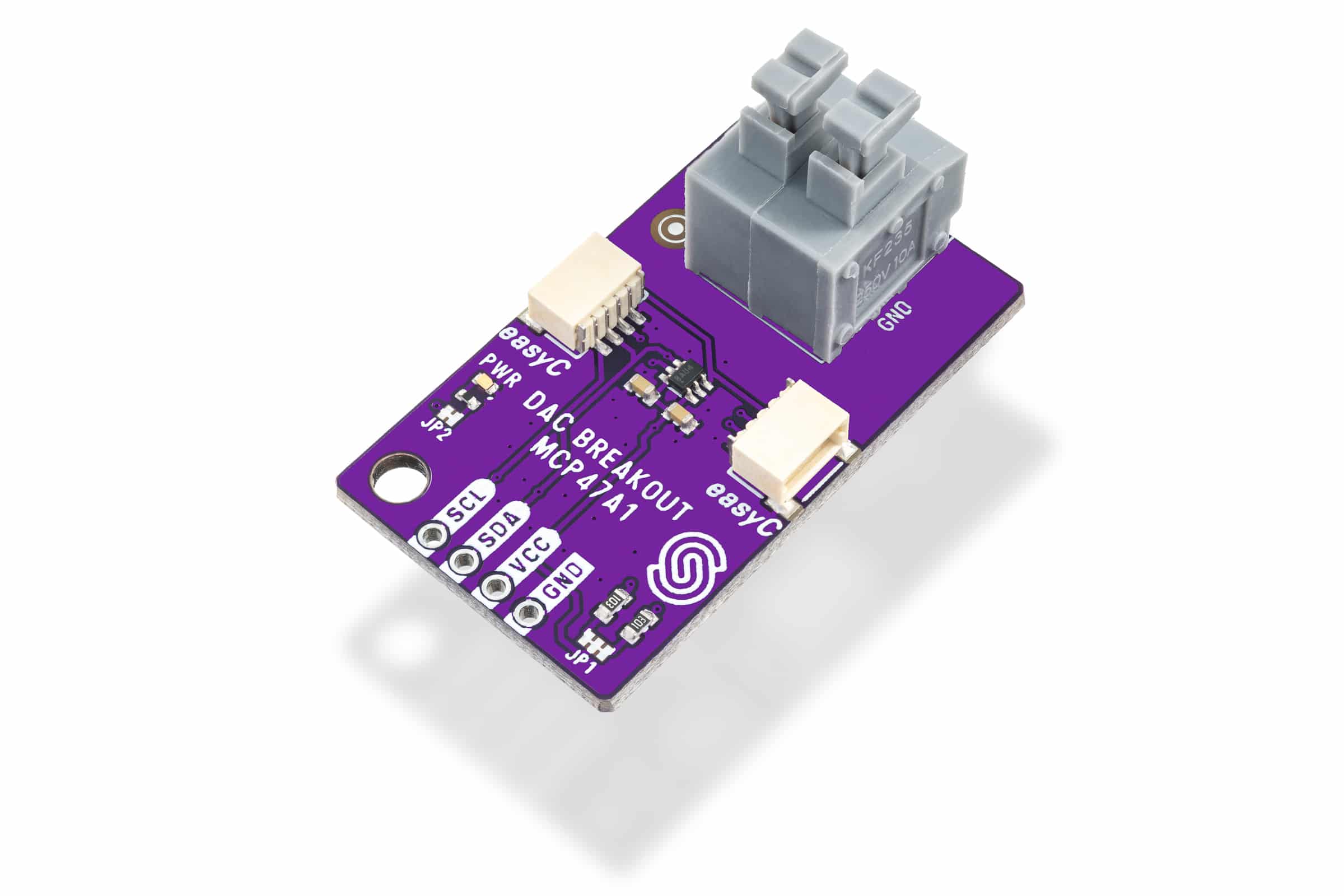
DAC 6-bit 1-channel MCP47A1 breakout
The DAC 6-bit 1-channel MCP47A1 breakout is a compact solution for adding precise analog output to microcontrollers and embedded systems. Featuring the Microchip MCP47A1, this single-channel DAC provides 6-bit resolution (64 steps) for accurate voltage generation, ideal for LED dimming, motor control, sensor calibration, and waveform generation.
Operating from 1.8V to 5.5V, it supports both 3.3V and 5V logic, and communicates via a simple I²C interface for easy two-wire control. Its small footprint and minimal external components make it perfect for space-constrained or battery-powered projects.
With a Qwiic (formerly easyC) connector, setup is quick and solder-free, ensuring reliable, tool-less integration. This breakout is ideal for hobbyists and engineers looking for precise, efficient analog control in compact designs.
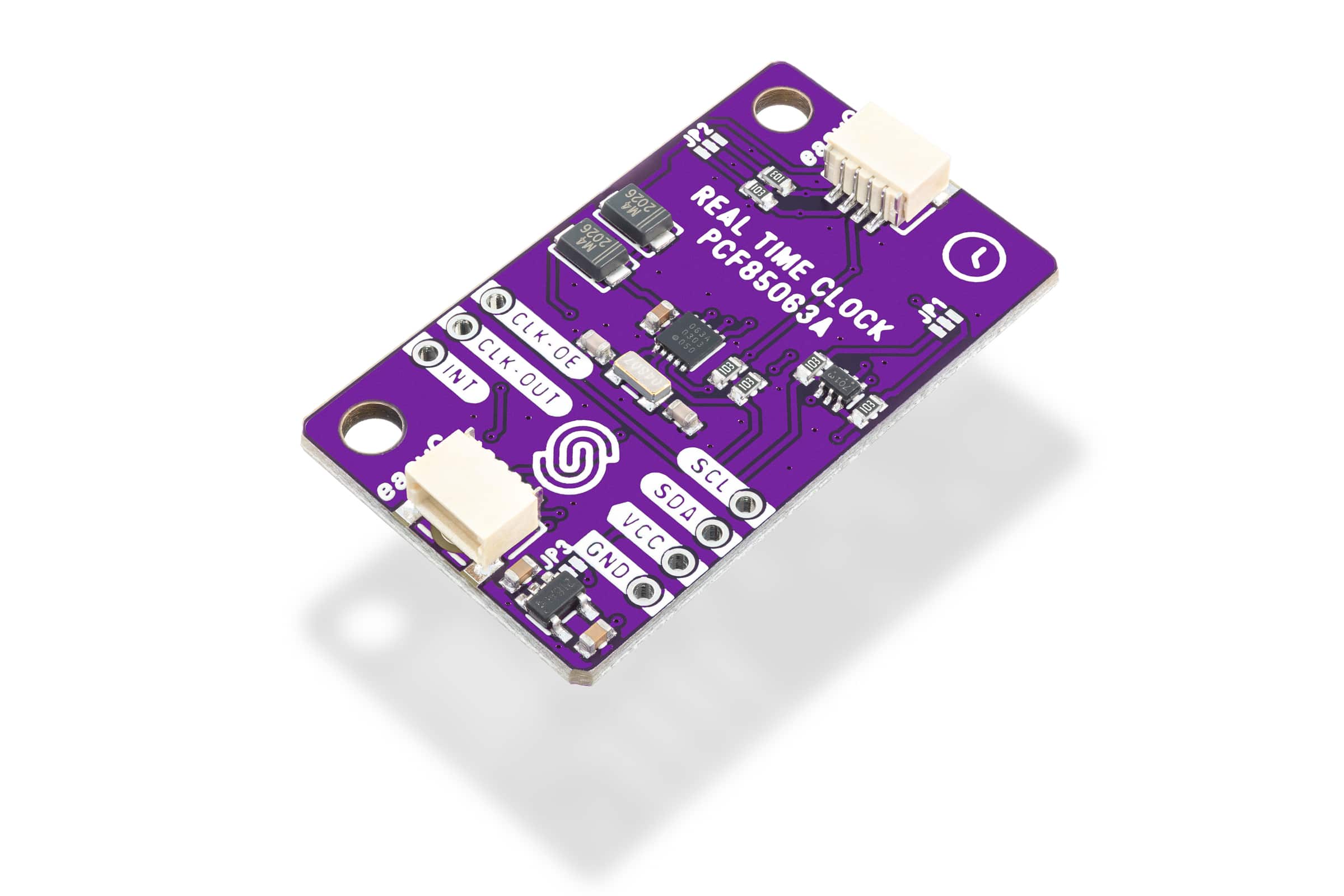
Real time clock RTC PCF85063A breakout
RTC (Real Time Clock) is a device that carefully and precisely tracks time and dates. It is extremely precise, so it is more suitable for long-term time tracking than clocks on microcontrollers. This breakout can work with an extremely low current and thanks to the alarm feature and interrupt pin, it will allow a microcontroller to enter sleep mode until its awaken by this RTC.
It has a built-in battery holder (battery not included) and even if power is lost, real-time tracking won’t be affected.
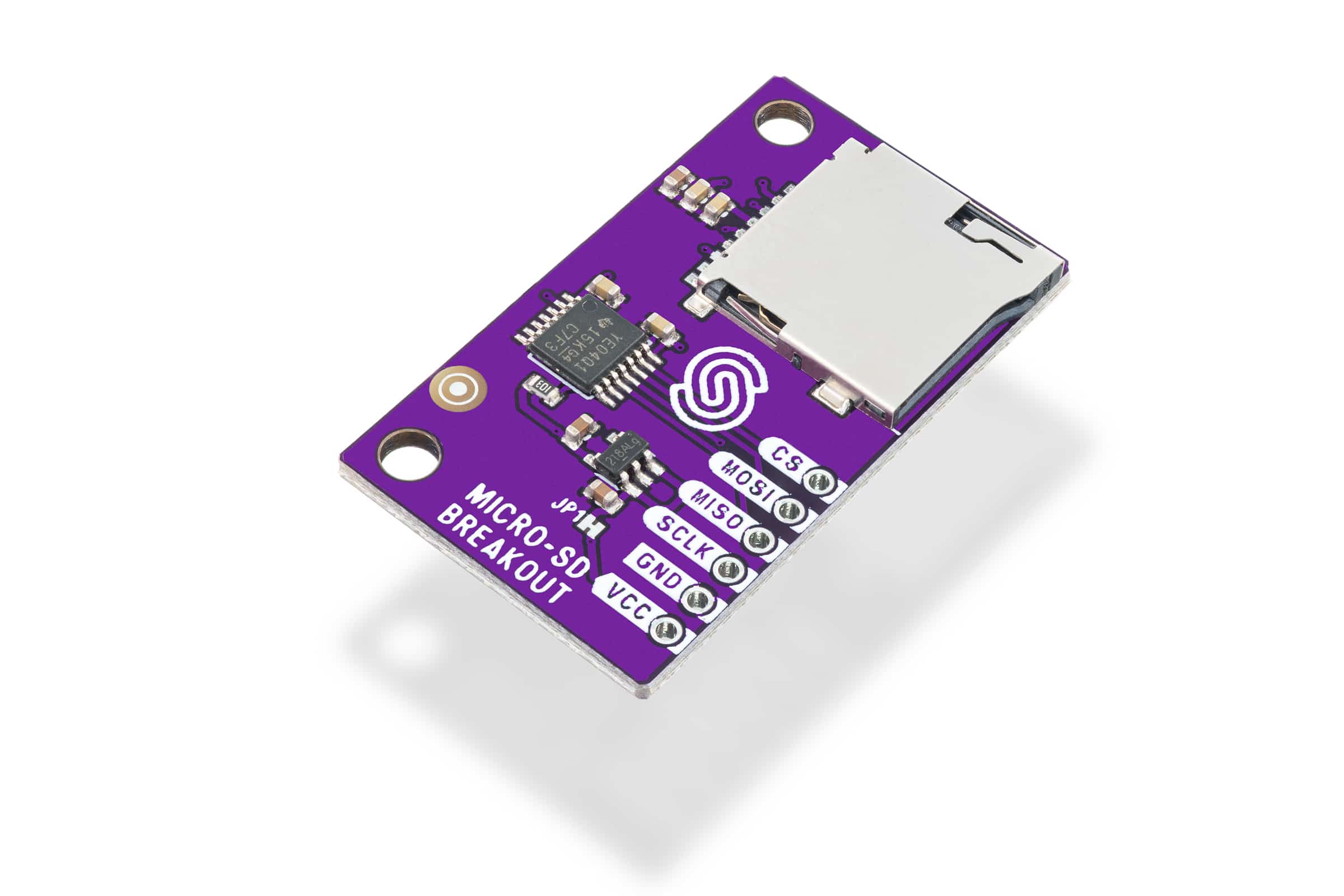
microSD card reader breakout
A module which enables the use of micro SD cards with Arduino via SPI communication. You can save various types of data on the SD card, create logs, read the information from it or perform various actions.
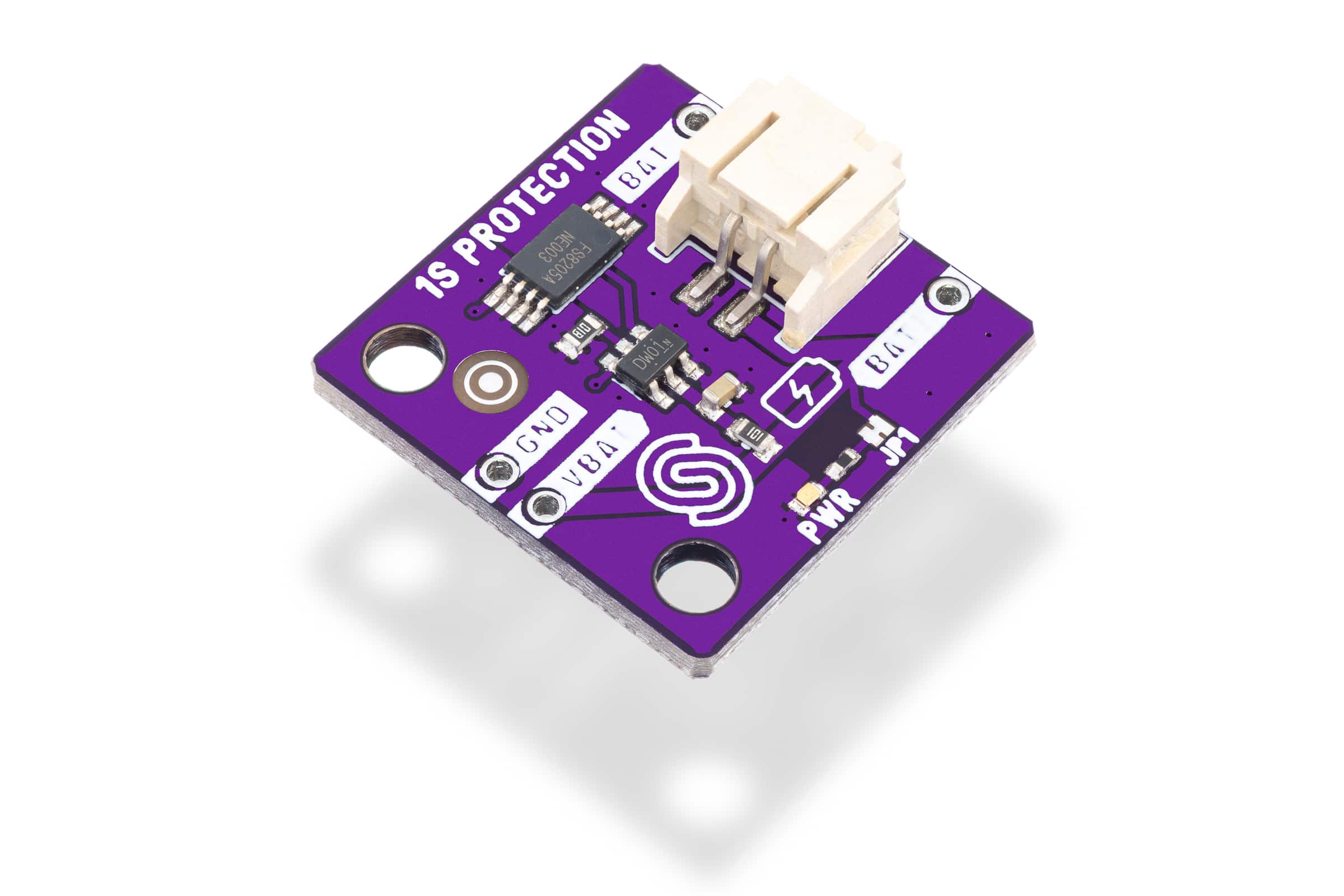
1S Li-Ion battery protection
A battery protector is, simply put, a device that makes sure that something bad doesn’t happen to the battery. This small circuit board protects your lithium battery (of any capacity) from overcharge, overdischarge, overcurrent and short circuit. It has a JST connector for connecting the battery, and the battery can be directly soldered.
• Protects from: undervoltage, overvoltage, overcurrent, short-circuit current
• Protection IC: DW01
• Battery configuration: 1S1P (1-serial, 1-parallel)
• Battery type: Li-ion, Li-poly
• Dimensions: 22 x 22mm
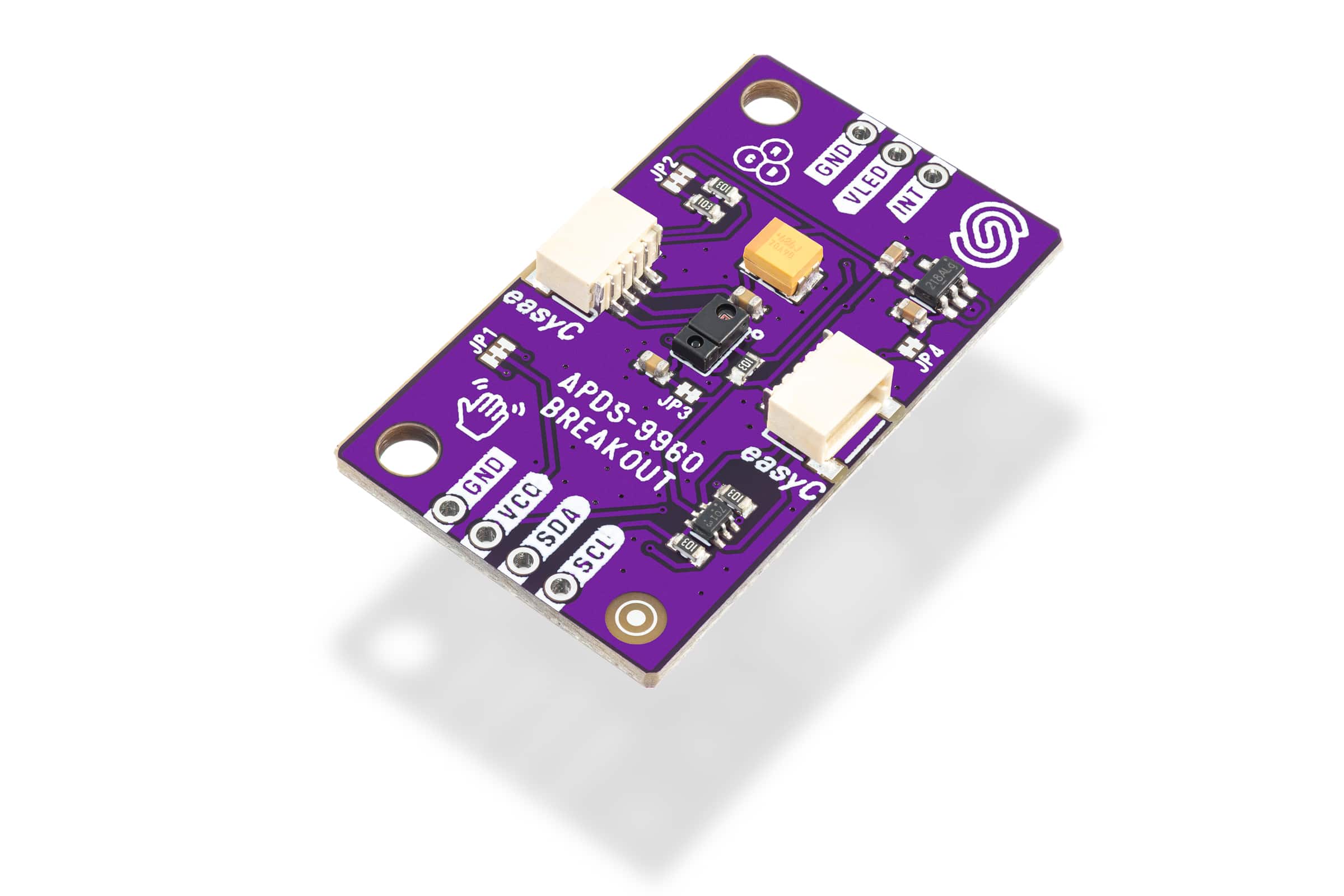
Color and gesture sensor APDS-9960 breakout
The Color and Gesture Sensor APDS-9960 breakout is a compact and powerful module designed for multiple sensing capabilities. It enables gesture recognition, allowing it to detect movements such as up, down, left, and right. In addition to gestures, it features proximity sensing, accurately measuring the distance of objects within a range of 10 to 20 cm. This makes it ideal for interactive applications and touchless control systems.
Create awesome user inputs with the APDS-9960, the all-in-one sensor that detects gestures, proximity, ambient light, and RGB colors. It’s a way to build smarter, more interactive projects. Whether you’re designing a hands-free user interface, a robot that can sense its surroundings, or a display that automatically adjusts to ambient light, the APDS-9960 provides the multi-faceted sensing capabilities you need.
This sensor, famously used in smartphones like the Samsung Galaxy S5, combines four sensing functions into a single compact module. The gesture detection allows you to recognize directional movements (up, down, left, right), while the proximity sensor can detect objects up to 20cm away. The integrated ambient light and RGB color sensor can measure the intensity and color of light, making it perfect for applications like automatic screen brightness adjustment or color sorting robots. With built-in UV and IR filters, you can be sure that your readings are accurate and free from interference.
What makes this breakout special is its seamless integration into our Qwiic ecosystem, allowing for quick connections with all your boards. As with all our products, it’s open-source, with all design files available for you to modify and adapt, plus our 2-year warranty and technical support.
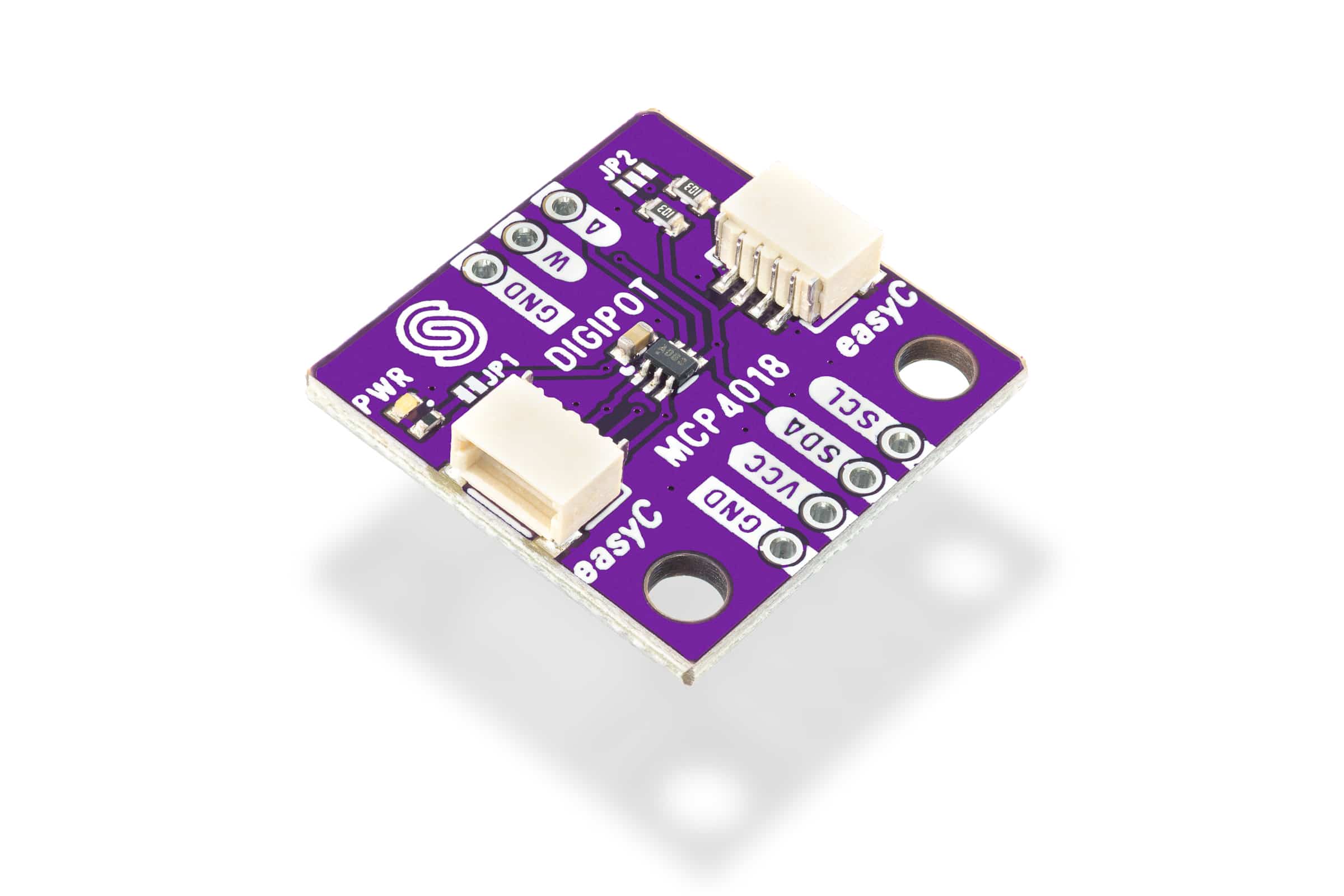
Digipot 5k MCP4018 breakout
A digital potentiometer is a device identical to a potentiometer, except that instead of a physical rotating part that adjusts the resistance, it uses digital communication. Namely, the resistance of the digital potentiometer is adjusted via I2C communication.
Our module is based on the MCP4018 IC which has a total of 128 steps between 0 and 5k resistance values. This would mean that it is capable of doing resistance steps of approximately 39ohms. It is controlled via I2C which makes it extremely easy to use.
Coming soon
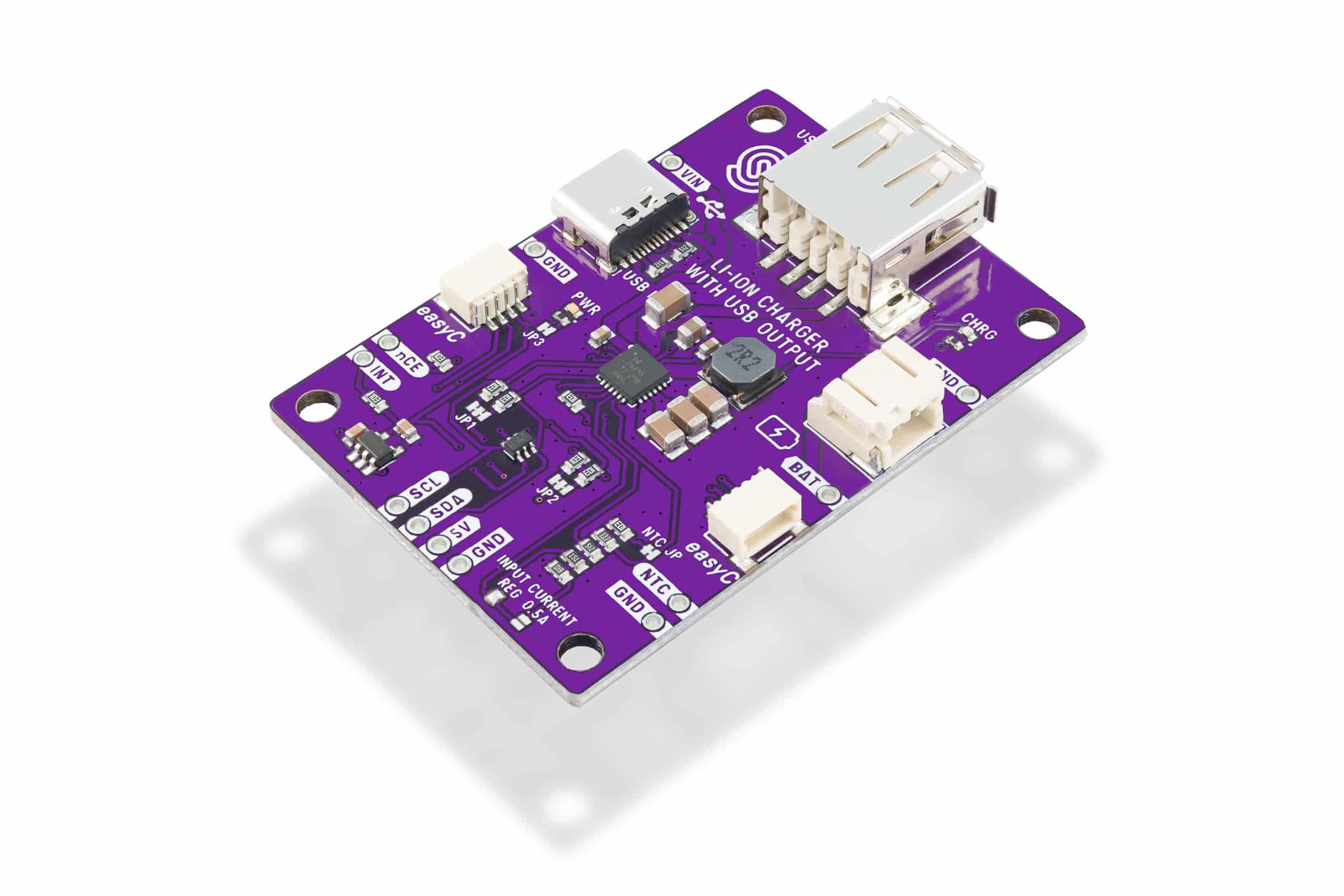
Li-ion charger BQ24295 with 5V USB output board
The BQ24295 is a versatile Li-ion battery charger designed to provide efficient and reliable charging for single-cell lithium-ion or lithium-polymer batteries. It supports various charging modes, including constant current (CC) and constant voltage (CV) charging, to ensure the battery is charged quickly and safely.
The BQ24295 charger operates on a wide input voltage range, typically from 4.35V to 17V, allowing it to be powered by a variety of power sources, including USB ports and AC adapters. It also features integrated power path management, which allows simultaneous charging of the battery while powering the connected device, providing uninterrupted operation.
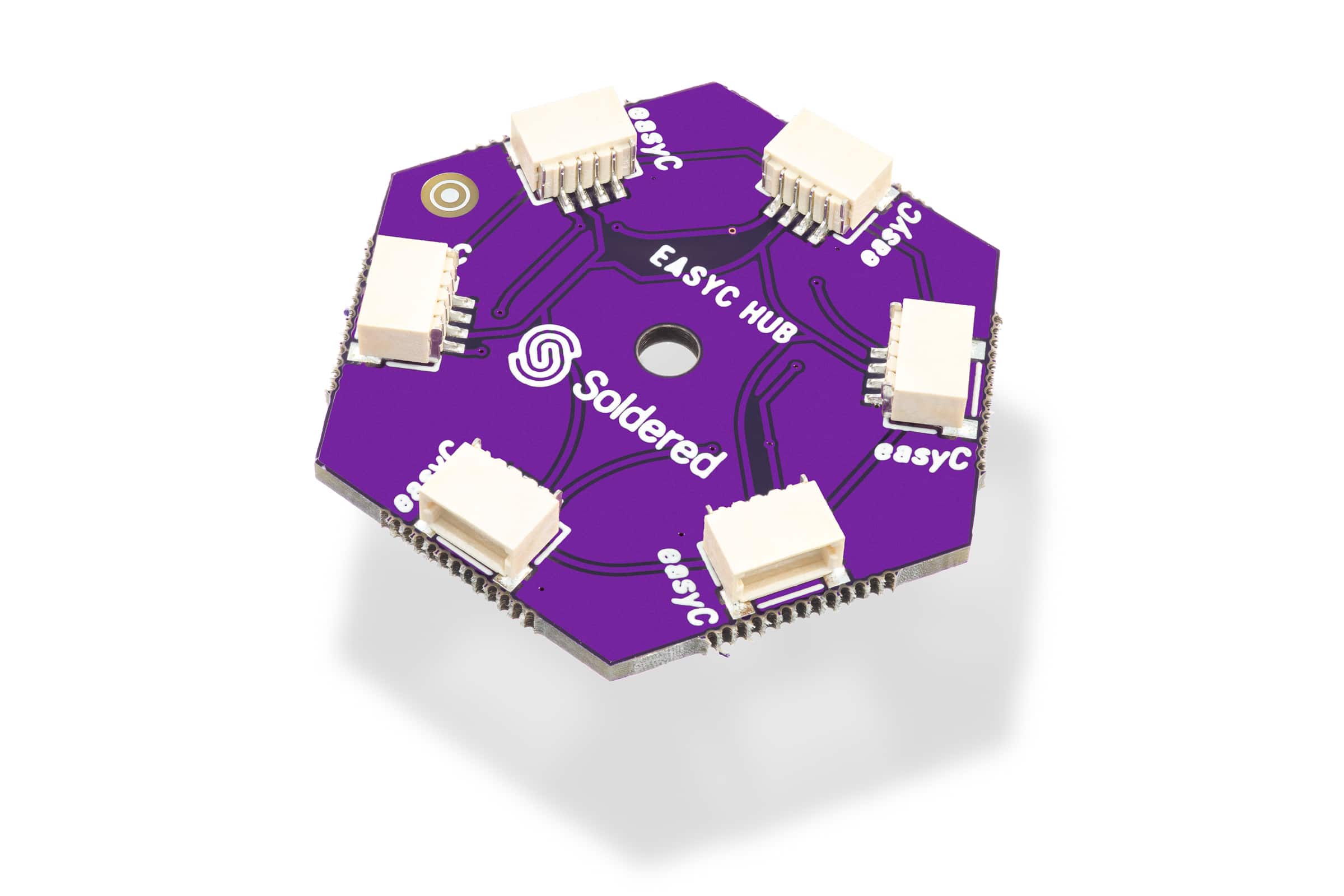
easyC Hub
We made the easyC system for faster prototyping and easy connection between the components. However, some of the components have only one easyC port or you just want your cable managmenet made better. What to do in those cases? The easyC hub comes to the rescue! It has six connectors so you can easily expand your circuit. It’s as simple of a device as it can get.
Product usage tips:
You can connect easyC devices to the hub like you would to any other easyC device. Just plug the preferred easyC cable into the hub and a device you’re working with. That’s all there is to it.
You should avoid working with the hub in wet environments to ensure it lasts a long time. Be sure to watch the operating voltage of your circuit. Since the hub works on 3.3V, higher voltages can burn it and render it useless. There is a hole in the middle of the board so it can be secured to any surface.
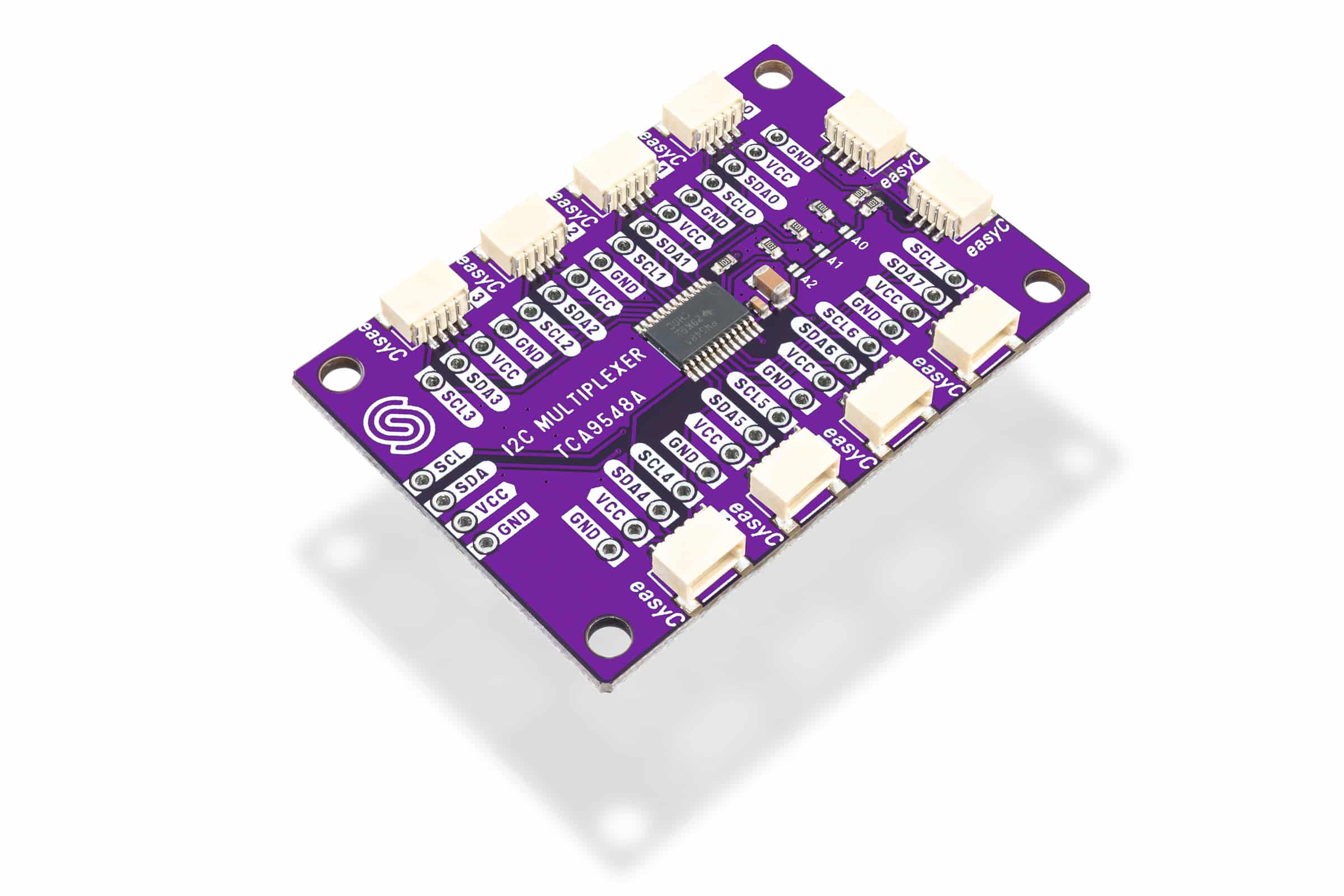
I2C multiplexer TCA9548A breakout
Ever needed to connect two peripherals with the same I2C address to the same microcontroller? This module allows you to seamlessly connect up to eight I2C devices with identical addresses.. Using the TCA9548A IC, our breakout board provides flexibility, enabling control of up to 64 devices on the same I2C bus. This means you can integrate numerous sensors, such as 64 BME680s (because why not?), all managed by just one microcontroller, simplifying complex setups and expanding your possibilities.
Beyond its core capabilities, the TCA9548A breakout is engineered for compatibility and ease of use, especially within the Qwiic ecosystem. This adapter is convenient for makers and engineers looking for rapid prototyping solutions without the intricate wiring. Its broad voltage compatibility (1.65V – 5.5V) ensures integration with a wide range of microcontrollers, including Arduino and NULA boards, making it an addition to any electronics workbench. With its compact dimensions and clear pinout, integrating this multiplexer into your existing or new projects is easy and efficient.
This I2C multiplexer is designed and manufactured in the EU, guaranteeing great performance and durability. We offer documentation, quick start guides and dedicated technical support to ensure your success, including our open-source community. Choose our TCA9548A breakout for a high-performance solution that empowers your innovative projects with I2C communication capabilities.
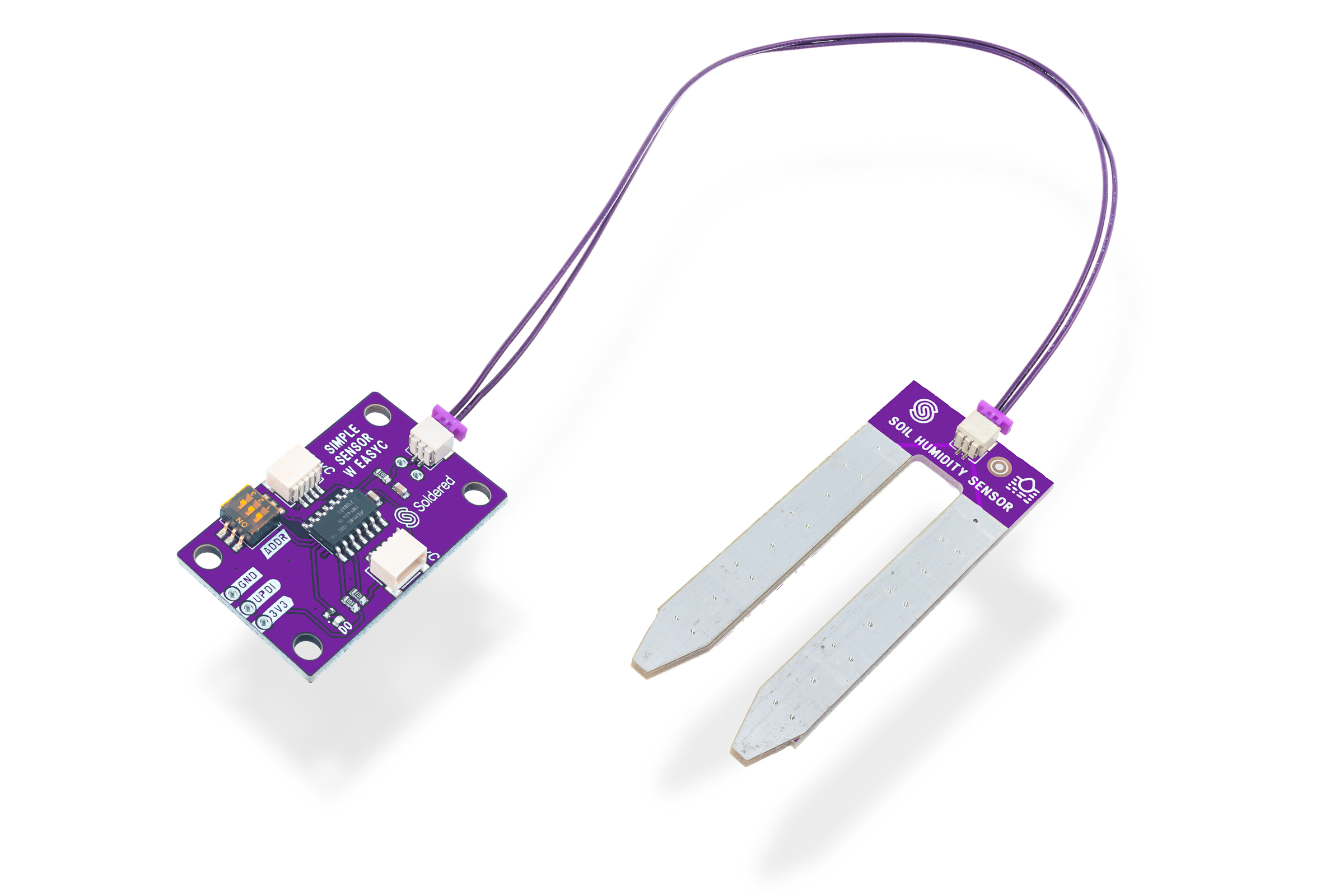
Simple soil humidity sensor board with easyC
How many times have you watered your plants and feared you overdid it? With a simple soil moisture sensor, these worries are a thing of the past! This two-part sensor is easy to use. Two exposed prongs go into the soil and send moisture information to the sensor via a connected wire. The more water there is in the ground, the better the results will be.
The two parts are connected with the included JST-SH 2-pin cable. The simple sensor has easyC connectors on it, which enables quick and easy connection with Dasduino microcontroller boards.
Coming soon
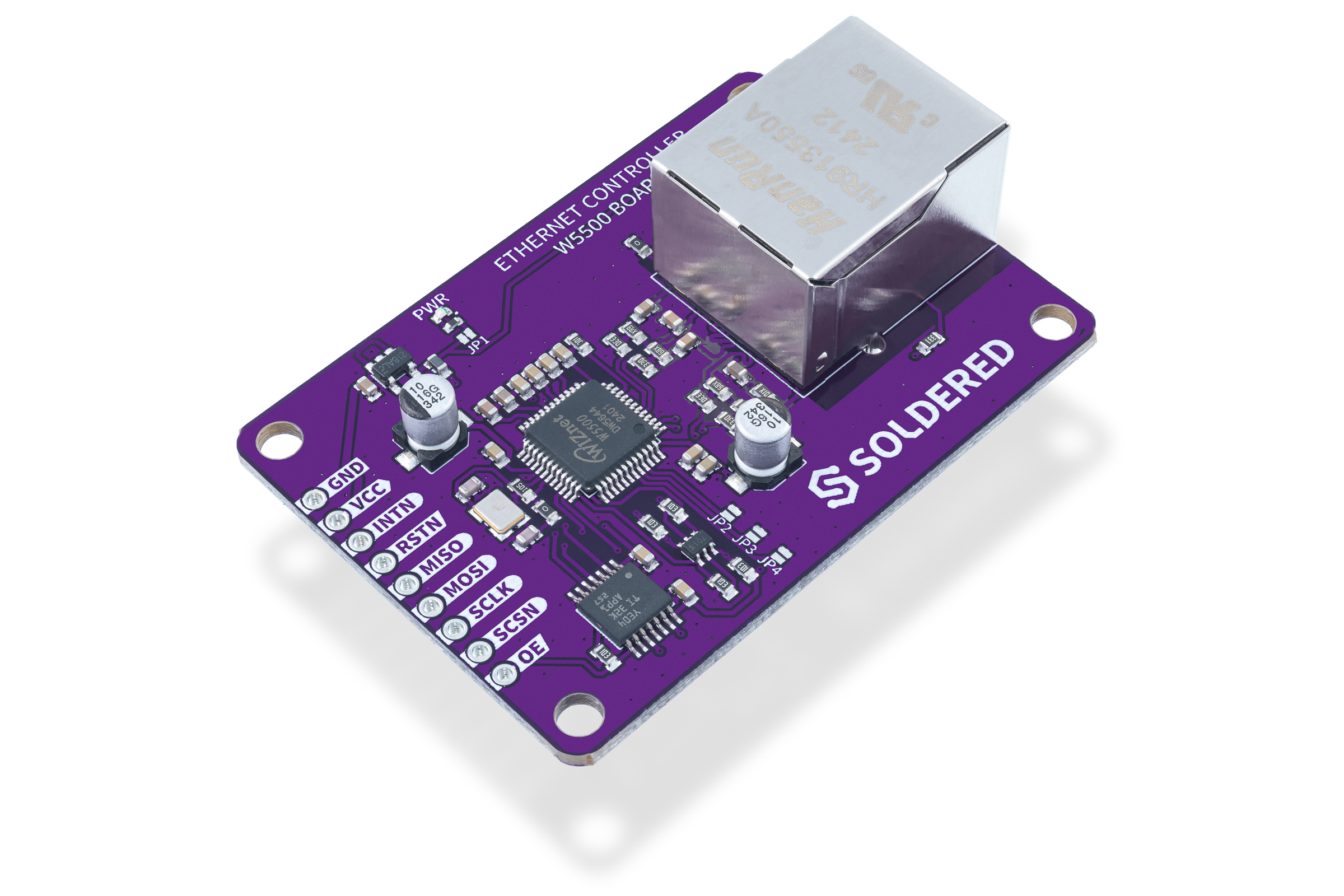
Ethernet controller W5500 board
Designed with practicality in mind, this small yet powerful breakout contains the W5500 Ethernet controller, enabling fast and reliable internet connection for your Dasduino projects. Whether you’re an experienced enthusiast or just a beginner, this module is your reliable ally for connecting your Dasduino CORE to the internet.
In addition to the mentioned controller, the board features an RJ-45 connector for Ethernet cable connection, and the connection to Dasduino is via the SPI protocol.
So, whether you want to build a smart home automation system, create an IoT device with web connectivity, or simply explore the world of networked electronics with your Dasduino, the W5500 breakout is here. Say goodbye to connection problems and welcome the world of endless possibilities – all with the help of this little marvel!
Coming soon
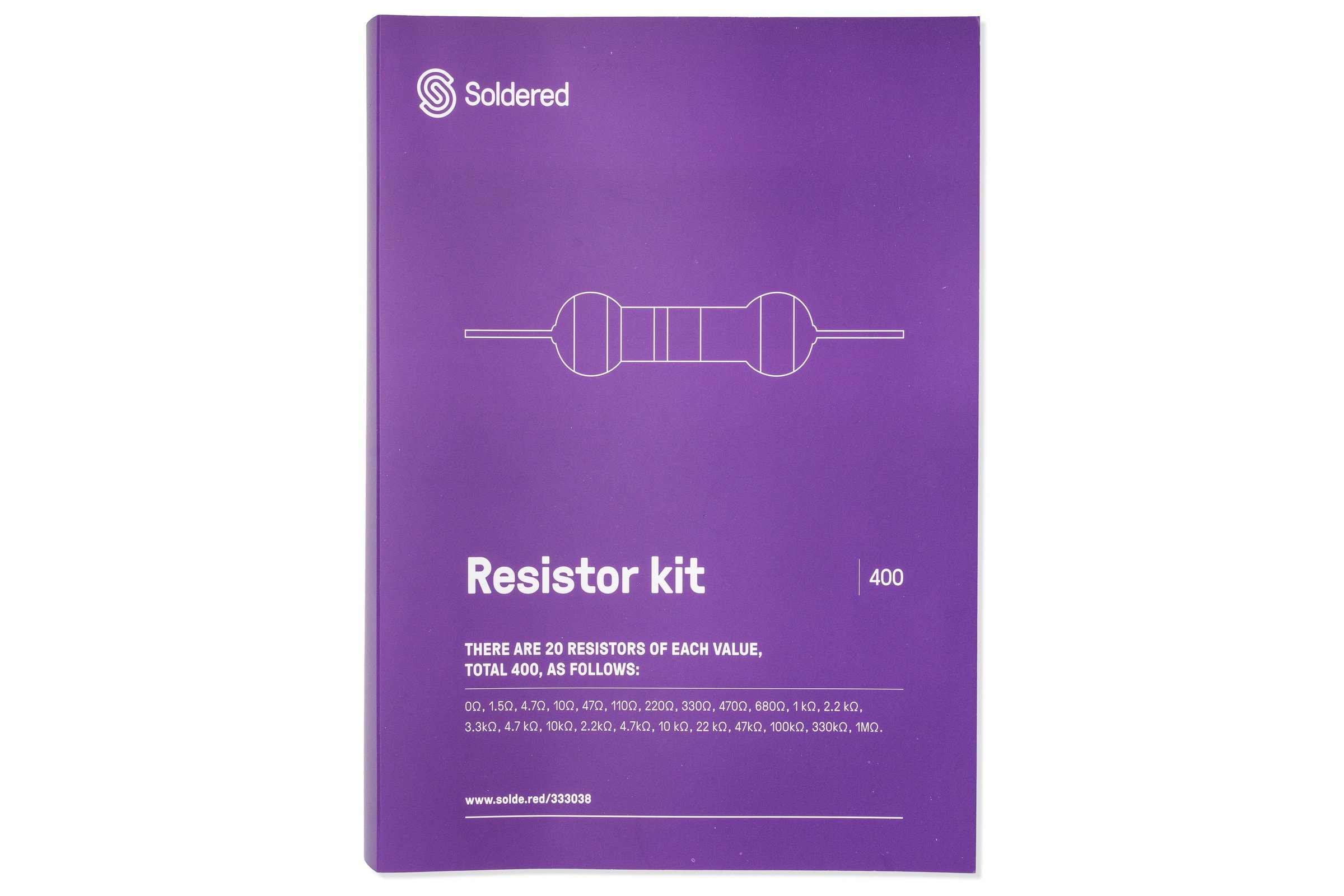
Resistor kit 400
Build electronics projects without missing resistances using our resistor kit containing 400 high-quality resistors across 20 essential values. Unlike loose resistor assortments that become jumbled messes, our design keeps each value separated and clearly labeled, saving you time and frustration during projects. Whether you’re prototyping circuits, repairing devices, or stocking your electronics lab, this complete assortment ensures you’ll have the right resistance value when you need it. Each value includes 20 pieces for multiple projects, while the practical packaging keeps everything organized and portable for workshop or field use.
This professional-grade resistor assortment covers the most commonly used resistance values from 0Ω jumper links to high-value resistors, making it perfect for Arduino projects, circuit prototyping, and electronic repairs. The 1/4W carbon film resistors provide reliable performance with ±5% tolerance, and the organized format includes clear value labeling and resistor color code reference charts. The inclusion of 0Ω resistors makes this kit particularly valuable for PCB prototyping and circuit modifications where jumper connections are needed.
What sets this resistor kit apart is its curation of values based on real-world electronics needs, combined with practical packaging that actually stays organized. With 20 pieces of each value, you’ll have spares for multiple builds while maintaining a complete inventory for future projects.
• 20 values x 20 pcs = 400 pcs of resistors
• Practical packaging
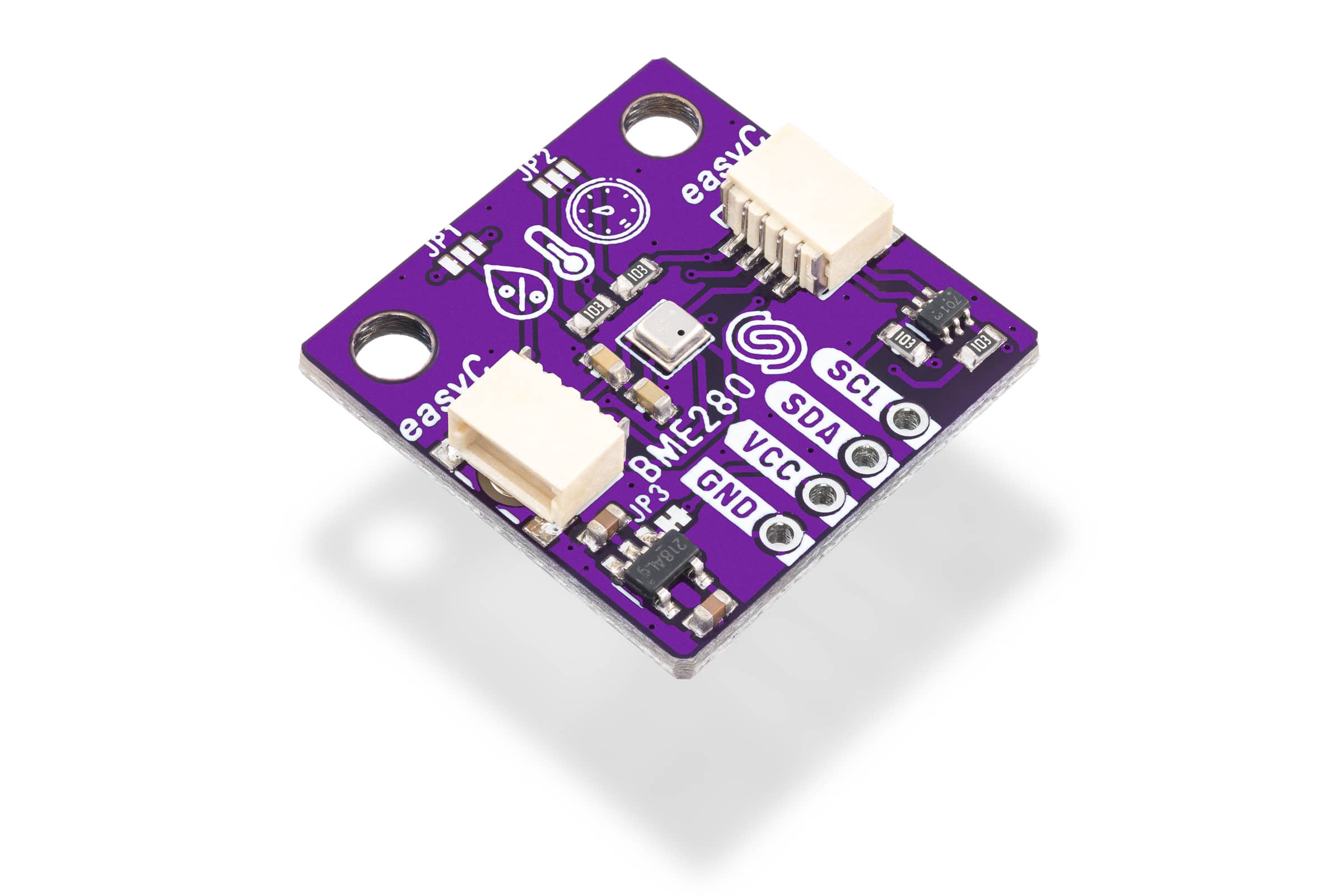
Enviromental sensor BME280 breakout
BME280 is an atmospheric sensor which measures 3 values: temperature, pressure, and humidity. Additionally, it is possible to calculate elevation. It is simple to use since it communicates via I2C and it is extra small sized so it can be put anywhere. Everything you need to know about the atmospheric condition – this sensor can measure for you; just ideal for meteorological station projects! This board comes with two easyC connectors, providing easy connections.
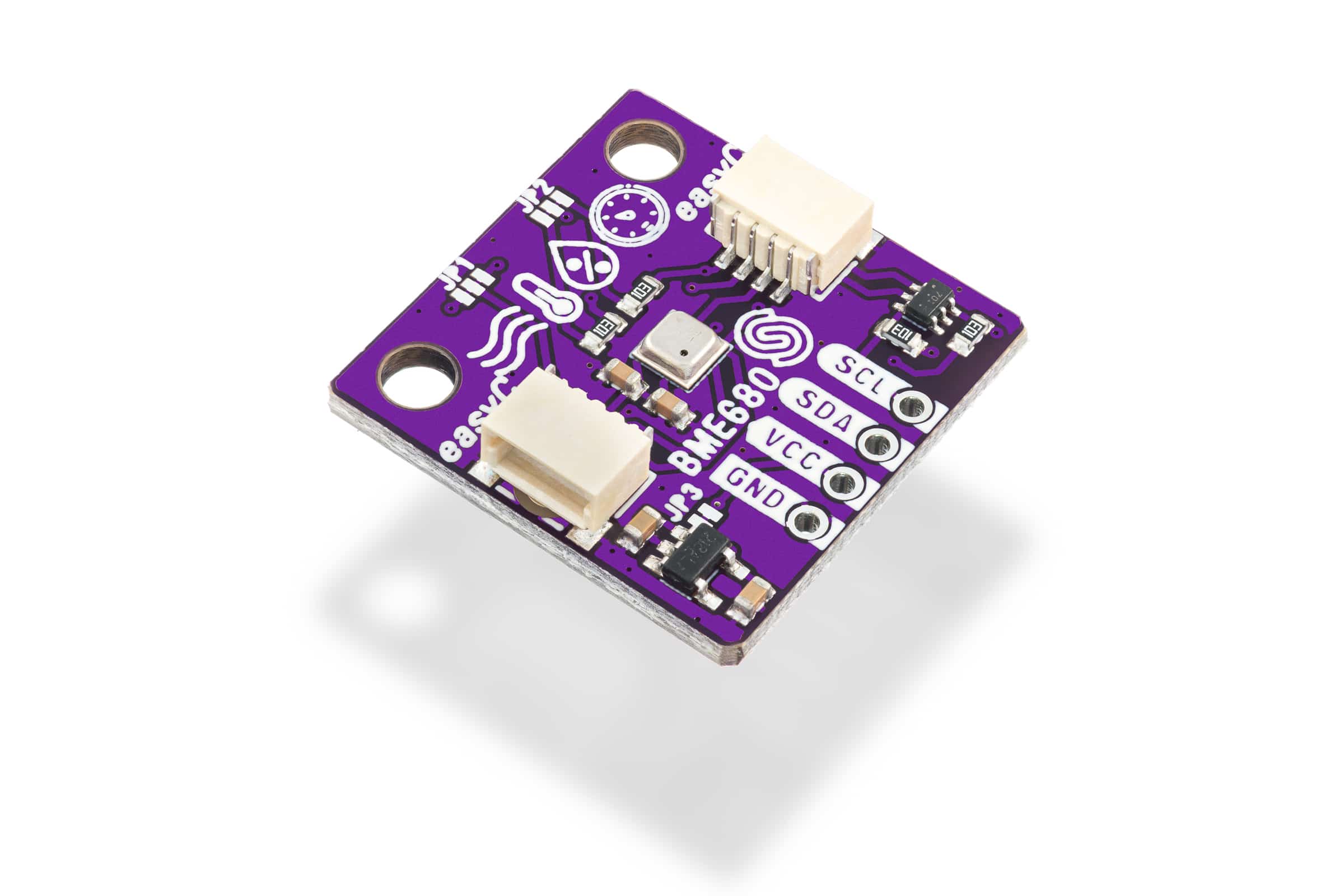
Enviromental & air quality sensor BME680 breakout
The BME680 is an atmospheric sensor that measures four values: temperature, pressure, humidity and air quality as an IAQ index. Using that data can calculate elevation. It is really simple to use considering that it’s using I2C communication protocol and its dimensions are really small so it can fit anywhere. Everything you need to know about the atmospheric conditions and the quality of the air – you can find out using this sensor (ideal for weather station projects!) This board comes with two easyC connectors, providing easy connection to other products.
Coming soon
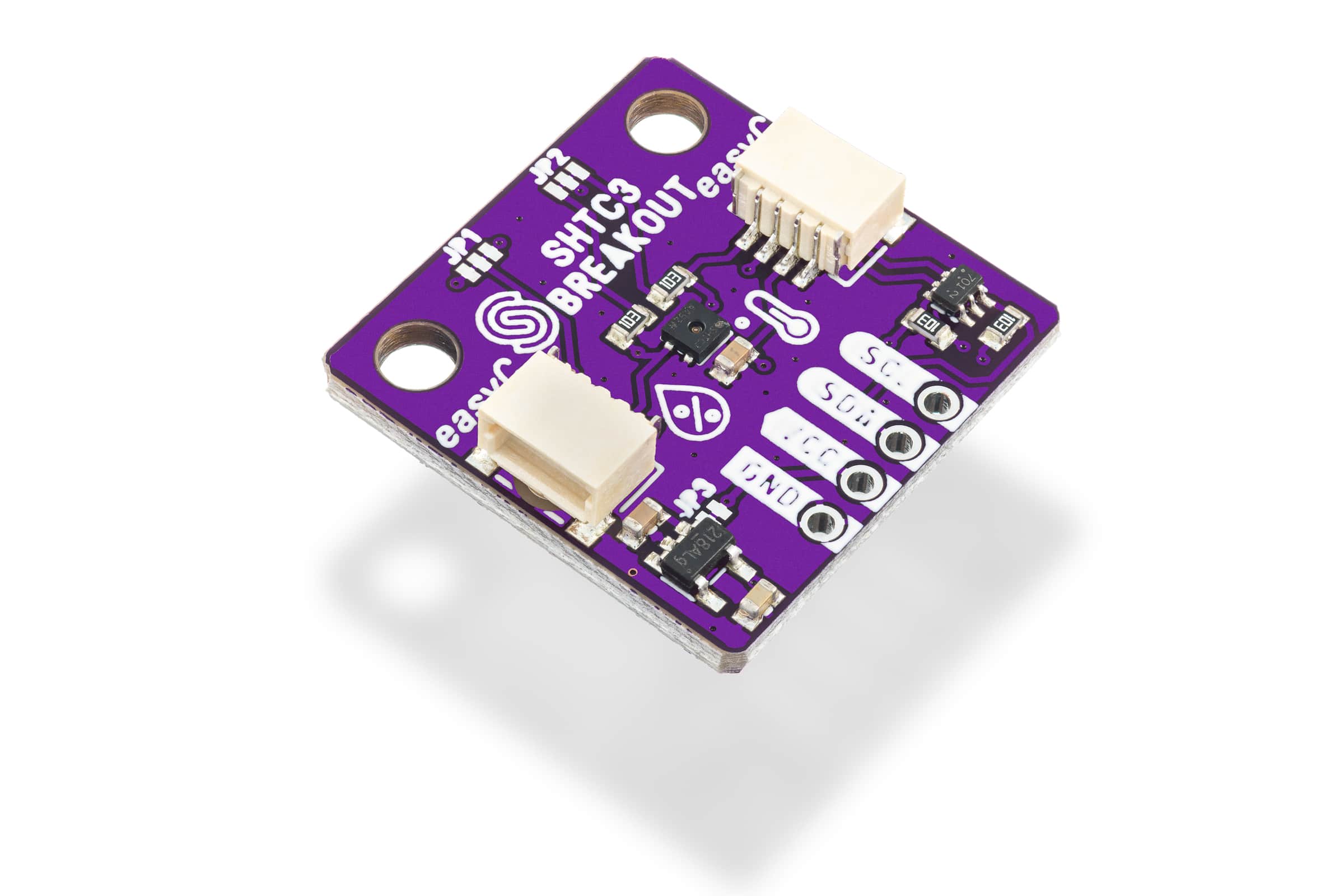
Temperature and humidity sensor SHTC3 breakout
Want to keep track of both the humidity and temperature in your room? Or maybe in the greenhouse to protect your crops? The SHTC3 breakout board is the solution you’re looking for! The digital sensor measures the changes in humidity and temperature very precisely. Since it’s very accurate and the temperature range is wide, it is a go-to sensor if you want precise climate information.
The breakout board uses the I2C communication protocol. Thus, it has two easyC ports so no soldering, nor distinguishing between SDA and SCL is required. The hardware-defined I2C address is 0x70. The design is 3.3V ready with an onboard regulator for 5V. The board’s standard current consumption is low, only 430 µA.
Product usage tips:
If you encounter errors when using the breakout board, see if it’s connected properly. First, look at the pinout on the board and your microcontroller. If everything seems OK, look at the connections on the breakout board. If all the wiring is correct, make sure that the breakout board’s I2C address is right. It should be 0x70. Everything as it should be so far? Go through your code again. There might be some bugs that are stopping things from working as expected.
The SHTC3 breakout board works wonderfully in combination with Dasduino Core and 16×2 easyC LCD. You can display temperature in one row and humidity in the other. Due to the easyC connections on all three, hooking all the devices together is as easy as it gets. The SHTC3 breakout board has two mounting holes so it can be attached to the project and won’t budge. The pins provided can be soldered if you don’t want to use the easyC ports.
To keep the longevity of the sensor, keep track of the current going through the circuit. Allowing an excessive amount of current to flow through it may cause the sensor to fail. It is not impact-resistant. When dropped from a high distance or at an odd angle, it can break beyond repair.
Coming soon
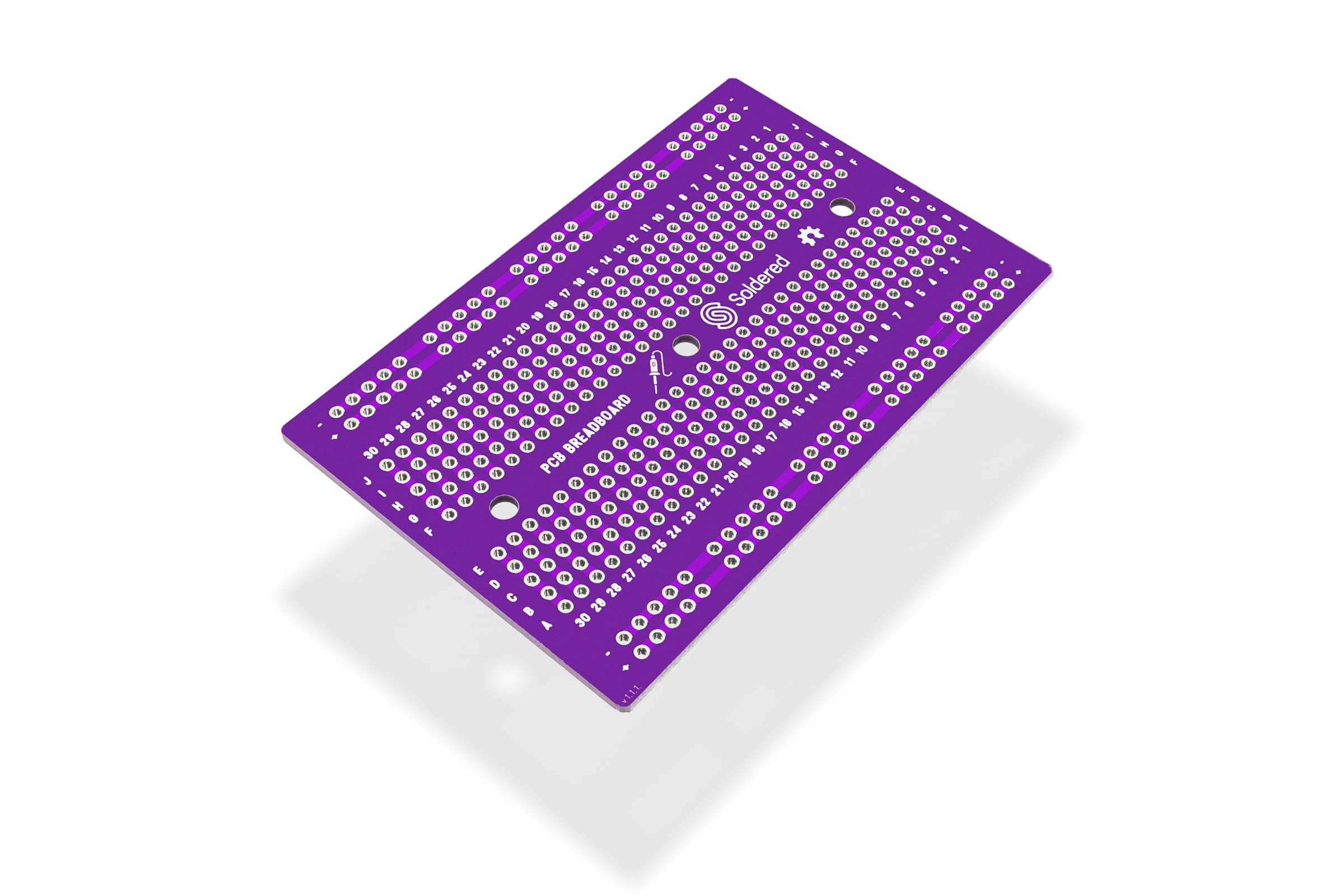
PCB breadboard/protoboard
This PCB is also a protoboard. It offers both the simplicity and the functionality of a breadboard. It is the same size as the modular half-size breadboard and has the same connections to pins. The board allows you to make the temporary circuit from the breadboard permanent.
Product usage tips:
The board has three mounting holes for secure placement on different surfaces.
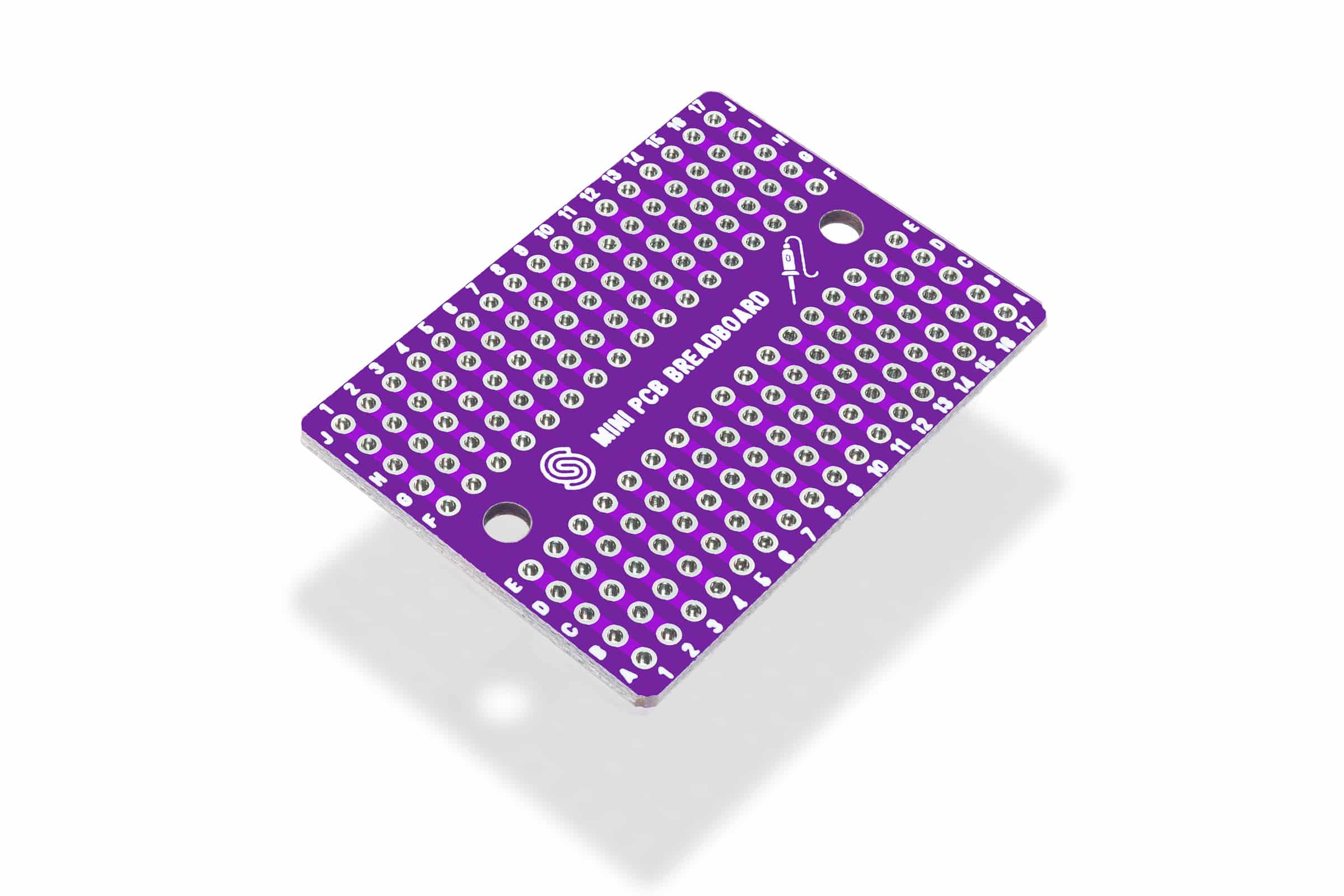
Mini PCB breadboard/protoboard
Tired of messy protoboardconnections? The Mini Solderable Breadboard is the perfect way to make your projects clean. This 2-in-1 protoboard has the same layout as a standard mini breadboard, allowing you to easily transfer your circuit from a temporary setup to a securely soldered one. The columns are internally connected – like on a real breadboard! Whether you’re a student learning to solder, a hobbyist building a gadget, or an engineer creating a final prototype, this board makes the transition from breadboard to PCB seamless.
With 170 holes, this compact protoboard provides plenty of space for your components, while the two M3 screw mounting holes allow you to securely fasten it into your project enclosure. The familiar breadboard layout means you don’t have to rethink your circuit design when it’s time to solder, saving you time and reducing the risk of errors. It’s the perfect tool for creating durable, long-lasting projects that can keep up in daily use.
What makes this protoboard special is its simplicity and reliability, and this board meets the highest quality and safety standards. This one, as with all our products, is open-source, with all hardware files available for you to modify and adapt.
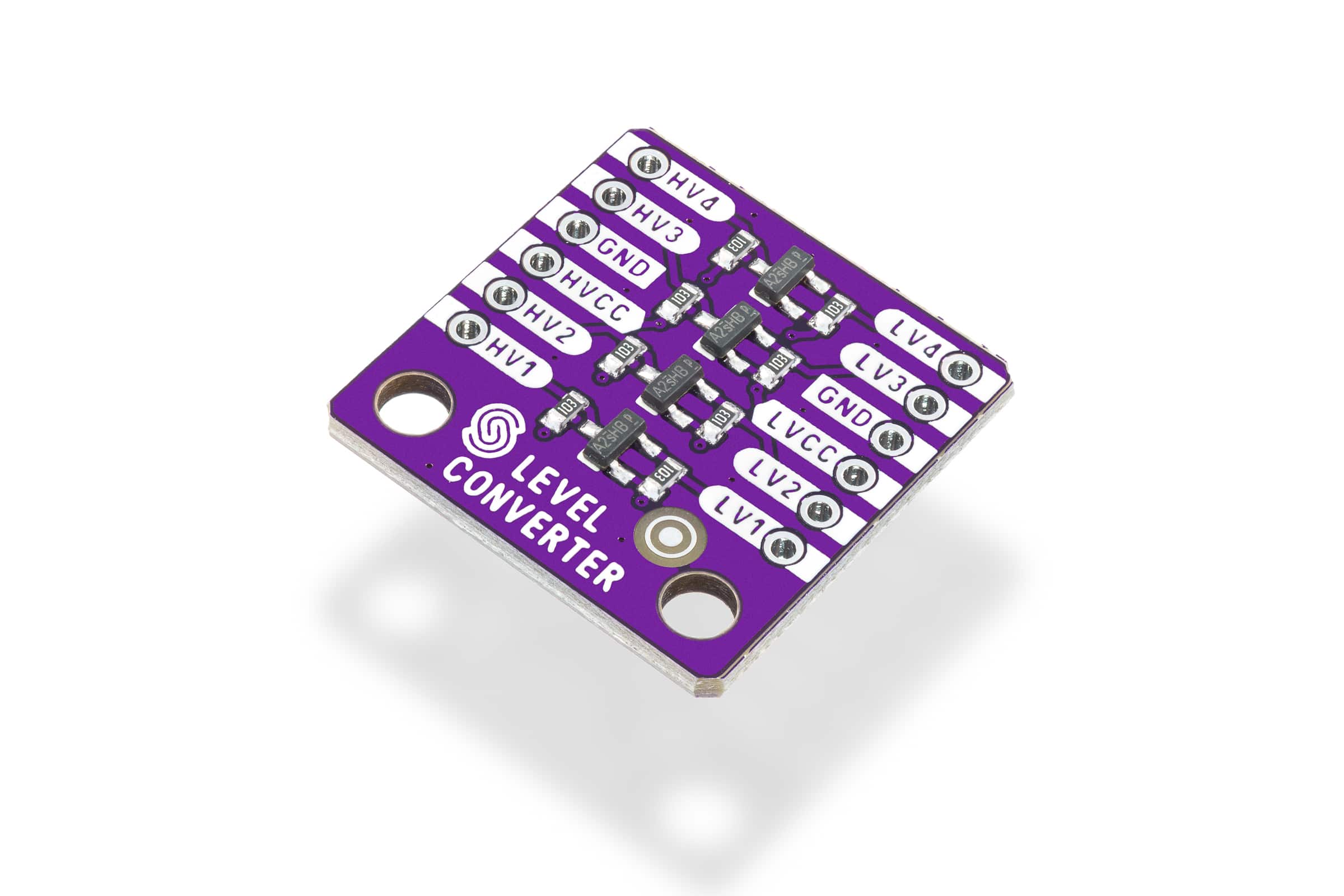
Logic level converter board
This logic level converter board module gives us a translation of logic level between two signals. In layman’s terms, if we take a signal with logical “unit” on 5V convert into a signal which logical “unit” has on 3.3V this module will help us. Something like this is useful in this case if we want to achieve communication between two devices from whom one works on 5V and the other on 3.3V, or any other combination of voltages. Directly connecting we would “burn” a device that works on 3.3V and a module gives us to avoid that.
• Max. voltage: 30V
• Number of channels: 4
• Dimensions: 22 x 22mm
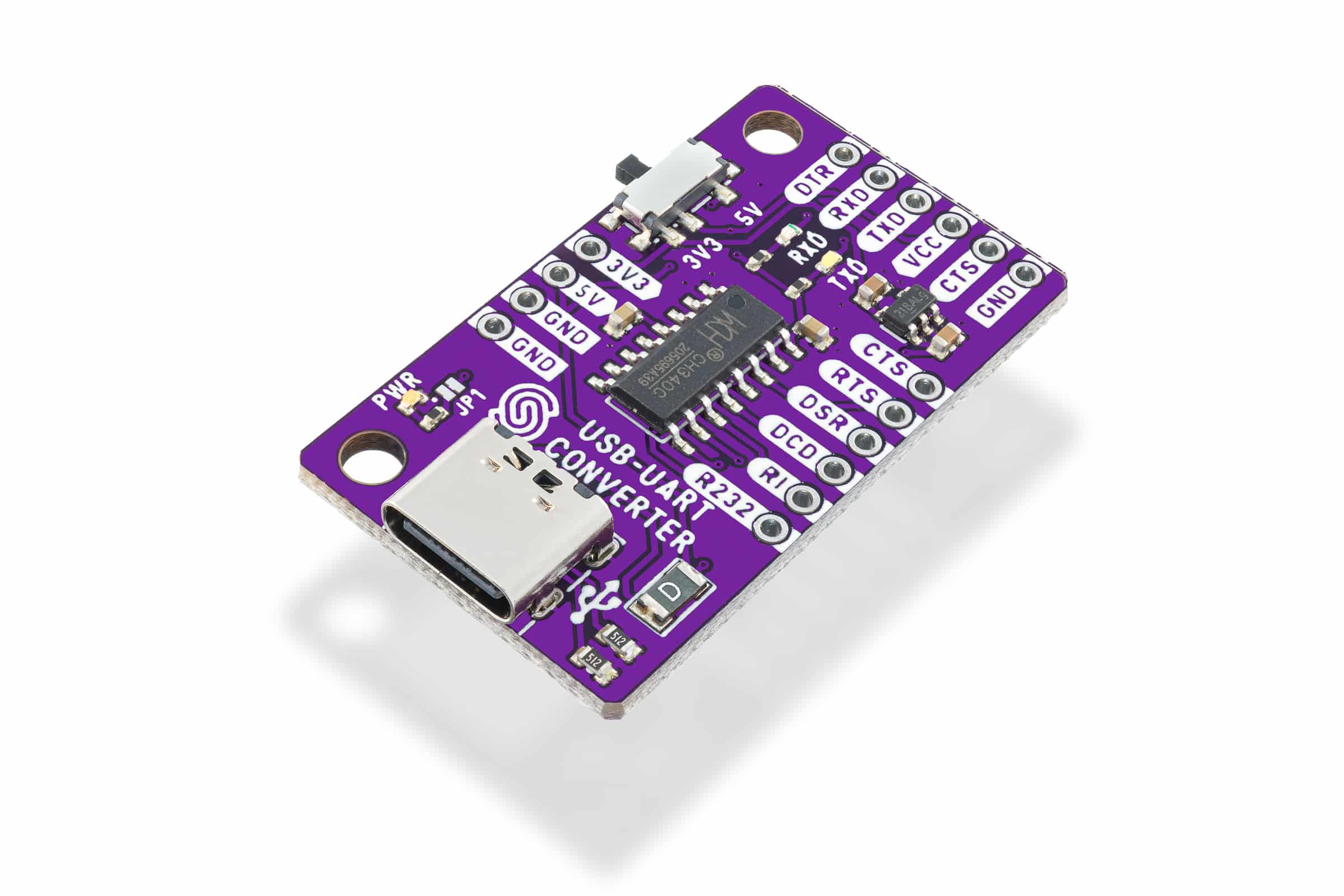
USB-UART CH340 converter board
Unlock the full potential of your microcontroller projects with the USB-to-UART CH340 Converter. This tool bridges the gap between your computer’s USB port and your microcontroller’s serial interface at it’s logic level (5V/3V3 compatible), enabling programming, debugging, and data exchange. Compatible with popular development boards like ESP32, RP2040, Atmega328p and others, the CH340 ensures stable and efficient communication, making it a perfect choice for both hobbyists and professional developers.
Designed for ease of use, the CH340 converter simplifies the process of serial communication, enabling the use of any GPIO pins to send data to a computer via USB. Its design and performance make it an ideal choice for a wide array of applications, from uploading sketches to ESP32 modules to establishing serial console access for embedded systems. Experience quick CH340 driver installation for Windows (macOS and Linux are natively supported), ensuring you spend less time on setup and more time on innovation.
Beyond basic programming, the CH340 excels in IoT and embedded applications where serial data monitoring is crucial. Its cost-effectiveness, combined with high functionality, provides an excellent alternative to more expensive converters, without compromising on performance. Whether you’re building smart home devices, robotics, or custom sensor networks, the CH340 offers the dependable serial connectivity you need to bring your ideas to life.
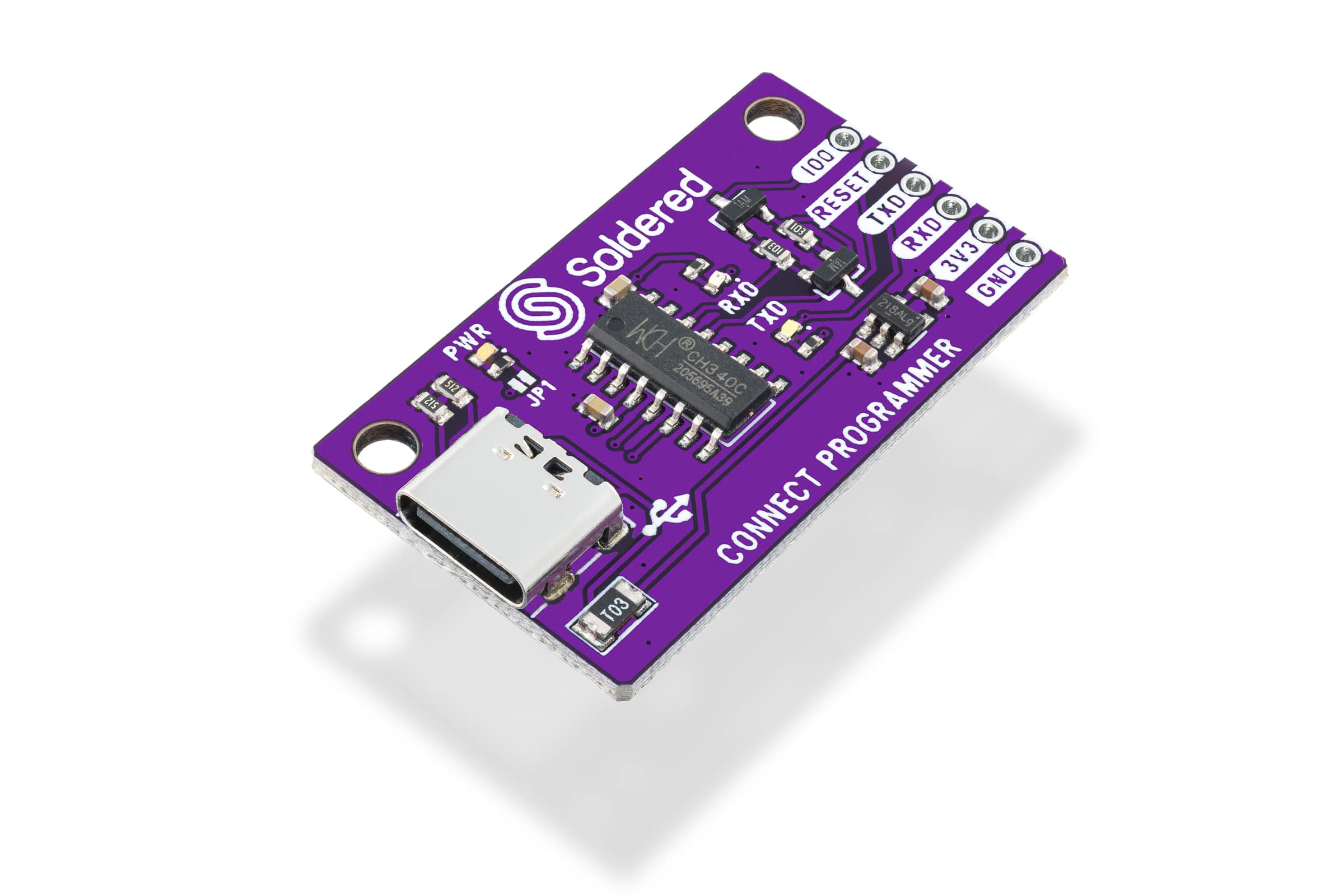
CONNECT programmer
CONNECT programmer is designed to allow extremely simple programming of boards based on ESP8266 and ESP32 microcontrollers. It contains all the necessary electronics and logic so that programming can be done by plugging USB cable into CONNECT programmer and connecting CONNECT programmer to the programming header. Electronics that take care of timing and signal sequence are also on board, so it puts the ESP uC into bootloader mode.
ESP programming header can be found boards made by Soldered based on ESP8266 or ESP32 microcontrollers that do not have a USB-UART converter, but this programmer can be used for any other ESP32 / ESP8266 board as well.
• IC: CH340
• Pin layout: GPIO0, RESET, RX, TX, 3V3, GND
• LEDs: RX, TX, power
• USB: USB-C
• Dimensions: 38 x 22 mm
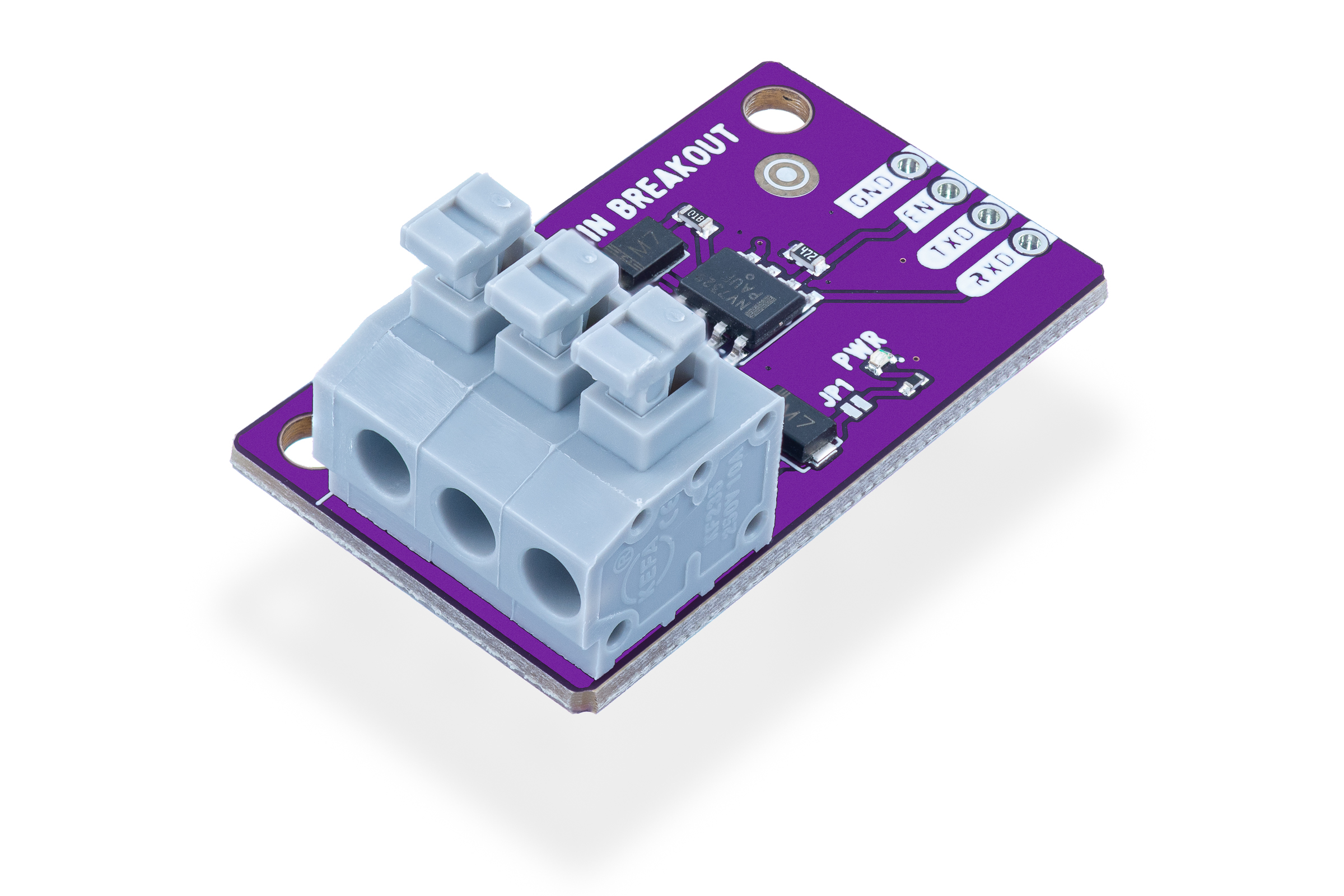
LIN Transceiver NCV7329 breakout
The LIN Transceiver NCV7329 Breakout Board offers a cost-effective and efficient solution for implementing Local Interconnect Network (LIN) communication in automotive and embedded systems. Designed for integration with microcontrollers It’s ideal for hobbyists and professionals looking to add in-car networking capabilities to their projects without complexity.
This breakout board simplifies the development of LIN-based communication systems, making it perfect for various automotive components such as window motors, seat controls, and climate sensors. Its compatibility with standard microcontrollers, including Arduino platforms and Soldered NULA boards.It ensures a broad range of applications for both prototyping and final product integration. The board’s design prioritizes ease of use, allowing developers to quickly establish communication with up to 16 devices on a single LIN bus.
With its open-source design and comprehensive documentation, the NCV7329 breakout board empowers users with full control and customisation options. Manufactured in the EU to high-quality standards, it comes with full technical support. Choose the LIN Transceiver NCV7329 Breakout Board for a reliable, affordable, and well-supported solution for your communication needs.
Coming soon
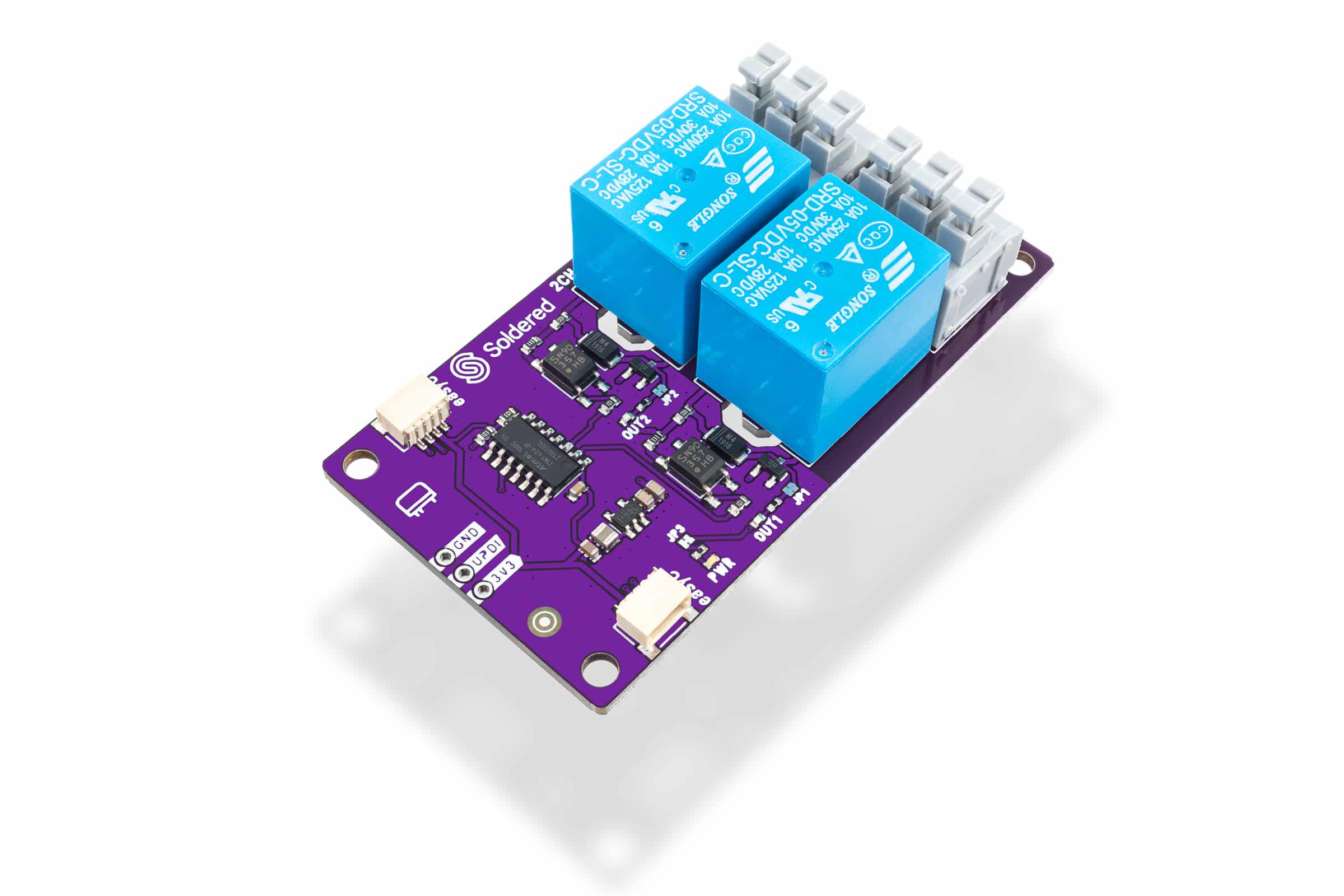
2-channel relay board with easyC
Did you ever wanted to turn on and off a device that needs large current or voltage? Whether operating on DC or AC, a relay is what you need. A relay is actually an electronic switch that is activated by a signal we send from a Dasduino or Arduino. This module further simplifies the whole process because it contains everything you need for the relay to work, and you just have to connect it to the microcontroller and power supply. You don’t have to think about voltages and currents, insulation between high and low voltage or grounding, everything is already taken care of on the board.
This board has easyC connector. Thanks to easyC ecosystem, this board can be connected using off-the-shelf cables, without soldering. Controlling the is as simple as it gets, too.
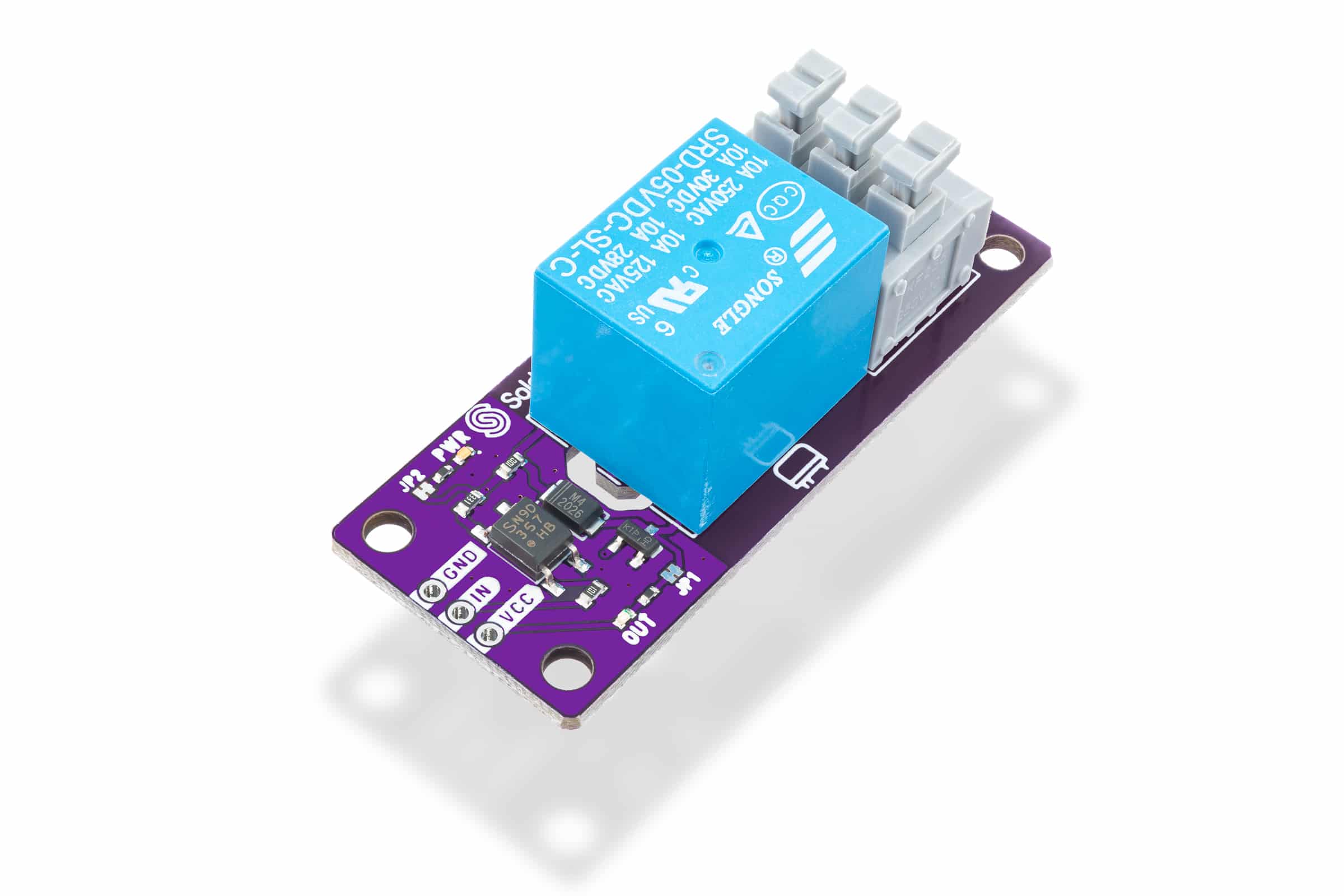
1-channel relay board
Did you ever want to turn on and off a device that needs large current or voltage? Whether operating on DC or AC, a relay is what you need. A relay is an electronic switch that is activated by a signal we send from a Dasduino or Arduino. This module further simplifies the whole process, because it contains everything you need for the relay to work, and you just have to connect it to the microcontroller and power supply. You don’t even have to think about voltages and currents, insulation between high and low voltage or grounding, everything is already taken care of on the board.
Coming soon

2-channel relay board
Did you ever wanted to turn on and off a device that needs large current or voltage? Whether operating on DC or AC, a relay is what you need. A relay is actually an electronic switch that is activated by a signal we send from a Dasduino or Arduino. This module further simplifies the whole process because it contains everything you need for the relay to work, and you just have to connect it to the microcontroller and power supply. You don’t have to think about voltages and currents, insulation between high and low voltage or grounding, everything is already taken care of on the board. This product has 2 relays.
11 years in the industry
Customers in 80+ countries
20,000+ satisfied customers