






- Dasduino (Arduino-compatible)

- Inkplate

- easyC ecosystem

- Raspberry Pi & Micro:bit

- Breadboards & Cables

- Batteries & Power supplies

- Kids

- Sensors

- Actuators

- Communication

- Tools & Lab equipment

- Soldering kits

- Components

- Sale

Shop

24/7 free customer and technical support

Comprehensive documentation

Open-source hardware and software

2-year Warranty - no questions asked
Showing 241–264 of 699 resultsSorted by average rating

LED dice Solder kit
Build your own LED dice kit while mastering soldering skills. Unlike basic practice boards, this kit creates a fully functional shake-to-roll dice that displays numbers 1-6 using LEDs in traditional dice patterns. Perfect for STEM education, maker spaces, and anyone who wants to learn electronics through gaming projects, this kit combines soldering skills with entertainment value and portability.
The Attiny404 microcontroller brings this dice to life with shake detection and random number generation, while the vibration sensor SW-18020P ensures new number generation with every shake. The compact design includes a CR2032 battery for weeks of gaming, plus a keychain attachment that makes it perfect for travel, game nights, or just to show off. The clear PCB markings guide beginners through each soldering step, making this an ideal introduction to component assembly.
What makes this kit special is its perfect balance of education and entertainment. The component list teaches different soldering techniques from resistors to microcontrollers, while the finished product becomes a portable gaming accessory. With clear assembly markings and quality components, this kit builds confidence in electronics while delivering gaming fun and showcasing your maker skills.
The kit consists of:
- PCB
- Attiny404 microcontroller
- 7 LEDs
- 7 330ohm resistors
- 1 10kohm resistor
- Battery holder
- CR2032 battery
- Switch
- Vibration sensor SW-18020P
- Keychain ring

Reaction game Solder kit
Challenge your reflexes while learning how to solder with this competitive reaction game kit. Unlike basic soldering projects, this kit creates an engaging speed-testing game that gets progressively harder, making it perfect for STEM classrooms, competitive learning environments, or anyone who wants to combine skill development with entertainment. Build your own portable reflex tester and discover how fast your reactions really are.
The Attiny404 microcontroller creates an increasingly challenging experience. Each successful reaction reduces your response time window, testing both your reflexes and your ability to stay calm under pressure. This progressive difficulty system makes it ideal for competitive environments, whether you’re challenging friends, testing student reflexes in classes, or simply pushing your own limits. The portable battery-powered design with a CR2032 button cell battery means you can take the challenge anywhere.
With this kit, you will solder LEDs, responsive pushbuttons, resistors, a power switch, and a CR2032 battery holder directly onto the PCB. Each component teaches different soldering techniques – from the precision required for resistor placement to the steady hand needed for LED orientation and the mechanical stability needed for button and switch mounting. The clearly marked PCB guides you through each step, making this an introduction to soldering while building practical skills with real electronic components.
What sets this kit apart is its focus on measurable skill improvement. You’re not just learning to solder, you’re building a tool that quantifies your reflexes and challenges you to improve. The keychain design means your finished project becomes portable, perfect for challenging friends or demonstrating your new electronic skills. Every component teaches different soldering techniques while contributing to an addictive game experience.
The kit consists of:
• PCB
• Attiny404 microcontroller
• 4 LEDs
• 4 Pushbuttons
• A switch
• 4 resistors 330ohm
• CR2032 battery holder
• Battery CR2032
• Keychain holder
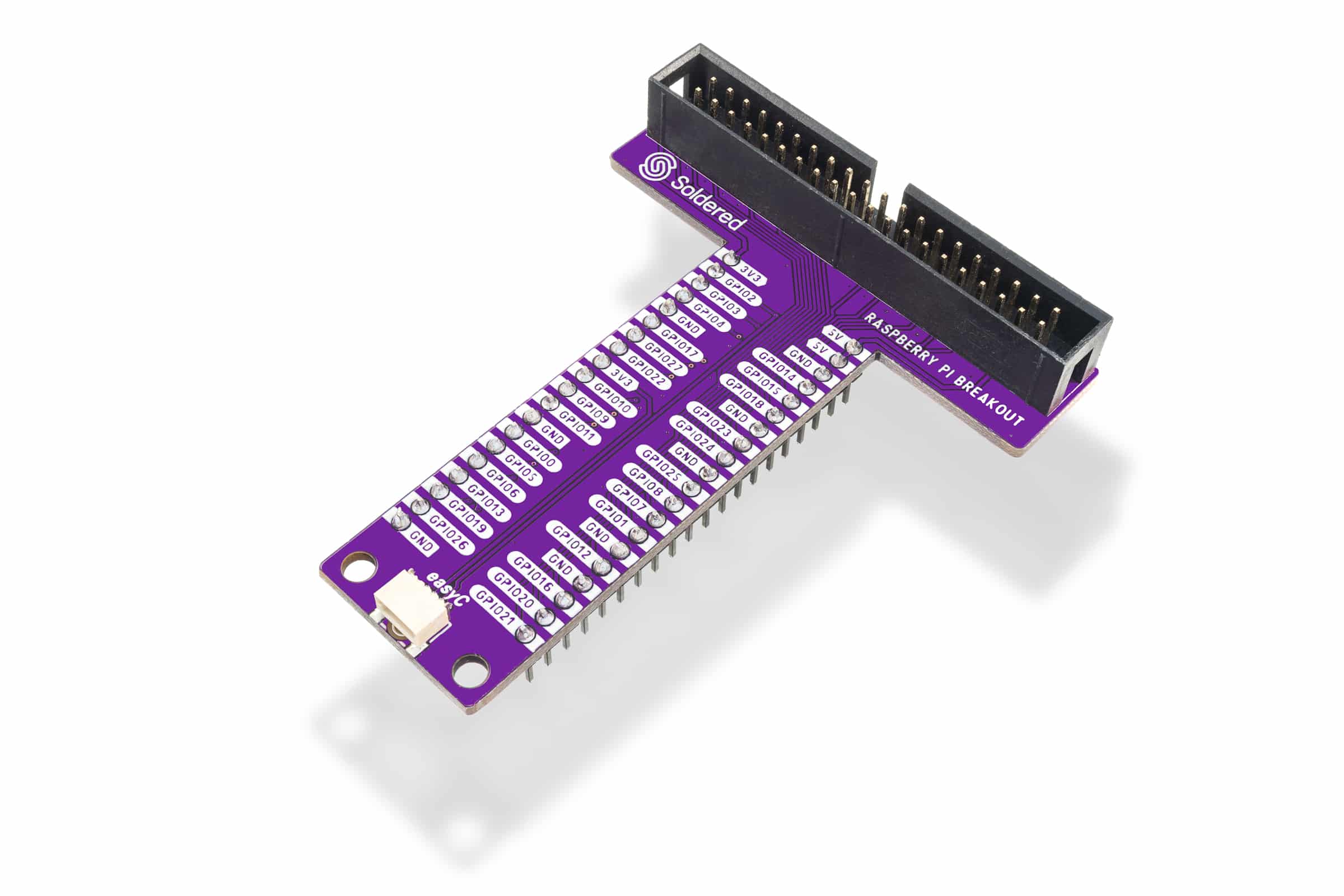
Raspberry Pi breadboard breakout + cable
This handy adapter makes it incredibly easy to connect your Pi to a standard breadboard, so you can start prototyping in seconds. No more fumbling with individual jumper wires, this breakout board gives you a clean, organized, and reliable connection to all of your Pi’s GPIO pins. Whether you’re a student learning to code, a hobbyist building a new gadget, or an engineer developing a new product, this breakout is a great tool for any Raspberry Pi user.
This breakout board is compatible with all Raspberry Pi models that have a 40-pin GPIO header. The pins are pre-soldered, so you can start using it right out of the box. It even adds extra ground and power pins, making it even more convenient to power your components. The included HAT ribbon cable ensures a secure connection between your Pi and the breakout board. With its compact size, it fits perfectly on both half-size and full-size breadboards.
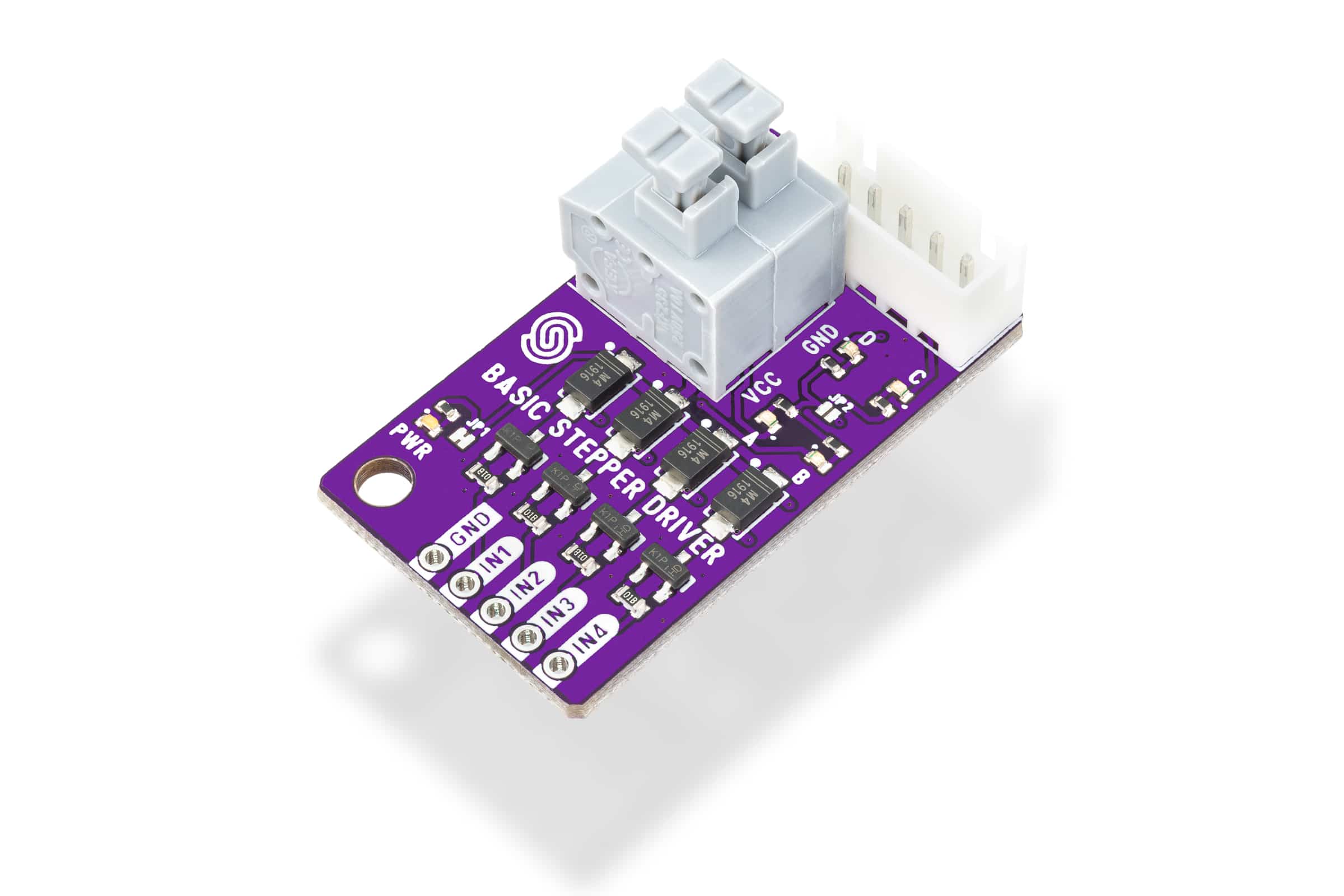
Basic stepper driver
This driver for stepper motor enables control over a stepper motor that does not require more than 800mA of current and works at up to 14V voltage. Except for the driver, it has built-in LED lights that indicate which phase of the motor is currently active. Connecting with microcontroller is easy, and control is directly through the library.
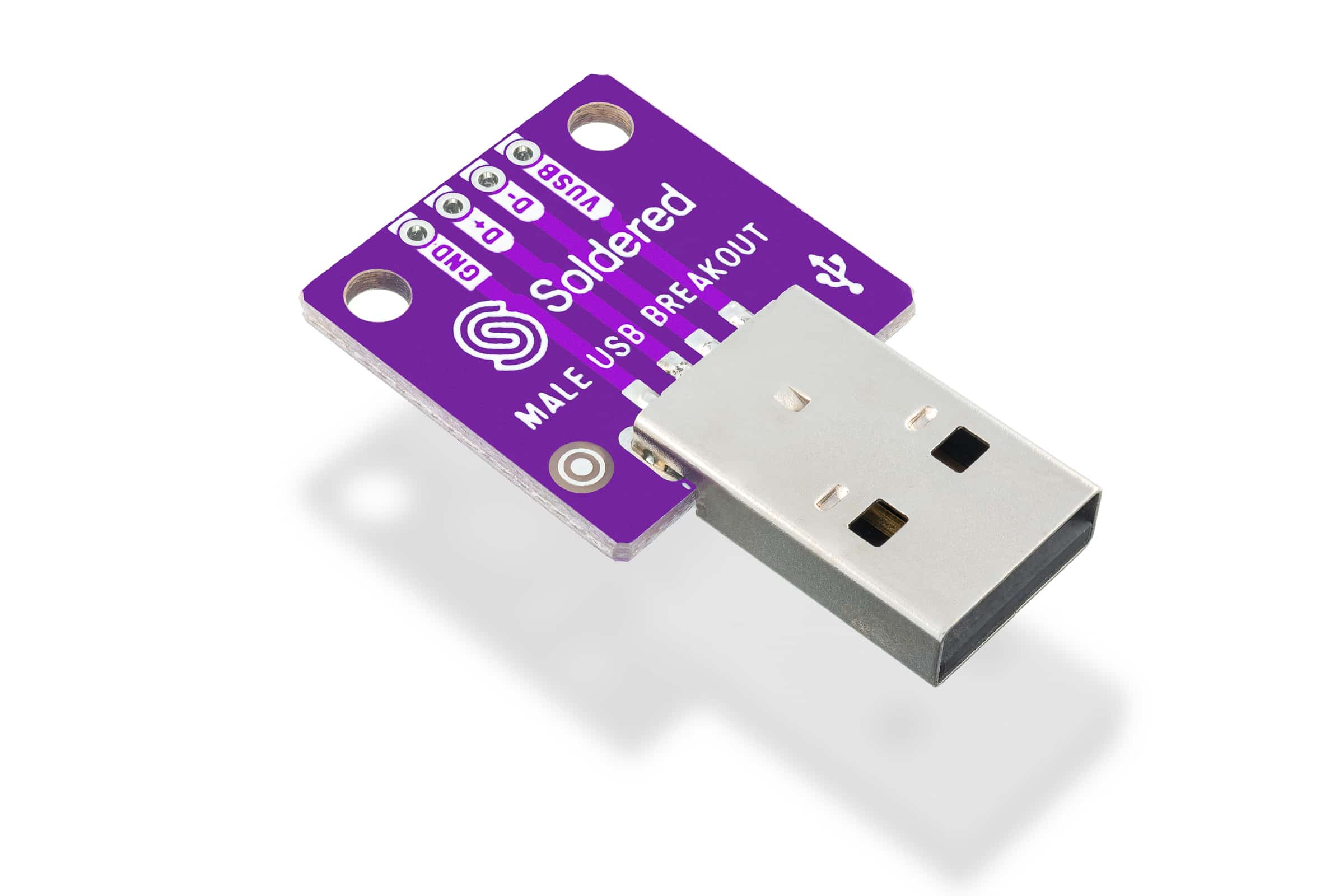
USB Type A male breakout
The USB Type-A connection is still prevalent. If it’s in the electronic devices everywhere around us, it is only natural that we’d want it in our electronic projects. Adding a USB Type-A connection to your circuit is as easy as pie with this breakout board.
The breakout board breaks the GND, D+, D-, and VUSB pins out to the plated through-holes.
Product usage tips:
Male headers for the pads are added and need to be soldered. The breakout board has two mounting holes for placing it on different surfaces.
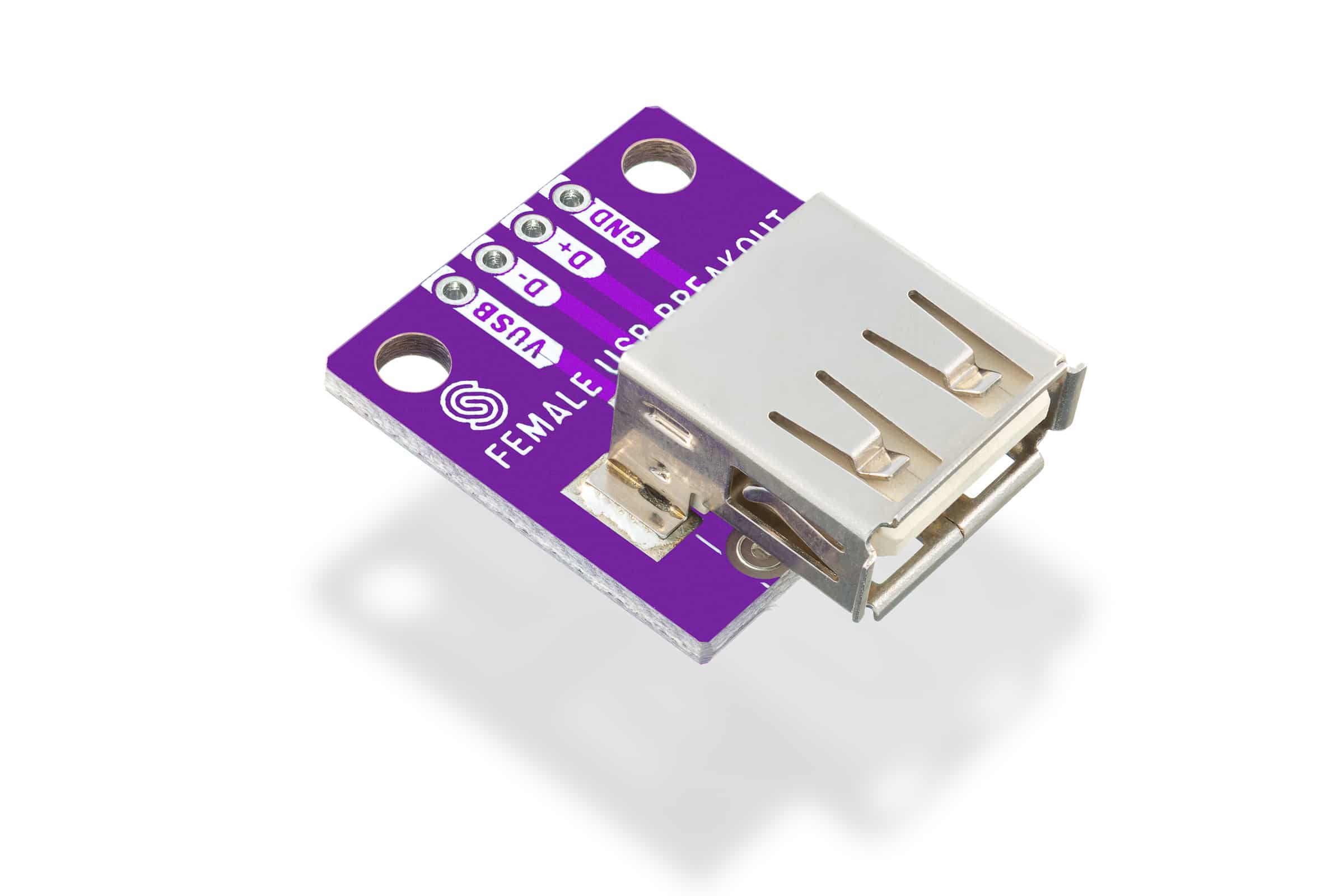
USB Type A female breakout
The USB Type-A connection is still prevalent. If it’s in the electronic devices everywhere around us, it is only natural that we’d want it in our electronic projects. Adding a USB Type-A connection to your circuit is as easy as pie with this breakout board.
The breakout board breaks the GND, D+, D-, and VUSB pins out to the plated through-holes.
Dimensions: 22 mm x 22 mm
Connectors: USB Type-A (female)
Mounting holes: 2
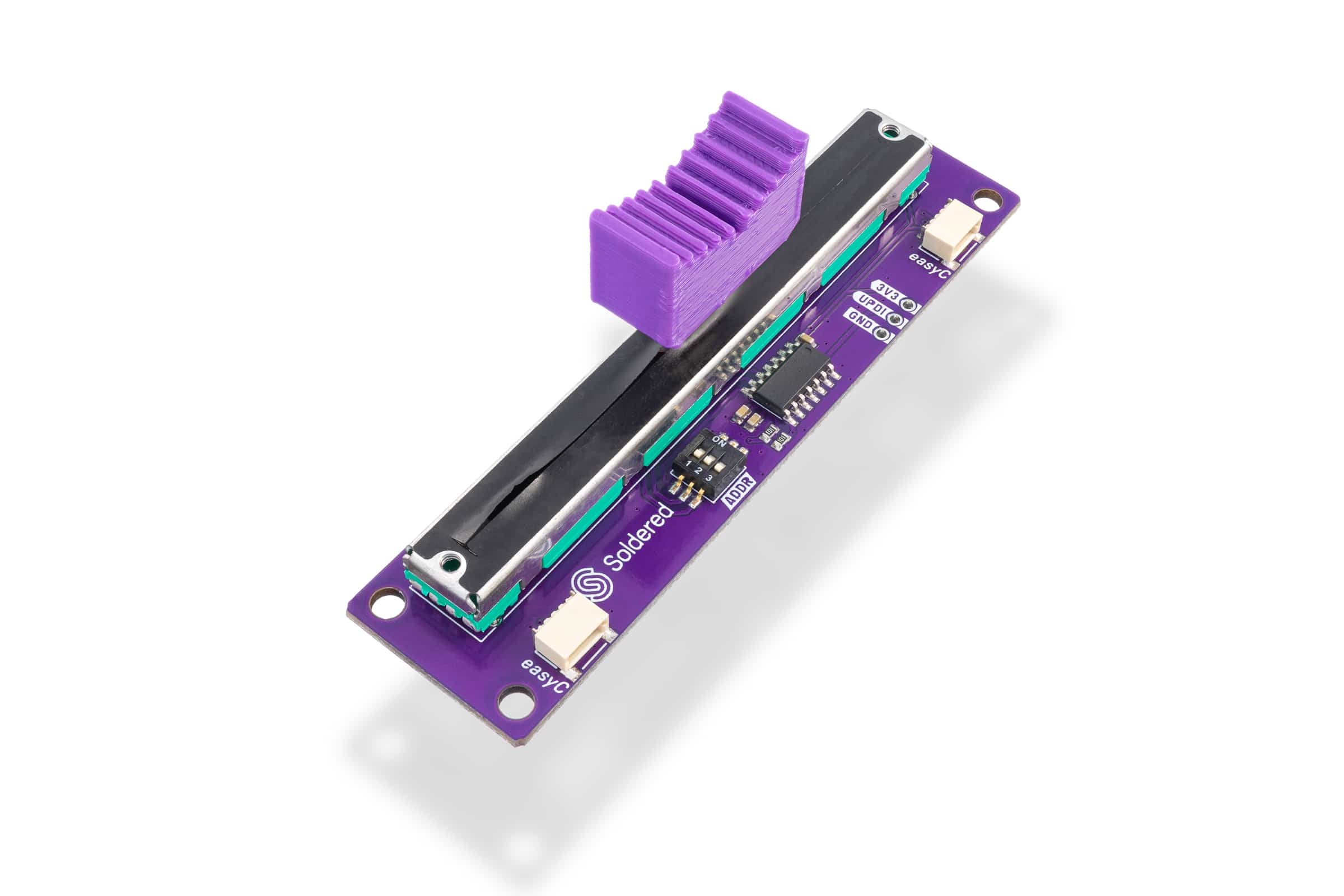
Slider potentiometer breakout with easyC
Potentiometers are well known all around, and the sliding potentiometer is just one of its versions. You’ve probably seen it in some music equipment, and now you have the chance to add it to your project!
This board has easyC connector. Thanks to easyC ecosystem, this board can be connected using off-the-shelf cables, without soldering. Controlling the is as simple as it gets, too.
Coming soon
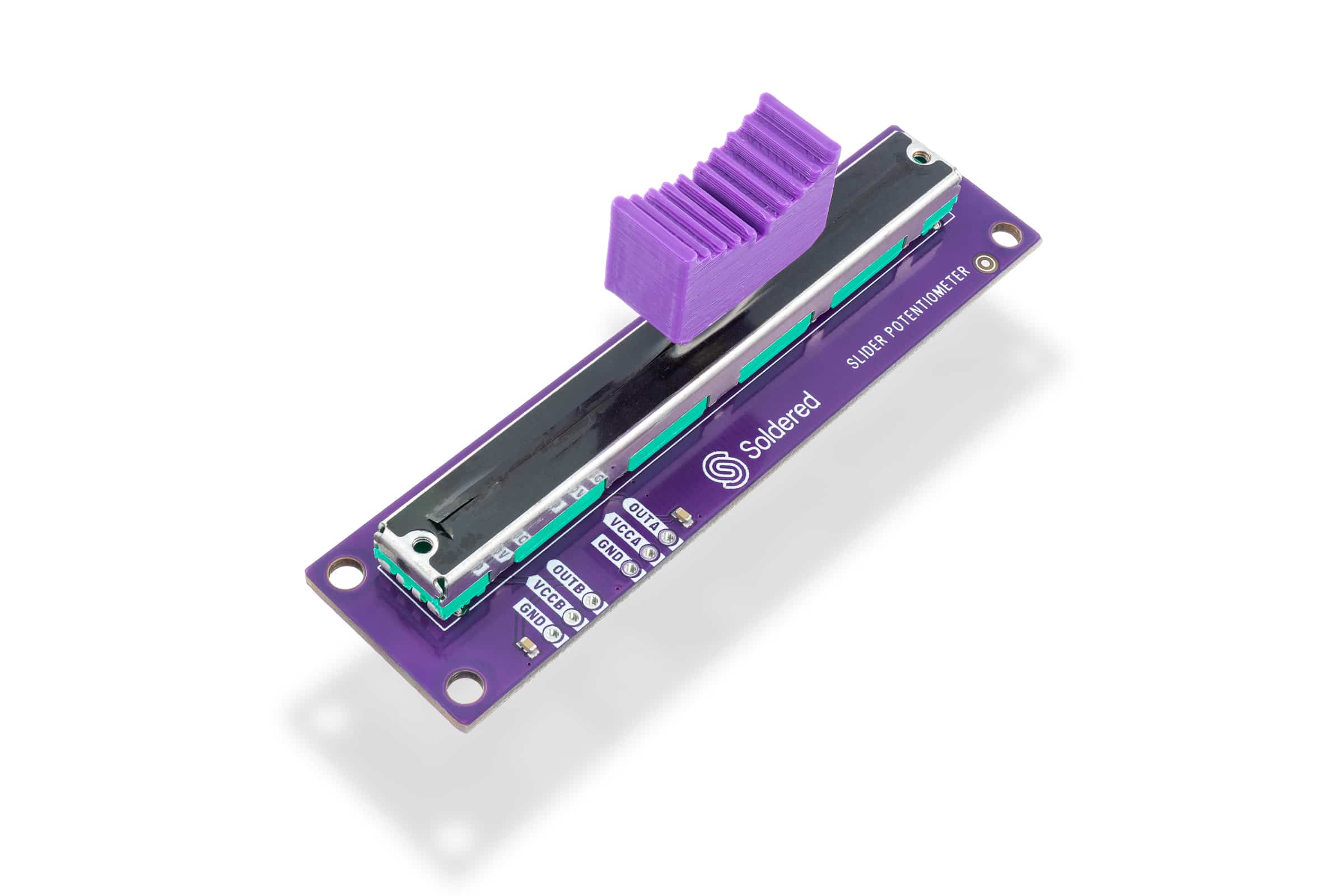
Slider potentiometer breakout
Potentiometers are well known all around, and the sliding potentiometer is just one of its versions.You’ve probably seen it in some music equipment, and now you have the chance to add it to your project!
• Type: linear
• Resistance: 10k
• Dimensions: 86 x 22 mm
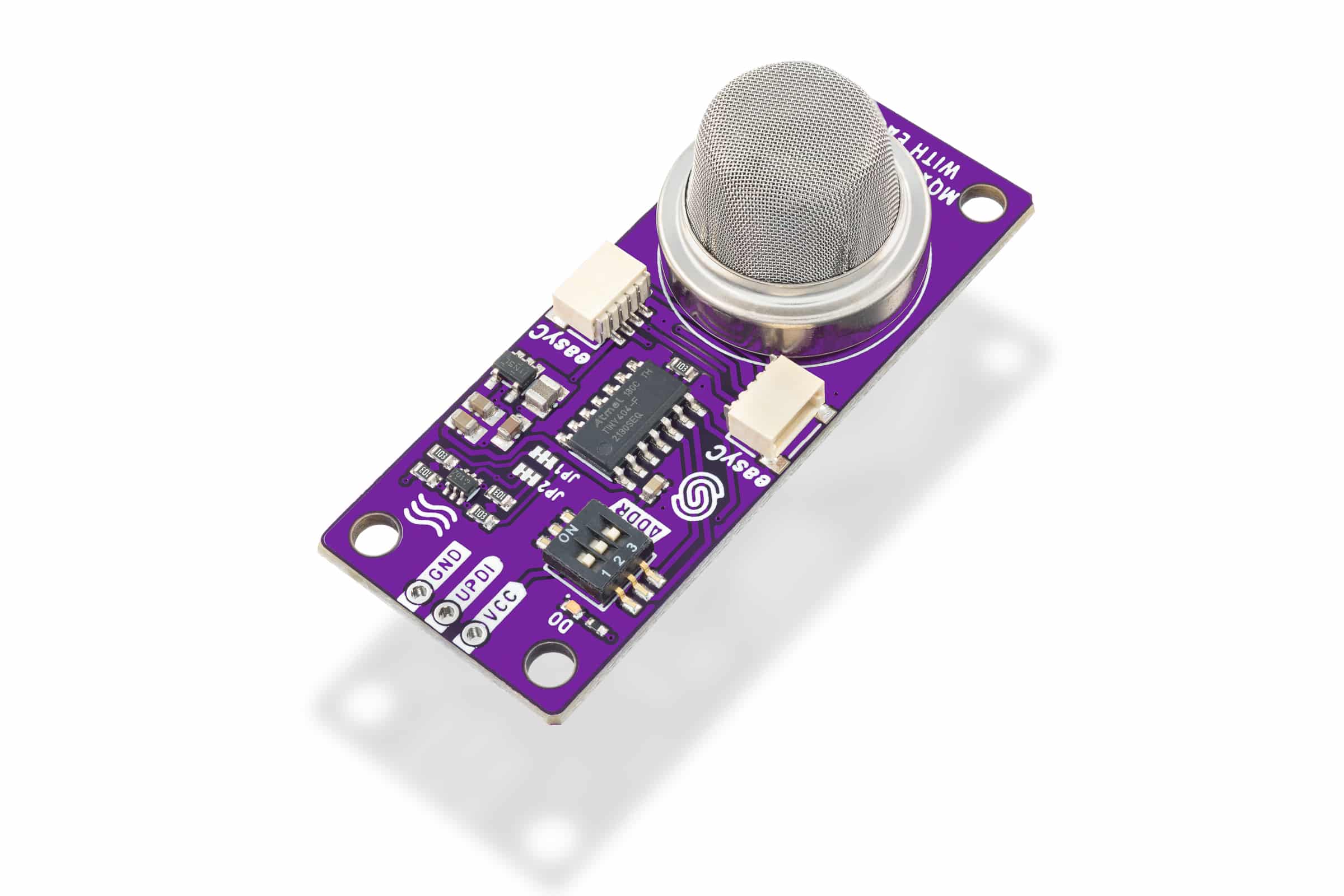
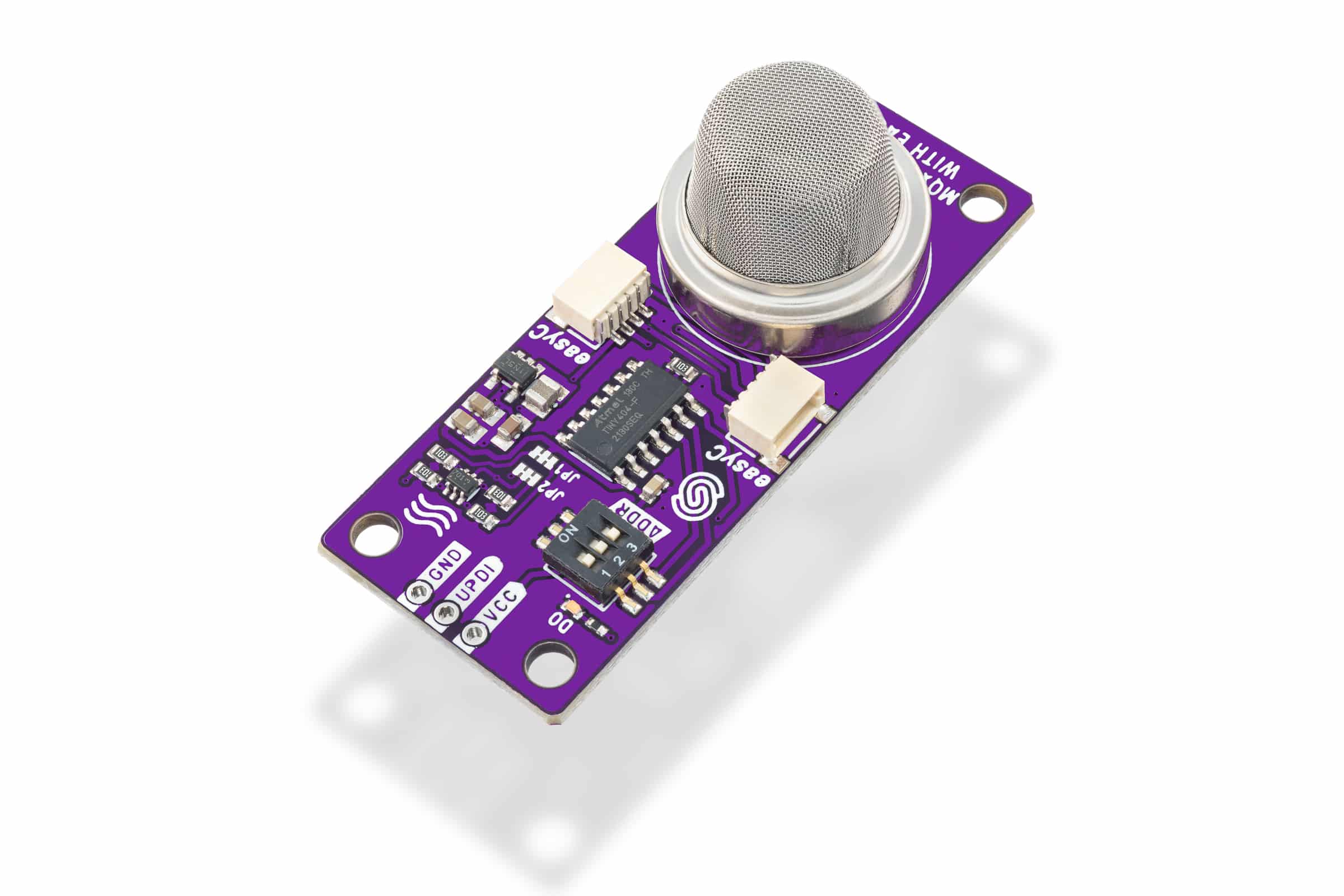
Benzene, Toluene, Acetone, Formaldehyde sensor MQ138 breakout with easyC
Protect your place from dangerous organic compounds with the MQ138 formaldehyde sensor. Formaldehyde, benzene, toluene, and acetone are invisible health hazards commonly found in new furniture, building materials, paints, and cleaning products – but now you can detect them before they become a problem. Perfect for indoor air quality monitoring, smart home safety systems, and industrial hygiene applications, this intelligent sensor features an onboard microcontroller for accurate, calibrated readings through the convenient Qwiic interface.
Engineered with an integrated microcontroller, this sensor delivers pre-calibrated readings through the Qwiic interface, eliminating analog signal processing and calibration requirements. Please note that you will have to use our Arduino library for the project to ensure correct communication with the onboard microcontroller. Don’t worry, using our documentation, you should find it easy to get started. The digital output provides reliable, consistent measurements while the Qwiic system enables tool-free connection to all Soldered development boards and others which support the Qwiic/easyC/STEMMA-QT interface. The 3.3V operation with onboard regulation ensures compatibility with modern microcontroller systems, while four mounting holes enable secure installation in monitoring applications.
This sensor is ideal for detecting formaldehyde levels in new homes, furniture, and workplace safety monitoring. The LED indicator provides immediate visual feedback when harmful VOC levels are detected. Allow an initial heat-up period (48 hours first run and then each consecutive run 5 mins heat up time) for optimal accuracy. The sensor provides relative concentration readings perfect for trend monitoring and threshold detection. Ideal for triggering ventilation systems or safety alerts. Four mounting holes enable permanent installation in HVAC systems, indoor air quality monitors, or portable testing devices. Compatible with Arduino, Raspberry Pi, and ESP32 through the Qwiic interface. Includes documentation and example code for immediate implementation in air quality monitoring projects. Custom selectable I2C address via onboard switch ensures compatibility with existing projects.
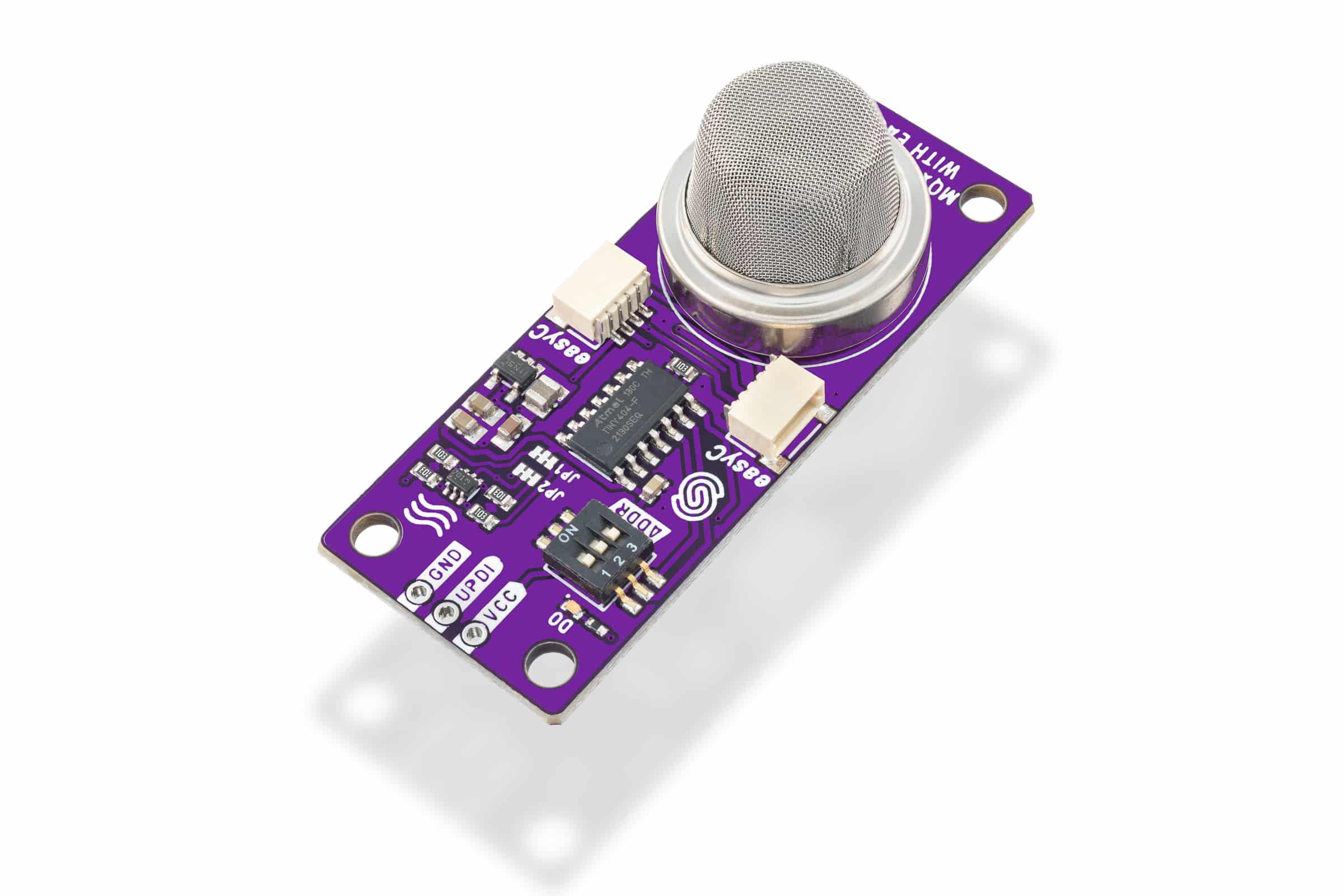
Ammonia sensor MQ137 breakout with easyC
The sensitivity and selectivity of the MQ137 sensor allow it to effectively detect and measure levels of ammonia, making it a valuable tool for applications such as gas leakage detection, agricultural monitoring, and environmental sensing. By integrating the MQ137 sensor with appropriate electronic circuits and microcontrollers like Dasduino, you can create systems that provide real-time monitoring and prompt alerts in the presence of hazardous ammonia concentrations. It requires a short time to heat up in order to work correctly.
The breakout board provides digital and analog information through the easyC system. Sensor readings are obtained through easyC.
Product usage tips:
When gas is detected, the LED will start glowing. It will remain off if it doesn’t detect anything. Four mounting holes enable easy mounting to surfaces. The board comes with three male headers.
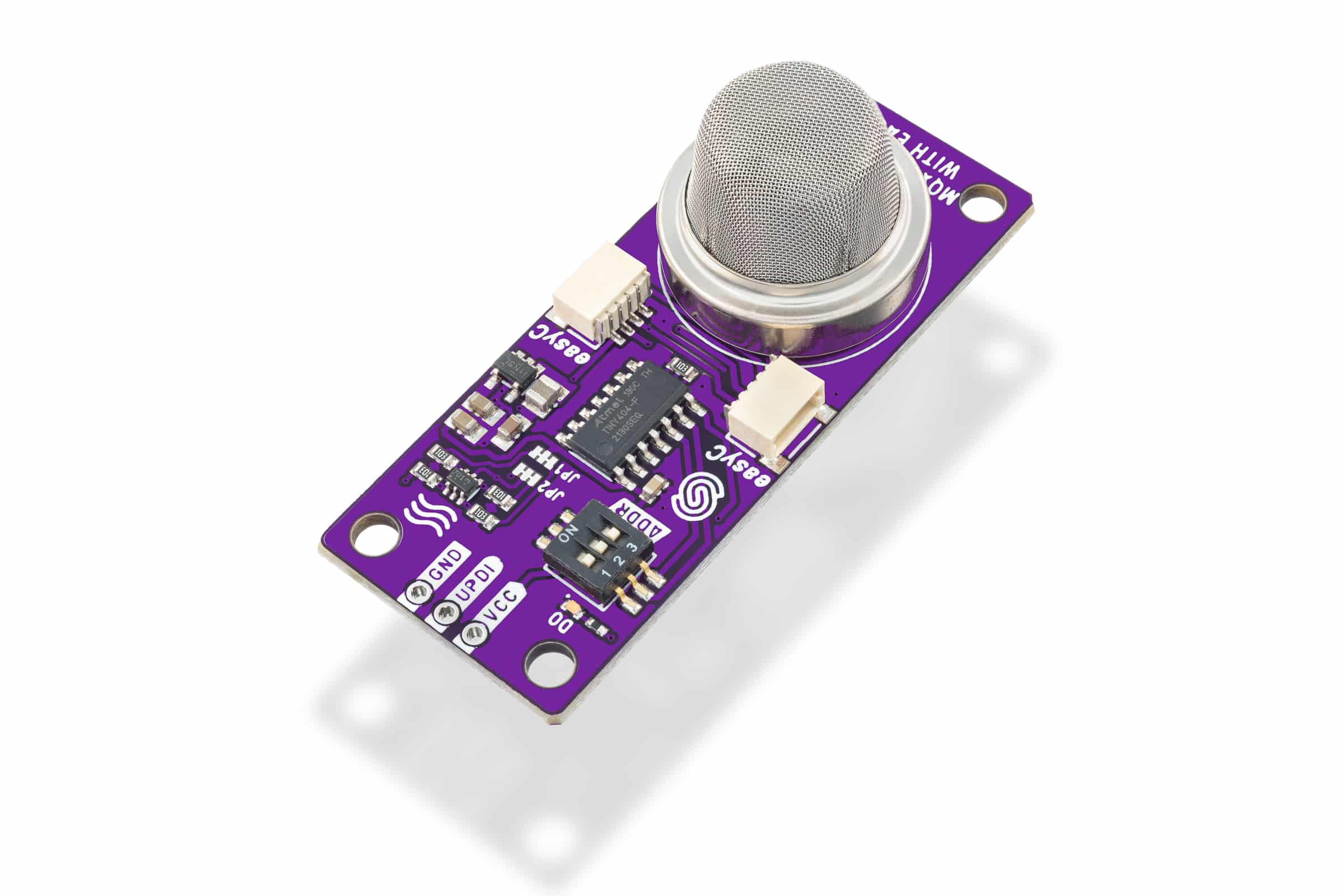
Air quality sensor MQ135 breakout with easyC
The versatility of the MQ135 sensor allows for its use in applications such as indoor air quality monitoring, gas leakage detection, and environmental sensing. While its main target gas is carbon dioxide (CO2), it is also sensitive to various other gases, including volatile organic compounds (VOCs), alcohol vapors, benzene, smoke, and other harmful gases commonly found in the environment. By integrating the MQ135 sensor with appropriate electronic circuits and microcontrollers like Dasduino, you can create systems that enable real-time monitoring and analysis of gas concentrations, allowing you to take necessary actions to maintain a healthy and safe environment.
The MQ135 air quality measurement module operates at 5V and consumes approximately 150mA. It requires some time to heat up before it can provide accurate results.
The breakout board provides digital and analog information through the easyC system. Sensor readings are obtained through easyC.
Product usage tips:
When gas is detected, the LED will start glowing. It will remain off if it doesn’t detect anything. Four mounting holes enable easy mounting to surfaces. The board comes with three male headers.
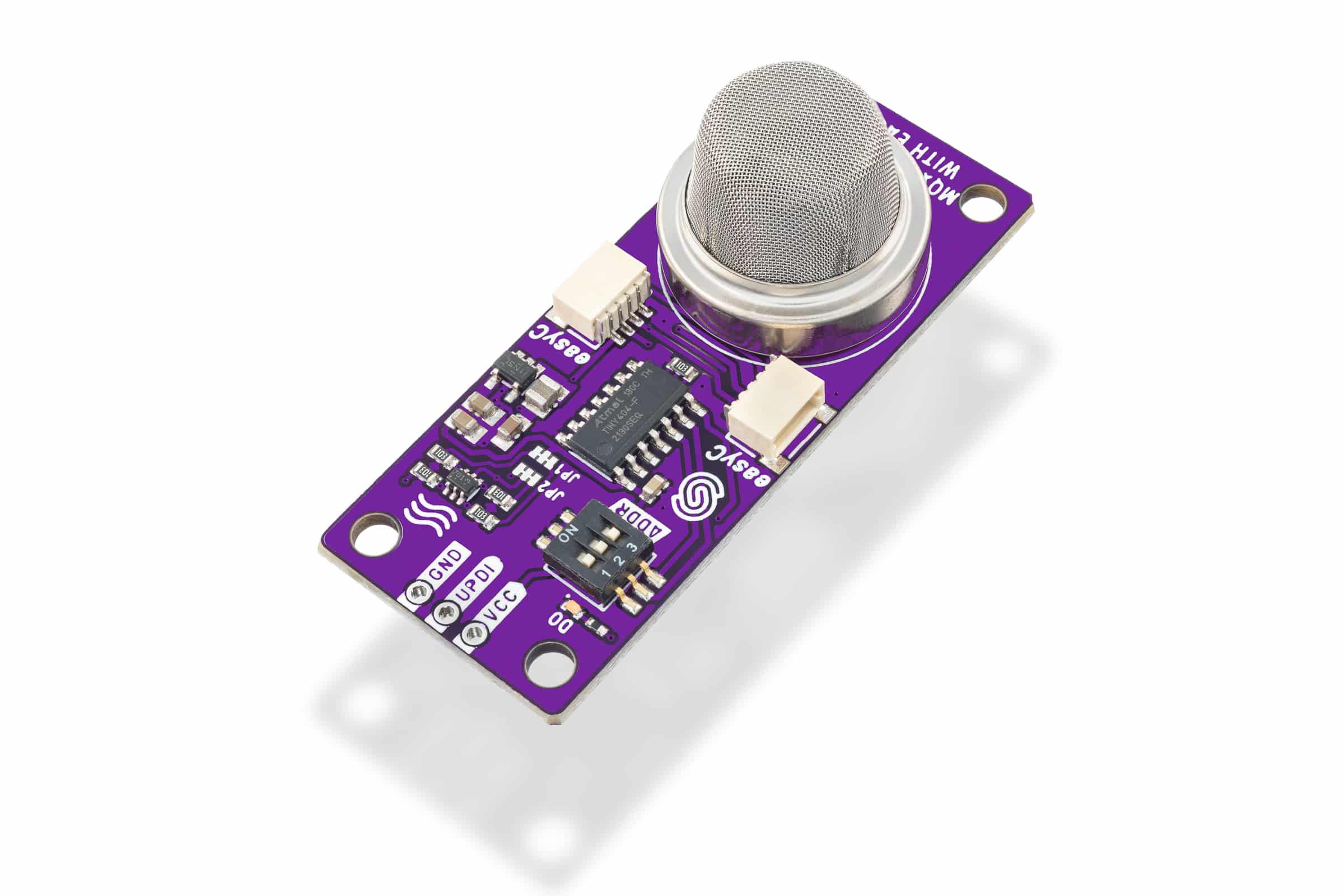
Ozone sensor MQ131 breakout with easyC
The MQ131-H is the high concentration version of the MQ131 ozone sensor, designed for detecting ozone (O₃) levels in the 10–1000 ppm range. This sensor offers good sensitivity to O₃ and operates on the semiconductor detection principle, making it ideal for industrial and environmental applications.
The sensitivity and selectivity of the MQ131 sensor enable it to effectively detect and measure ozone levels, making it a valuable tool for applications such as air quality monitoring, ozone generators, and ozone leakage detection systems. By integrating the MQ131 sensor with appropriate electronic circuits and microcontrollers like Dasduino, you can create systems that enable real-time monitoring of ozone concentration and trigger alerts when dangerous levels are detected.
The breakout board provides digital and analog readings via the easyC system, allowing smooth integration with platforms that support this interface. Sensor data is easily accessible through easyC.
Product usage tips:
-
-
When gas is detected, the LED will light up. It will remain off if no gas is detected.
-
The board includes four mounting holes for easy installation.
-
Comes with three male headers for UPDI programming the onboard ATTINY, which is not required for normal usage
-
CO, flammable gasses sensor MQ9 breakout with easyC
We are surrounded by invisible gases everywhere. Although we generally don’t have to worry about them, in certain circumstances they can be very flammable and dangerous. The MQ9 breakout detects carbon monoxide, methane, propane and other flammable gases so that the right measures can be taken in time. The sensor detects carbon monoxide at 10-1000 ppm and other flammable gases at 100-10000 ppm.
The breakout board provides digital and analog information via the easyC system. Sensor readings are obtained via easyC.
Product usage tips:
When gas is detected, the LED will start glowing. It will remain off if it doesn’t detect anything. Four mounting holes enable easy mounting to surfaces. The board comes with three male headers.
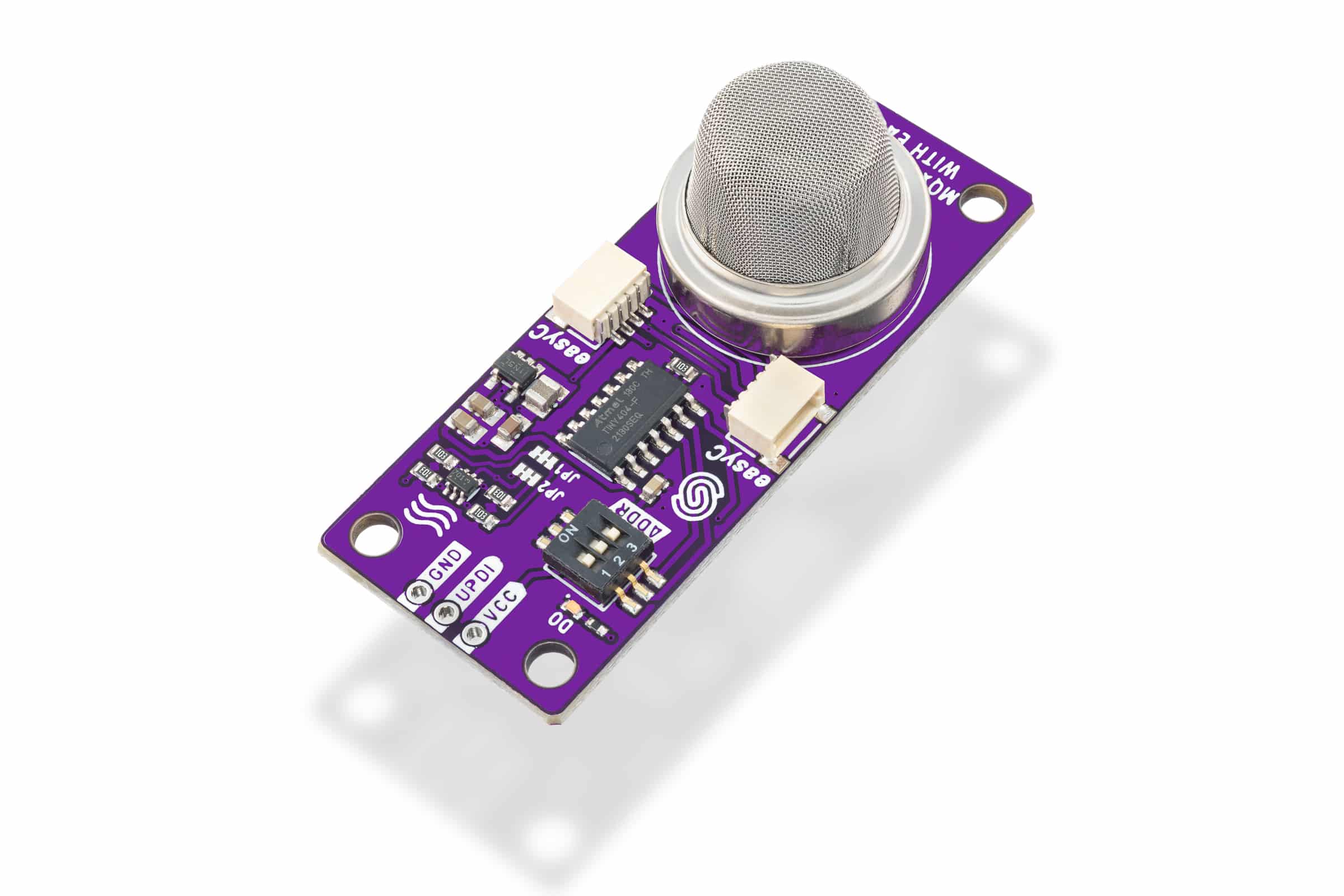
Hydrogen sensor MQ8 breakout with easyC
Hydrogen is all around us, and it is dangerous because it is highly flammable. Its leakage can be very dangerous for both life and property. That is why it is important to detect any leakage to prevent such losses in the industry. To do this, hydrogen sensors such as the MQ8 breakout board are used. The sensor detects hydrogen in the range of 100-1000 ppm.
The breakout board provides digital and analog information via the easyC system. Sensor readings are obtained via easyC.
Product usage tips:
When gas is detected, the LED will start glowing. It will remain off if it doesn’t detect anything. Four mounting holes enable easy mounting to surfaces. The board comes with three male headers.
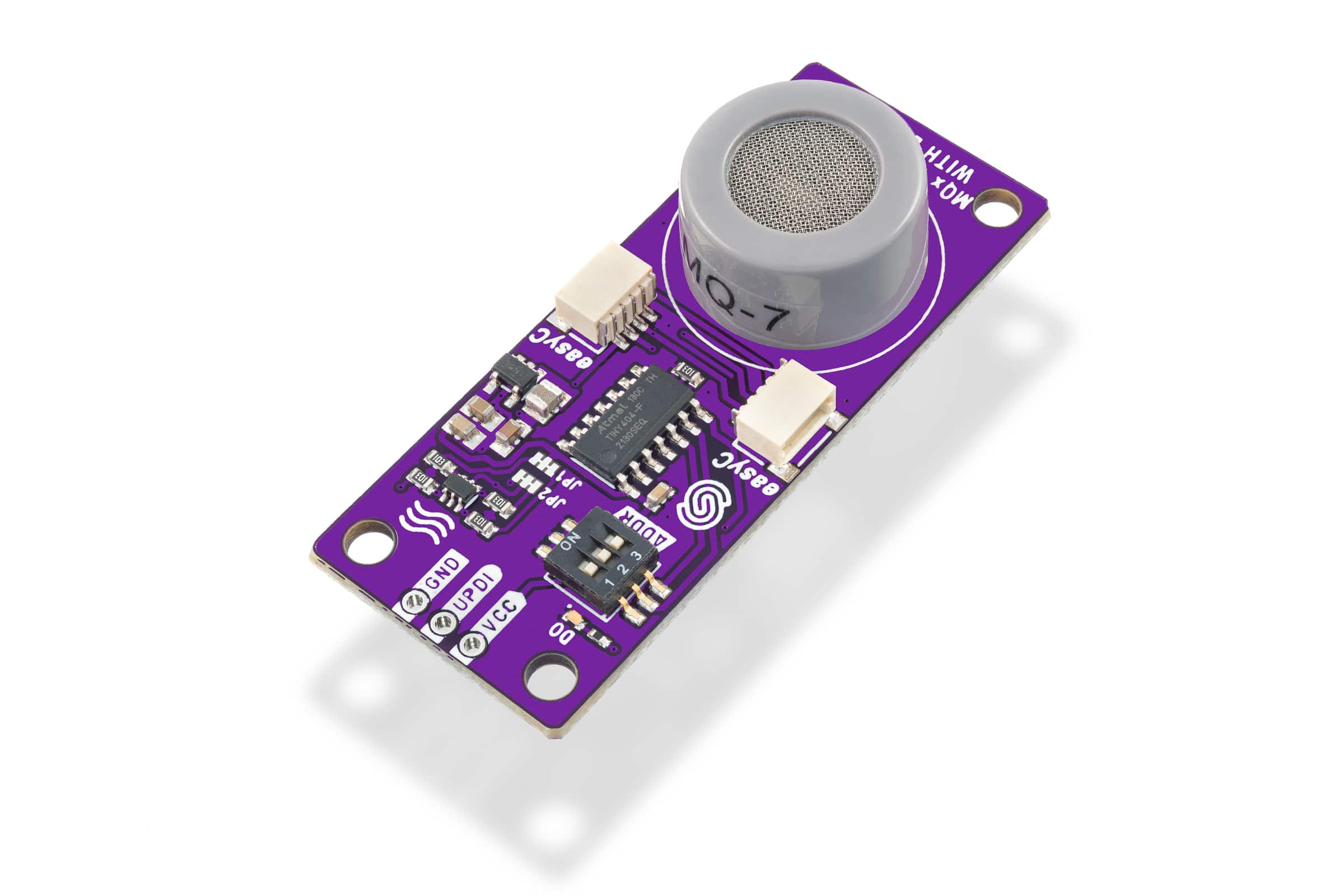
CO sensor MQ7 breakout with easyC
The sensitivity and selectivity of the MQ7 sensor enable it to effectively detect and measure carbon monoxide levels, making it a crucial tool for applications such as gas leakage detection, security systems, and environmental monitoring. By integrating the MQ7 sensor with appropriate electronic circuits and microcontrollers like Dasduino, you can create systems that enable real-time monitoring and prompt alerts in the presence of hazardous CO concentrations. It requires a short time to warm up in order to work correctly.
The breakout board provides digital and analog information through the easyC system. Sensor readings are obtained through easyC.
Product usage tips:
When gas is detected, the LED will start glowing. It will remain off if it doesn’t detect anything. Four mounting holes enable easy mounting to surfaces. The board comes with three male headers.
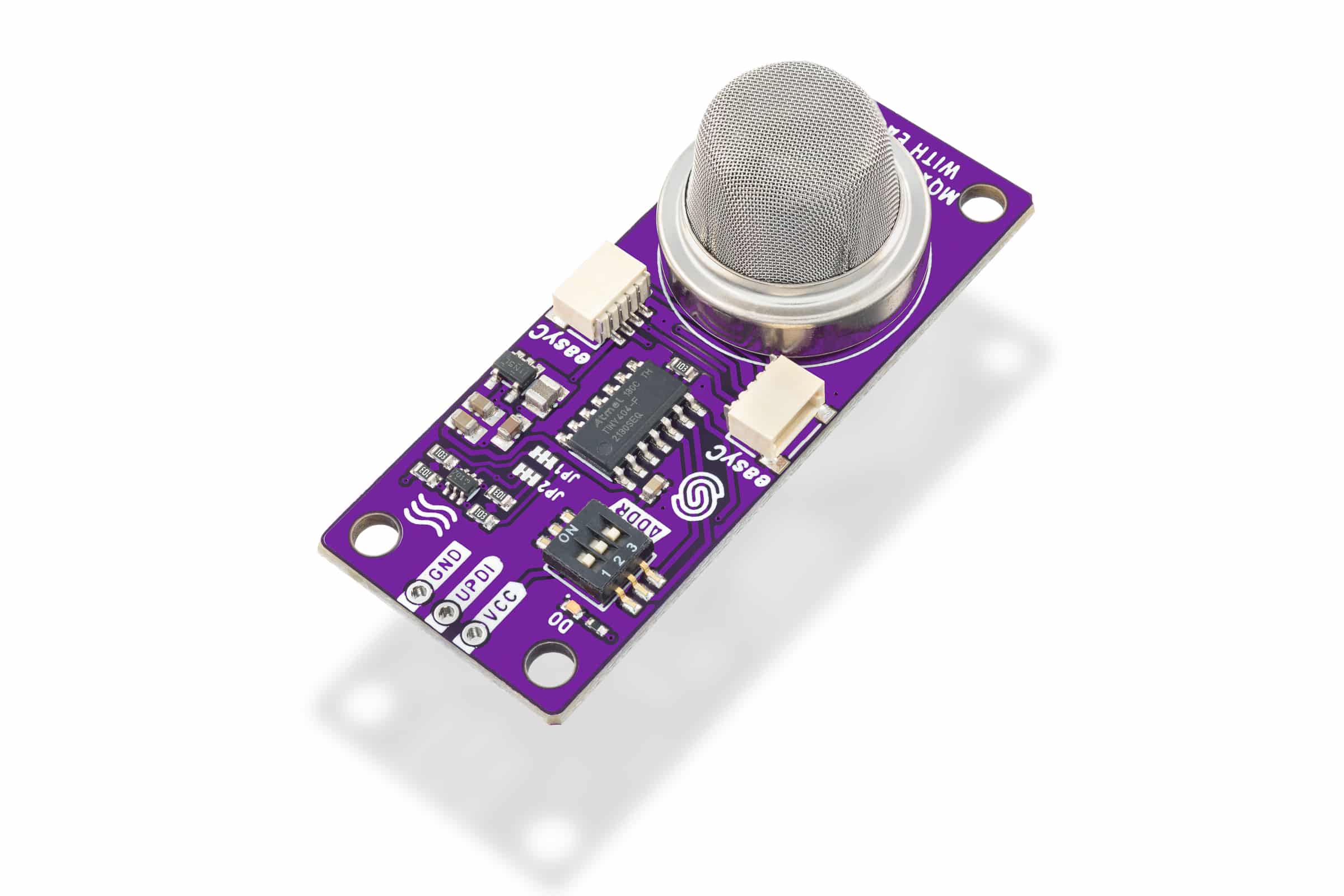
LPG, Butane sensor MQ6 breakout with easyC
Humans can detect many smells, but may have difficulty distinguishing gases. That’s why we use sensors like the MQ6 that detects LPG and butane in the air. When heated to the optimal operating temperature, it very quickly detects changes in air concentration between 200 and 10,000 ppm.
The breakout board provides digital and analog information via the easyC system. Sensor readings are obtained via easyC.
Product usage tips:
When gas is detected, the LED will start glowing. It will remain off if it doesn’t detect anything. Four mounting holes enable easy mounting to surfaces. The board comes with three male headers.
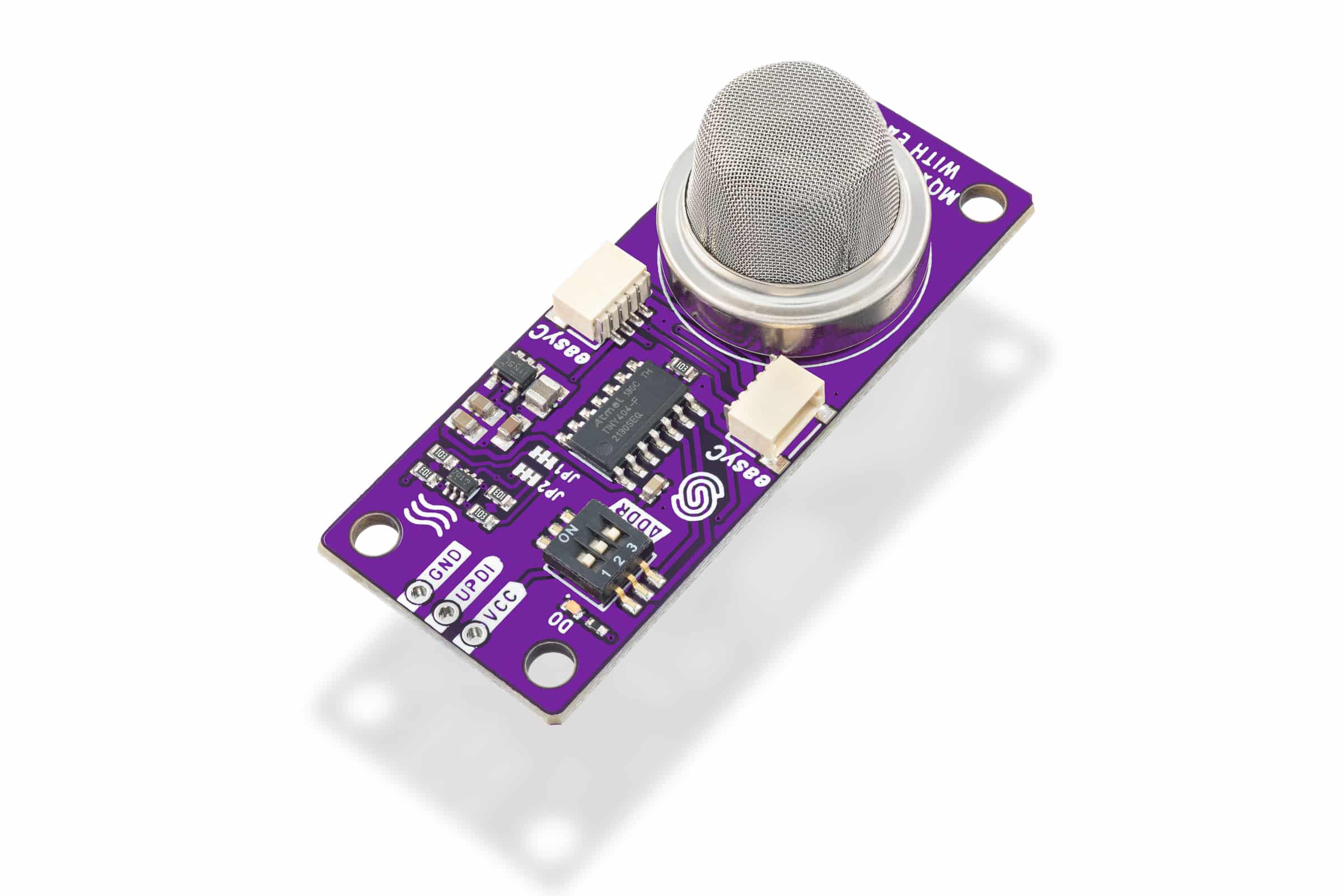
Natural gas, LPG sensor MQ5 breakout with easyC
Is your office located near a high traffic area? Are you concerned about the presence of natural and liquefied petroleum gases in your work environment? The MQ series sensors can help detect various gases, and the MQ5 sensor is an easy-to-use sensor that provides information about the levels of natural gases and LPG (liquefied petroleum gas) in your surroundings. It quickly detects gas particles in the range of 200 to 10,000 ppm.
The breakout board provides digital and analog information through the easyC system. Sensor readings are obtained through easyC.
Product usage tips:
When gas is detected, the LED will start glowing. It will remain off if it doesn’t detect anything. Four mounting holes enable easy mounting to surfaces. The board comes with three male headers.

Methane, CNG sensor MQ4 breakout with easyC
The Methane/CNG Sensor MQ4 Breakout with Qwiic offers a reliable, compact solution for detecting combustible gases like Methane (CH4) and Compressed Natural Gas (CNG). Built around the sensitive MQ-4 sensor, the board includes an ATTiny404 MCU that converts the analog signal to a digital I²C output, simplifying integration and eliminating the need for external ADCs or complex calibration. This ready-to-use module is ideal for environmental monitoring and safety applications.
Designed for easy integration, the breakout features a 4-pin Qwiic (formerly easyC) connector, allowing solder-free connection to Qwiic-enabled development boards. The I²C interface supports multiple sensors on a single bus and works with a range of microcontrollers, from Arduino to Raspberry Pi. Low power consumption makes it suitable for battery-powered or remote monitoring systems, while the robust design ensures long-term stability in demanding environments.
Perfect for portable gas leak detectors, automated ventilation systems, or air quality monitoring stations, the MQ4 breakout provides accurate, digital gas sensing for both educational and professional projects. Simply connect via the Qwiic port to your microcontroller and start monitoring Methane and CNG immediately.
Coming soon
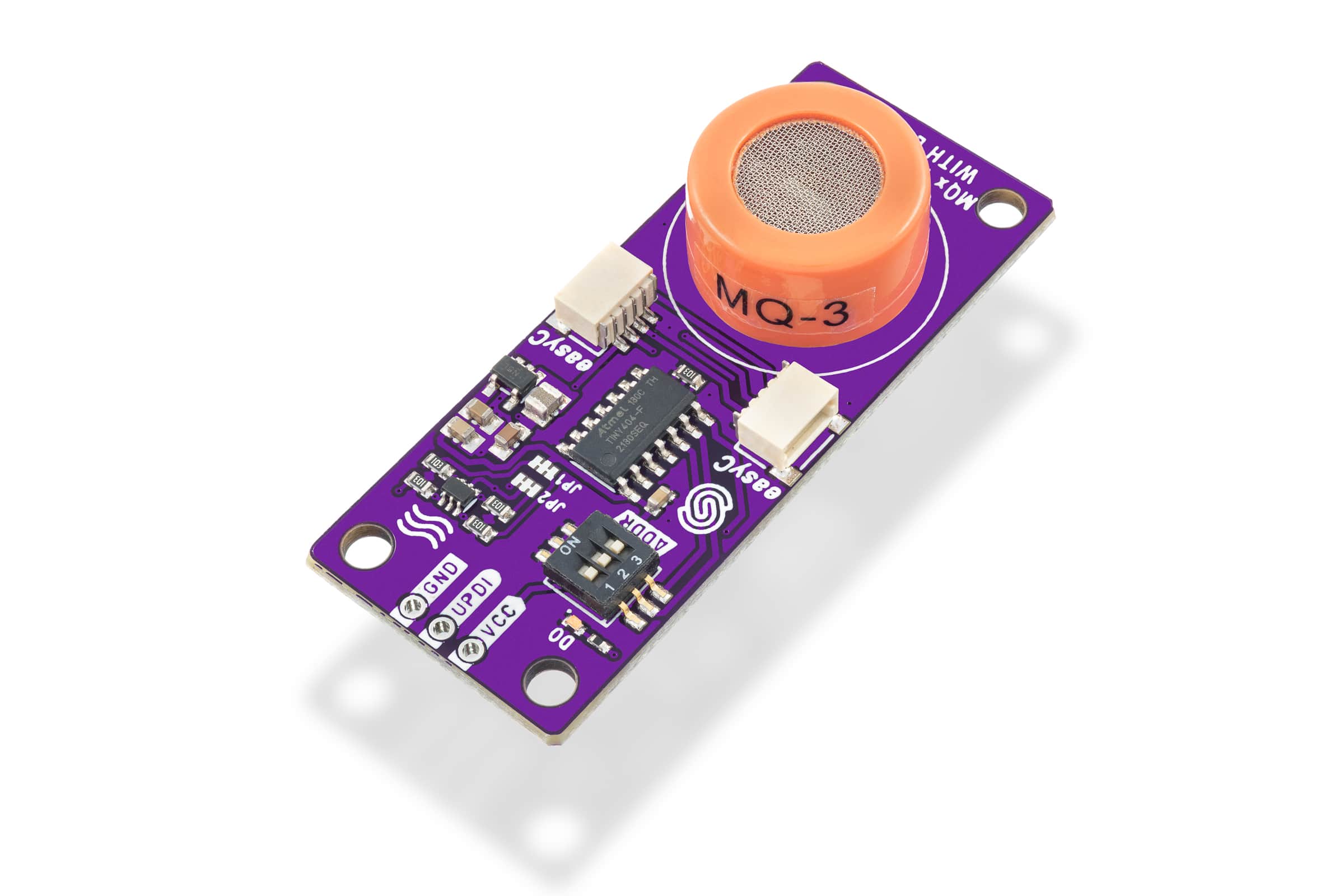
Alcohol, Ethanol sensor MQ3 breakout with easyC
MQ sensors, including the MQ3 sensor, have the capability to detect various gases. The MQ3 sensor is specifically designed to detect alcohol vapors. This means it is sensitive to alcohols such as methanol, ethanol, and isopropanol. The MQ3 sensor is commonly used for measuring alcohol concentration in the air and serves as a useful tool for alerting to the presence of alcohol in the environment.
It is important to note that MQ sensors are not specific to only one gas and can react to other gases besides the ones they are specifically designed for. Therefore, it is important to use the MQ3 sensor exclusively for alcohol detection and follow the manufacturer’s instructions to achieve optimal accuracy and reliability of measurements. It requires a short time to heat up in order to work correctly.
The breakout board provides digital and analog information through the easyC system. Sensor readings are obtained through easyC.
Product usage tips:
When gas is detected, the LED will start glowing. It will remain off if it doesn’t detect anything. Four mounting holes enable easy mounting to surfaces. The board comes with three male headers.

Butane, LPG & Smoke sensor MQ2 breakout with easyC
MQ sensors, including the MQ2 sensor, have the capability to detect various gases. The MQ2 sensor is specifically designed to detect combustible gases such as LPG (liquefied petroleum gas), butane, propane, methane, alcohol, hydrogen, and smoke. These gases are commonly found in residential, industrial, and automotive environments. The sensor’s sensitivity and responsiveness enable it to detect even trace amounts of these gases, making it a valuable tool for gas leakage detection, fire detection, and air quality monitoring. It takes a short time to heat up in order to work correctly.
The breakout board provides digital and analog information through the easyC system. Sensor readings are obtained through easyC.
Product usage tips:
When gas is detected, the LED will start glowing. It will remain off if it doesn’t detect anything. Four mounting holes enable easy mounting to surfaces. The board comes with three male headers.

VOC sensor MQ138 breakout
The MQ138 sensor is specifically designed to detect various gases, with a primary focus on air quality monitoring. While its main target gas is formaldehyde (HCHO), it is also sensitive to a range of other gases, including volatile organic compounds (VOCs – toulen, alcohol, acetone and hydrogen) and other harmful gases commonly found in the environment. It takes a short time to heat up in order to work correctly.
The breakout board works with both digital (DO) and analog signals (AO). The digital output is obtained by setting a threshold value with a potentiometer. The analog output will differ depending on the intensity of the gas.
Product usage tips:
When gas is detected, the LED will start glowing. It will remain off if it doesn’t detect anything. Two mounting holes enable easy mounting to surfaces. The board comes with four male headers that need to be soldered.
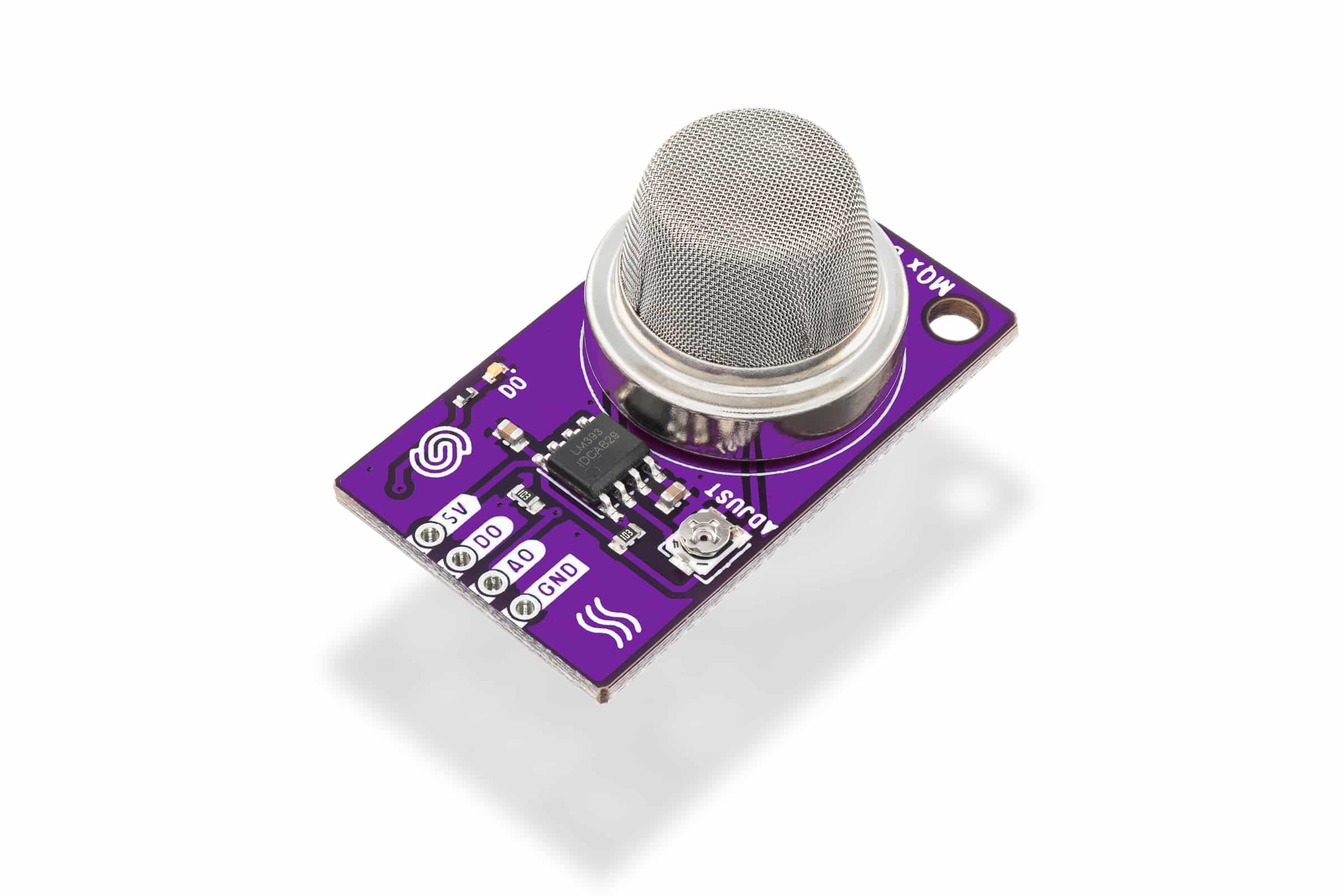
Ammonia sensor MQ137 breakout
The MQ137 sensor’s sensitivity and selectivity allow it to effectively detect and measure ammonia levels, making it a valuable tool for applications such as gas leakage detection, agricultural monitoring, and environmental sensing. By integrating the MQ137 sensor with appropriate electronic circuits and microcontrollers like Dasduino, you can create systems that provide real-time monitoring and prompt alerts in the presence of hazardous ammonia concentrations. It takes a short time to heat up in order to work correctly.
The breakout board works with both digital (DO) and analog signals (AO). The digital output is obtained by setting a threshold value with a potentiometer. The analog output will differ depending on the intensity of the gas.
Product usage tips:
When gas is detected, the LED will start glowing. It will remain off if it doesn’t detect anything. Two mounting holes enable easy mounting to surfaces. The board comes with four male headers that need to be soldered.
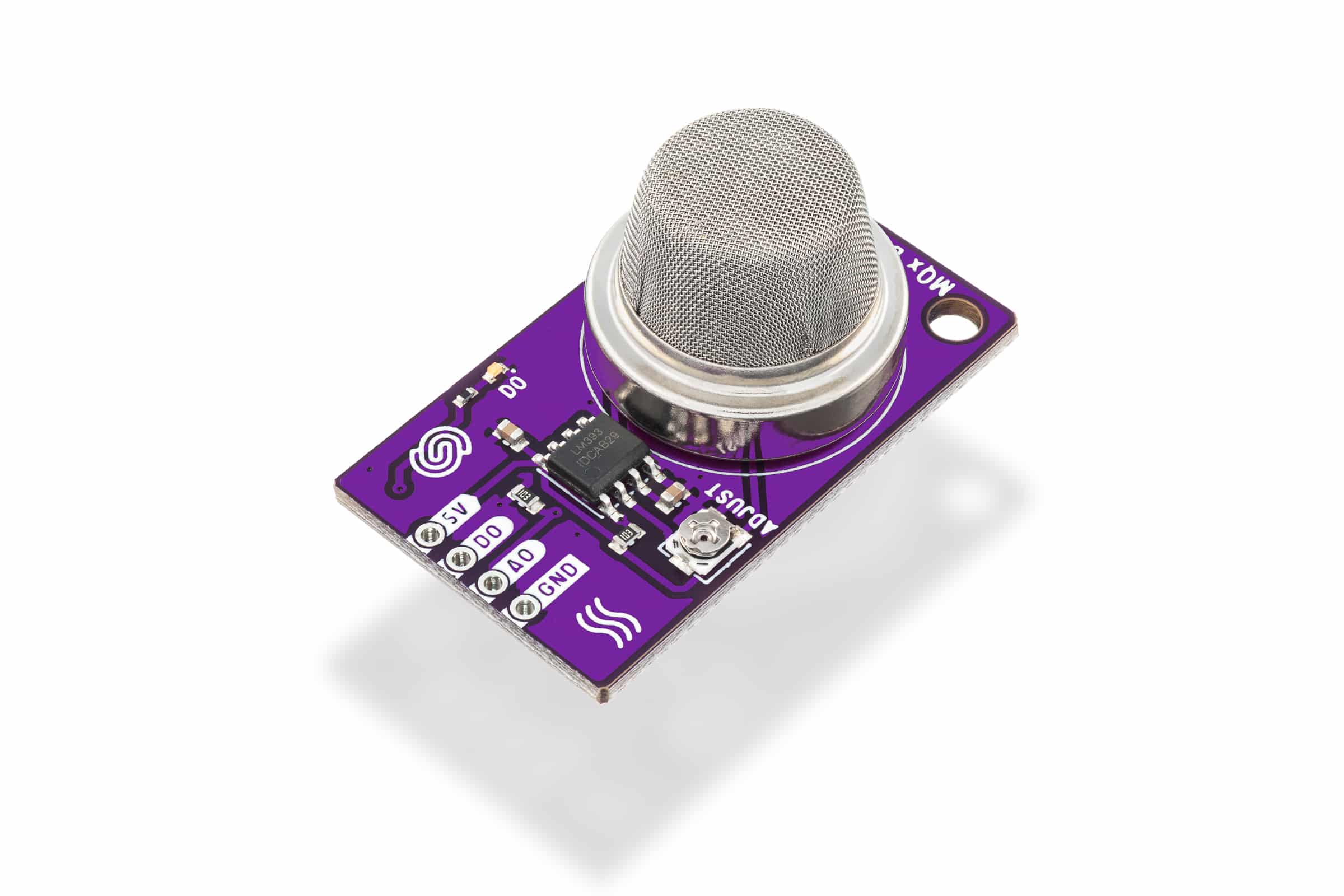
Air quality sensor MQ135 breakout
Monitor your indoor air quality and protect your health with this versatile MQ135 multi-gas sensor. Perfect for detecting dangerous CO2 levels, organic compounds (VOCs), ammonia, benzene, and smoke in homes, offices, and workshops. Whether you’re building a smart home air quality system, creating environmental monitoring stations, or developing safety alert systems, this Arduino compatible sensor provides real-time gas detection with both analog and digital outputs. With our comprehensive documentation and library, you should be set to start working on your projects quickly!
This breakout board provides both digital (DO) and analog (AO) outputs for maximum flexibility. The digital output features an adjustable threshold via an onboard potentiometer, enabling custom trigger points for alarm systems and automated responses. The analog output delivers proportional voltage readings (0-5V) corresponding to gas concentration levels, perfect for data logging and monitoring applications. Operating at 5V with 150mA consumption, the sensor includes pre-heating circuitry for accurate readings and features mounting holes for permanent installations. The compact 22x38mm form fits easily into enclosures while providing environmental sensing capabilities.
Allow an initial pre–heating (48 hours first run and then each consecutive run 5 mins heat up time) period for optimal accuracy and stability. The MQ135 sensor provides relative gas concentration readings for trend monitoring and threshold detection. For precise measurements, calibration with known gas concentrations is recommended. Compatible with 5V microcontroller systems. Includes documentation, example code, and wiring diagrams to get your air quality monitoring project running. Perfect for smart home automation, environmental research, and safety monitoring applications.
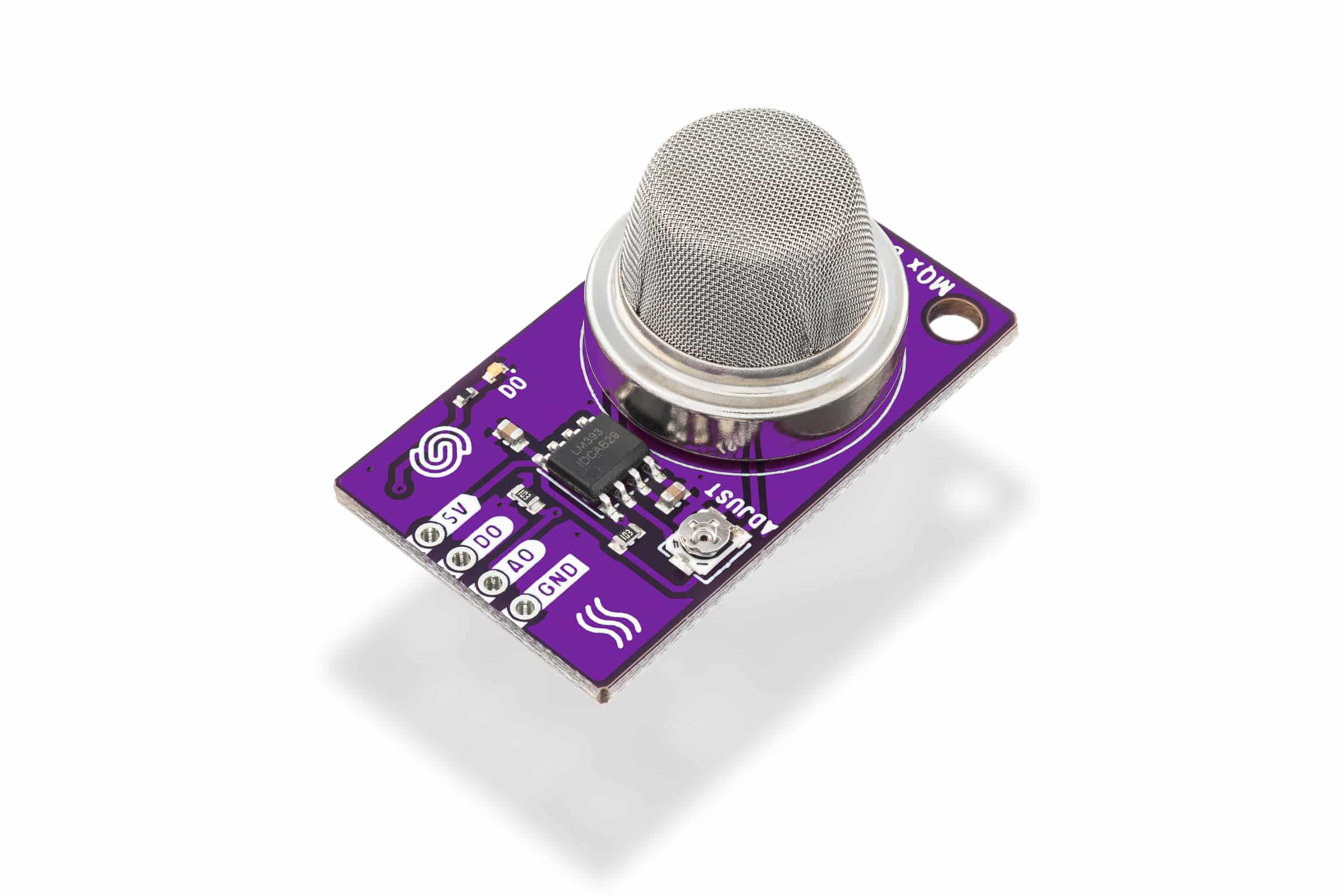
Ozone sensor MQ131 breakout
The MQ131-H is the high concentration version of the MQ131 ozone sensor, designed for detecting ozone (O₃) levels in the 10–1000 ppm range. This sensor offers good sensitivity to O₃ and operates on the semiconductor detection principle, making it well-suited for industrial and environmental applications.
The MQ131 sensor’s sensitivity and selectivity enable it to effectively detect and measure ozone levels, making it a valuable tool for applications such as air quality monitoring, ozone generators, and ozone leakage detection systems. By integrating the MQ131 sensor with appropriate electronic circuits and microcontrollers like Dasduino, you can create systems that provide real-time ozone concentration monitoring and trigger alerts when hazardous levels are detected.
The breakout board works with both digital (DO) and analog signals (AO). The digital output is obtained by setting a threshold value with a potentiometer, while the analog output will vary depending on the intensity of the detected gas.
Product usage tips:
- When gas is detected, the LED will light up. It will remain off if no gas is detected.
- The board includes two mounting holes for easy installation on surfaces.
- Four male headers are included but need to be soldered by the user.
11 years in the industry
Customers in 80+ countries
20,000+ satisfied customers