






- Dasduino (Arduino-compatible)

- Inkplate

- easyC ecosystem

- Raspberry Pi & Micro:bit

- Breadboards & Cables

- Batteries & Power supplies

- Kids

- Sensors

- Actuators

- Communication

- Tools & Lab equipment

- Soldering kits

- Components

- Sale

Shop

24/7 free customer and technical support

Comprehensive documentation

Open-source hardware and software

2-year Warranty - no questions asked
Showing 313–336 of 699 resultsSorted by average rating
Coming soon
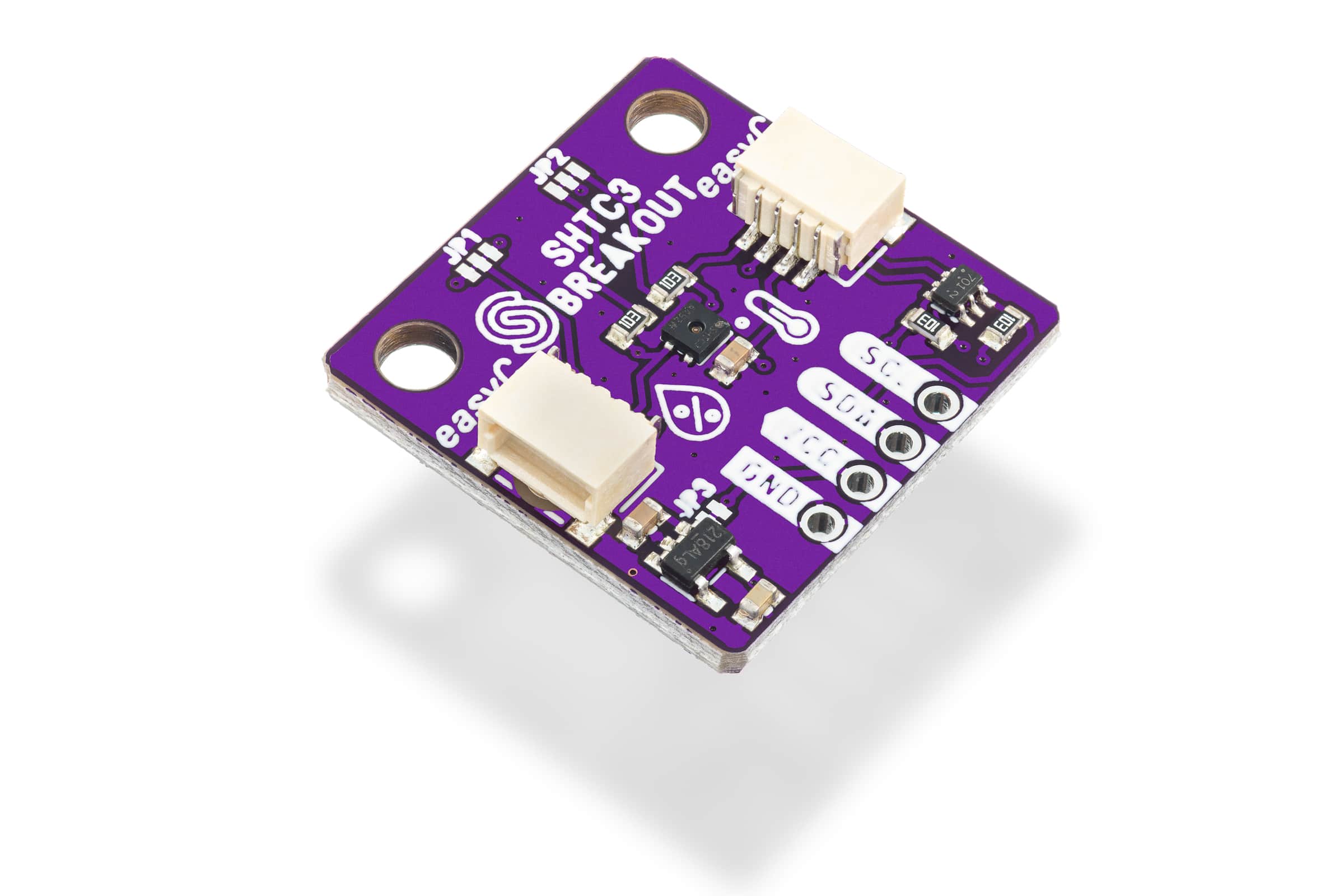
Temperature and humidity sensor SHTC3 breakout
Want to keep track of both the humidity and temperature in your room? Or maybe in the greenhouse to protect your crops? The SHTC3 breakout board is the solution you’re looking for! The digital sensor measures the changes in humidity and temperature very precisely. Since it’s very accurate and the temperature range is wide, it is a go-to sensor if you want precise climate information.
The breakout board uses the I2C communication protocol. Thus, it has two easyC ports so no soldering, nor distinguishing between SDA and SCL is required. The hardware-defined I2C address is 0x70. The design is 3.3V ready with an onboard regulator for 5V. The board’s standard current consumption is low, only 430 µA.
Product usage tips:
If you encounter errors when using the breakout board, see if it’s connected properly. First, look at the pinout on the board and your microcontroller. If everything seems OK, look at the connections on the breakout board. If all the wiring is correct, make sure that the breakout board’s I2C address is right. It should be 0x70. Everything as it should be so far? Go through your code again. There might be some bugs that are stopping things from working as expected.
The SHTC3 breakout board works wonderfully in combination with Dasduino Core and 16×2 easyC LCD. You can display temperature in one row and humidity in the other. Due to the easyC connections on all three, hooking all the devices together is as easy as it gets. The SHTC3 breakout board has two mounting holes so it can be attached to the project and won’t budge. The pins provided can be soldered if you don’t want to use the easyC ports.
To keep the longevity of the sensor, keep track of the current going through the circuit. Allowing an excessive amount of current to flow through it may cause the sensor to fail. It is not impact-resistant. When dropped from a high distance or at an odd angle, it can break beyond repair.
Coming soon
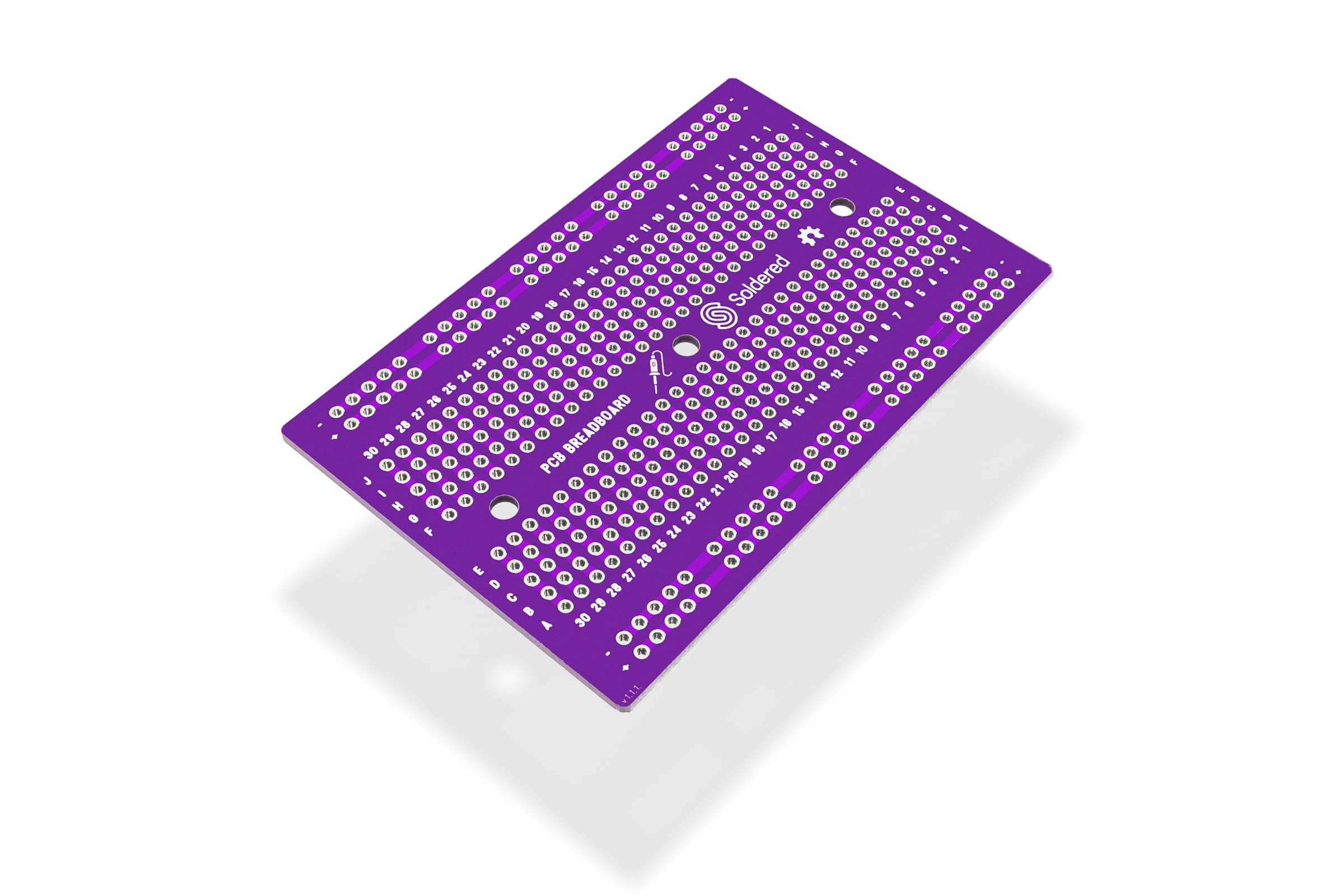
PCB breadboard/protoboard
This PCB is also a protoboard. It offers both the simplicity and the functionality of a breadboard. It is the same size as the modular half-size breadboard and has the same connections to pins. The board allows you to make the temporary circuit from the breadboard permanent.
Product usage tips:
The board has three mounting holes for secure placement on different surfaces.
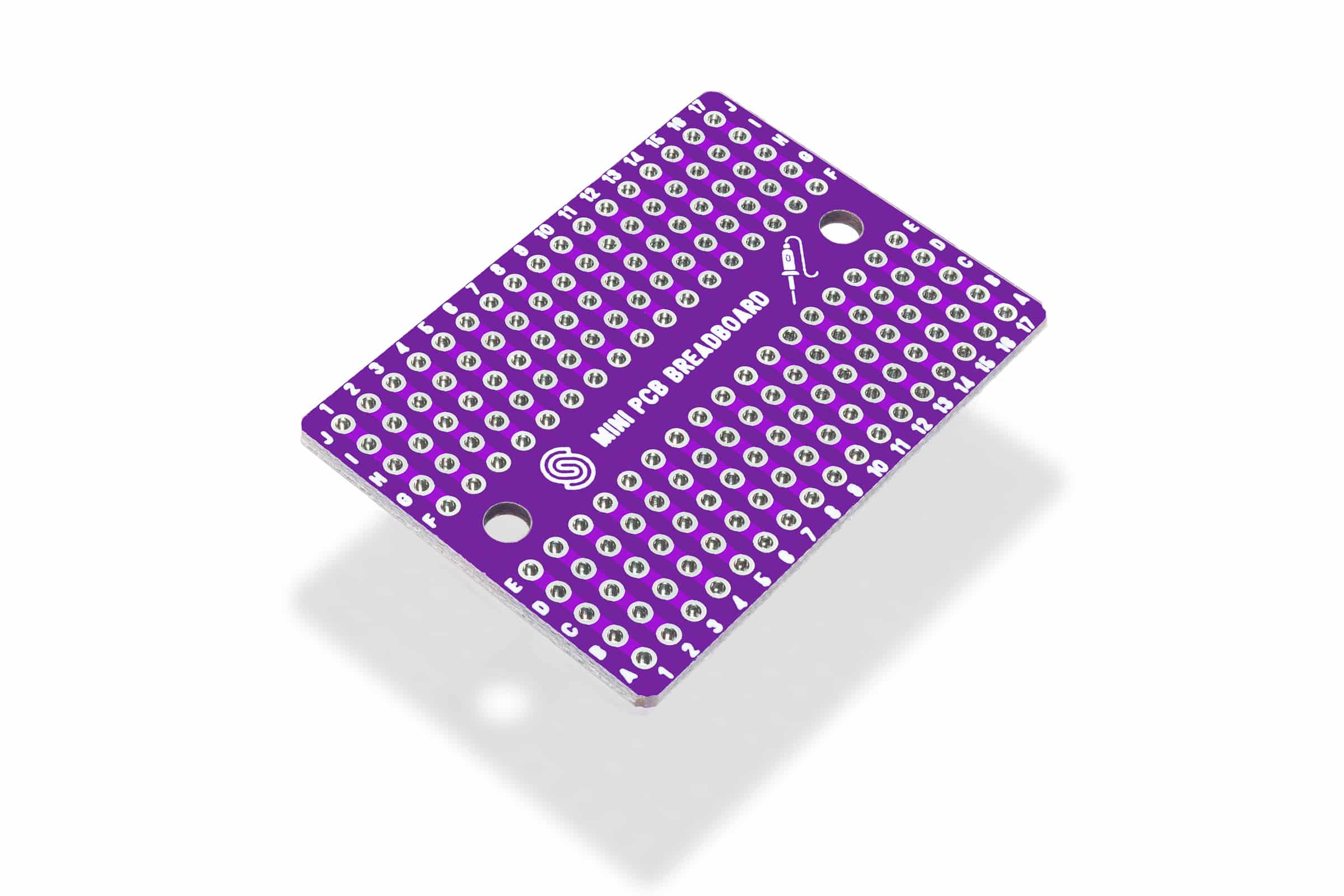
Mini PCB breadboard/protoboard
Tired of messy protoboardconnections? The Mini Solderable Breadboard is the perfect way to make your projects clean. This 2-in-1 protoboard has the same layout as a standard mini breadboard, allowing you to easily transfer your circuit from a temporary setup to a securely soldered one. The columns are internally connected – like on a real breadboard! Whether you’re a student learning to solder, a hobbyist building a gadget, or an engineer creating a final prototype, this board makes the transition from breadboard to PCB seamless.
With 170 holes, this compact protoboard provides plenty of space for your components, while the two M3 screw mounting holes allow you to securely fasten it into your project enclosure. The familiar breadboard layout means you don’t have to rethink your circuit design when it’s time to solder, saving you time and reducing the risk of errors. It’s the perfect tool for creating durable, long-lasting projects that can keep up in daily use.
What makes this protoboard special is its simplicity and reliability, and this board meets the highest quality and safety standards. This one, as with all our products, is open-source, with all hardware files available for you to modify and adapt.
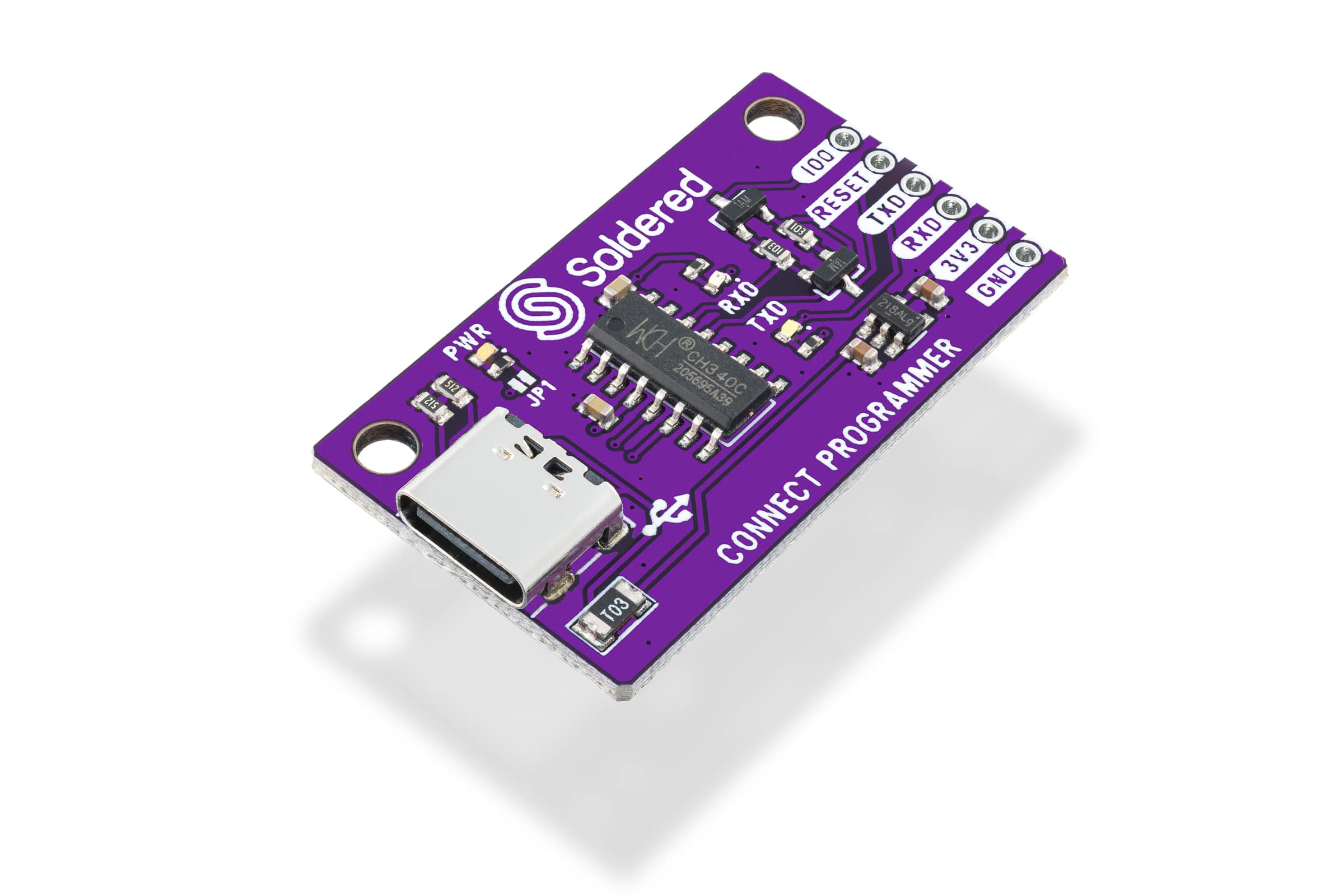
CONNECT programmer
CONNECT programmer is designed to allow extremely simple programming of boards based on ESP8266 and ESP32 microcontrollers. It contains all the necessary electronics and logic so that programming can be done by plugging USB cable into CONNECT programmer and connecting CONNECT programmer to the programming header. Electronics that take care of timing and signal sequence are also on board, so it puts the ESP uC into bootloader mode.
ESP programming header can be found boards made by Soldered based on ESP8266 or ESP32 microcontrollers that do not have a USB-UART converter, but this programmer can be used for any other ESP32 / ESP8266 board as well.
• IC: CH340
• Pin layout: GPIO0, RESET, RX, TX, 3V3, GND
• LEDs: RX, TX, power
• USB: USB-C
• Dimensions: 38 x 22 mm
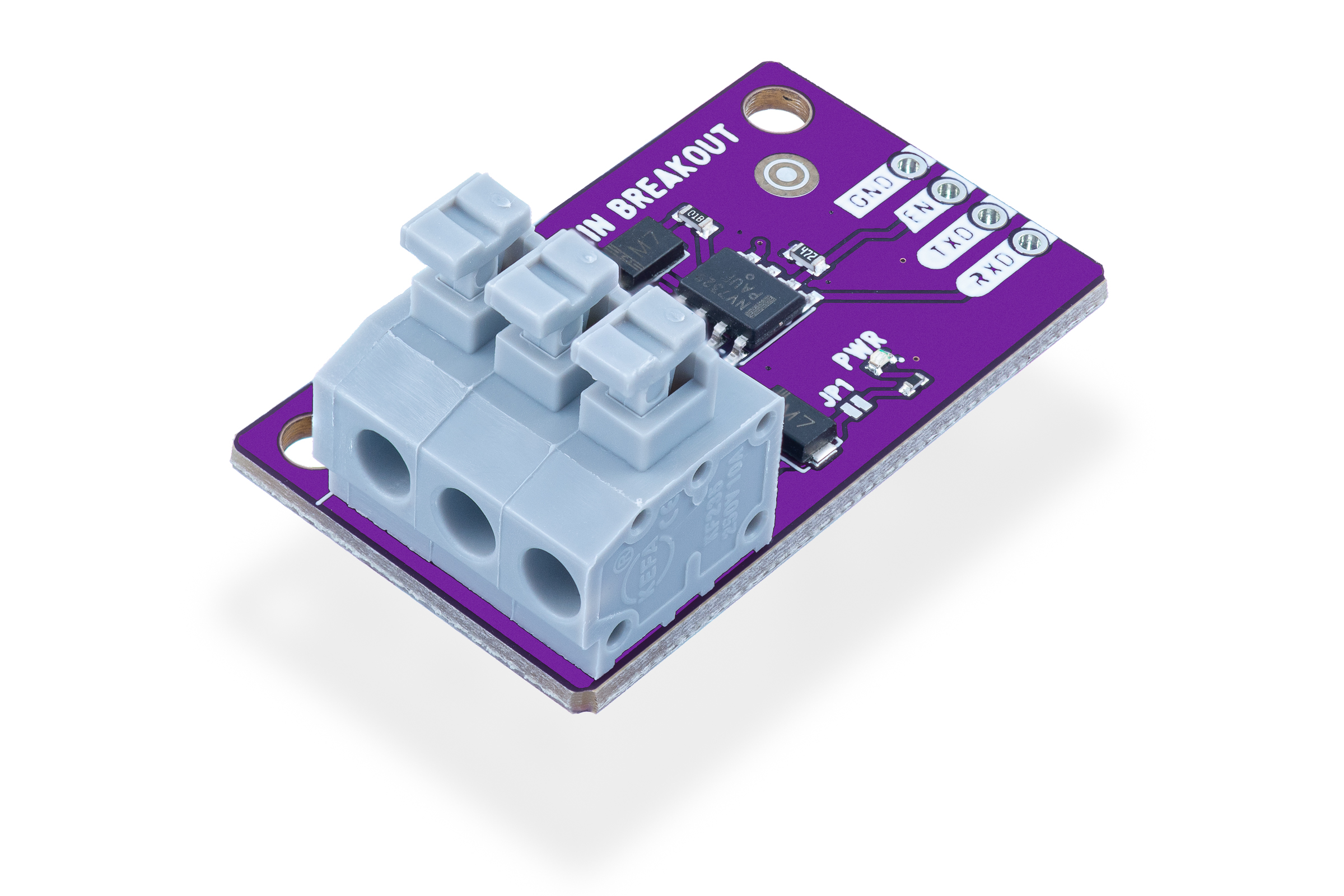
LIN Transceiver NCV7329 breakout
The LIN Transceiver NCV7329 Breakout Board offers a cost-effective and efficient solution for implementing Local Interconnect Network (LIN) communication in automotive and embedded systems. Designed for integration with microcontrollers It’s ideal for hobbyists and professionals looking to add in-car networking capabilities to their projects without complexity.
This breakout board simplifies the development of LIN-based communication systems, making it perfect for various automotive components such as window motors, seat controls, and climate sensors. Its compatibility with standard microcontrollers, including Arduino platforms and Soldered NULA boards.It ensures a broad range of applications for both prototyping and final product integration. The board’s design prioritizes ease of use, allowing developers to quickly establish communication with up to 16 devices on a single LIN bus.
With its open-source design and comprehensive documentation, the NCV7329 breakout board empowers users with full control and customisation options. Manufactured in the EU to high-quality standards, it comes with full technical support. Choose the LIN Transceiver NCV7329 Breakout Board for a reliable, affordable, and well-supported solution for your communication needs.
Coming soon
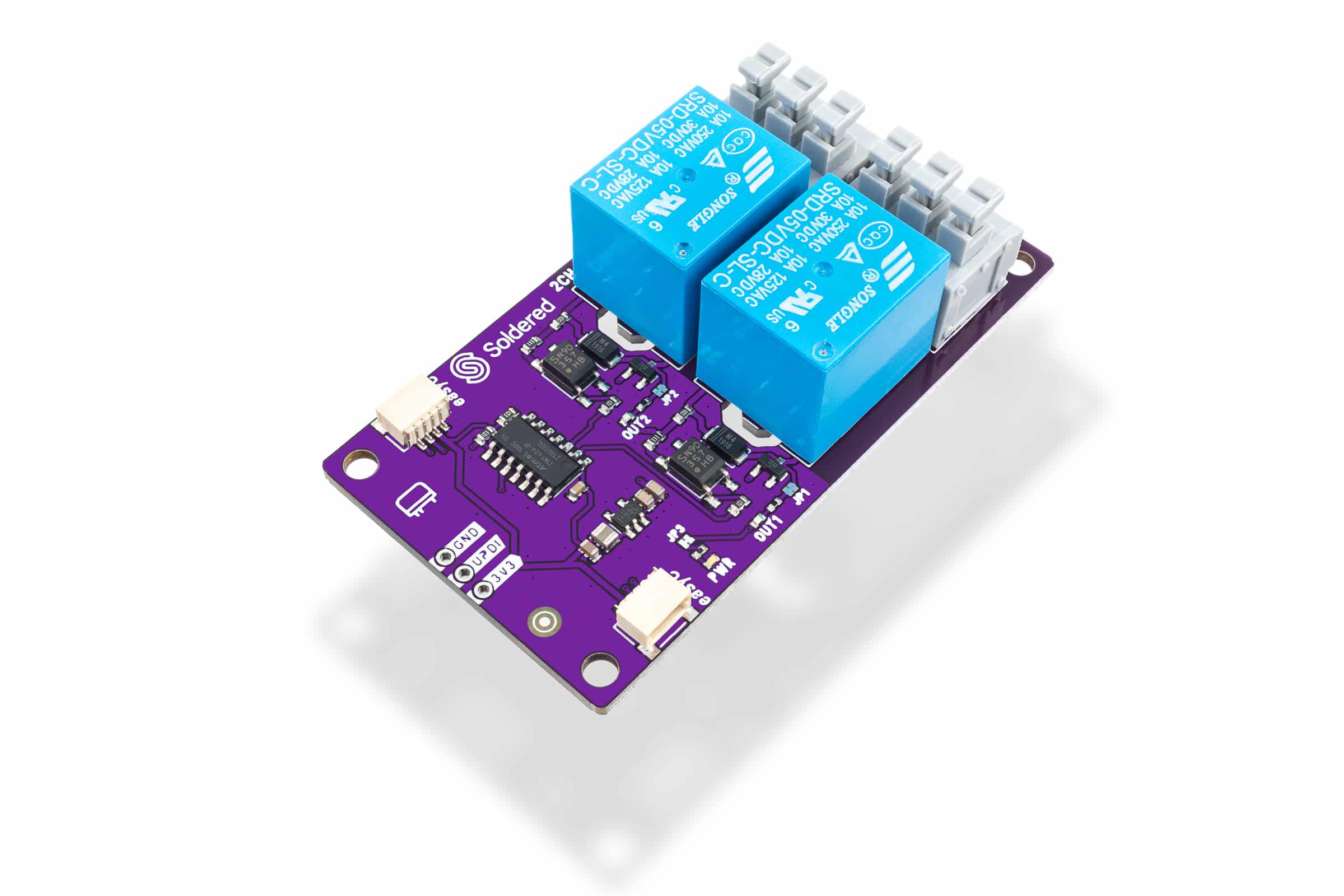
2-channel relay board with easyC
Did you ever wanted to turn on and off a device that needs large current or voltage? Whether operating on DC or AC, a relay is what you need. A relay is actually an electronic switch that is activated by a signal we send from a Dasduino or Arduino. This module further simplifies the whole process because it contains everything you need for the relay to work, and you just have to connect it to the microcontroller and power supply. You don’t have to think about voltages and currents, insulation between high and low voltage or grounding, everything is already taken care of on the board.
This board has easyC connector. Thanks to easyC ecosystem, this board can be connected using off-the-shelf cables, without soldering. Controlling the is as simple as it gets, too.
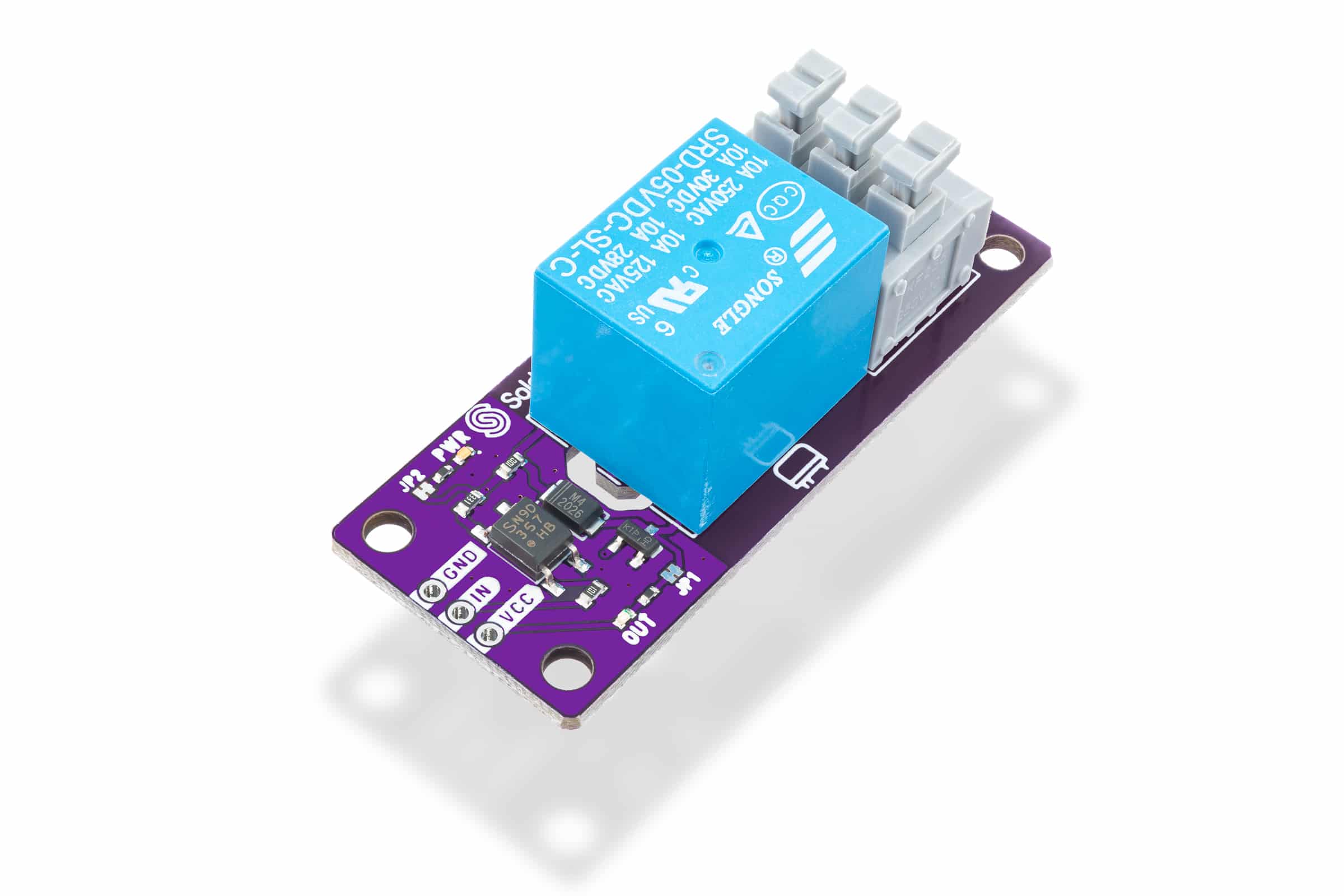
1-channel relay board
Did you ever want to turn on and off a device that needs large current or voltage? Whether operating on DC or AC, a relay is what you need. A relay is an electronic switch that is activated by a signal we send from a Dasduino or Arduino. This module further simplifies the whole process, because it contains everything you need for the relay to work, and you just have to connect it to the microcontroller and power supply. You don’t even have to think about voltages and currents, insulation between high and low voltage or grounding, everything is already taken care of on the board.
Coming soon

2-channel relay board
Did you ever wanted to turn on and off a device that needs large current or voltage? Whether operating on DC or AC, a relay is what you need. A relay is actually an electronic switch that is activated by a signal we send from a Dasduino or Arduino. This module further simplifies the whole process because it contains everything you need for the relay to work, and you just have to connect it to the microcontroller and power supply. You don’t have to think about voltages and currents, insulation between high and low voltage or grounding, everything is already taken care of on the board. This product has 2 relays.
Coming soon
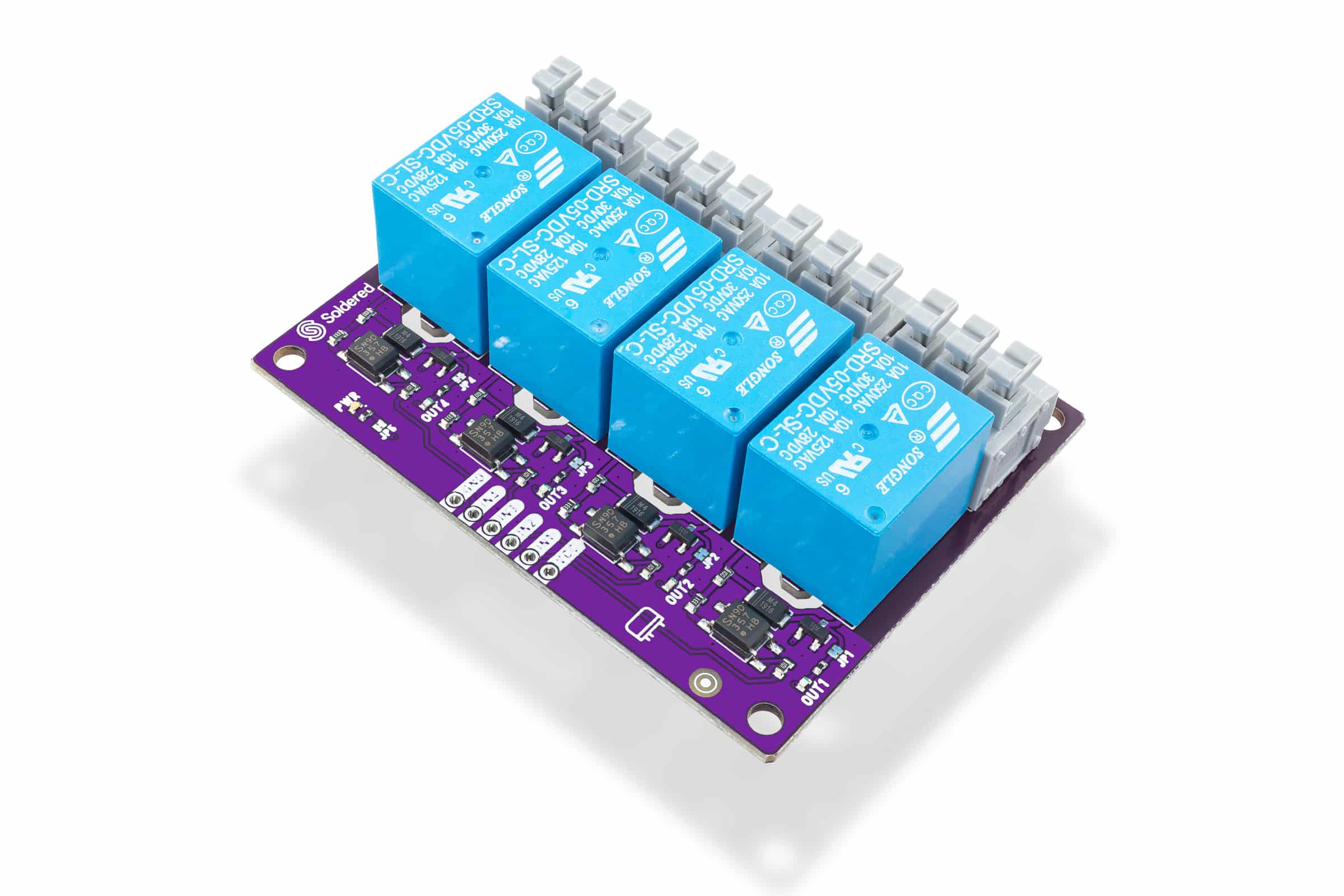
4-channel relay board
Did you ever want to turn on and off a device that needs large current or voltage? Whether operating on DC or AC, a relay is what you need. A relay is actually an electronic switch that is activated by a signal we send from a Dasduino or Arduino. This module further simplifies the whole process because it contains everything you need for the relay to work, and you just have to connect it to the microcontroller and power supply. You don’t have to think about voltages and currents, insulation between high and low voltage or grounding, everything is already taken care of on the board. This product has 4 relays.

1-channel relay board with easyC
Did you ever wanted to turn on and off a device that needs large current or voltage? Whether operating on DC or AC, a relay is what you need. A relay is actually an electronic switch that is activated by a signal we send from a Dasduino or Arduino. This module further simplifies the whole process because it contains everything you need for the relay to work, and you just have to connect it to the microcontroller and power supply. You don’t have to think about voltages and currents, insulation between high and low voltage or grounding, everything is already taken care of on the board.
This board has easyC connector. Thanks to easyC ecosystem, this board can be connected using off-the-shelf cables, without soldering. Controlling the is as simple as it gets, too.
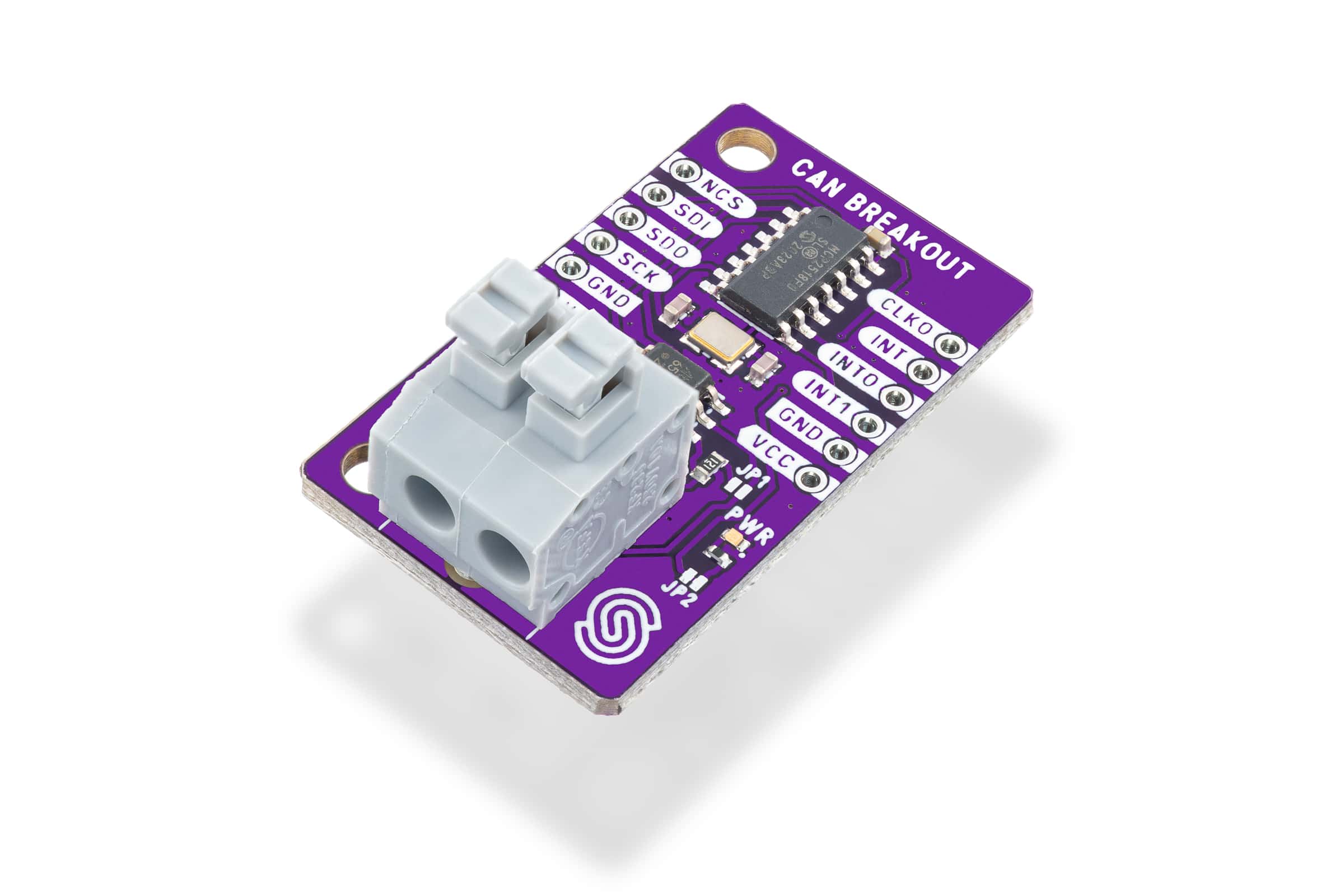
CAN Transceiver MCP2518 board
Connect your Arduino or microcontroller projects to automotive and industrial CAN networks with our MCP2518FD transceiver board. Designed for automotive diagnostics, industrial automation, and IoT applications, this board supports both legacy CAN 2.0B and modern CAN FD standards with data rates up to 8 Mbps. If you are building vehicle diagnostic tools, industrial monitoring systems, or custom automotive interfaces, this SPI-controlled module provides reliable, high-speed communication with built-in termination.
The MCP2518FD controller at the heart of this board delivers CAN communication with arbitration bit rates up to 1 Mbps and data bit rates up to 8 Mbps for CAN FD applications. The integrated ATA6563 transceiver ensures signal integrity in harsh automotive and industrial environments, while the SPI interface provides easy integration with Arduino, ESP32, and other microcontroller platforms. The onboard 120-ohm termination resistor can be easily enabled via a jumper, making this board perfect for end-node applications or network testing.
What sets this CAN transceiver apart is its automotive-grade components combined with maker-friendly design. The screw terminal connections ensure secure, vibration-resistant connections for all applications, while the compact 38x22mm form factor fits easily into smaller projects. With Arduino library support and detailed documentation, you can quickly integrate CAN communication into your projects without deep protocol knowledge. Perfect for automotive enthusiasts, industrial automation engineers, and IoT developers who need reliable CAN connectivity.
• Standards: CAN 2.0B i CAN FD
• Voltage: 2.7V i 5V
• Current: from 10uA to 12mA
• SPI interface
• Dimensions: 38 x 22 mm

Raspberry Pi easyC adapter
This adapter makes it easy to connect easyC devices and sensors to the Raspberry Pi. It has 3 pieces of easyC connectors and a female header for Raspberry Pi, next to the header there are pins for connecting 5V and 3.3V and ground pins. It simply connects to the Raspberry Pi because its pinout matches the pinout of the Raspberry Pi.
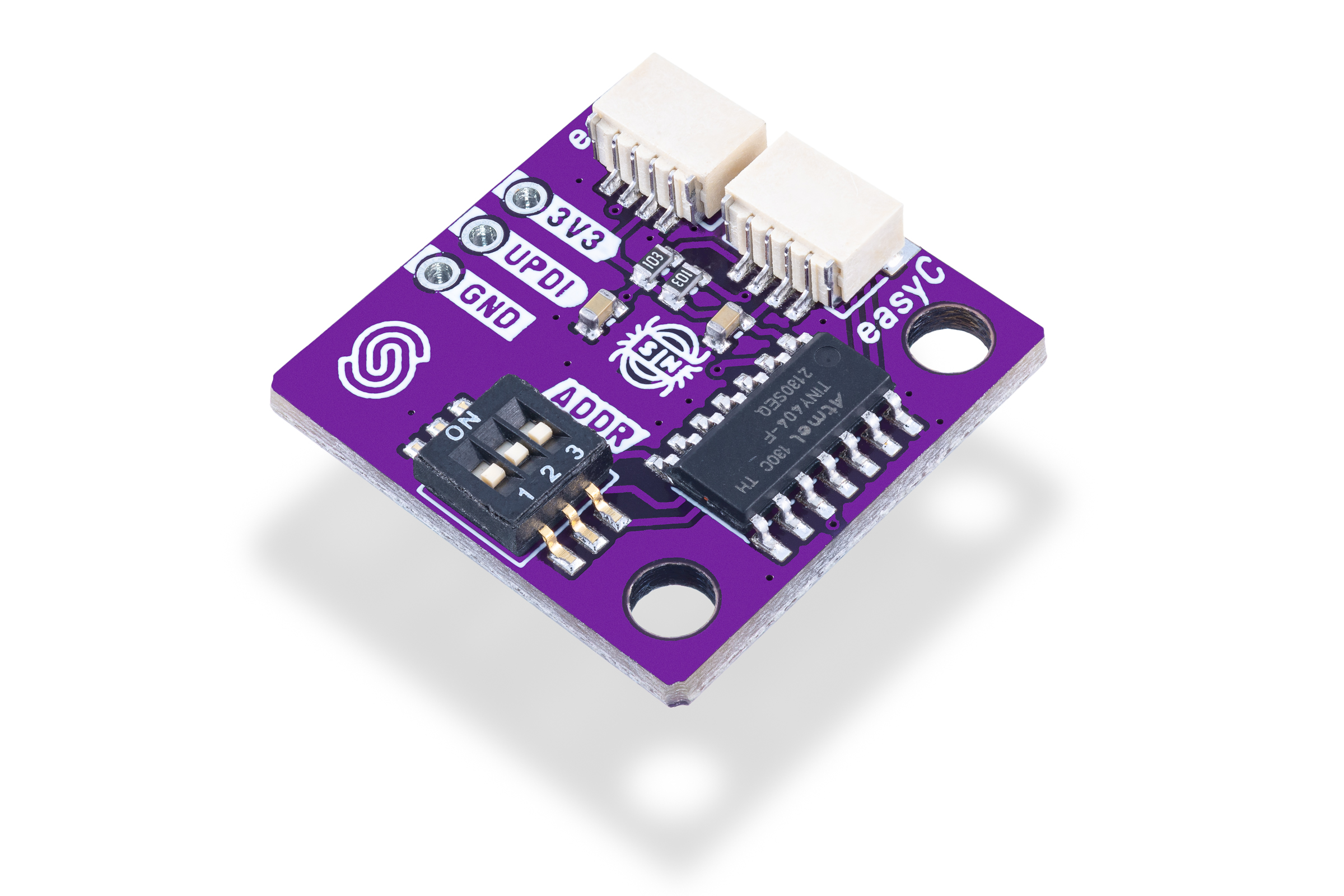
Hall effect sensor breakout with analog output & easyC
The Hall effect sensor breakout with analog output is a versatile and reliable sensor module designed to detect and measure magnetic fields. It utilizes the Hall effect principle, where the presence of a magnetic field induces a voltage proportional to the strength and direction of the field.
This sensor module features an analog output, which provides a continuous voltage signal that varies in response to changes in the magnetic field. The analog output allows for precise and real-time monitoring of magnetic field strength. It is commonly used in applications such as position sensing, current sensing, and speed detection.
The module is typically powered with a supply voltage ranging from 2.25V to 5V, making it compatible with a wide range of systems.
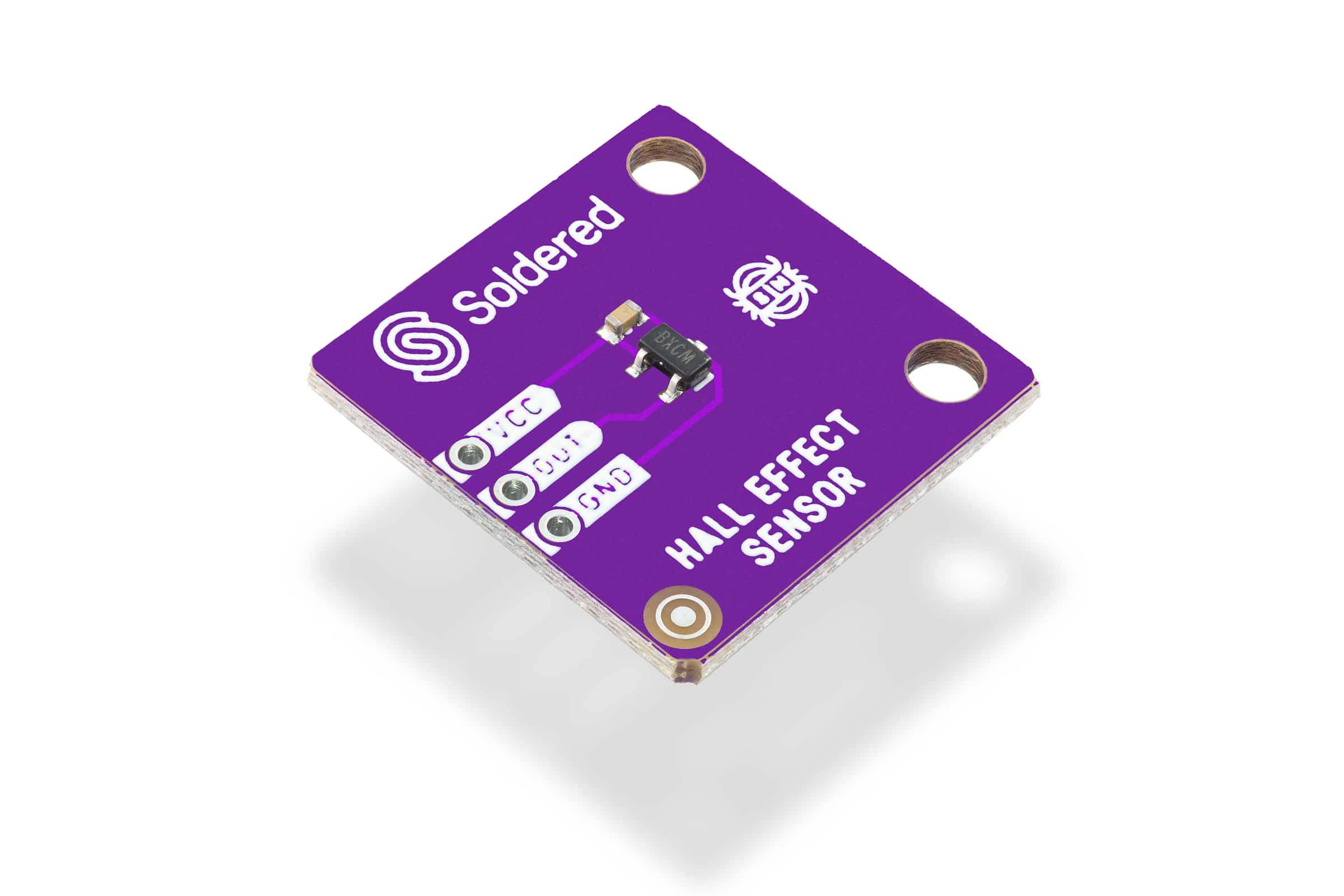
Hall effect sensor breakout with analog output
The hall effect sensor (Hall Effect sensor) will be able to detect the magnetic field in its vicinity thanks to the aforementioned physical law. A magnetic field that can be created by a magnet, a current flowing through a conductor or some third source, the Hall effect sensor will recognize each. The stronger the magnetic field, the higher the voltage will be at the output of this sensor, so it is a sensor with analog output.
Dimensions: 22 mm x 22 mm
Logic voltage level: 0V – 5V
Operating voltage: 2.25V – 5V
Sensor: SI7211-B-00-IV
Output: analog
Mounting holes: 2
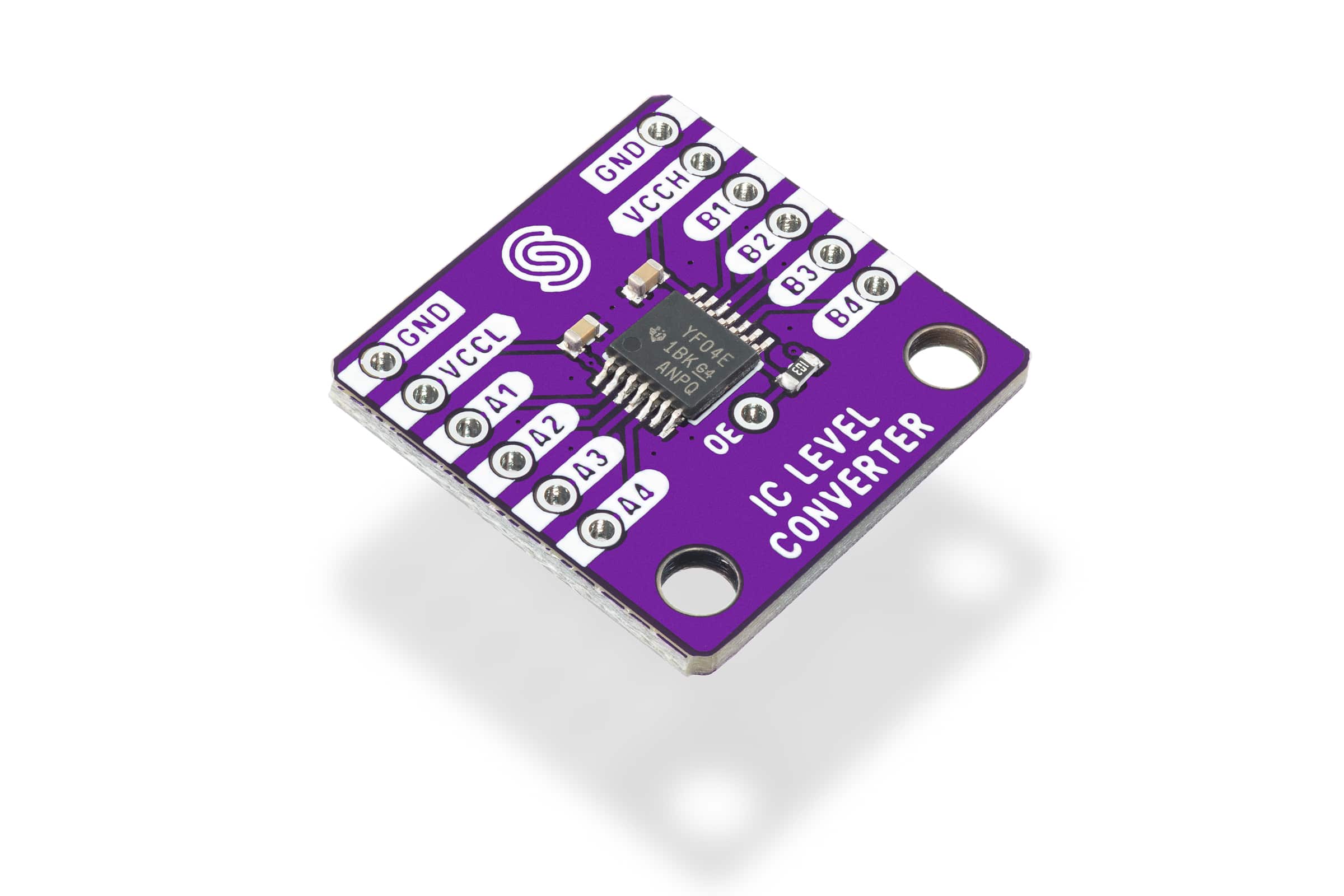
Logic level converter I2C TXS0104 breakout
This small and simple module gives us a translation of logic level between two signals. In layman’s terms, if we take a signal with logical “unit” on 5V convert into a signal which logical “unit” has on 3.3V this module will help us. Something like this is useful in this case if we want to achieve communication between two devices from whom one works on 5V and the other on 3.3V, or any other combination of voltages. Directly connecting we would “burn” a device that works on 3.3V and a module gives us to avoid that.
This board is specialized for signal conversion for I2C communication protocol, and for this conversion it uses a special integrated circuit that enables communication at high speeds.
• Max. voltage: 30V
• Number of channels: 4
• Communication protocol: I2C
• Dimensions: 22 x 22mm
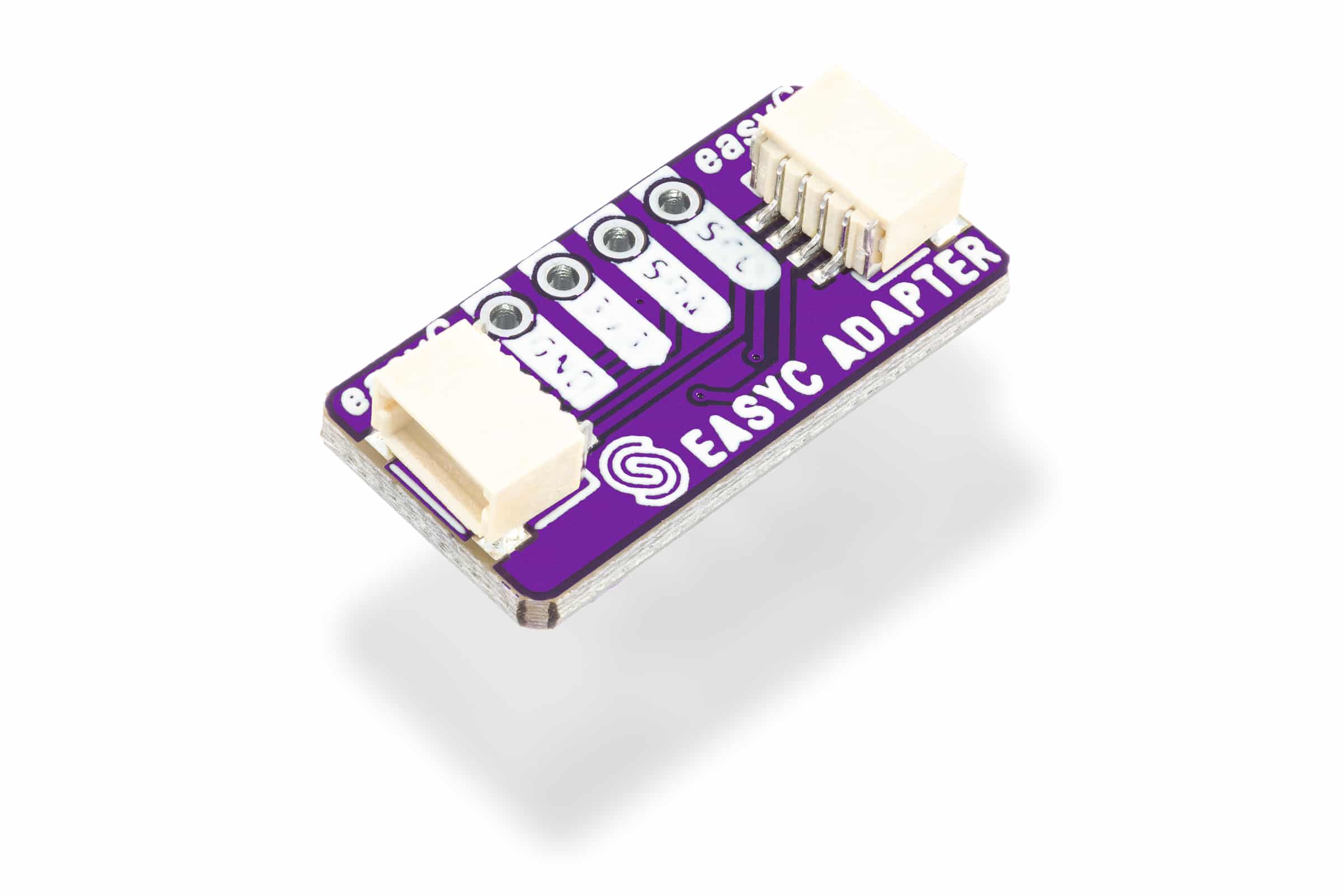
easyC adapter
Do you have an old I2C board lying around that would be perfect only if it had easyC connectors? With the easyC adapter and a little bit of soldering, you can give it new life. It will be able to connect easily to newer boards with easyC cables.
The adapter has two easyC connection ports and four plated through-holes: SCL, SDA, 3.3V, and GND. It comes with pins that need to be soldered to the board.
Product usage tips:
Connecting easyC devices to the adapter is the same as to any other easyC device. Choose an easyC cable and connect it to the adapter. That’s it.
To ensure the longevity of the adapter, avoid working with it in wet environments. Device operates at the 3.3V voltage level so higher voltages can burn it.

Obstacle sensor TCRT5000 breakout
Obstacle sensor, based on TCRT5000, uses infrared diode and photo-receiver to detect obstacle in front of it – emitted light just reflects back to the sensor. Onboard, you’ll find voltage comparator, so just by adjusting the potentiometer, the board gives digital output. There’s LED DO onboard to show the current digital output status. There’s analog output as well, in case you need it. Sensor works particularly well for line-following purposes on small robots.
• Sensor: TCRT5000
• Comparator: LM303
• Dimensions: 22 x 22 mm
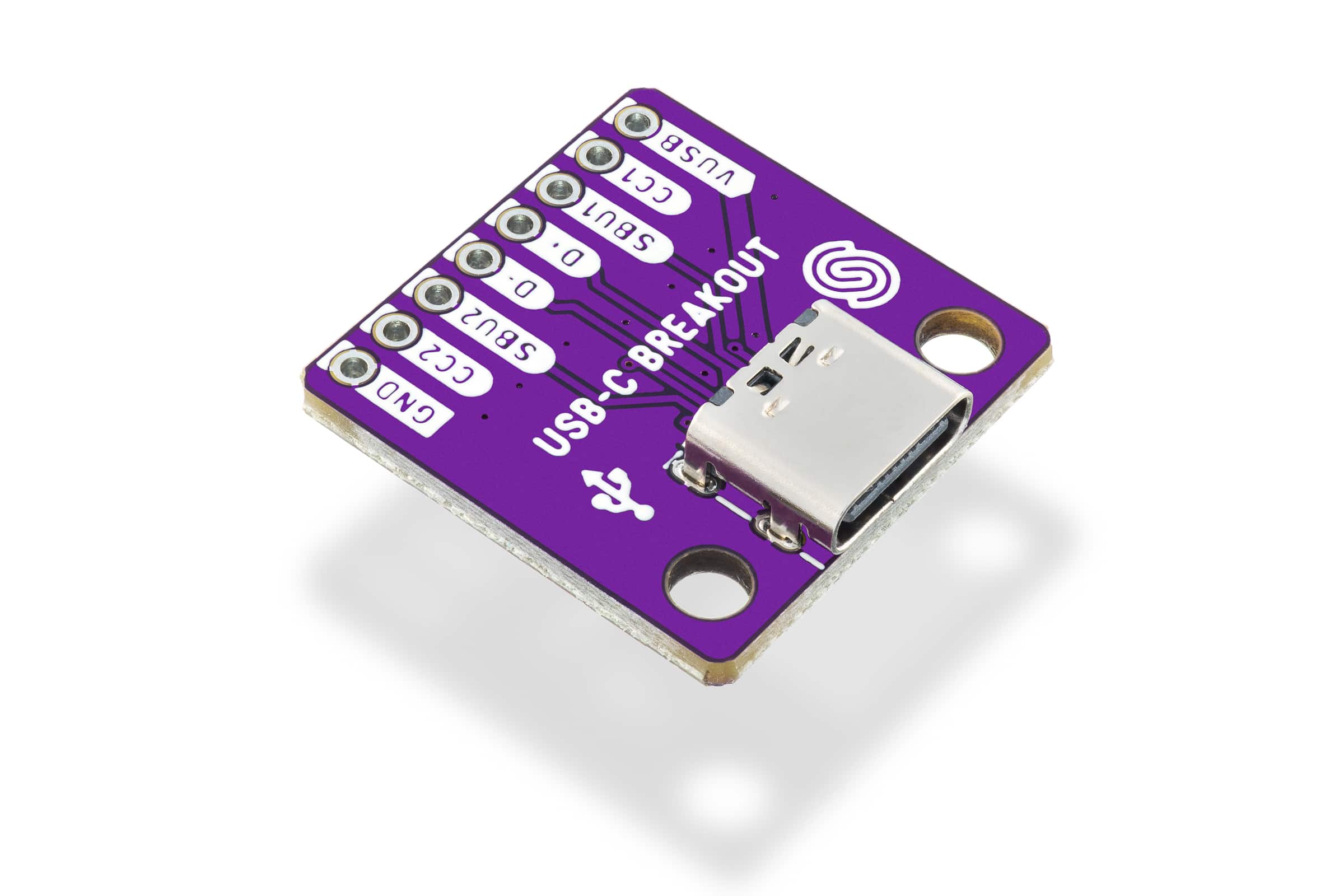
USB-C female connector breakout
Unlock the full potential of your DIY projects with our versatile USB-C Female Breakout Board. Designed for seamless integration, this board provides easy access to all USB-C signals which have been exposed as breadboard-compatible pins, including VBUS, GND, CC1, CC2, D+, and D-. Whether you’re powering a custom device, transferring data, or experimenting with new prototypes, this breakout board simplifies USB-C connectivity, making it a tool for hobbyists and professionals. Its design ensures reliable performance, bridging the gap between modern USB-C technology and traditional prototyping methods.
Engineered with Arduino compatibility in mind, this USB-C breakout board is perfect for makers looking to upgrade their projects with the latest connectivity standards. Say goodbye to outdated USB-A or Micro-USB connections and choose the high-power capabilities of USB-C. It’s ideal for a wide range of applications, from custom mechanical keyboards and embedded systems to smart home devices and portable gadgets.
Enhanced power delivery and faster data transfer rates, improving how you interact with your creations. This breakout board not only facilitates power and data but also supports advanced features like Power Delivery (PD) when paired with compatible controllers, opening up possibilities for more demanding applications. Its compact form factor and ease of use make it a choice for anyone seeking a reliable, future-proof USB-C solution for their Arduino, Raspberry Pi, or other microcontroller-based projects. Elevate your designs with the efficiency and convenience of USB-C.
Product usage tips:
Male headers that are included need to be soldered to the board. The breakout board has two mounting holes and can be placed on any surface.
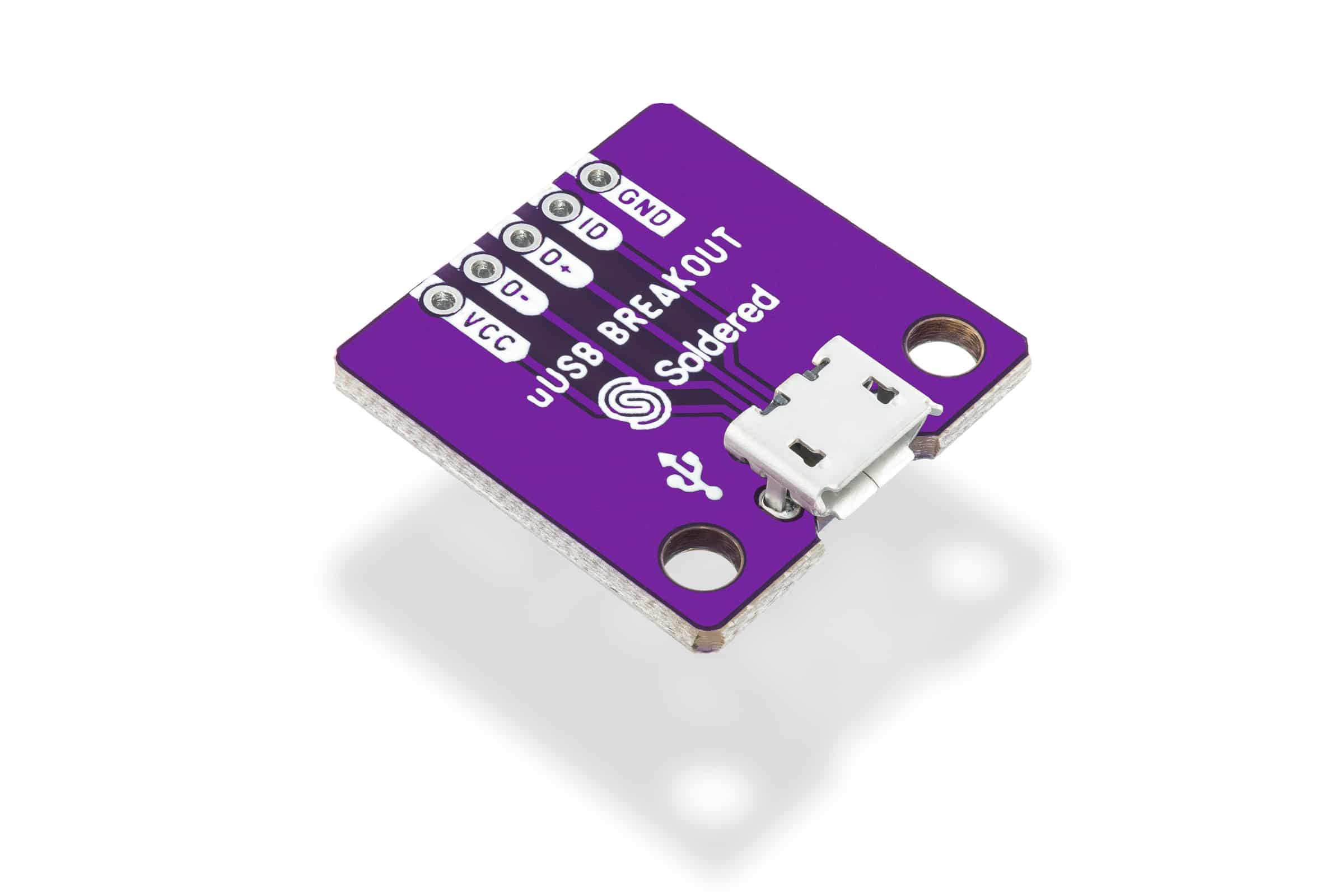
MicroUSB female connector breakout
Designed for seamless integration, this compact module provides a reliable female MicroUSB port exposed to breadboard-compatible header pins, making it ideal for powering your Arduino, ESP32, or other microcontroller-based applications. Say goodbye to cumbersome wiring and embrace a clean, efficient power and data interface that simplifies prototyping and final product assembly.
This breakout board is engineered with easy access to all five MicroUSB pins (VCC, GND, D+, D-, ID) via clearly labeled header pins. Whether you’re developing portable devices, charging solutions, or data communication interfaces, its friendly design ensures quick connections. Its small footprint is perfect for space-constrained projects, providing a professional finish without sacrificing functionality.
Elevate your DIY electronics and embedded systems with this essential component. The MicroUSB Female Connector Breakout streamlined development, enabling reliable power delivery and data exchange for a wide array of applications, from IoT sensors to custom charging docks.
Product usage tips:
The pins included need to be soldered to the board. It won’t move an inch when mounted with the two mounting holes.
Coming soon
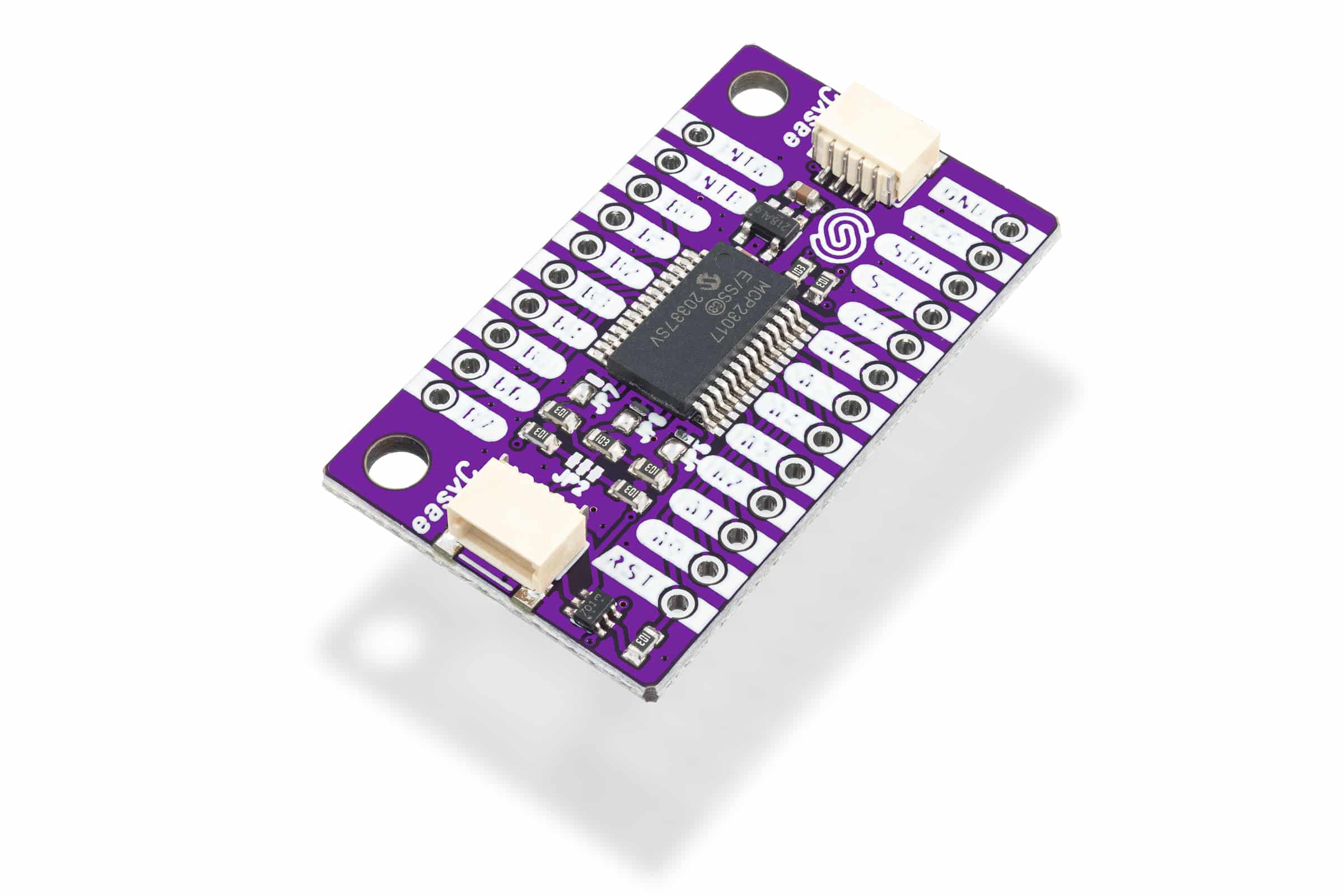
IO expander MCP23017 breakout
Running out of IO pins on your microcontroller? The MCP23017 I2C IO Expander is the perfect solution, allowing you to add 16 fully configurable digital IO pins to your project with just two wires (I2C protocol). The pins can be driven using our Arduino and MicroPython libraries. It’s a powerful tool that enables you to build bigger and complex projects without upgrading your microcontroller. Whether you’re driving multiple LEDs, reading a large array of buttons, or managing a complex sensor network, this IO expander provides the extra capacity you need.
Each pin can be individually configured as an input, output, or input with an internal pull-up resistor. The ability to change the I2C address via onboard jumpers means you can connect up to eight of these breakout boards to a single microcontroller, giving you a massive 128 additional IO pins. With the ability to sink or source up to 25mA per pin, you can directly drive LEDs and other components without the need for extra driver circuitry. This makes it perfect for students learning about digital electronics, makers building custom control panels, and engineers prototyping complex systems.
What makes this breakout special is its seamless integration into our Qwiic ecosystem, allowing for quick connections to your favorite boards and other I2C modules. As with all our products, it’s open-source, with all design files available for you to modify and adapt. Plus, as with all our products, 2-year warranty and technical support are included.
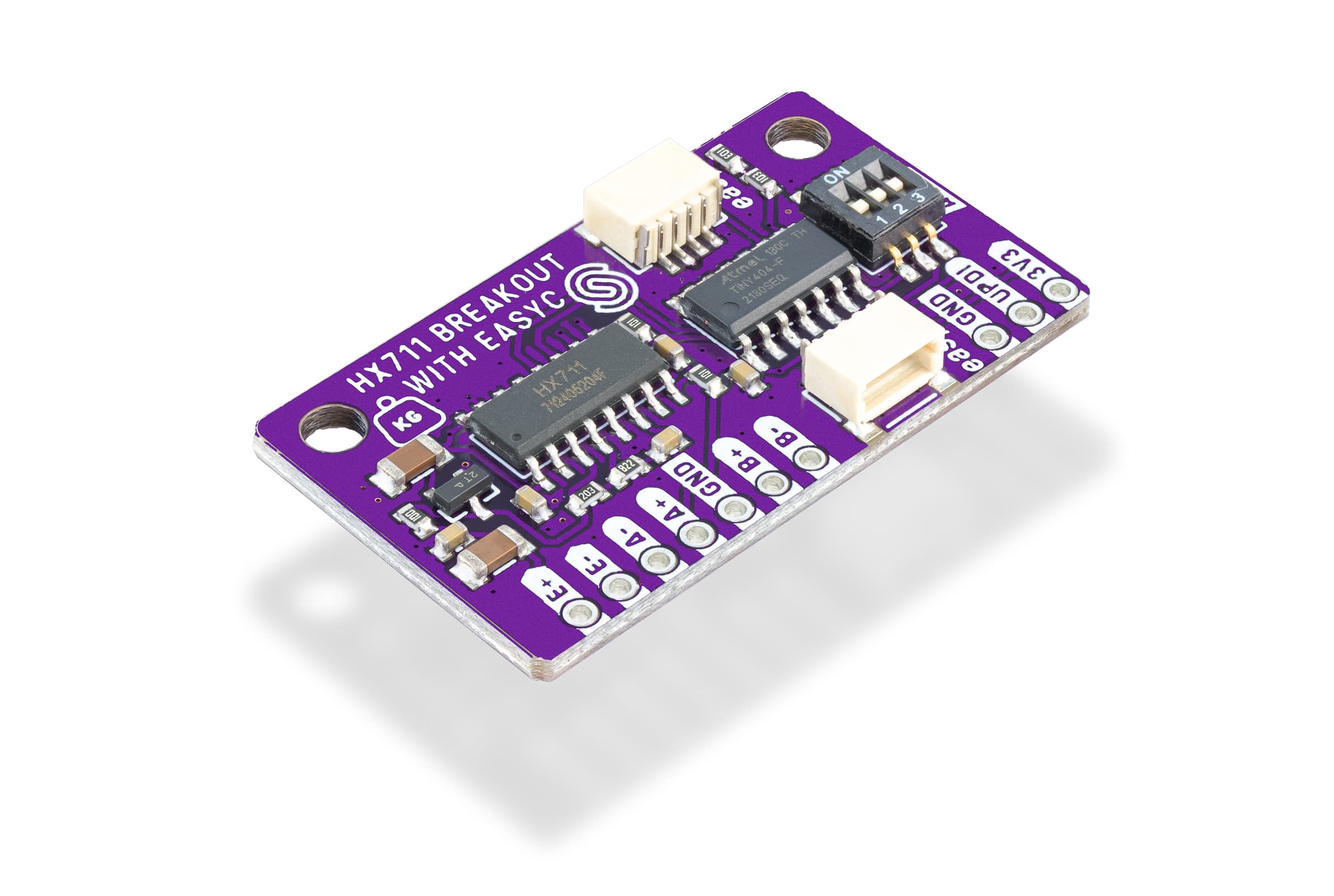
Load-cell amplifier HX711 with easyC
The HX711 is a highly versatile load cell amplifier that is widely used in various applications requiring precise weight measurements. This version of the breakout comes with a Qwiic connector and a pre-programmed Attiny404 microcontroller. It is designed to convert analog signals into digital values and have them easily available over Qwiic/Stemma QT/easyC, making it ideal for integration with microcontrollers and other digital systems. An Arduino and MicroPython library to communicate with the board is also provided.
This load cell amplifier employs a 24-bit analog-to-digital converter (ADC) to ensure high-resolution and accurate readings. It supports differential input signals and offers two differential input channels, allowing the connection of up to two load cells simultaneously. This feature enables the measurement of both single- and multi-load cell systems, expanding its application range.
The HX711 incorporates an integrated voltage regulator, which provides a stable supply voltage for the load cells and ensures accurate and reliable measurements this Qwiic version only requires a Qwiic cable for operation – send power and I2C data over one convenient connector! You can use the other connector to continue daisy chaining other Qwiic sensors. It also comes with switches for selecting the I2C address.
Coming soon
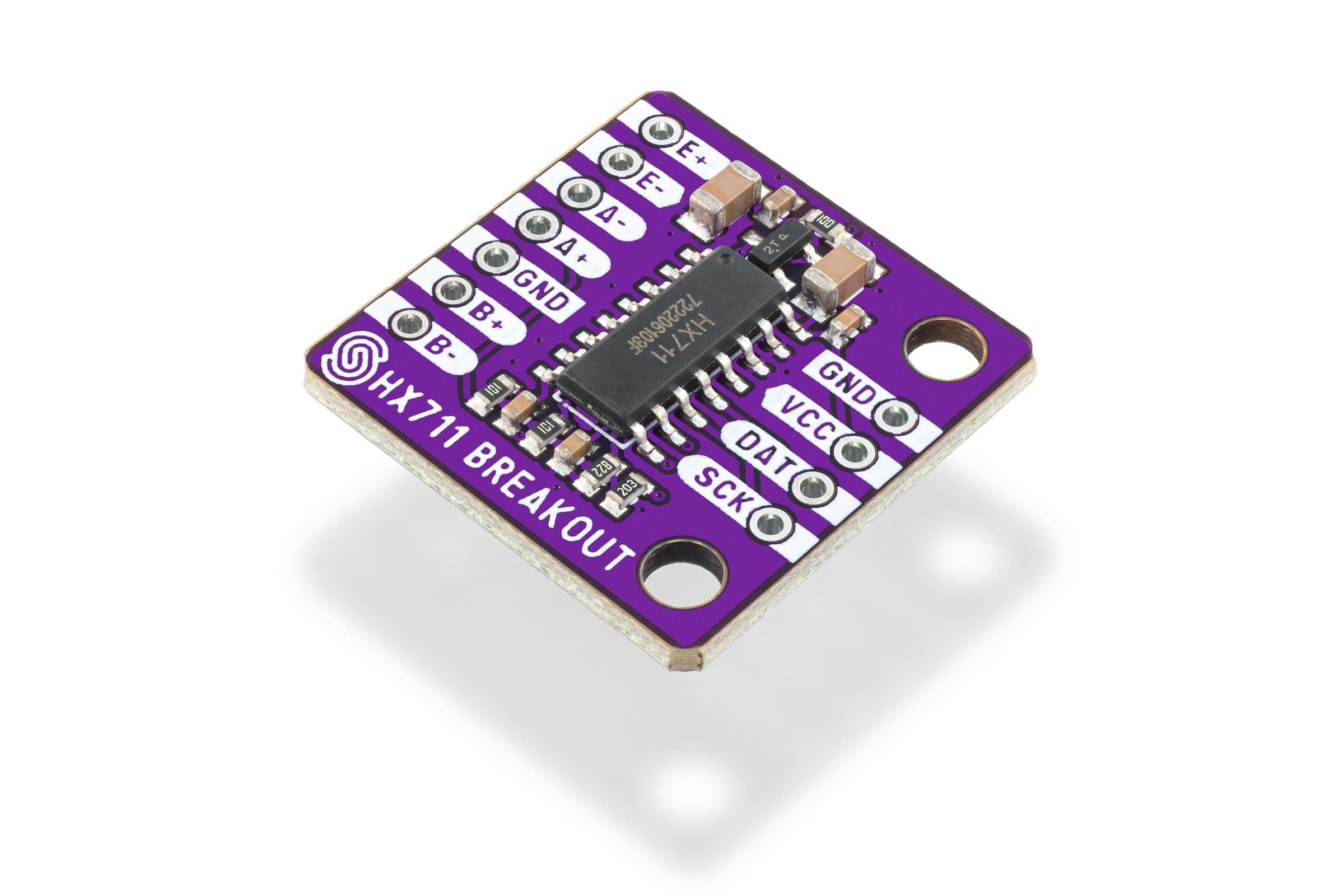
Load-cell amplifier HX711 board
Unlock high-precision weight and strain measurement in your next project with our HX711 Load Cell Amplifier Board. This breakout board features a 24-bit analog-to-digital converter (ADC) that can detect the changes in resistance from a load cell, providing you with accurate data. Whether you’re building a custom digital scale, an industrial process control system, or a smart presence detector, this amplifier board is the perfect solution for translating minuscule forces into clear, digital signals for your microcontroller.
Our HX711 board simplifies the process of integrating load cells into your electronics projects. It’s compatible with the four-wire Wheatstone bridge configuration found in most load cells, with labelled connection points for power (E+ and E-) and signal (A+ and A-). We’ve also made this board open-source, providing all the design documentation you need to customize it for your specific application. Plus, with our complimentary technical support, you can be confident that you’ll have the help you need to get your project up and running.
Our Arduino library features a convenient way to calibrate the board, ensuring you can get measurements in units like kilos or pounds! The board operates on a 2.7V to 5.5V power supply and features a selectable 10SPS or 80SPS data rate via jumper, giving you the ability to choose between higher resolution or faster readings. Start your next weight-sensing project today with a reliable amplifier board that’s backed by open-source principles and customer support.
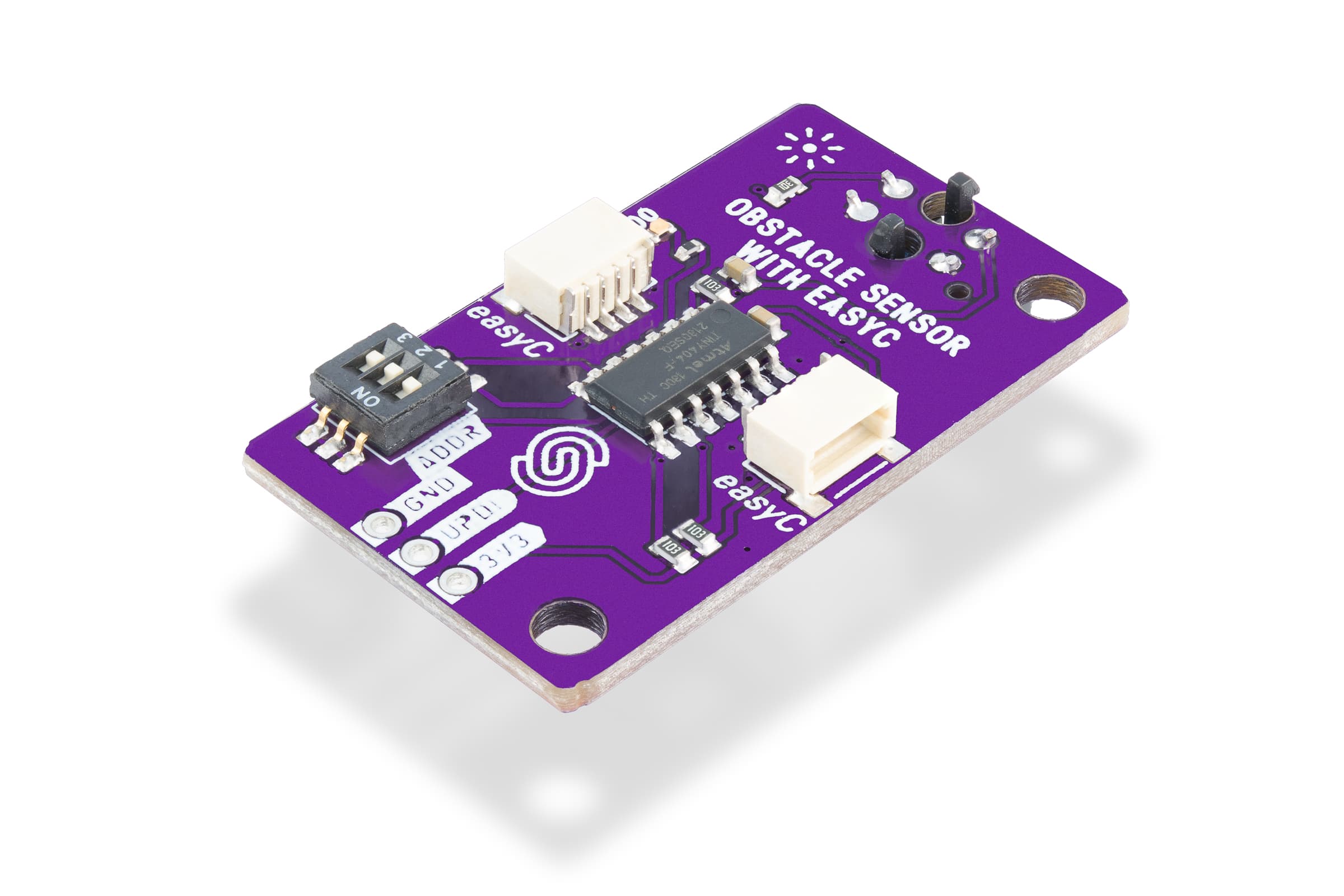
Obstacle sensor with easyC
The TCRT5000 is an infrared (IR) reflective sensor module that is commonly used for proximity sensing and line-following applications. It consists of an infrared emitter and a phototransistor placed side by side in a compact package. The emitter emits infrared light, which gets reflected off nearby objects, and the phototransistor detects the intensity of the reflected light.
This sensor module is widely used in robotics and automation projects. It can be used to detect the presence or absence of objects by measuring the intensity of reflected infrared light. It is also commonly employed in line-following robots where it can detect and follow lines marked with contrasting colors.
The TCRT5000 operates on a supply voltage typically ranging from 3.3V to 5V. The breakout board provides digital and analog information through the easyC system. Sensor readings are obtained through easyC.
Product usage tips:
Two mounting holes enable easy mounting to surfaces.
11 years in the industry
Customers in 80+ countries
20,000+ satisfied customers