






- Dasduino (Arduino-compatible)

- Inkplate

- easyC ecosystem

- Raspberry Pi & Micro:bit

- Breadboards & Cables

- Batteries & Power supplies

- Kids

- Sensors

- Actuators

- Communication

- Tools & Lab equipment

- Soldering kits

- Components

- Sale

Shop

24/7 free customer and technical support

Comprehensive documentation

Open-source hardware and software

2-year Warranty - no questions asked
Showing 265–288 of 699 resultsSorted by average rating
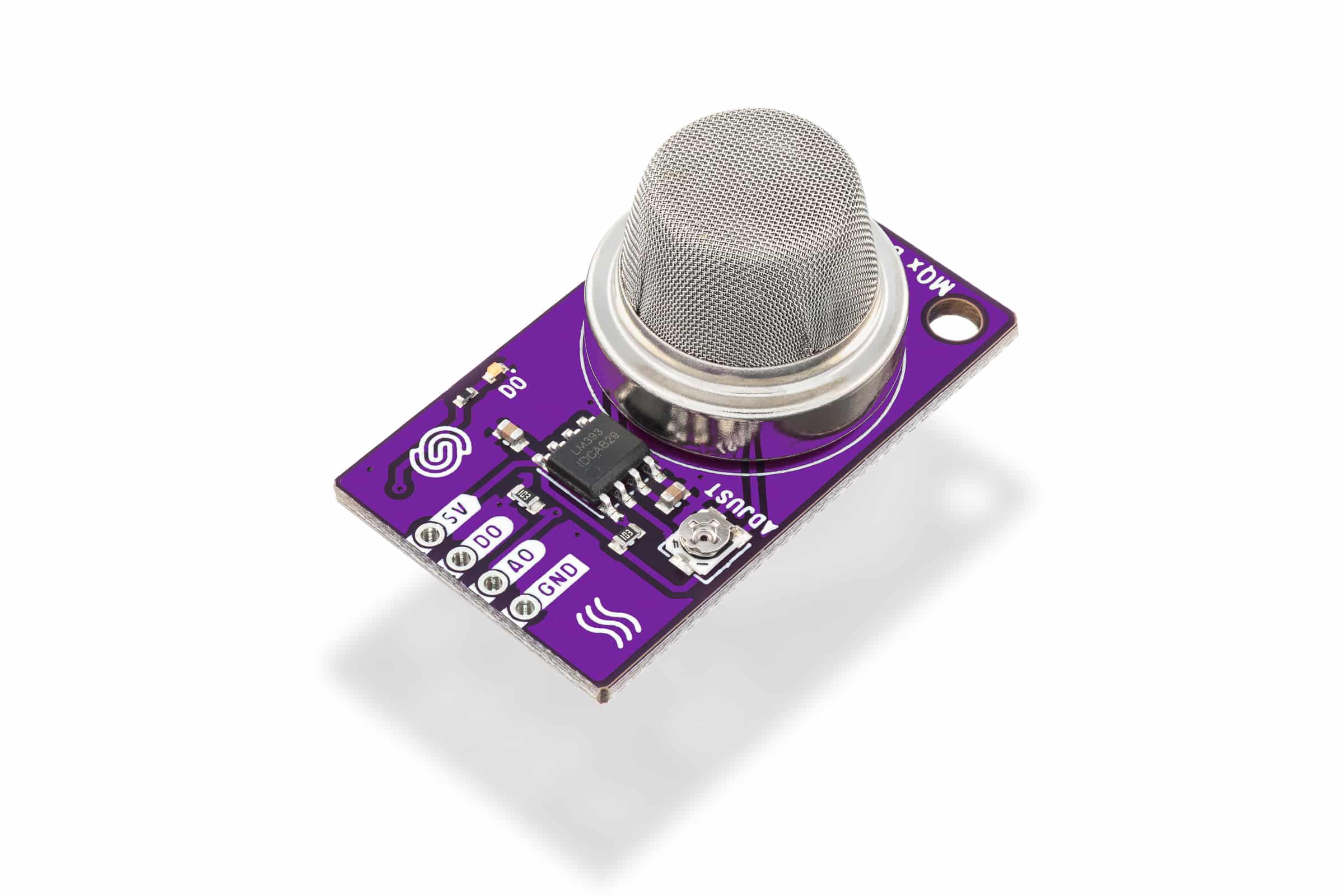
CO, flammable gasses sensor MQ9 breakout
We are surrounded by invisible gases everywhere. While we generally don’t have to worry about them, under the right circumstances, they can be very combustible and dangerous. The MQ9 breakout board detects carbon monoxide, methane, propane, and other flammable gases so the right measures can be taken in time. The sensor detects carbon monoxide at 10-1000 ppm and other combustible gasses at 100-10000 ppm.
The digital and analog outs can be found on the through-holes. They are marked as DO and AO respectively. The digital output can be obtained by setting a threshold value with a potentiometer. The analog output will depend on the intensity of the gases.
Product usage tips:
The sensor needs 48 hours to preheat to optimal working temperature. If it detects some gas, the LED will glow. If there are no gases, it will remain off. The board can be attached to the project thanks to the two mounting holes. It comes with four pins that need to be soldered.
Due to its long life, the breakout board can be used for quite some time without a second thought. To prevent damage to the sensor, avoid dipping it in water or freezing it. Highly corrosive gases will weaken the sensor significantly.
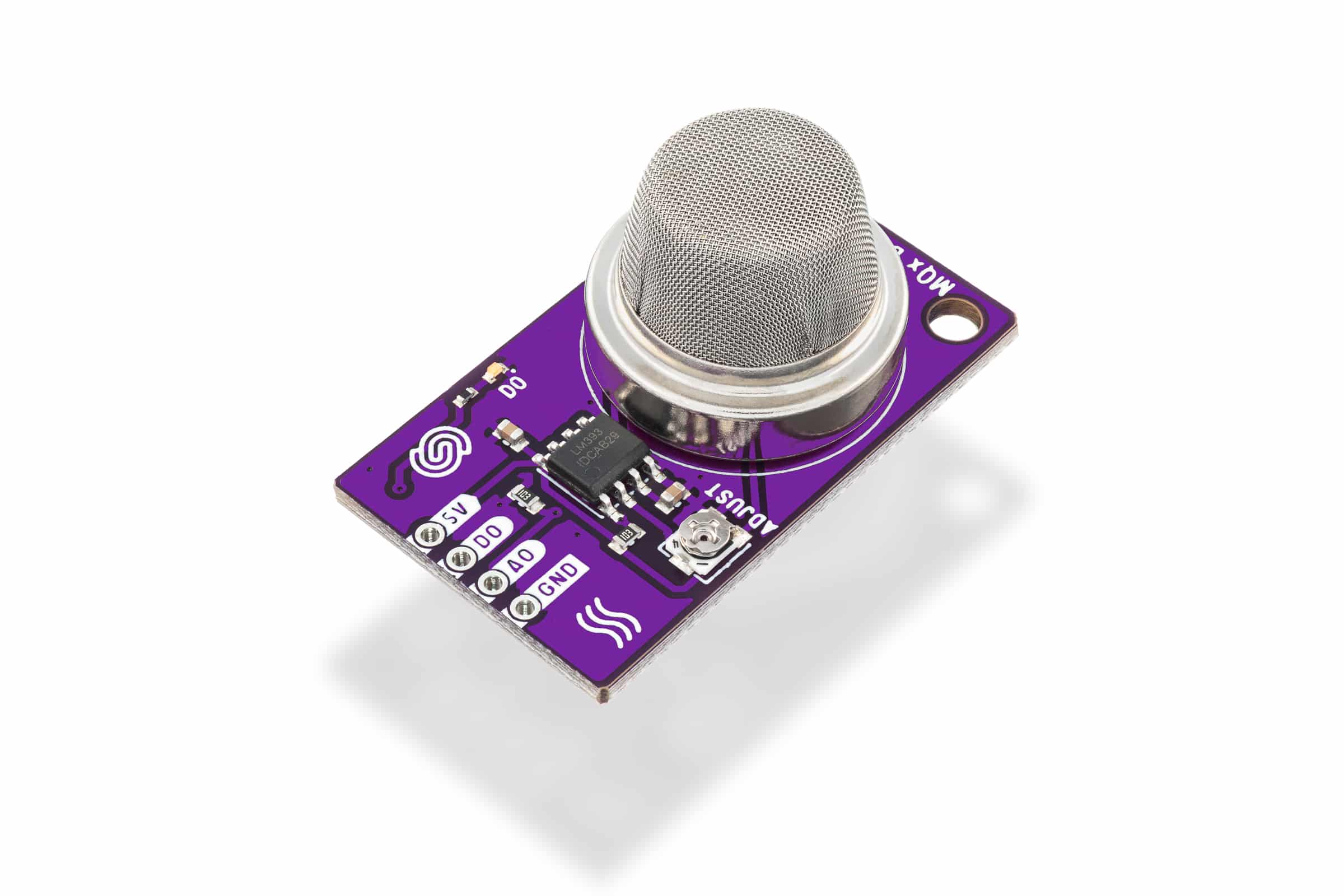
Hydrogen sensor MQ8 breakout
Hydrogen is all around us, and it’s very flammable. Its leakage can be very dangerous to both life and property. That’s why it’s important to detect any leakage to prevent in the industry. To help with that, hydrogen sensors like the MQ8 breakout board are used. The sensor detects hydrogen at the range of 100-10000 ppm.
The digital and analog outs are on the breakout through-hole pins. They are marked as DO and AO respectively. By setting a threshold value with a potentiometer, you can get the digital output. The analog output will depend on how much gas is detected around the sensor.
Product usage tips:
The sensor needs 48 hours to preheat to optimal working temperature. The LED on the board will remain off if it detects no gas, and will glow once it does. Two mounting holes allow you to easily secure the board in place. The four pins provided need to be soldered.
Due to its long life, you won’t have to worry about changing the sensor often. To prevent damage to the sensor, do not submerge it underwater or freeze it. It will be weakened by highly corrosive gases as well.
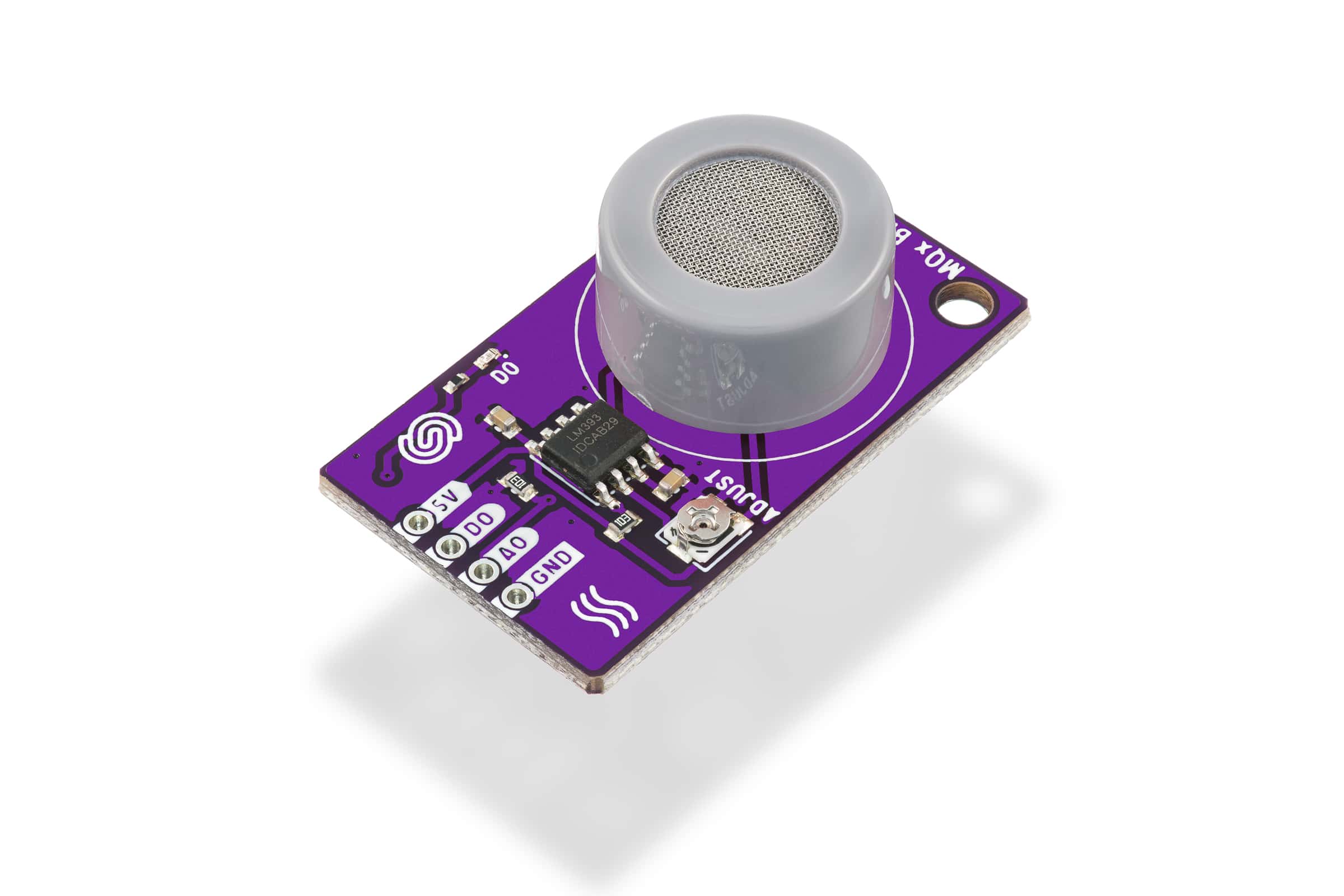
CO sensor MQ7 breakout
The MQ7 sensor’s sensitivity and selectivity allow it to effectively detect and measure carbon monoxide levels, making it a crucial tool for applications such as gas leakage detection, safety systems, and environmental monitoring. By interfacing the MQ7 sensor with appropriate electronic circuits and microcontrollers like Arduino, you can create systems that provide real-time monitoring and prompt alerts in the presence of hazardous CO concentrations. It needs a bit of time to warm up in order to work correctly.
The breakout board works with both digital (DO) and analog signals (AO). The digital output is obtained by setting a threshold value with a potentiometer. The analog output will differ depending on the intensity of the gas.
Product usage tips:
When gas is detected, the LED will start glowing. It will remain off if it doesn’t detect anything. Two mounting holes enable easy mounting to surfaces. The board comes with four male headers that need to be soldered.
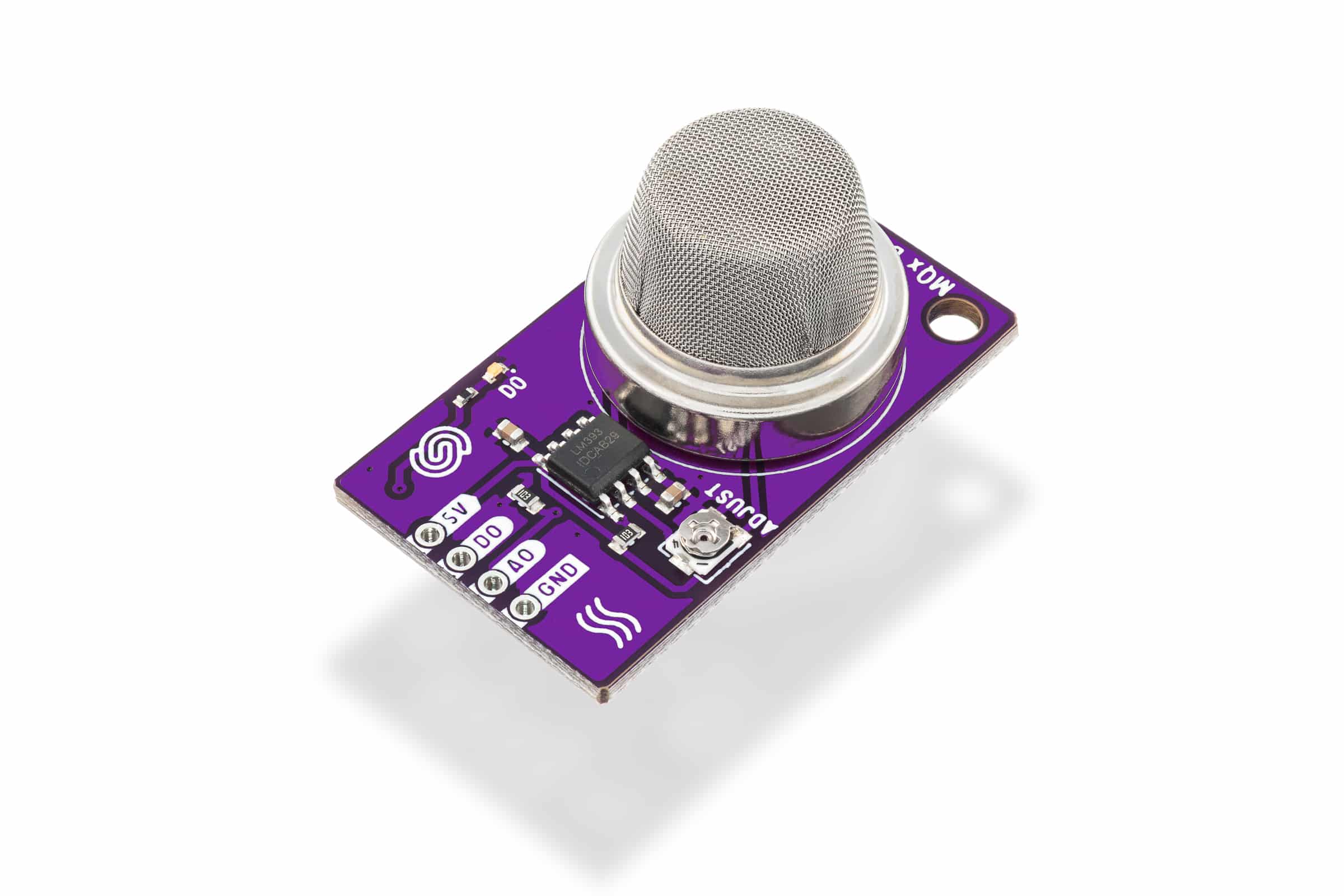
LPG, Butane sensor MQ6 breakout
Humans can detect many scents, but can have difficulties when it comes to differentiating gases. That’s why we use sensors like MQ6. It detects LPG and butane in the air. When heated to the optimum working temperature, it detects changes in air concentrations very quickly between 200 and 10000 ppm.
The DO pin stands for digital out. AO stands for analog out. The digital output is obtained by setting a threshold value using the potentiometer. The analog output will depend on the intensity of the gas around the sensor.
Product usage tips:
Preheating the sensor to the optimal working temperature takes 24 hours. The LED on the board will glow when gas is detected. It will remain off when it’s not. The board has two mounting holes for easy attachment to the project. It comes with four pins that need to be soldered.
You can use the board for years due to its long life. To prevent damage to the sensor, it should not be dipped in water or frozen. Highly corrosive gases will render the sensor useless. Cooking fumes and cigarette smoke will interfere with the sensor.
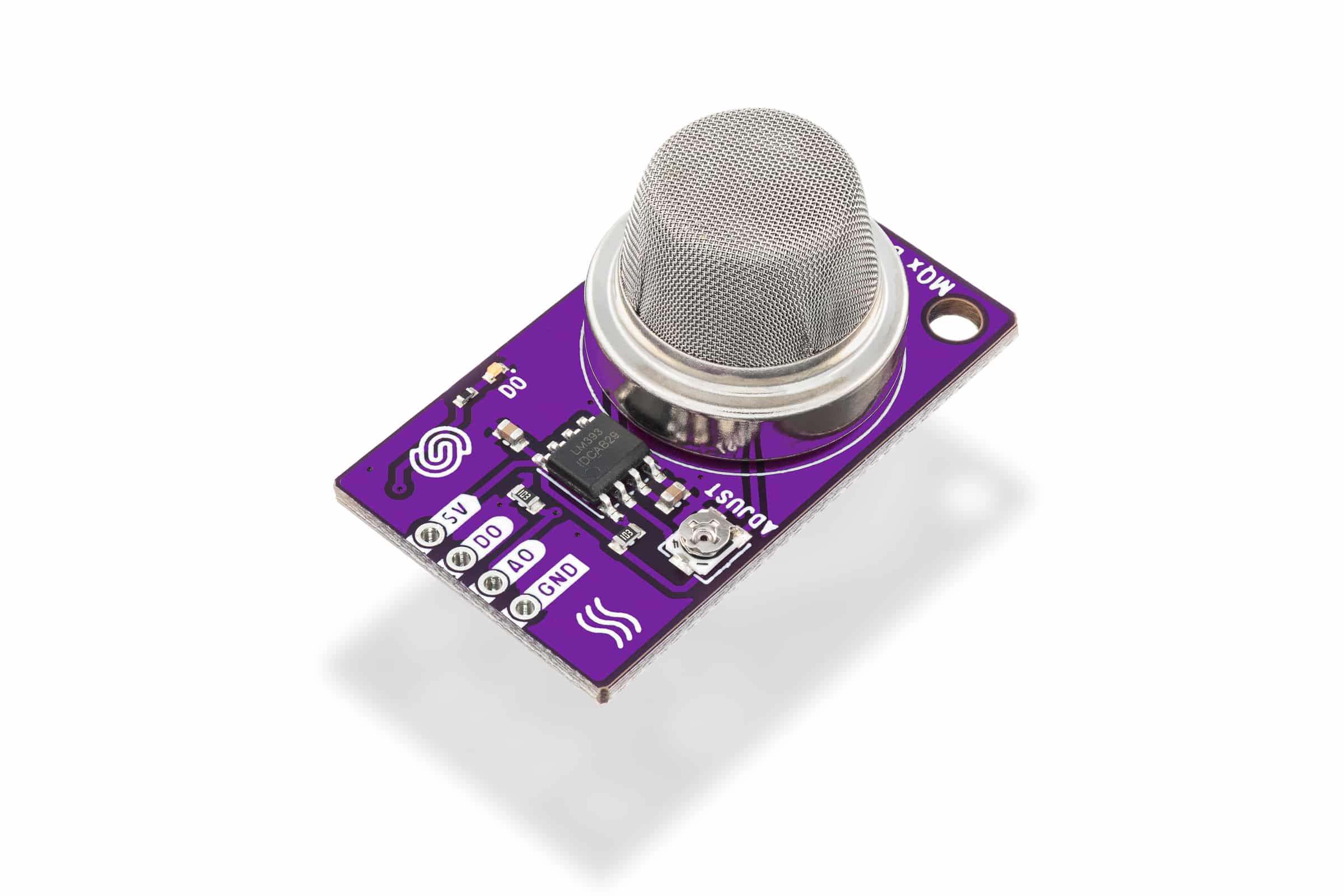
Natural gas, LPG sensor MQ5 breakout
Is your office near a high-traffic area? Are you concerned about the amount of natural and liquefied petroleum gases in your work environment? The MQ5 is a simple-to-use sensor to put your mind at ease. It detects gas particles very quickly between 200 and 10000 ppm.
The breakout board works with both digital (DO) and analog signals (AO). The digital output is obtained by setting a threshold value with a potentiometer. The analog output will differ depending on the intensity of the gas.
Product usage tips:
The sensor takes 24 hours to preheat to optimal working temperature. When gas is detected, the LED will start glowing. It will remain off if it doesn’t detect anything. Two mounting holes enable easy mounting to surfaces. The board comes with four pins that need to be soldered.
The breakout board boasts a long life so you don’t have to worry about it suddenly breaking. Submerging the sensor underwater and freezing it will damage it beyond repair. Highly corrosive gases will also damage the sensor.
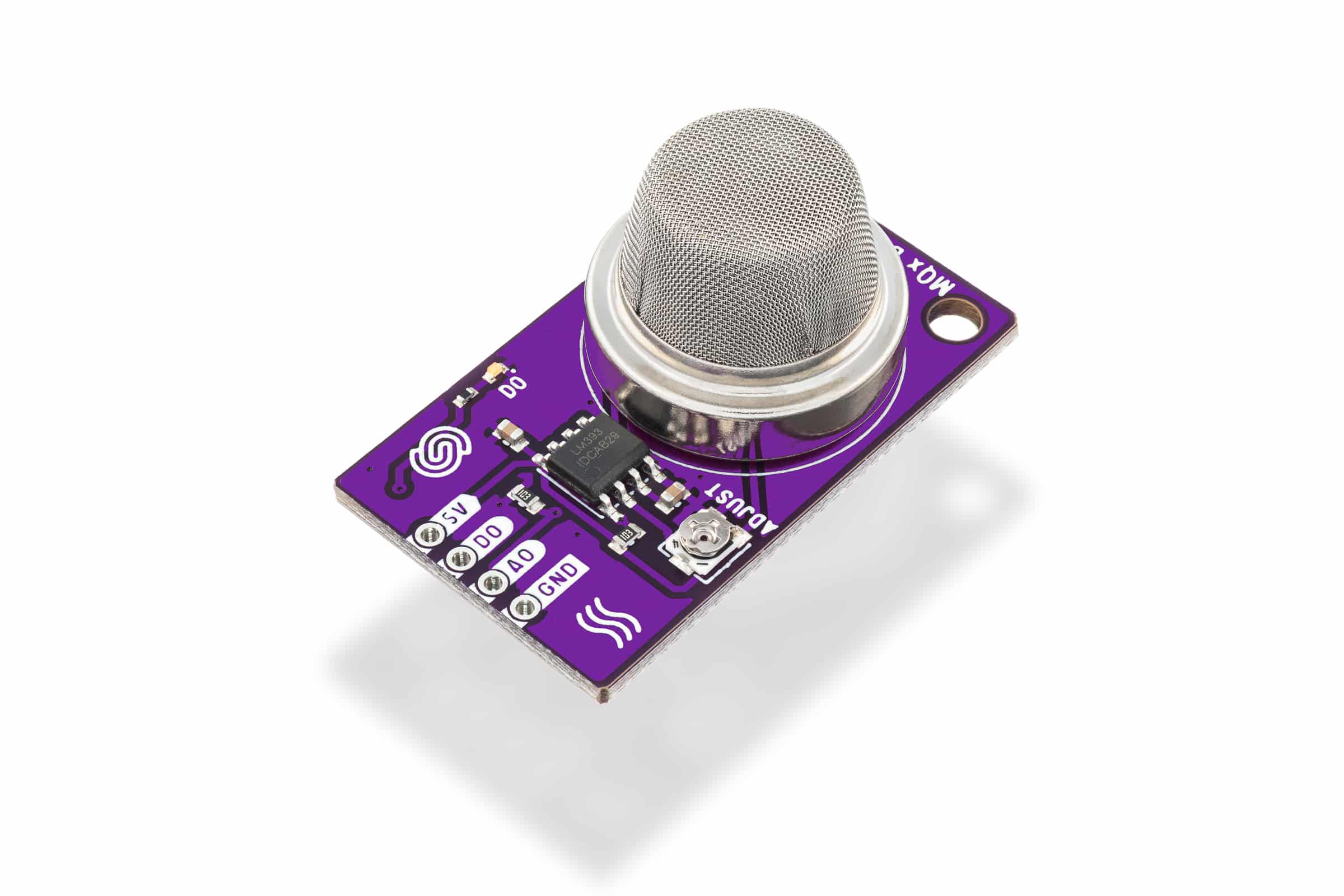
Methane, CNG sensor MQ4 breakout
Have you ever wondered how much natural gas and methane are in your living room? You can easily measure that! The MQ4 breakout board is a simple-to-use sensor that detects the natural gas and methane (CH4) in the air. Once heated to working temperature, it detects changes in air concentrations very quickly between 200 and 10000 ppm.
On the through-holes, the DO stands for digital out and AO for analog out. The digital output is obtained by setting a threshold value using the potentiometer. The analog output will depend on the intensity of the gas around the sensor.
Product usage tips:
The sensor will take 24 hours to preheat to working temperature. The LED on the board will glow when gas is detected, and remain off when it’s not. The board can easily be secured in place using the two mounting holes. It comes with four pins that need to be soldered.
Due to its long life, you can use this board for years without much of a thought. Dipping the sensor in water and freezing it will damage it, so avoid doing that. Highly corrosive gases will weaken it significantly, making it useless.
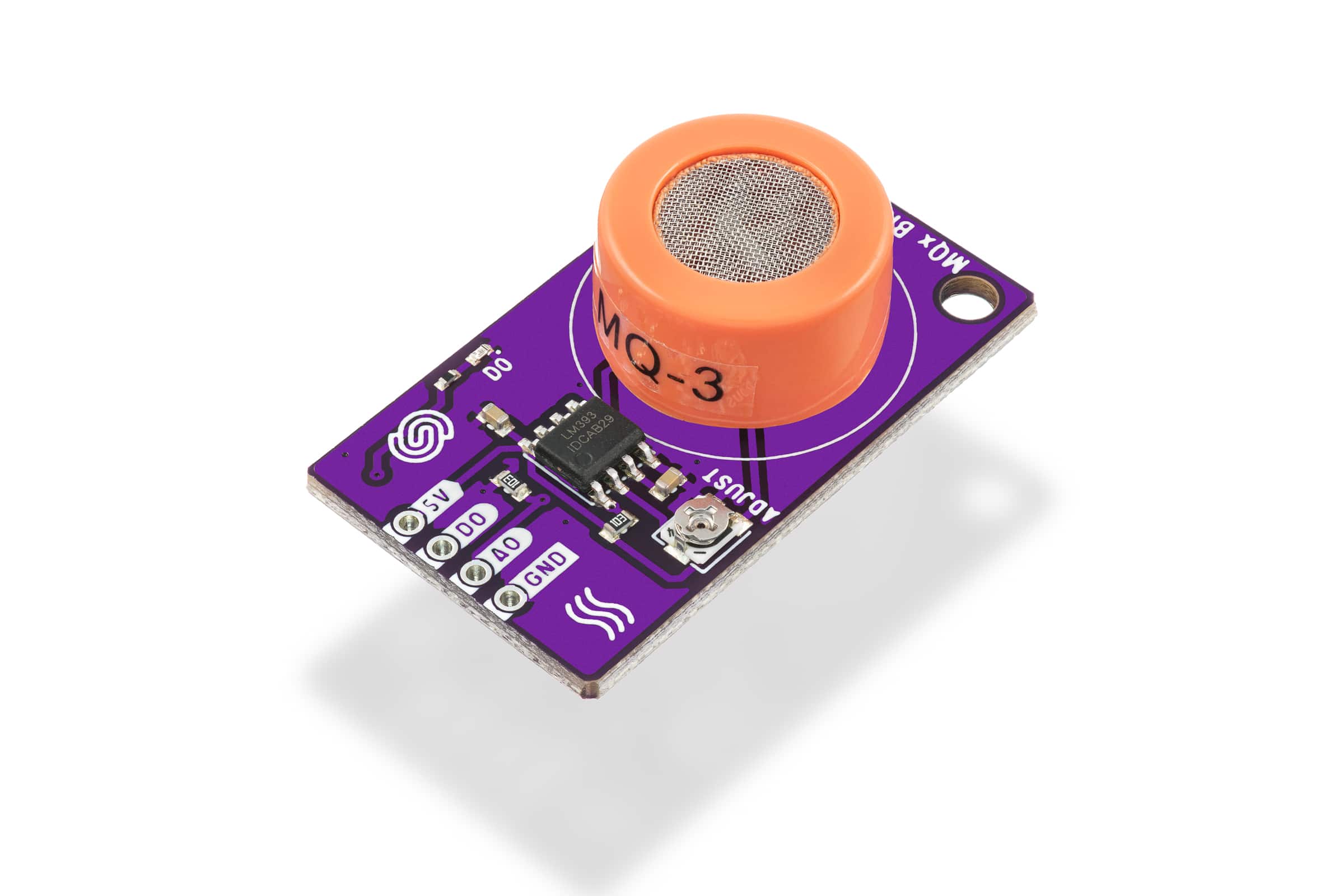
Alcohol, Ethanol sensor MQ3 breakout
MQ sensors, including the MQ3 sensor, have the ability to detect various gases. The MQ3 sensor is specifically designed to detect alcohol vapors. This means it is sensitive to alcohols such as methanol, ethanol, and isopropanol. The MQ3 sensor is commonly used to measure the concentration of alcohol in the air and is a useful tool for alerting to the presence of alcohol in the surrounding environment.
It is important to note that MQ sensors are not specific to only one gas and can react to other gases besides those they are specifically designed for. Therefore, it is important to use the MQ3 sensor exclusively for alcohol detection and to follow the manufacturer’s instructions to achieve optimal accuracy and reliability of measurements. It requires a short heating time to function correctly.
The breakout board works with both digital (DO) and analog signals (AO). The digital output is obtained by setting a threshold value with a potentiometer. The analog output will differ depending on the intensity of the gas in the sensor’s environment.
Product usage tips:
When gas is detected, the LED will start glowing. It will remain off if it doesn’t detect anything. Two mounting holes enable easy mounting to surfaces. The board comes with four male headers that need to be soldered.
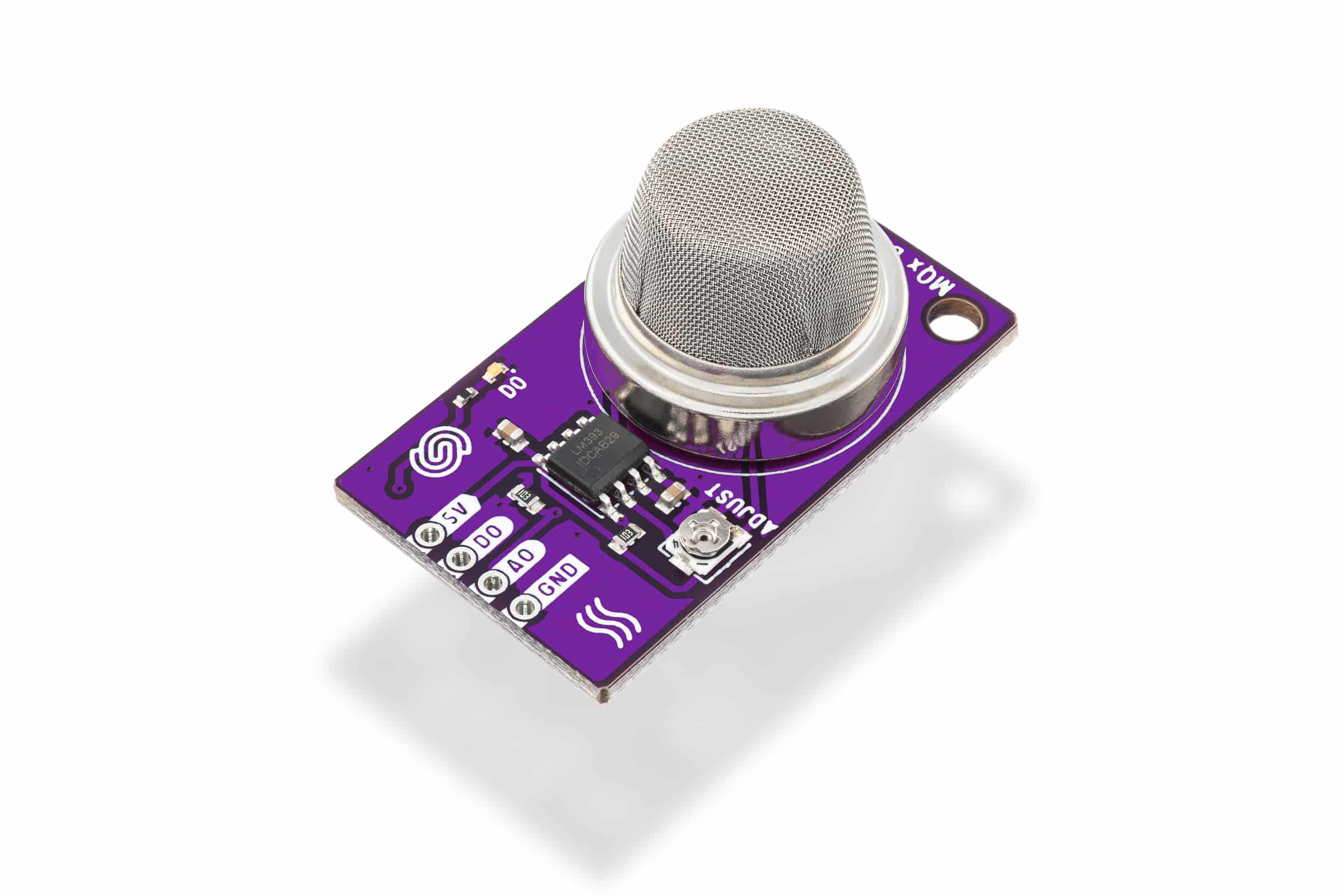
Butane, LPG & Smoke sensor MQ2 breakout
MQ sensors, including the MQ2 sensor, have the capability to detect various gases. The MQ2 sensor is specifically designed to detect combustible gases such as LPG (liquefied petroleum gas), butane, propane, methane, alcohol, hydrogen, and smoke. These gases are commonly found in residential, industrial, and automotive environments. The sensor’s sensitivity and responsiveness enable it to detect even trace amounts of these gases, making it a valuable tool for gas leakage detection, fire detection, and air quality monitoring applications. It takes a short time to heat up in order to work correctly.
The breakout board works with both digital (DO) and analog signals (AO). The digital output is obtained by setting a threshold value with a potentiometer. The analog output will differ depending on the intensity of the gas.
Product usage tips:
When gas is detected, the LED will start glowing. It will remain off if it doesn’t detect anything. Two mounting holes enable easy mounting to surfaces. The board comes with four pins that need to be soldered.
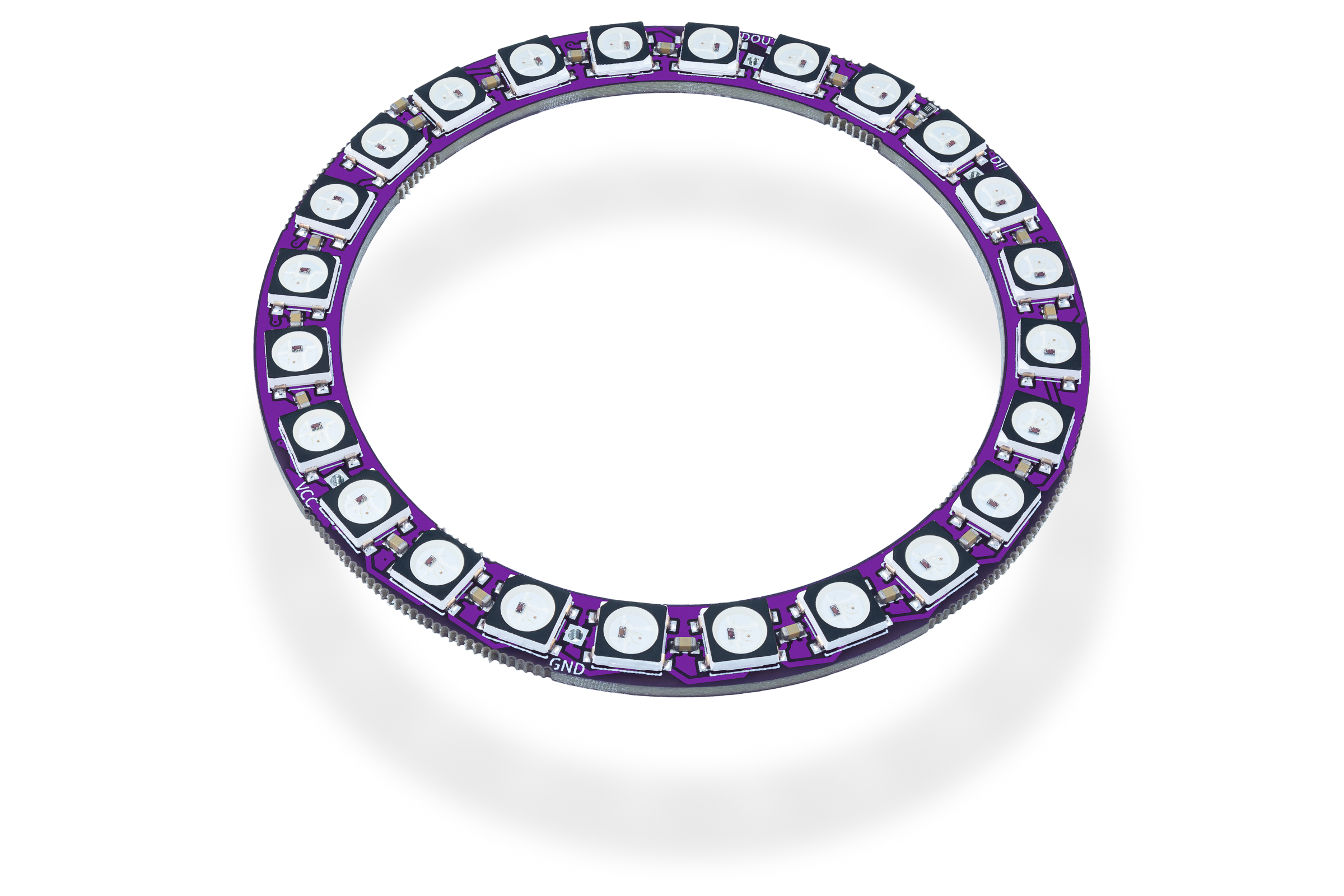
Smart LED WS2812B Ring24
The Smart LED WS2812B Ring24 is a circular array of 24 individually addressable WS2812B RGB LEDs, perfect for vibrant and dynamic lighting. Each LED can be controlled independently via a single data line, enabling complex animations and color patterns with microcontrollers like Arduino or ESP32. Its durable design ensures reliable performance for wearable tech, ambient lighting, or LED Alerts.
Operating at 5V, each LED draws ~18 mA, with a maximum ring current of 432 mA. The 67 mm diameter fits standard enclosures, and the WS2812B protocol allows daisy-chained control from one digital pin. High refresh rates ensure smooth, flicker-free animations with minimal external components.
Ideal for visual feedback in robotics, cosplay, or interactive art, the Ring24 displays complex color gradients or status indicators with ease. Pair it with a Qwiic-compatible microcontroller for simplified integration and start building professional-grade dynamic lighting projects today.
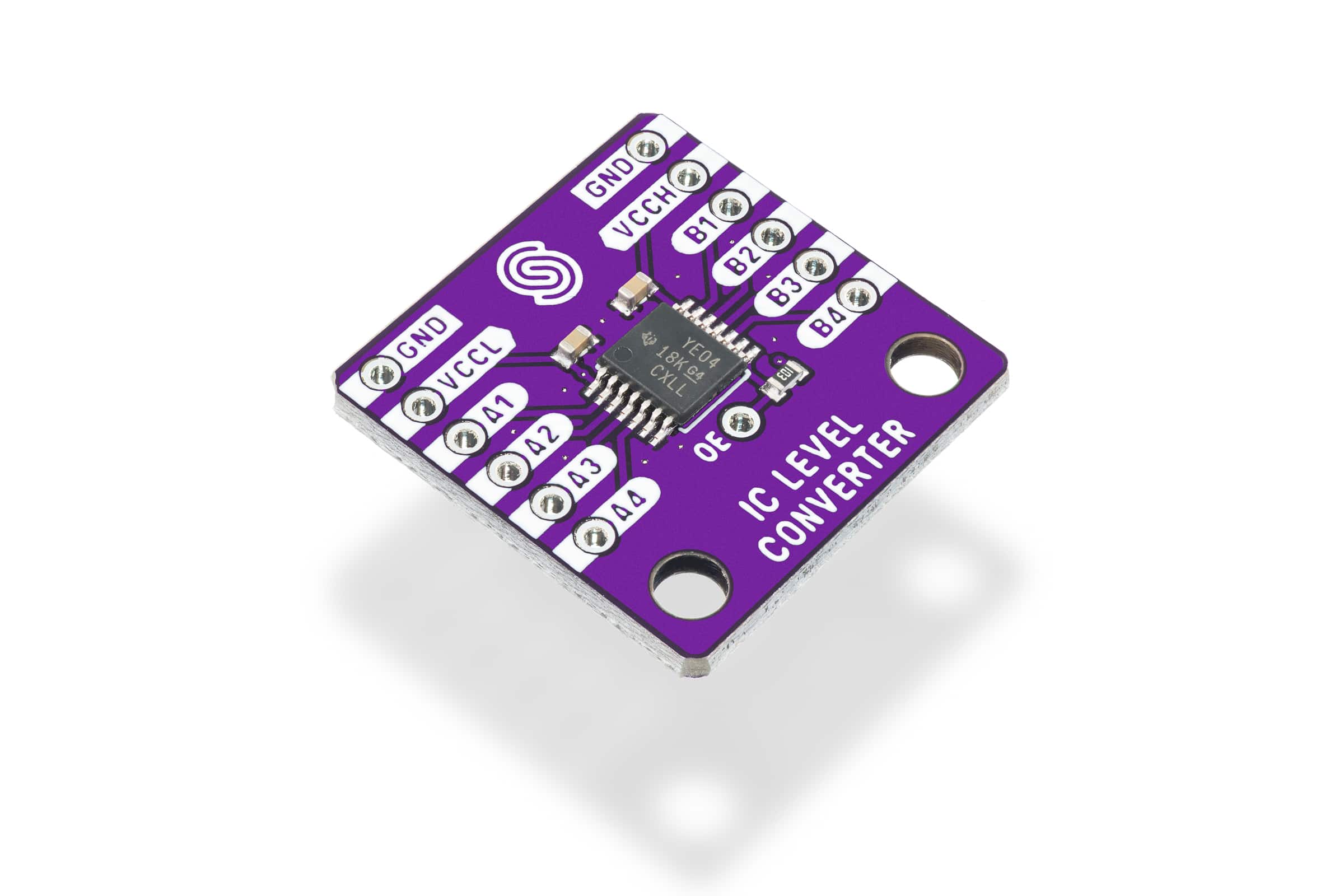
Logic level converter generic TXB0104 breakout
The Logic Level Converter TXB0104 breakout safely interfaces components operating at different voltages. The TI TXB0104 IC provides four bidirectional channels, bridging low-voltage microcontrollers (1.8V–3.3V) with higher-voltage peripherals up to 5V. Its auto-direction sensing simplifies data transfer without extra direction pins, ensuring reliable communication across mixed-voltage systems.
The TXB0104 handles push-pull and open-drain signals, supporting SPI, I2C, UART, and other digital interfaces. All channels are fully bidirectional, allowing simultaneous two-way communication. The compact breakout format makes it easy to integrate into breadboards or custom PCBs.
Ideal for connecting sensors or modules of varying voltages, this breakout ensures safe, stable, and flexible logic-level translation for any project.

ADC 12-bit ADS1015 4-channel with PGA breakout
ADC (Analog Digital Converter) is a device that reads analog signals (just like the analogRead () function in Arduino IDE) and converts them into digital signals that can be read by a microcontroller. This breakout is based on the ADS1015 ADC, which reads values in 12-bit resolution, receives a maximum of 3.3V on its inputs and has a total of 4 channels (which can also be used as two differential). Works great with any microcontroller at 5V. It has 2 easyC connectors for easier connection on I2C communication.
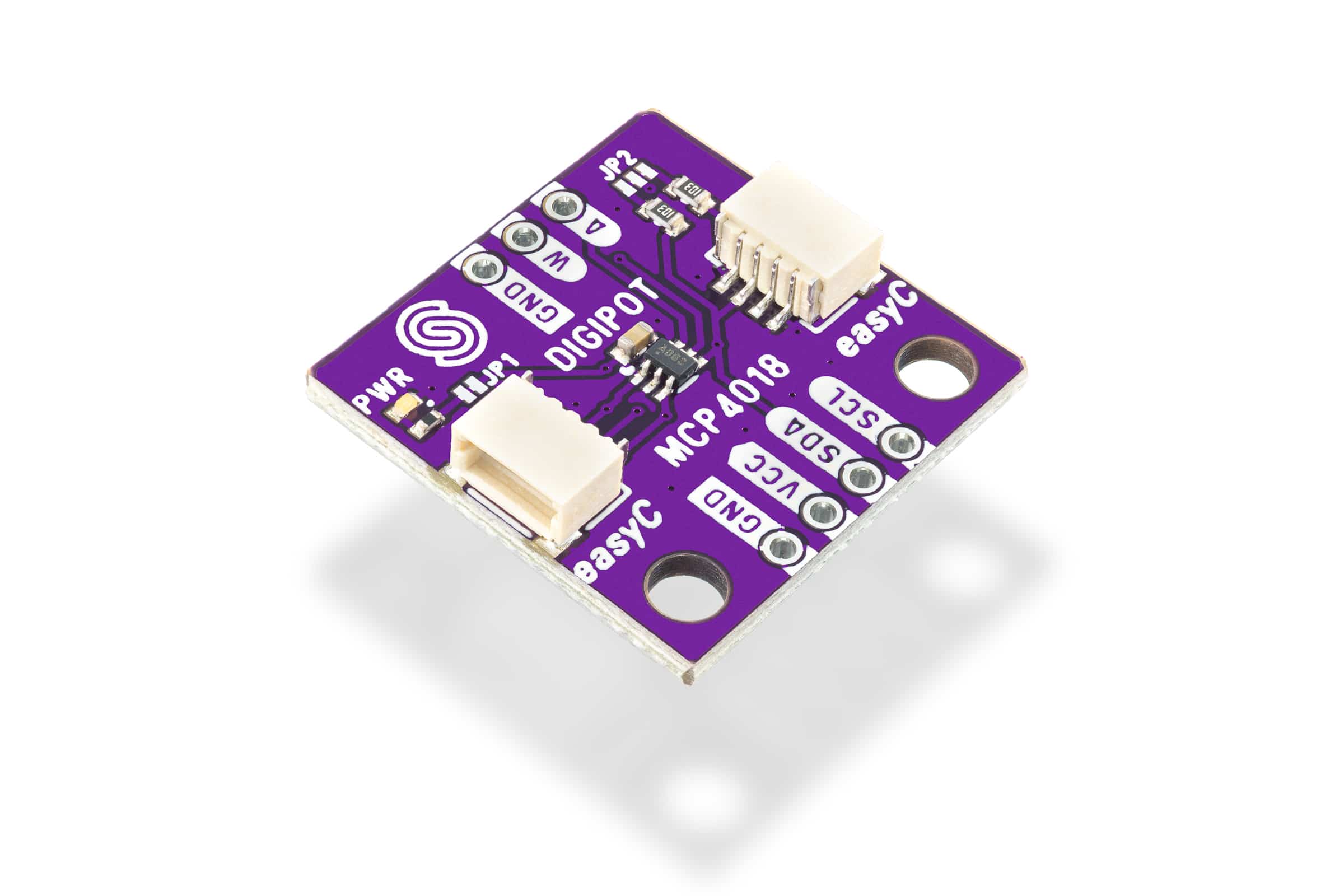
Digipot 100k MCP4018 breakout
A digital potentiometer is a device identical to a potentiometer, except that instead of a physical rotating part that adjusts the resistance, it uses digital communication. Namely, the resistance of the digital potentiometer is adjusted via I2C communication.
Our module is based on the MCP4018 IC which has a total of 128 steps between 0 and 100k resistance values. This would mean that it is capable of doing resistance steps of approximately 781 ohms. It is controlled via I2C which makes it extremely easy to use.
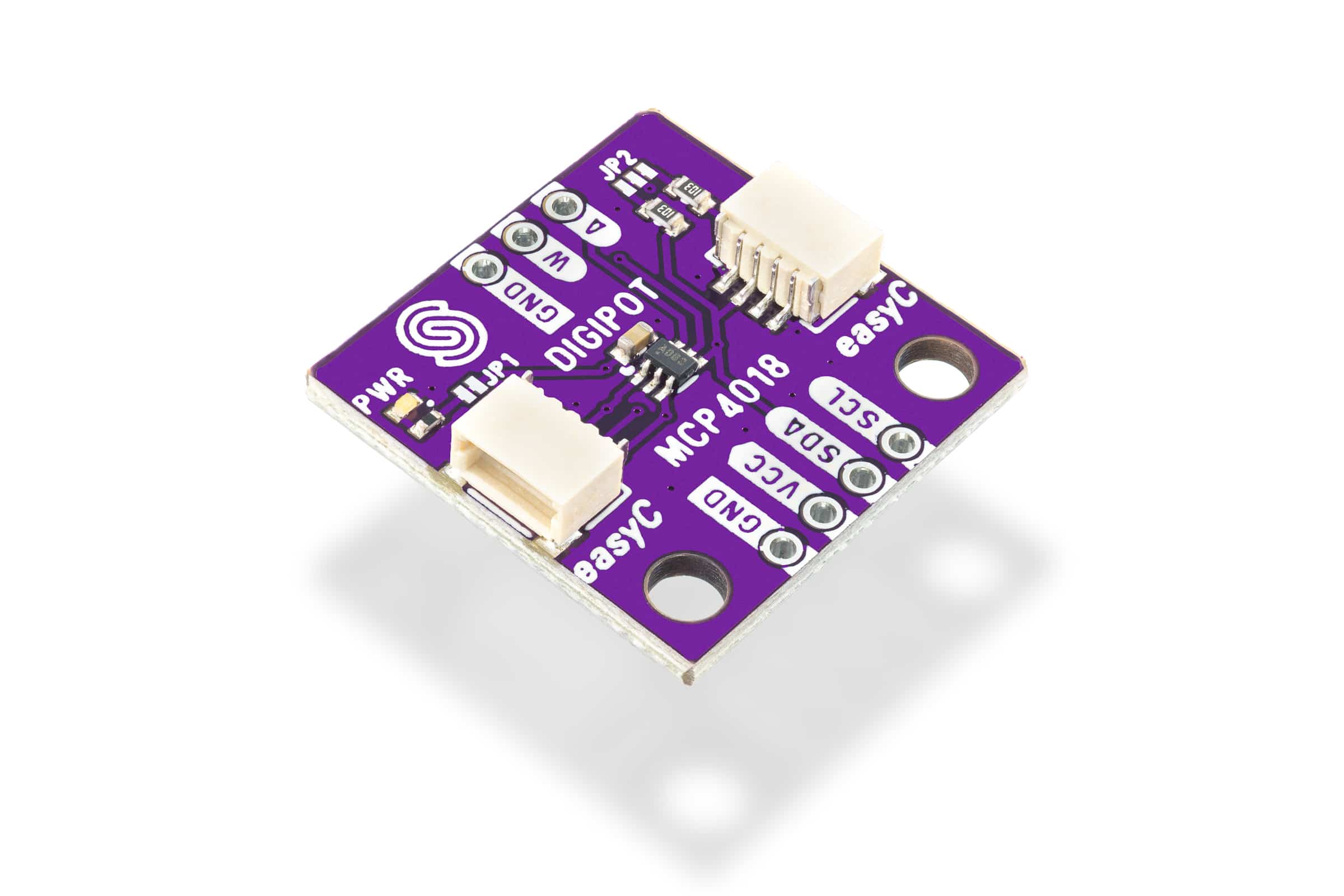
Digipot 50k MCP4018 breakout
A digital potentiometer is a device identical to a potentiometer, except that instead of a physical rotating part that adjusts the resistance, it uses digital communication. Namely, the resistance of the digital potentiometer is adjusted via I2C communication.
Our module is based on the MCP4018 IC which has a total of 128 steps between 0 and 50k resistance values. This would mean that it is capable of doing resistance steps of approximately 390ohms. It is controlled via I2C which makes it extremely easy to use.
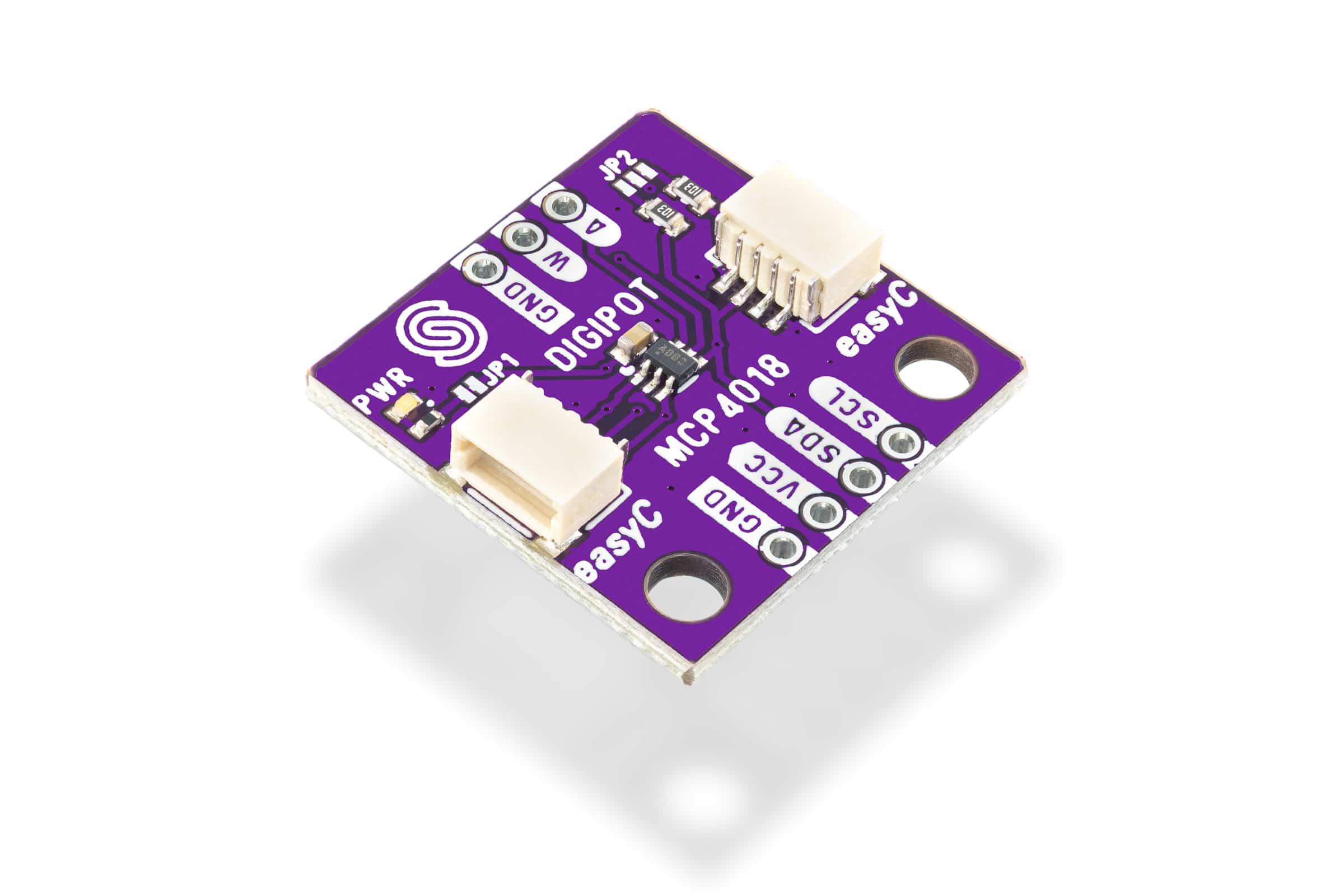
Digipot 10k MCP4018 breakout
A digital potentiometer is a device identical to a potentiometer, except that instead of a physical rotating part that adjusts the resistance, it uses digital communication. Namely, the resistance of the digital potentiometer is adjusted via I2C communication.
Our module is based on the MCP4018 IC which has a total of 128 steps between 0 and 10k resistance values. This would mean that it is capable of doing resistance steps of approximately 78ohms. It is controlled via I2C which makes it extremely easy to use.
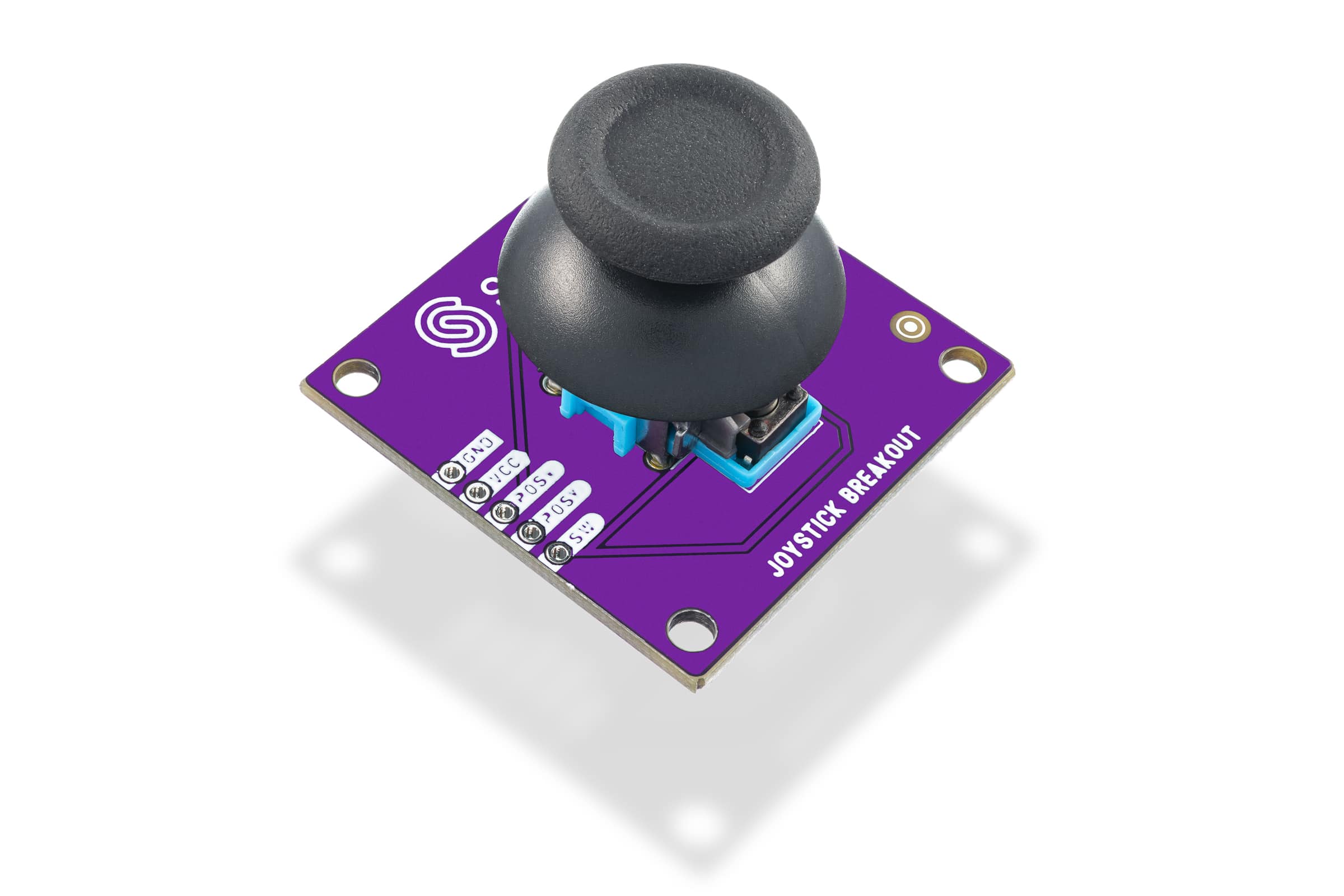
Joystick 2-axis with pushbutton breakout
Joystick module is well known to all – it is identical to the one found in the PlayStation2 joystick. Whether you are making a game with a microcontroller or want more freedom while navigating a joystick module will come handy.
It reads X and Y position of the joystick knob (used for controlling) and whether the joystick is being pressed down. X and Y values are shown in the form of analog values while reading off if the joystick is pressed or not is shown in the form of digital value (HIGH/LOW; it has pull-up resistor).
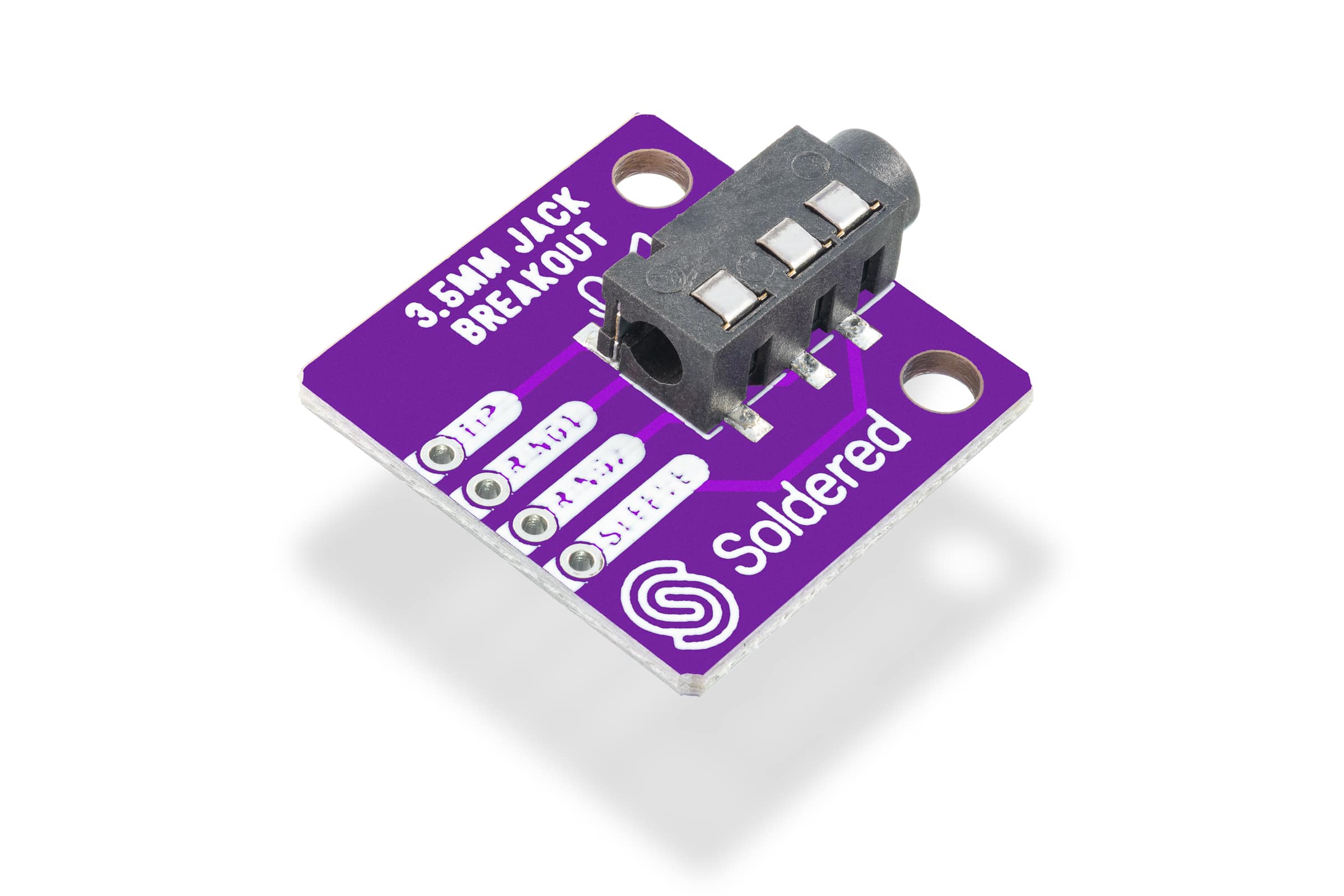
3.5mm Jack breakout
If you are working with audio and need easy access to all the pins of the 3.5mm connector, this breakout makes it possible. It accepts a male 3.5mm connector, in a 4-pin version, and allows access to all connector pins on the header.
Dimensions: 22 mm x 22 mm
Board connector: 3.5mm female, accepts 3.5mm male
Connections: ground, speaker right, speaker left, microphone
Mounting holes: 2
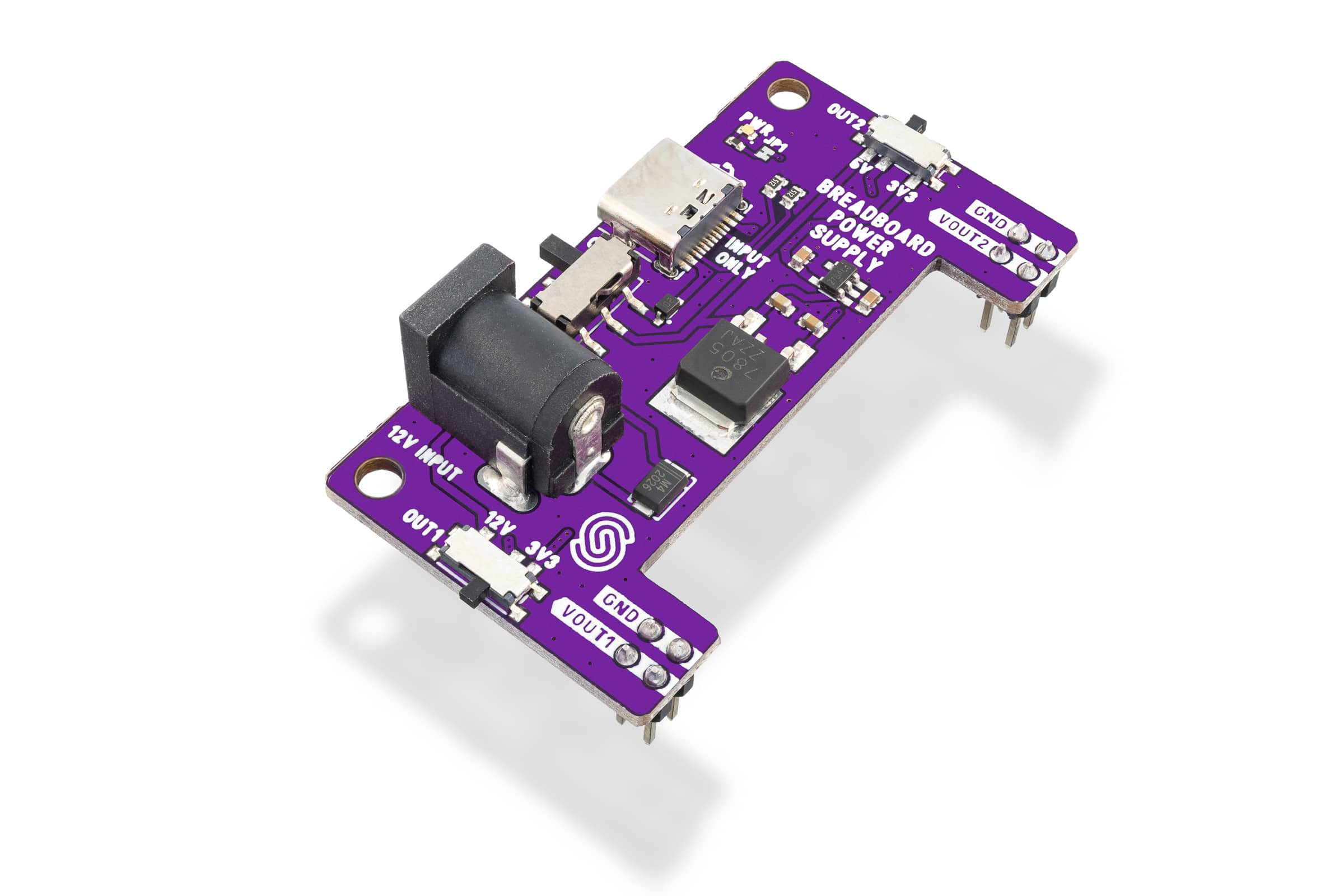
Power supply for the experimental board
If you need a simple and stable power source on your breadboard, this board is here to help. Just give it some other power source via DC port or USB-C, and it gives you 3V3, 5V or 12V discretely to the power lines on the experimental. The output voltages are adjustable for both sides via switches. It also has a power LED, ignition switch and automatic power source selection (if both are present, it will be powered via the DC jack).
*12V is only available when used with a DC jack with 12V power supply

PIR Movement sensor board
A PIR (passive infrared) motion sensor is a device that detects physical movement within its field of vision by sensing changes in infrared radiation. This sensor works on the principle of detecting thermal thermal signals emitted by objects, mainly warm-blooded creatures like humans. The “passive” in the name refers to the fact that the sensor itself does not emit or radiate any energy for detection.
Easily connects to Dasduino/Arduino via digital pin. When it detects movement, it sets the output digital pin to HIGH. The angle that the sensor “sees” is 100 degrees and reaches up to 5 meters. It has a potentiometer for delay (how often to check for movement).
It is often used in a variety of applications, including home security systems, automatic lighting, and energy management, among others.

Hall effect sensor breakout with digital output
The hall effect sensor (Hall Effect sensor) will be able to detect the magnetic field in its vicinity thanks to the aforementioned physical law. A magnetic field that can be created by a magnet, a current flowing through a conductor or some third source, the Hall effect sensor will recognize each. This sensor has a programmed threshold at which it will change the state of its output signal, so it is a sensor with a digital output.

Hall effect sensor breakout with digital output & easyC
The hall effect sensor (Hall Effect sensor) will be able to detect the magnetic field in its vicinity thanks to the aforementioned physical law. A magnetic field that can be created by a magnet, a current flowing through a conductor or some third source, the Hall effect sensor will recognize each.
This sensor has a programmed threshold at which it will change the state of its output signal, so it is a sensor with a digital output. Through the easyC connectors, it enables a simple connection with the microcontroller.
Coming soon
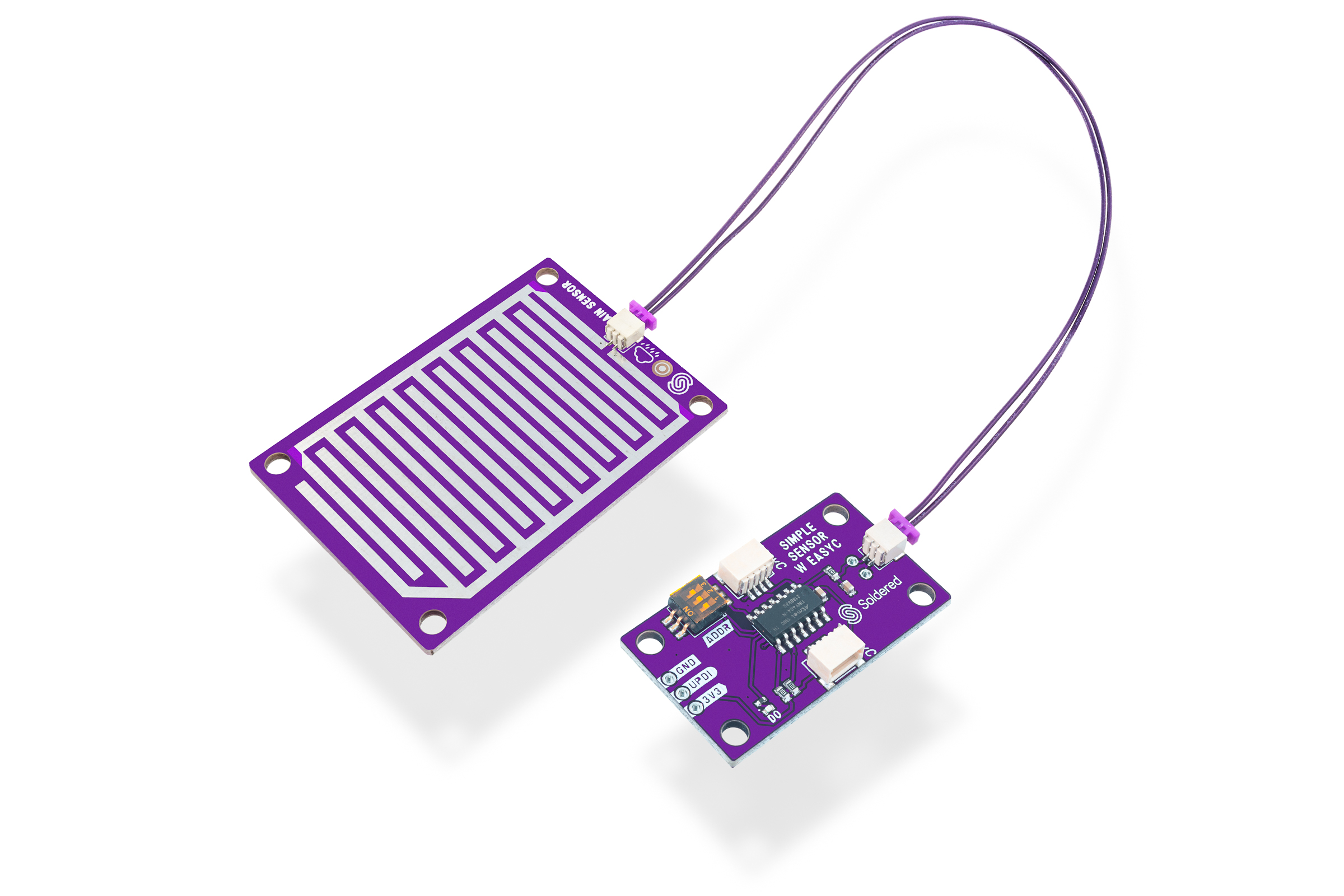
Simple rain sensor board with easyC
This sensor has two pieces – the rain sensor and the simple sensor. The rain sensor has nickel-coated lines on both sides. It measures moisture and outputs the data to the simple sensor that reads it. The simple sensor comes with easyC connectors onboard, which enables quick and easy connection with Dasduino microcontroller boards.
With the easy-to-use simple rain sensor, farmers can save water in irrigation. The sensor will alert them to shut down the water supply when it senses rain. It can even act as an automatic on and off switch, like turning on wipers on a car when it senses rain.
Coming soon
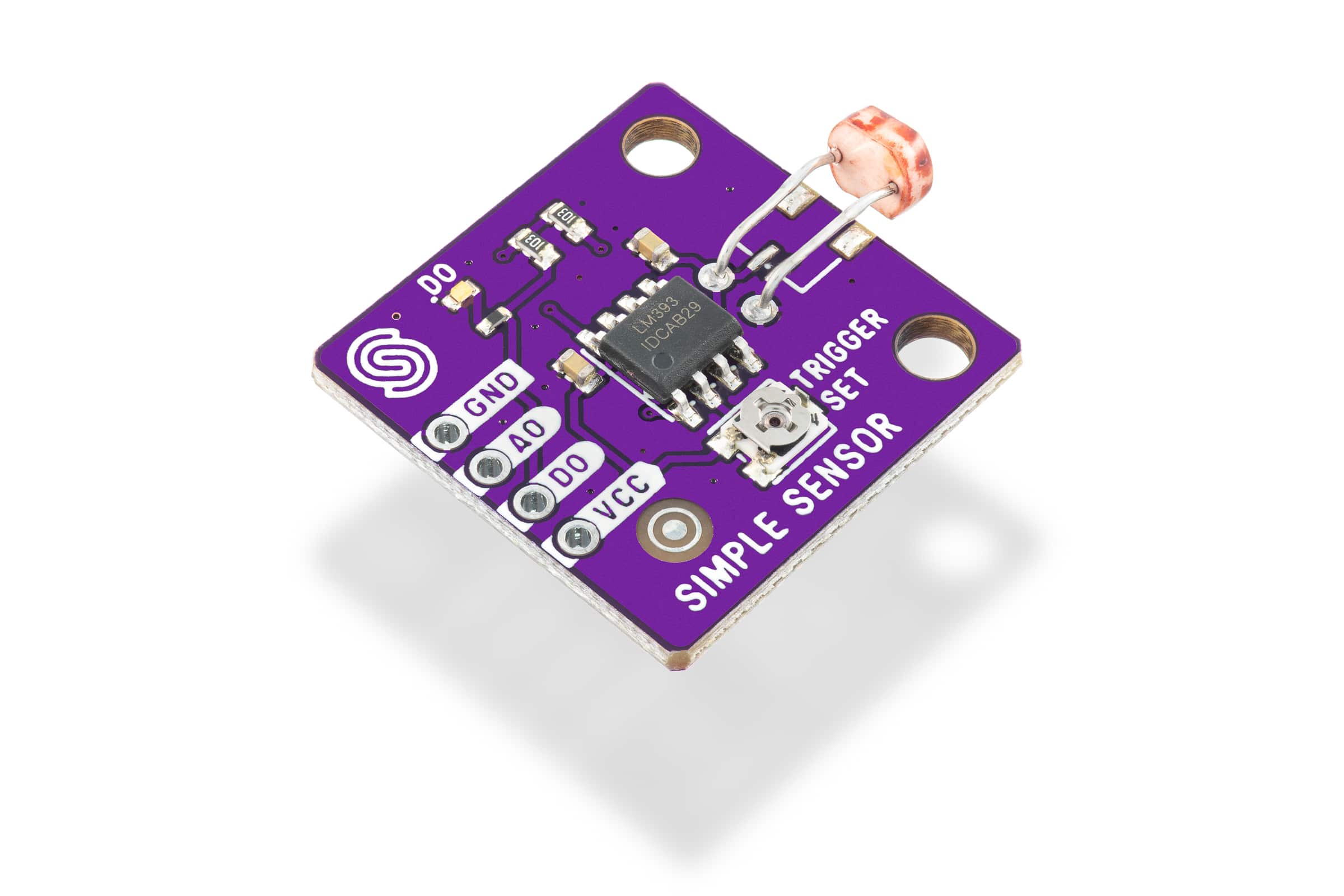
Simple light sensor board
The Simple Light Sensor Board is a versatile solution for adding light detection to your electronics projects. It’s a complete module that provides both analog and digital outputs, giving you the flexibility to create a wide range of applications. Whether you’re building an automatic lighting system, a plant-monitoring device, or a smart home alarm, this sensor board provides the reliable light detection that every maker needs.
The onboard LM393 comparator and adjustable potentiometer make this board perfect for creating precise light-activated triggers. You can easily set a specific light threshold for the digital output, allowing you to trigger an action when the light level crosses a certain point. This is ideal for beginners who want a simple on/off signal, as well as for advanced users who need to fine-tune the sensor’s sensitivity for their specific application. Perfect for students learning about sensors, hobbyists building interactive projects, or engineers prototyping new devices.
What makes this light sensor board special is its all-in-one design, combining a LDR with all the necessary circuitry on a compact module. This sensor will not give you detailed lux readings, just a simple analog value proportional to the amount of light. As with all our products, it’s open-source, with all design files available for you to modify and adapt. Plus, with our 2-year warranty and technical support, you can be confident in your purchase.
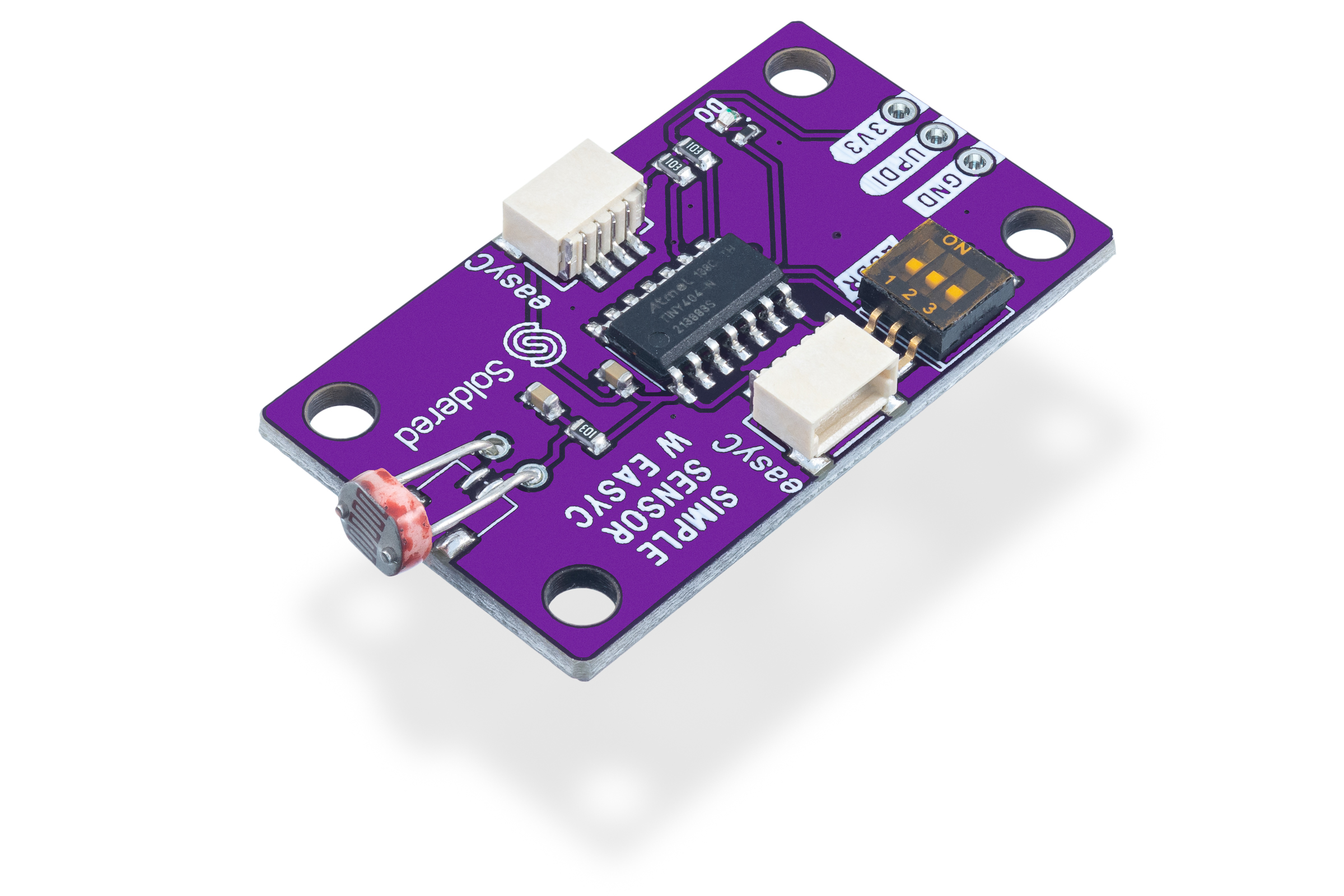
Simple light sensor board with easyC
Light is one of the most important things in the life of most living beings. This is why it is common to work with light sensors when learning about electronics. A simple light sensor has a light dependent resistor (LDR) and sensor on a breakout board for easy wiring. The simple sensor comes with easyC connectors onboard, which enables quick and easy connection with Dasduino microcontroller boards.
As the name suggests, an LDR will change its resistance depending on the amount of light it is exposed to. The amount of light and resistance are inversely proportional. The more light it is exposed to, the less resistance it will have. So if there is more light, the board will have a resistance of several hundred Ohms. If the resistor is in the dark, it will have a resistance of several thousand Ohms.
11 years in the industry
Customers in 80+ countries
20,000+ satisfied customers